

When you buy through links on our articles, Future and its syndication partners may earn a commission.
Credit: Getty Images / Sasha Shtepo
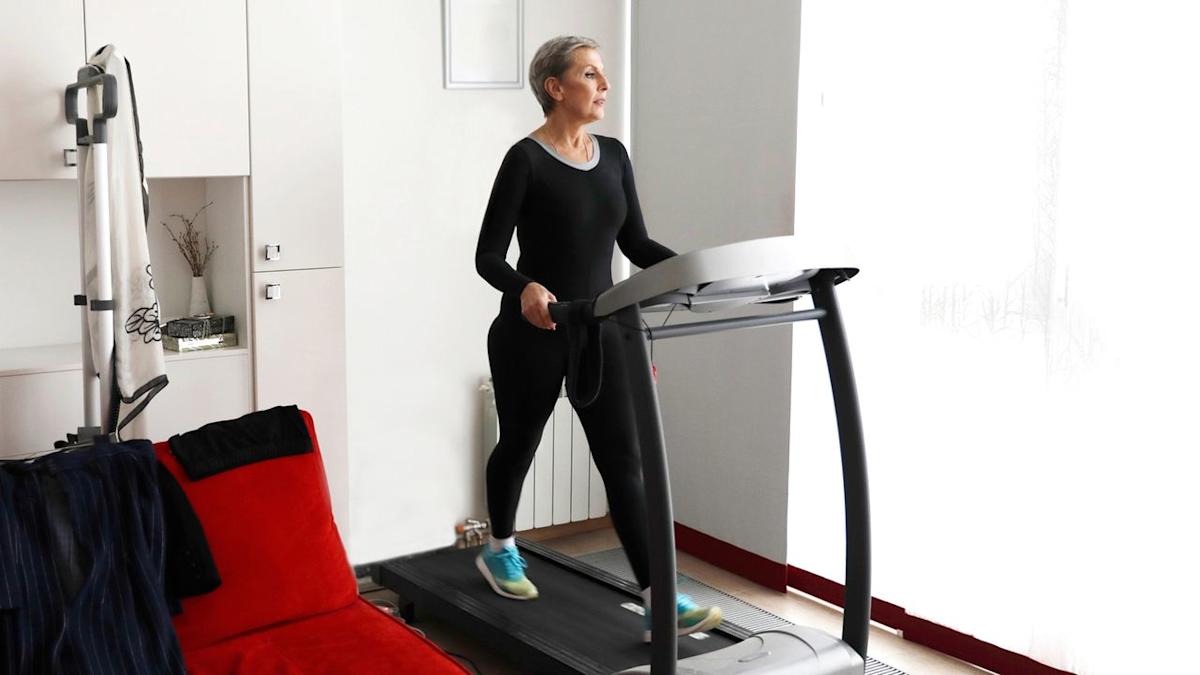
We all know we’ll benefit if we stay active, but it becomes harder to do if you have concerns about your joint health. In that case, the treadmill is your friend.
“Walking on a treadmill is actually gentler on your joints because the belt provides some shock absorption, unlike the hard pavement outdoors,” says Denise Chakoian, a certified fitness trainer and owner of Core Cycle and Fitness LaGree.
When combined with some of the best walking shoes, you may find your joints are more comfortable with indoor walking. Plus, you remove many of the other factors that worry people about walking outdoors.
“Treadmills can feel safer for people who are worried about traffic, uneven sidewalks or isolated areas. Some people also prefer the convenience of walking at home or the gym while watching TV or listening to music,” says Chakoian.
If you think that the shock absorption of the treadmill makes it a less effective workout, you don’t need to worry.
“Walking on a treadmill is just as effective as walking outdoors for cardiovascular health and burning calories,” she adds.
Chakoian explains that outdoor walking has its benefits too. For instance, the uneven terrain engages your stabilizing muscles and time outdoors can be better for your mental health.
That said, you’re not giving yourself an easier time by picking the treadmill. In fact, there are some times it’s definitely better to walk on a treadmill rather than going outside.
Ultimately, however you choose to do your walking workout, you’re moving your body and that’s a cause for celebration.
If you want to add structure to your next treadmill workout, give the following 20-minute workout a spin. Just remember to keep an eye on the treadmill timer to know how far through the workout you are and when you need to change up your pace or incline.
1. Warm-up
Time: 3min Incline: 0%
Walk at an easy pace to loosen up your muscles. Remember to keep your back straight.
2. Brisk walk
Time: 3min Incline: 2%
Pick up the pace. You should be able to hold a conversation, but you should be breathing harder.
3. Incline walk
Time: 2min Incline: 3-4%
Maintain your brisk pace and increase the incline. Feel your legs and glutes working and note any stiffness or discomfort. Don’t push through pain.
4. Controlled walk
Time: 2min Incline: 0-1%
Slightly slow your pace and reduce the incline. Pay close attention to your gait: Your feet should roll from heel to toe.
5. Power walk
Time: 3min Incline: 1-2%
Increase the pace to hit the fastest walking speed of the workout. Swing your arms and lengthen your stride. It should become harder to hold a conversation.
6. High incline
Time: 2min Incline: 5-6%
Slow back down to a brisk pace, but tackle the steepest incline of the workout. As the incline increases, you will need to take shorter steps.
7. Recovery
Time: 2min Incline: 0%
Slow down to a gentle walk and catch your breath.
8. Brisk finish
Time: 2min Incline: 2%
Increase the speed to a brisk pace again, taking notice of your posture and how your body feels for this final push.
9. Cool-down
Time: 1min Incline: 0%
Slow right down and take deep, steady breaths.