

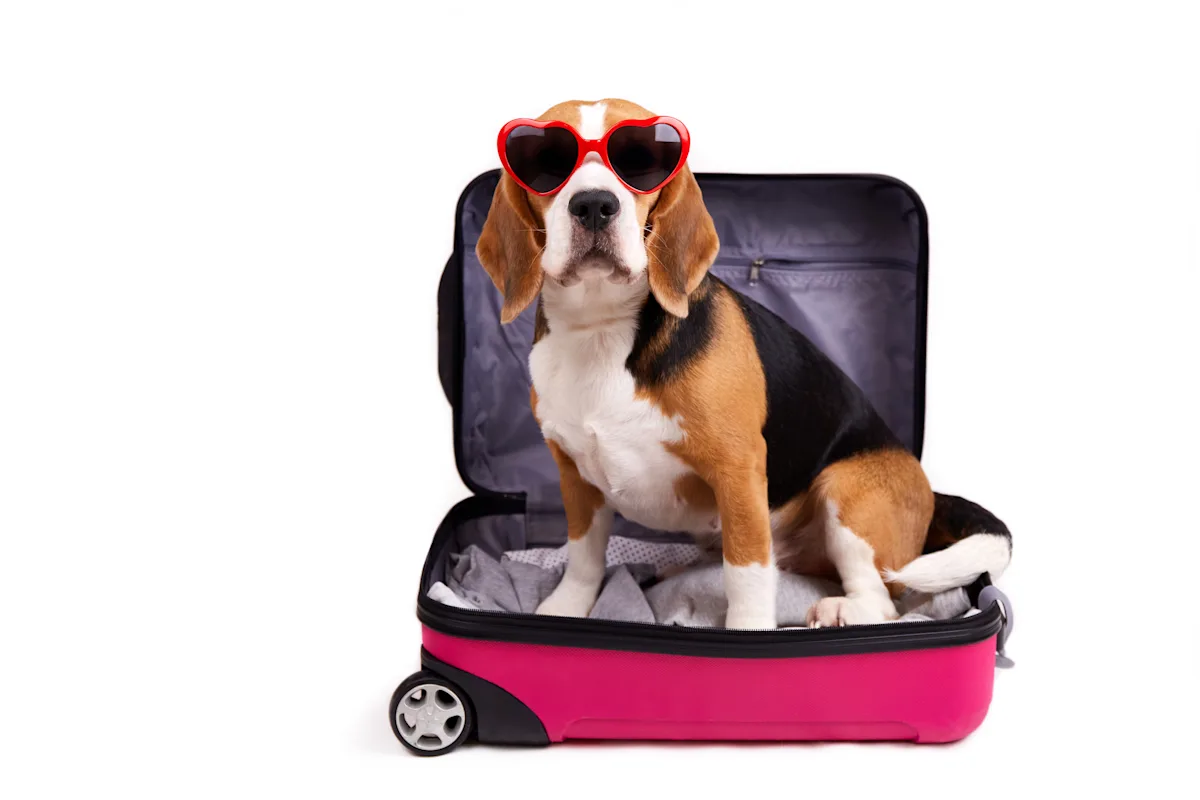
Bringing your pet on a trip sounds simple until you run into airline rules, vaccine requirements, or that hotel that claims to be pet friendly but has a long list of restrictions. The good news is you can avoid most headaches with a little planning. Whether you are flying, driving, or heading abroad, here are the biggest do’s, don’ts, and lesser-known rules that make traveling with your pet smoother.
Flying with a pet: what to know before you book
Last month I was standing in line at the ticket counter at the airport, waiting to check my bag, when I see a woman at the next stall start to panic. “When did this rule start? That wasn’t the case last year when I traveled with her!” She pointed to her mini cocker spaniel. She didn’t have the required pet carrier, and without proof of one, the agent couldn’t issue the in-cabin pet ticket. Her shock is common. Flying is where rules shift fast, and travelers get caught off guard.
Every airline sets its own pet policy, and the differences can be dramatic. What was allowed last year may not be allowed today.
Research the policy and do this early.
• Call the airline before buying your ticket. Airlines limit how many pets can fly in the cabin, and those spots often sell out before the cheapest seats.
• Measure your pet while fully zipped inside the carrier. Airlines approve carrier dimensions, not your dog’s height or weight.
• Book nonstop when possible. Long layovers, missed connections, and tarmac delays are tough on pets and can lead to denied boarding if your new flight is already maxed out on pets.
Things most travelers overlook or don’t know.
• Airlines can turn you away at the gate if your pet cannot stand or turn around comfortably in the carrier, even if you followed the posted dimensions.
• Pets count as your carry-on. You still only get one personal item.
• Some airports require pets to stay inside carriers everywhere except designated relief areas. You can be stopped by security or airport police if you let them walk.
• Certain airlines won’t allow pets on flights with extreme temperatures, even if they’re traveling in the cabin.
• If you’re connecting internationally, the rules reset at the new country’s border. You may need paperwork reviewed again before continuing.
• Many airlines require your pet to stay fully zipped inside the carrier for the entire flight. Heads-out is not allowed, even for “well-behaved” pets.
Do not do these things.
• Don’t sedate your pet for flights. Most vets warn against it because sedation can affect breathing and balance at altitude.
• Don’t assume your vet’s vaccine schedule matches airline or destination requirements. International destinations often require microchipping, parasite treatment, and vaccines given on a strict timeline.
• Don’t skip a “practice flight.” This means getting your pet used to the carrier at home for several days. Pets travel much better when the space already feels familiar.
Check out the USDA’s Pet Travel Portal which publishes destination-specific rules, including required forms, and health certificate details. It’s the most reliable source when you’re flying abroad with a pet.
Road trips with pets: easier, but not effortless
Road trips give you more flexibility, but they still require realistic planning. You have to have an understanding of what your pet can tolerate. Generally, pets do not adapt to long days in the car the same way humans do; and many owners underestimate the logistics.
Best practice tips for road trips with pets.
• Use a crash-tested harness or secured carrier. A loose pet becomes a projectile in a sudden stop.
• Bring your pet’s bedding or travel mat. Familiar smells make new environments less stressful.
• Pack more water than you think you need. Hydration drops quickly, especially in warm cars.
• Build in longer breaks. Pets need more decompression time than humans between breaks, walks and stretches.
Keep in mind these things that most people overlook or don’t know.
• Many national parks restrict pets to parking lots, paved areas, and campgrounds. Trails are often off-limits.
• Rental cars may charge additional cleaning fees, even if your pet is calm and contained.
• “Pet-friendly” hotels may allow only certain sizes or breeds, or restrict the number of pets per room.
• Some states require health certificates if you’re crossing borders with animals, especially in the Northeast.
Here’s some things to avoid.
• Don’t feed your pet right before hitting the road. They need time to digest. It increases nausea.
• Don’t leave pets in the car, even briefly. Indoor temperatures rise fast in all seasons.
• Don’t assume roadside rest stops have relief areas. Many do not. That means you have to research.
Pets Welcome offer a Road-Trip Planner that helps you find pet-friendly lodging along your driving route. And BringFido covers hotels, campgrounds, restaurants, and dog-friendly rest stops across the U.S. and beyond.
Traveling abroad with a pet: the rules get strict
International travel is where the rules get more involved and far more specific. Some destinations require multi-step documentation that takes weeks, or in some cases months, to complete. Airlines, rail operators, and border agents all have their own guidelines, and they do not overlap neatly. Research is the single most important step.
So, to prepare, do these things early.
• Check entry requirements as soon as you begin planning. Many countries require microchipping before the rabies vaccine, rabies titer tests, or health certificates completed by USDA-accredited vets on exact timelines.
• Confirm whether pets may fly in the cabin. Some carriers ban in-cabin travel on long-haul routes, to certain regions, or during extreme seasonal temperatures.
• Learn the rules for the country you are returning to as well. Reentry requirements can differ from outbound rules.
• Keep a printed folder with all documents plus digital copies. Many immigration and customs officers still require paper.
• Build in extra time for connections. Some airports require an official inspection before you’re cleared to continue your journey.
Things most people don’t know.
• Some countries require a vet exam within 24 to 48 hours of arrival and may require another one before reentry.
• A handful of destinations still have mandatory quarantine periods depending on where your pet is traveling from, even if they are fully vaccinated.
• Microchips must meet international ISO standards. If yours doesn’t, you may need to bring your own scanner or have your pet re-chipped before travel.
• Many countries do not allow pets to enter through every airport. There are designated “approved entry points,” and arriving elsewhere can lead to denial of entry.
• Service animals have different rules, but they still require documentation. Each country sets its own standards, and airlines can enforce additional requirements.
Do not do these things.
• Don’t wait to start the paperwork. Rabies titer tests alone can take three to five weeks, and USDA endorsement appointments book out fast.
• Don’t assume your pet will have access to relief areas during long-haul connections. Some international terminals do not have any.
• Don’t assume your airline will handle the import paperwork. Many require you to upload documents in advance for approval, and missing a deadline can result in denied boarding.
Train travel abroad with pets
Train systems around the world have vastly different policies, and many travelers don’t find out until they’re already at the station.
Things to know before you go.
• In Europe, many national rail systems allow pets, but sizes and fees vary. On some lines, small pets must travel in carriers; on others, larger dogs require muzzles and leashes.
• Eurostar is one of the strictest: it allows service animals only. No pets in carriers, regardless of size.
• Japan Rail (JR) allows small pets in carriers that fit specific dimensions; larger pets are not permitted.
• Many long-distance trains in Canada and Australia do not allow pets at all except service animals.
• Overnight sleeper trains often have separate rules from daytime routes, even within the same rail system.
Make sure to do this.
• Check rules for each individual rail operator — even regional lines can differ from national ones.
• Measure your carrier against the exact published size limits. They are enforced.
• Bring a waterproof pad inside the carrier. Many rail systems require your pet to remain fully contained for the full journey.
Do not do this.
• Don’t assume that “pet friendly” means “out of carrier.” Most trains require pets to stay inside the carrier at all times.
• Don’t buy rail passes before confirming pet rules. Some countries do not allow refunds if you later find out pets are restricted.
Bookmark PetTravel.com will be the most complete, worldwide source for researching pet travel requirements. It provides entry rules for more than 200 countries and territories, including required forms, quarantine rules, microchip standards, airline policies, and pet passport instructions.