

My name is Cori Ritchey, and I am an exercise physiology nerd turned fitness journalist, and the fitness editor at Women’s Health. When I’m not writing, editing, and researching fitness, I’m teaching it to my personal training and group fitness clients. In my new column, Between Sets, I’m pulling back the curtain on the same advice, tips, and ‘aha!’ moments I share with my clients while they’re catching their breath. Stick around for the strategic, science-backed nuggets that’ll help you move better, train smarter, and actually enjoy the process.
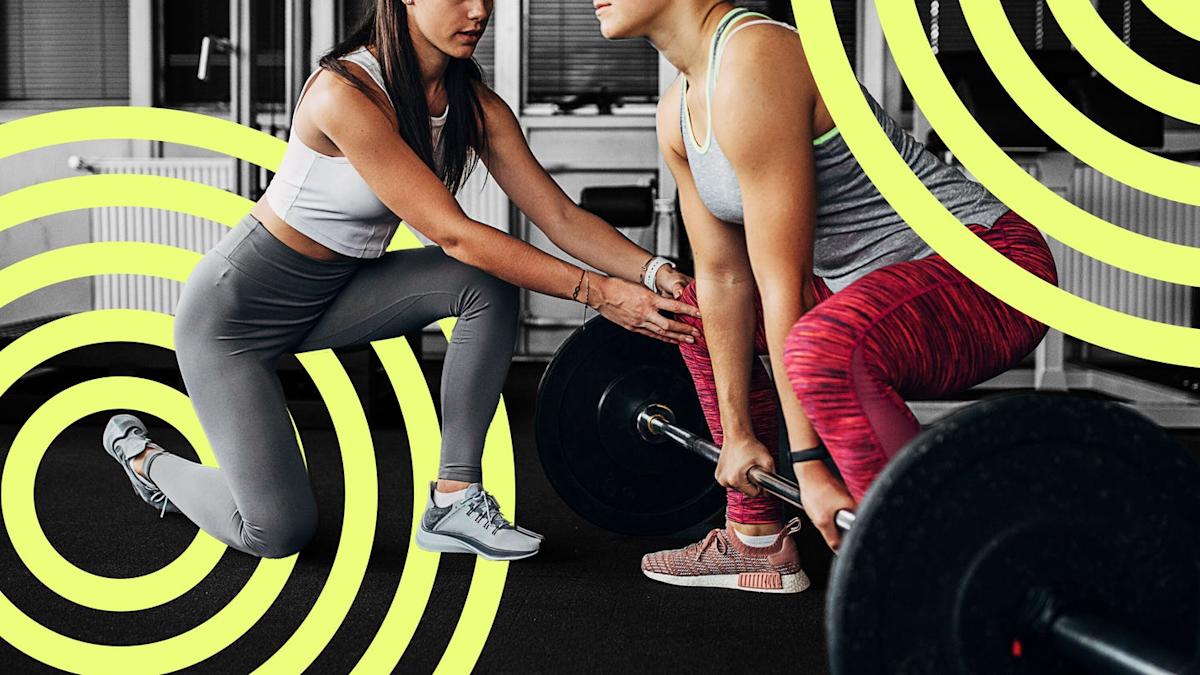
Trainers wear a million hats. I’m a teacher, a coach, a therapist, a motivational speaker, and an equipment manager. But ask any worthwhile trainer what the job really is, and the answer is simple: watching and correcting exercise technique.
Proper form in exercise is non-negotiable. Make a mistake, and you’ll set yourself up for injury at worst, or train inefficiently at best.
But here’s what took me several years in the industry to realize: Proper form is largely dependent on body structure. Bodies are different. We all have different limb lengths, strength differentials, and mobility. What makes sense for my 5’6”, short-legged body won’t make sense for a 6′ 6”, long-legged person. Yet, there are so many cues that you’ll hear from trainers and group fitness instructors that have solid intentions but might not fully apply to you depending on your physiology. These are five training cues that may not actually work for everybody—and what to think about instead.
Old rule: “Don’t let your knees go past your toes.”

Hearst Owned
Instead, think: “Squat as deep as you can with your feet remaining flat on the floor.”
Move: Squat
Remember being in your college workout class and your instructor told you you should still be able to see your toes at the bottom of your squat? Just me?
The classic cue had roots in older research. Sports medicine doctor Karl Klein studied knees in the 1950s, and when looking at competitive lifters compared to subjects with no lifting experience, he concluded that deep squats—especially when the knee traveled past the toes— damaged knee ligaments. Later research didn’t support the same conclusion, and some findings suggest that limiting knee travel can shift more stress to the hips and low back.
So,if your knees go over your toes in squats, that’s okay. And if they don’t, that’s okay too. The bigger goal is a strong, controlled squat with your whole foot staying planted. If your heels lift, reduce depth to prevent instability.
Old rule: “Keep your weight in your heels.”
Hearst Owned
Instead, think: “Put your weight through your whole foot.”
Move: Squat, deadlift, lunge
Speaking of: A common mistake novice lifters make is shifting their weight into the front of the foot and letting the heels pop up. This usually happens when someone lacks the ankle mobility needed to reach depth in a squat.
Trainers often try to fix this by instructing you to “keep your weight in your heels.” And the cue isn’t necessarily bad—especially if you’re prone to lifting your heels—but focusing too hard on the heels can tip you backwards, or change the way your joints are angled—meaning your muscles might not be set up to power as constructively. If you don’t press through your full foot, you can also lose strength from your quads and put your low back in a less supported position.
During moves like squats, deadlifts, and lunges, think about driving up through the whole foot—find connection through the heel, big toe, and pinky toe. It will keep you in a more stable position, and ensure you’re engaging all the muscles involved.
Old rule: “Pinch shoulder blades together” or “Keep a proud chest.”
Hearst Owned
Instead, think: “Stand tall, but don’t flare your ribcage.”
Move: Squat, deadlift, bent-over row
You want your back to stay neutral on moves like squats and deadlifts. Losing that position can really put your low back through the wringer. To help, trainers often cue “pinch your shoulder blades together.”
There’s a half-truth here: You do want to get out of the hunched posture many of us default to. But to truly pinch your shoulder blades together, most people need to over-arch their back and flare their ribs—which can make it harder to brace and, in turn, actually irritate your low back.
The fix: Stand tall, and keep your ribs stacked over your hips without flaring them outward. Aim for your best posture that feels strong—not forced.
Old rule: “Keep your elbows in line with your shoulders.”
Hearst Owned
Instead, think: “Lower your elbows at a 45 degree angle relative to the torso.”
Move: Chest press
If you’ve ever taken a group fitness class that involves lifting, you might have heard this cue. It’s a natural assumption that you are supposed to flare out to the sides on a chest press. But lowering your elbows directly out wide often puts the shoulder at risk by placing excessive pressure on it, and doesn’t always challenge the pectoral muscles as well.
Instead, release the elbows slightly forward as you lower the weight. I like to tell my clients to create a 45 degree angle through their armpit—the elbow isn’t glued to the ribs, but it’s not flared straight out either. This tends to hit the chest more evenly and feels better on the shoulders.
Build serious strength with our 4-week Build & Burn Plan
Old rule: “Squeeze your core as hard as you can.”
Hearst Owned
Instead, think: “Brace like you’re being poked in the stomach.”
Move: Plank, squat, deadlift, bent-over row
You likely hear “engage your core” all the time—and yes, your core helps protect your spine during planks, squats, deadlifts, rows, and more. But bracing isn’t the same as sucking in or squeezing as hard as possible. When people try to “max squeeze,” they often hold their breath, round forward, or get shaky and tired fast. You don’t need to squeeze as hard as you can—you need to brace. Here’s what that actually means.
My trick: place two fingers into your sides, just under your rib cage, like you’re being poked. Then, take a deep breath in, and try to expand that breath out against your fingers. You should feel your sides push lightly outward into your fingers—not your belly pulling sharply inward. Keep that gentle but firm tension as you keep breathing.
That’s a strong, sustainable brace that supports your spine without turning you into a breathless statute.

Get the Workouts

Get the Workouts

Get the Workouts

Get the Workouts

Get the Workouts

Get the Workouts

Get the Workouts

Get the Workouts

Get the Workouts
Get the Workouts

Get the Workouts
You Might Also Like
-
Jennifer Garner Swears By This Retinol Eye Cream
-
These New Kicks Will Help You Smash Your Cross-Training Goals