


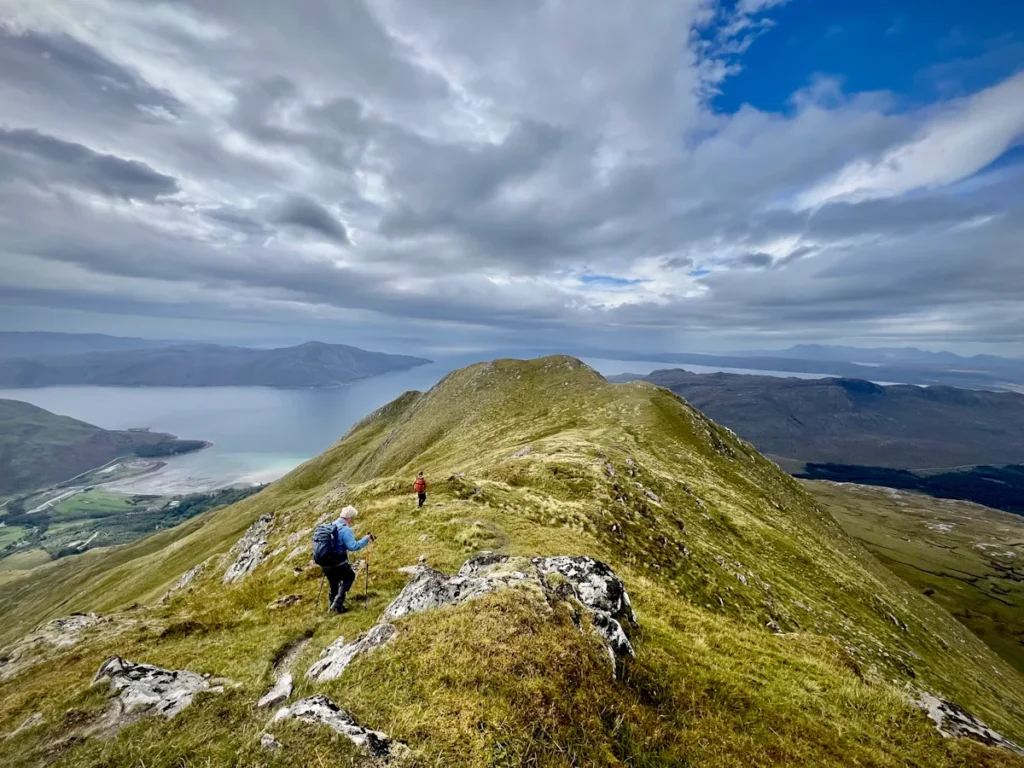
Scotland’s Knoydart Peninsula is billed as “Britain’s last wilderness.” That’s not marketing speak: There are no roads connecting it to the mainland. You can’t drive here, you can’t fly here, you can’t even easily leave once you arrive. At 86 square miles, it’s roughly the size of Edinburgh, but it has 120 people. That’s not a typo. 120 people. The only way in is via ferry or boat, and once you’re there, you’re committed.
Knoydart is where I found myself on a hiking trip with Wilderness Scotland. Every day for eight days, my small group and I — nine travelers, all varying ages and nationalities — would venture out into the raw Scottish wilderness, skirting lochs and climbing moors and hills, fighting through the bracken, huffing through peat and heather, returning to our perfect little inn for a well-deserved home-cooked meal. We traveled slowly, mindfully. We basically time-traveled.

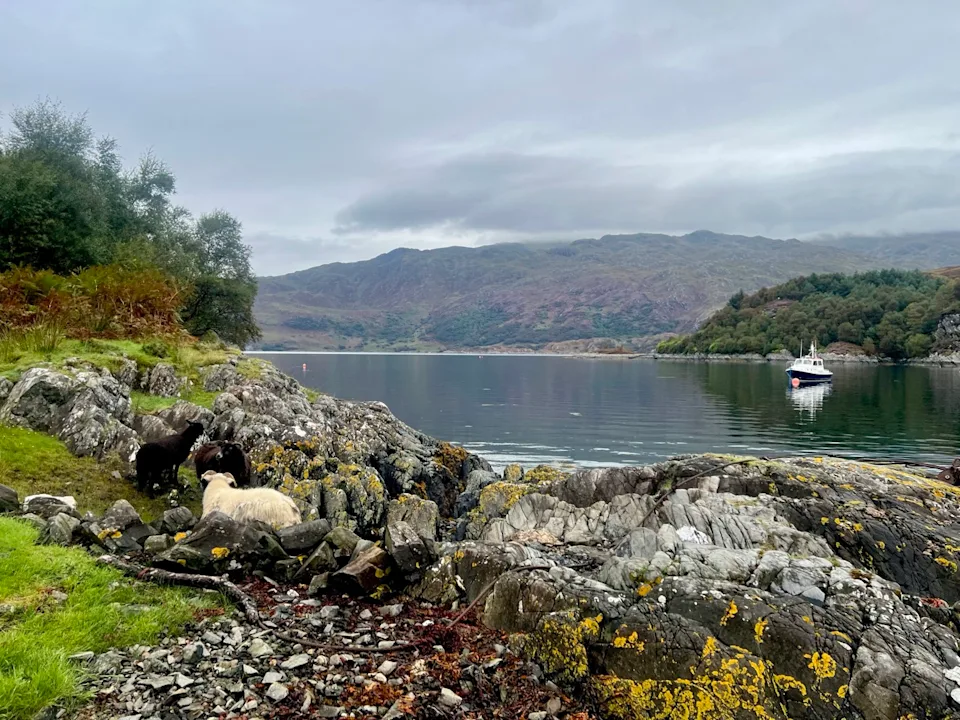
Apart from the sheer beauty of it all, it was the antithesis of Instagram travel. There’s no hopping between picture-perfect cafes. No quick sunset shot before moving on to the next location. We hiked some 10 miles a day through terrain that’s often off-trail — no well-manicured paths, no strategic photo platforms, no strict off-trail regulations. Cell service comes and goes, but we didn’t want it, and we definitely didn’t need it. We were there to be present, to travel slowly, sustainably, to soak it all in.
It was one of the best trips I’ve ever taken, and I’m a travel writer who does this for a living. To explore the Knoydart Peninsula, Britain’s last wilderness, here’s how — even if you don’t care to break a sweat.
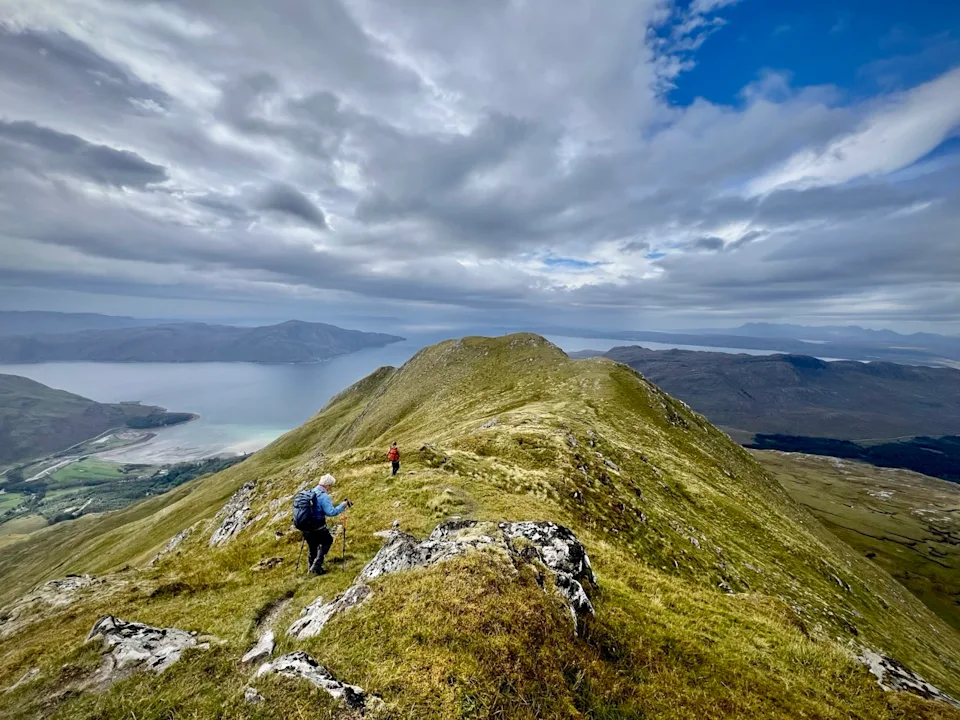
Knoydart Peninsula: walking and hiking
The best way to see Knoydart? Walk it. And unless you have a penchant for travel logistics, reading maps, and potentially getting lost, you’re best off with a local tour operator like Wilderness Scotland.
I landed in Glasgow and took the train to Mallaig, where I met my guide, Dave, outside the train station. The 9-person crew quickly piled up, and Dave escorted us to our ride: a small boat owned by Louise and David Costello, the proprietors of Doune Bay Lodge. We got on the Atlantic, tucked into Loch Hourn, watched dolphins follow our boat(!), and headed to our accommodations — in a tiny, remote harbor with just four off-grid houses.
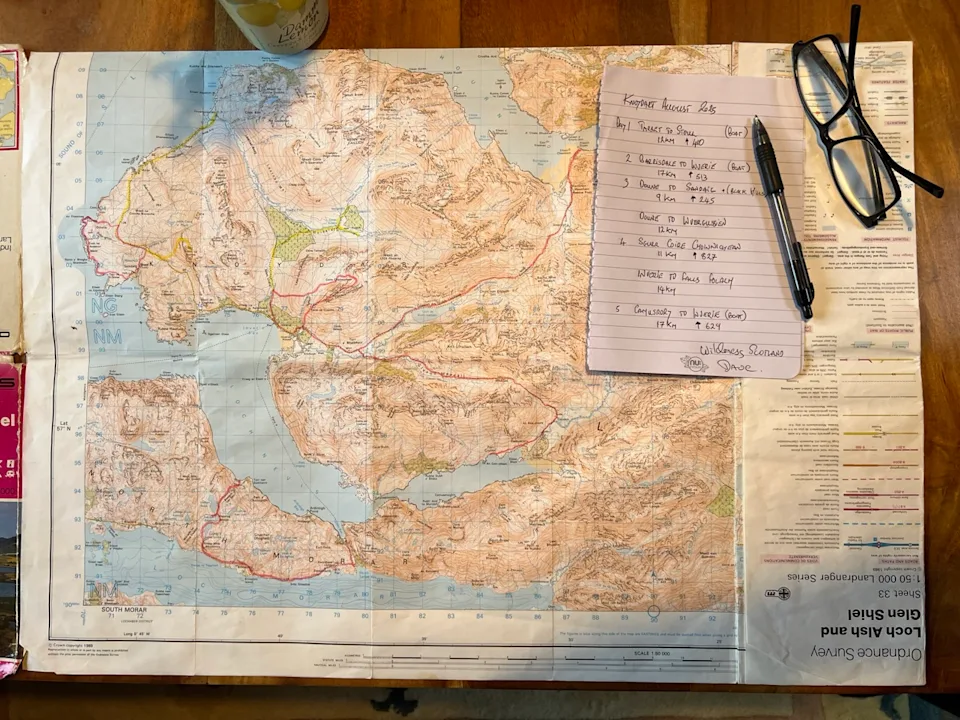
We sat down to dinner, and Dave busted out his topographical map — a routine we would begin to relish by night four. Across the next week, we would watch the weather and scout out paths worth taking, from ancient Viking harbors to high mountains, including up Sgurr Coire Choinnichean, pictured above. Days would be anywhere from 5 to 15 miles, and we would never see more than a few other hikers on each trek. The group was of varied fitness levels, to be sure, but everyone was allowed a pace they felt was comfortable, and by the end of each day, we were back, gratefully so, at the dinner table. A neighbor, Britta, cooked us up some of the finest food I’ve ever had — melt-in-your-mouth lasagnas, curries, pies, salads, oysters…in a town of 6 people. (If someone could get me Britta’s number, I would like a word.)
By the end of the week, it felt like a deep dive into finding community, being resourceful, and living locally and sustainably. It was the antithesis of life back home — of content creation, of hustling, of processed food, traffic, and too-bright headlights. It was an accidental detox, and I’d do it again, even if the blisters were permanent.

Knoydart Peninsula: Ferries, boats, cars, kayaks — and pints
Fortunately or unfortunately, there is one spot that’s set to put the Knoydart Peninsula on the map: the Old Forge Pub, in Inverie. It’s become sort of a cult phenomenon for in-the-know travelers, and our group walked and hiked to it twice — both times, it eventually got packed. It’s known as Britain’s most remote pub, though I suspect it won’t stay that way for long.
From Mallaig, a train ride from Glasgow, you can hop the ferry to Inverie and grab a pint and a seat at the Old Forge. (Inverie is working on some lodging options, too, if you want to make this your destination.) Paths and small roads — locals have gotten a handful of cars onto the peninsula, though those cars can’t actually leave — wind in and around Inverie, so you can get around if you hitch a ride. You could also charter a boat, if you can figure out who to rub elbows with, sea captain-wise (you can also click the above ferry link and check out the private services). If the weather cooperates, know that you could wind up on the popular and nearby Isle of Skye or Isle of Eigg, too.
You could also mix things up with a little kayaking. Water runs through and around Knoydart like a maze, with options in nearly every direction.

Knoydart Peninsula: The beautiful, remote payoff
In a world where we’ve been trained to travel for the story we’ll tell online and to our friends, Knoydart forces a different question: What if you traveled somewhere just to be there? No WiFi strong enough for posting. No attractions designed for viral moments (beyond sheer, epic beauty, of course). Just wilderness, walking, food, and the radical act of staying put.
This is what we’ve lost in the age of Instagram travel — and what Knoydart gives back.