


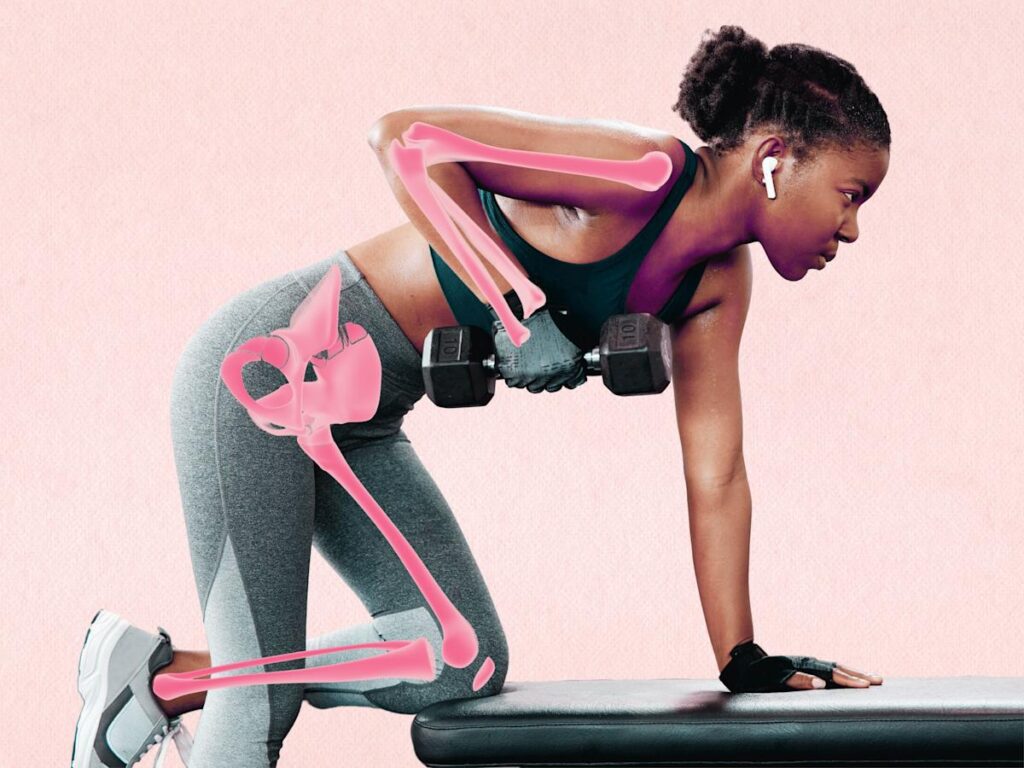
Bone density might not be the first thing you think about when you hit the gym, but it’s one of the most important markers of long-term health. It plays a major role in how strong your bones are, and how well they can resist fractures as you age. According to research, bone density peaks around age 30 for women, and starts to decline after menopause—up to 20% in the five to seven years after menopause.
“Bone density is an important indicator of how likely bones are to break,” Susan Bukata, MD, professor and chair of orthopedics at UC San Diego Health, and advisor for Solaria Bio, tells SELF. “When you have osteoporosis, your bones become brittle and porous, making them more likely to fracture from minor falls.” Bone density is only half of the equation, because bone quality also declines overtime, Dr. Bukata explains. “We become more dependent upon bone density to maintain the strength of our bones.”
That shift is exactly why your workout routine matters more than you might think.
How exercise builds stronger bones
Bones are living tissue, constantly responding to the stress we place on them. “Exercise provides regular ‘stress’ to the bones and stimulates those cells to respond,” Dr. Bukata explains. “Those cells then put out signals to your body to make more bone in areas of stress, to strengthen the bone, and to repair bones if there are areas of micro-damage.”
In other words, movement isn’t just maintenance—it’s a signal for your bones to rebuild.
That’s especially true when it comes to impact and resistance. “Bone and cartilage are a use-it-or-lose-it situation,” Jojo Kelly, CPT, and head coach at Tone House, tells SELF. “Contrary to what many people believe, running and jumping actually promote healthy bones and cartilage.” That checks off cardio.
The most recent Physical Activity Guidelines for Americans recommend at least 150 minutes of moderate-intensity cardio or 75 minutes of vigorous-intensity cardio (you can also do a combo of the two) each week for general health benefits.
“The other way we want to stimulate bone growth is through resistance-training,” Kelly says. “During a lift, the muscle connected to its tendon pulls on where it attaches to the bone causing the bone to react and remodel.”
The key elements of a bone-building routine
To support bone density, your routine should include two pillars: weight-bearing (impact) activity and strength training. Dr. Bukata recommends aiming for at least 30 minutes of weight-bearing movement each day—walking, running, dancing, or even climbing stairs all count. “The key is to get up on your feet and move for those 30 minutes,” she says, noting that consistency matters more than doing it all at once.
Then, layer in resistance training at least two to three times per week. Kelly suggests gradually working toward heavier loads. “Around 70 to 85% of your one rep max for three to eight reps is a good range for bone stimulus,” she says, or about an eight to nine out of 10 effort level. If you’re newer to this style of training, start small and build up. The goal isn’t perfection—it’s progression.
Can you prevent bone loss?
While bone loss is a natural part of aging, there’s a lot you can do to slow it down.
“We build bone mass and bone density until we are in our late 20s,” Dr. Bukata says, making early movement habits especially impactful. Later down the line, particularly during menopause, when estrogen drops—bone loss can accelerate. “Exercise, maintaining a healthy weight and lifestyle can help to slow this loss,” she says.
A workout designed with your bones in mind
To help you put this into practice, we’ve included a bone-strengthening workout, created by Kelly, that combines both impact and resistance training—two of the most effective ways to stimulate bone growth and slow down bone loss.
“If you’re someone who’s new to lifting and high impact activities, start small and work up to heavier weights and higher impact workouts,” Kelly says.
The exact exercises matter less than the intention: applying consistent, varied stress to your skeleton. As Dr. Bukata puts it, “It is really about loading your bones repeatedly that gives the signal the cells need to stimulate bone formation and repair.”
The workout
What you need: Two sets of dumbbells—one heavier and one lighter—that feel medium-to-hard for your moves, and a resistance band. You’ll use the heavier set of weights for the exercises that target your bigger muscle groups—like the squats, deadlifts, and chest press. You’ll use the resistance band in your warm-up. Have a lighter set of dumbbells at-the-ready if you feel like the weight is too heavy or your form is falling apart.
Warm-up
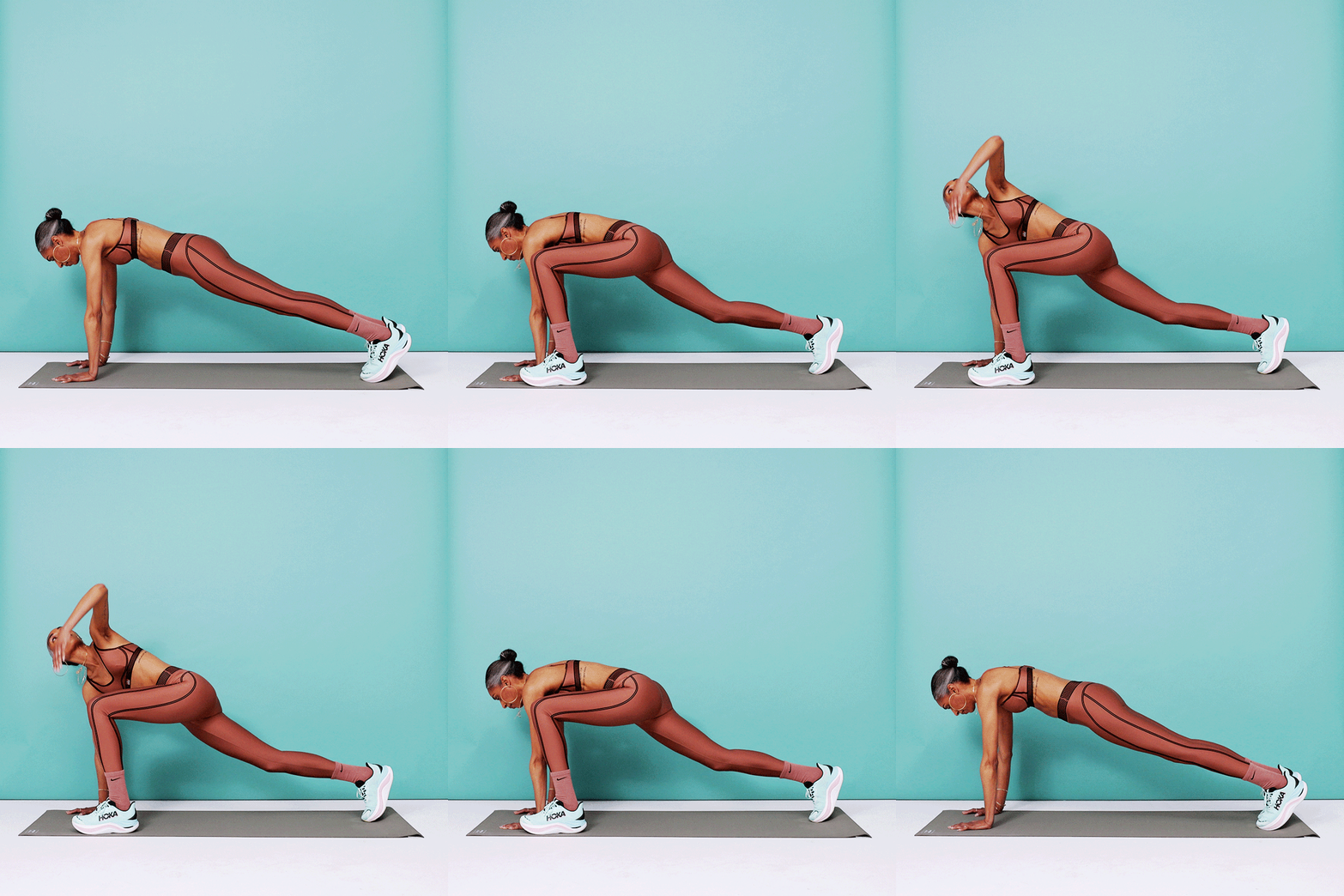
World’s Greatest Stretch
“This is to open up the hips, hamstrings, thoracic spine, and glutes,” Kelly says.

Katie Thompson
-
Start standing, then step your right foot forward into a deep lunge. Place both hands on the floor inside your right foot.
-
Lower your left knee to the ground (or keep it lifted for more intensity).
-
Bring your right elbow down toward the inside of your right foot, feeling a stretch in your hips.
-
Then rotate your torso and reach your right arm up toward the ceiling, following your hand with your eyes.
-
Bring your hand back down and repeat for 30 seconds on both sides.
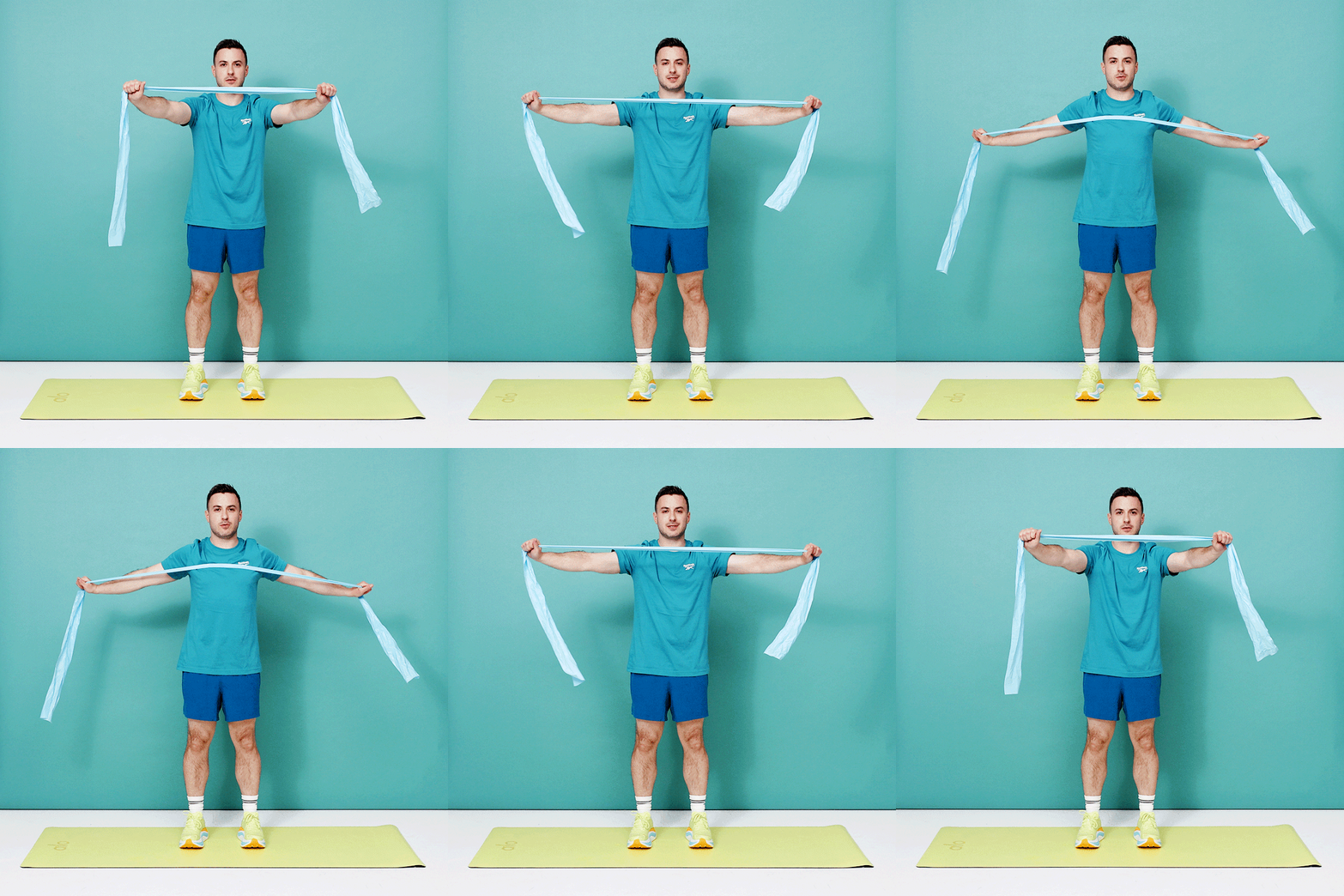
Banded Pull-Apart
This move is great for shoulder mobility and overall range of motion, Kelly says.
-
Stand tall holding a resistance band with both hands, arms extended straight out in front of you at shoulder height, palms facing down.
-
Keep your arms mostly straight as you pull the band apart, moving your hands out to your sides.
-
Focus on squeezing your shoulder blades together as the band reaches your chest.
-
Slowly return to the starting position with control.
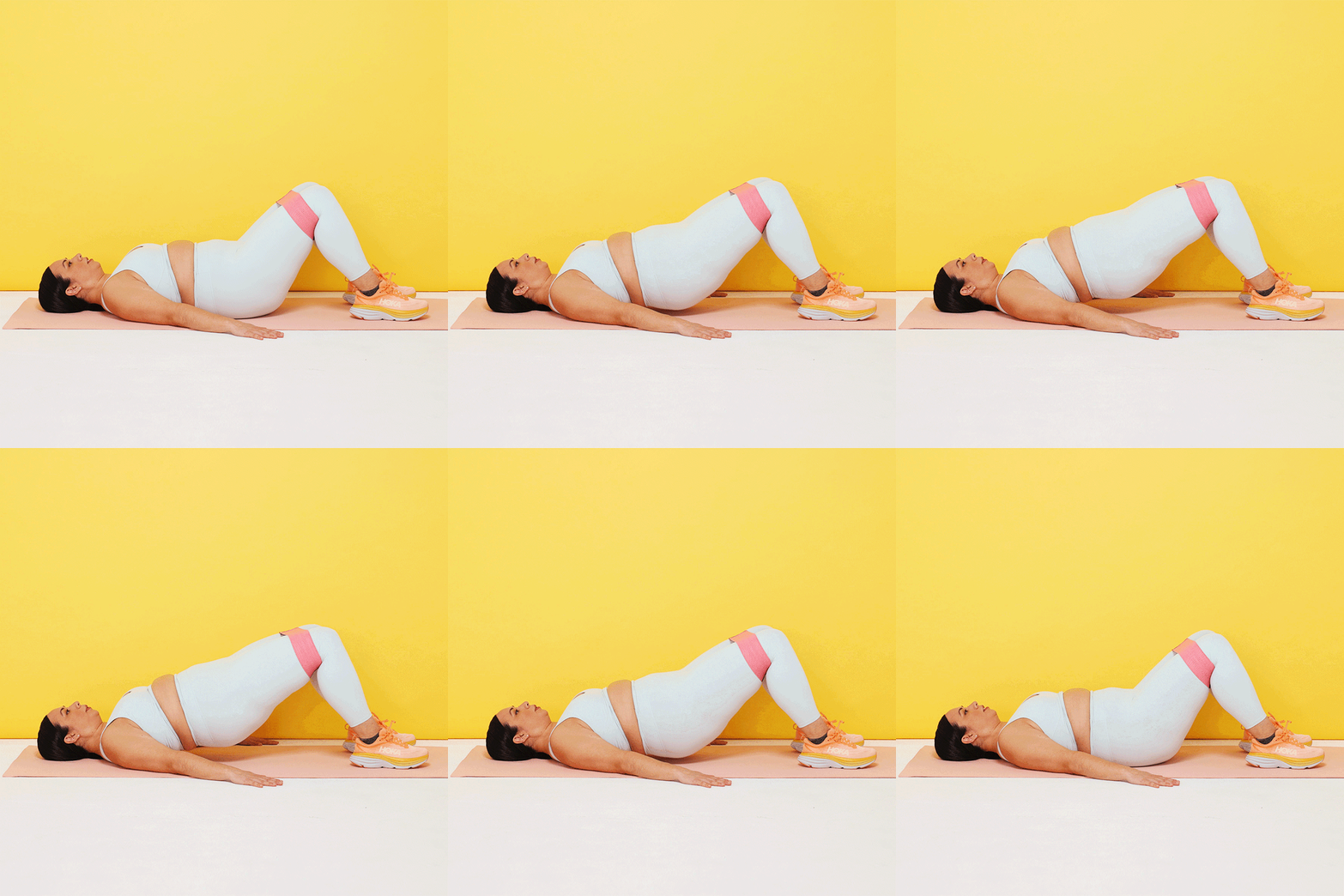
Banded Glute Bridge
A banded glute bridge activates your glutes and boosts hip stability.
Katie Thompson
-
Lie flat on your back with your knees bent and feet flat on the floor, hip-width apart. Place a resistance band just above your knees.
-
Rest your arms by your sides and engage your core.
-
Press through your heels to lift your hips toward the ceiling, forming a straight line from shoulders to knees.
-
As you lift, gently press your knees outward against the band to activate your glutes.
-
Pause at the top, then slowly lower your hips back down with control.
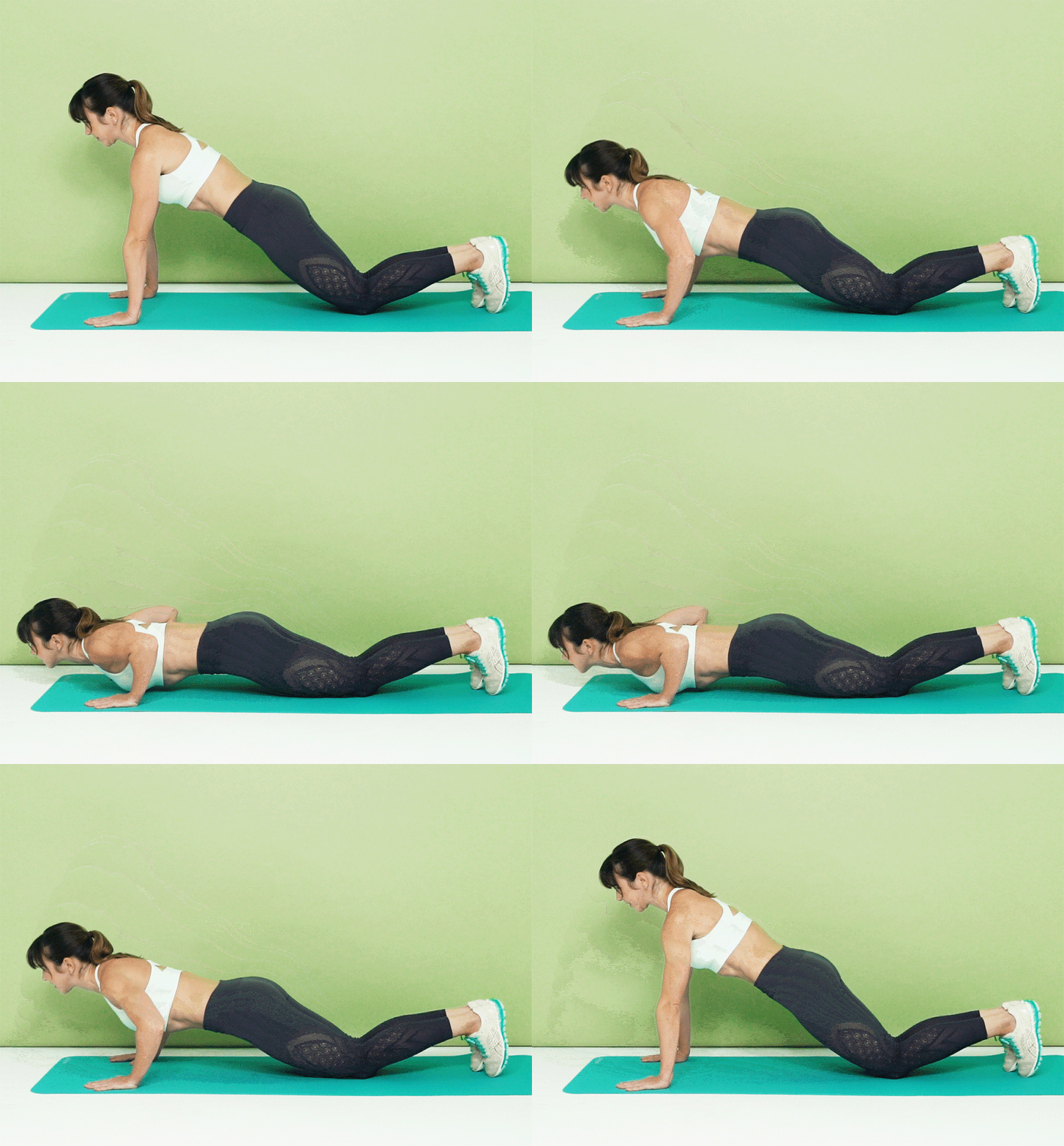
Push-Up on Knees
These are for additional shoulder stability and to prep your shoulders for heavy pressing, Kelly explains.

Katie Thompson
-
Start in a modified plank position with your knees on the floor, hands placed slightly wider than shoulder-width apart, and your body forming a straight line from head to knees.
-
Engage your core and keep your hips in line with your shoulders (avoid rounding your back).
-
Bend your elbows to lower your chest toward the floor, keeping your elbows at about a 45-degree angle from your body.
-
Press through your palms to push yourself back up to the starting position.
Set #1: Compound Movements
Compound movements are exercises that work multiple muscle groups and joints at the same time, Kelly says. Because they recruit more muscles and allow you to move heavier loads, they’re especially effective for building strength, improving coordination, and placing the kind of stress on your bones that helps support bone density.
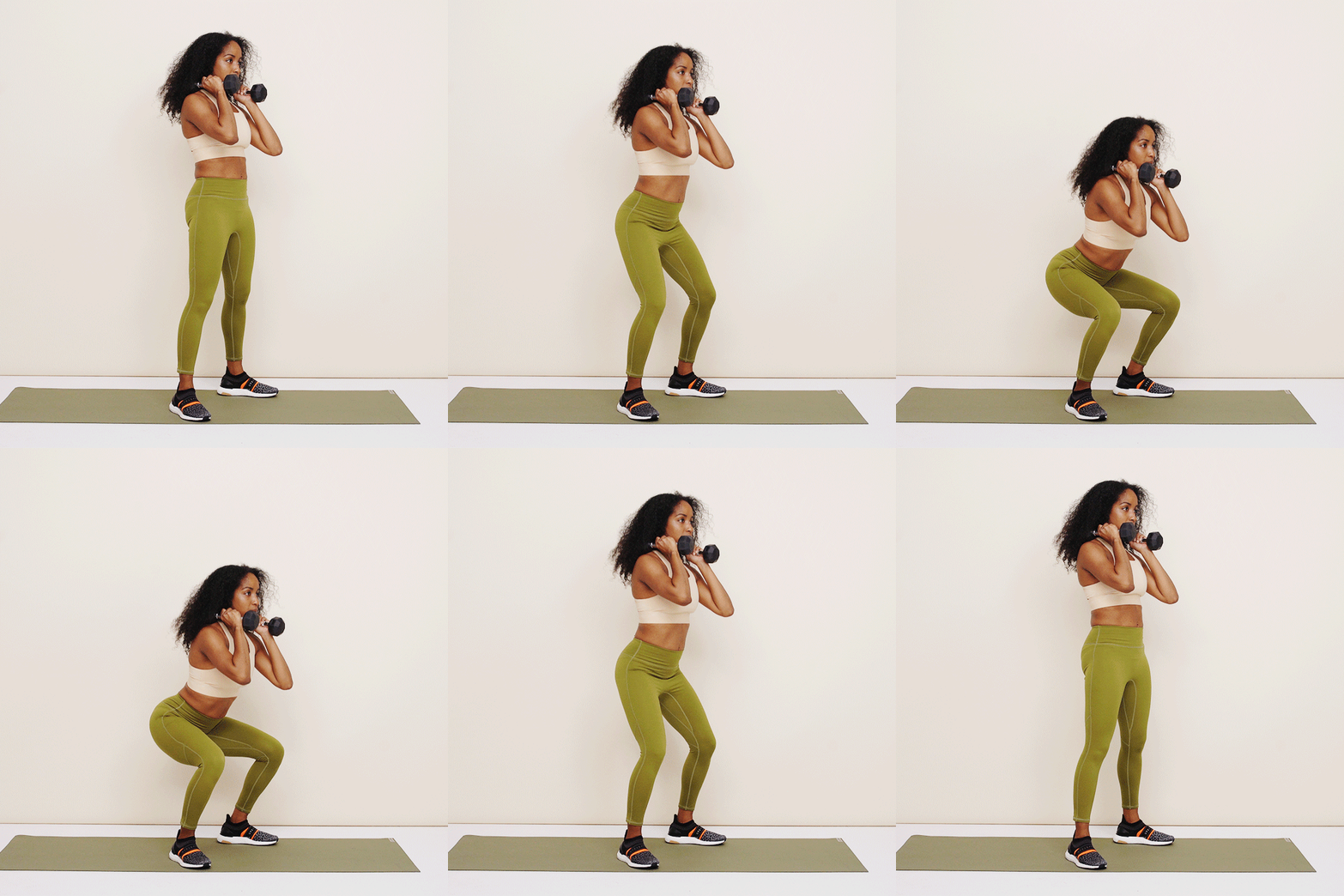
Front Squat
Front squats are a compound lower-body exercise that targets your quads and core while encouraging an upright posture, helping build strength and stability that supports both movement and bone health.

Katie Thompson
-
Stand with your feet about shoulder-width apart, holding a heavy dumbbell in each hand at shoulder height, palms facing in (a front rack position).
-
Keep your chest up and elbows slightly lifted as you brace your core.
-
Push your hips back and bend your knees to lower into a squat, keeping the weights steady at your shoulders.
-
Go as low as comfortable (aim for thighs parallel to the floor), then press through your heels to stand back up.
-
Complete three to eight reps. If the weight is too heavy, pick up your lighter option.
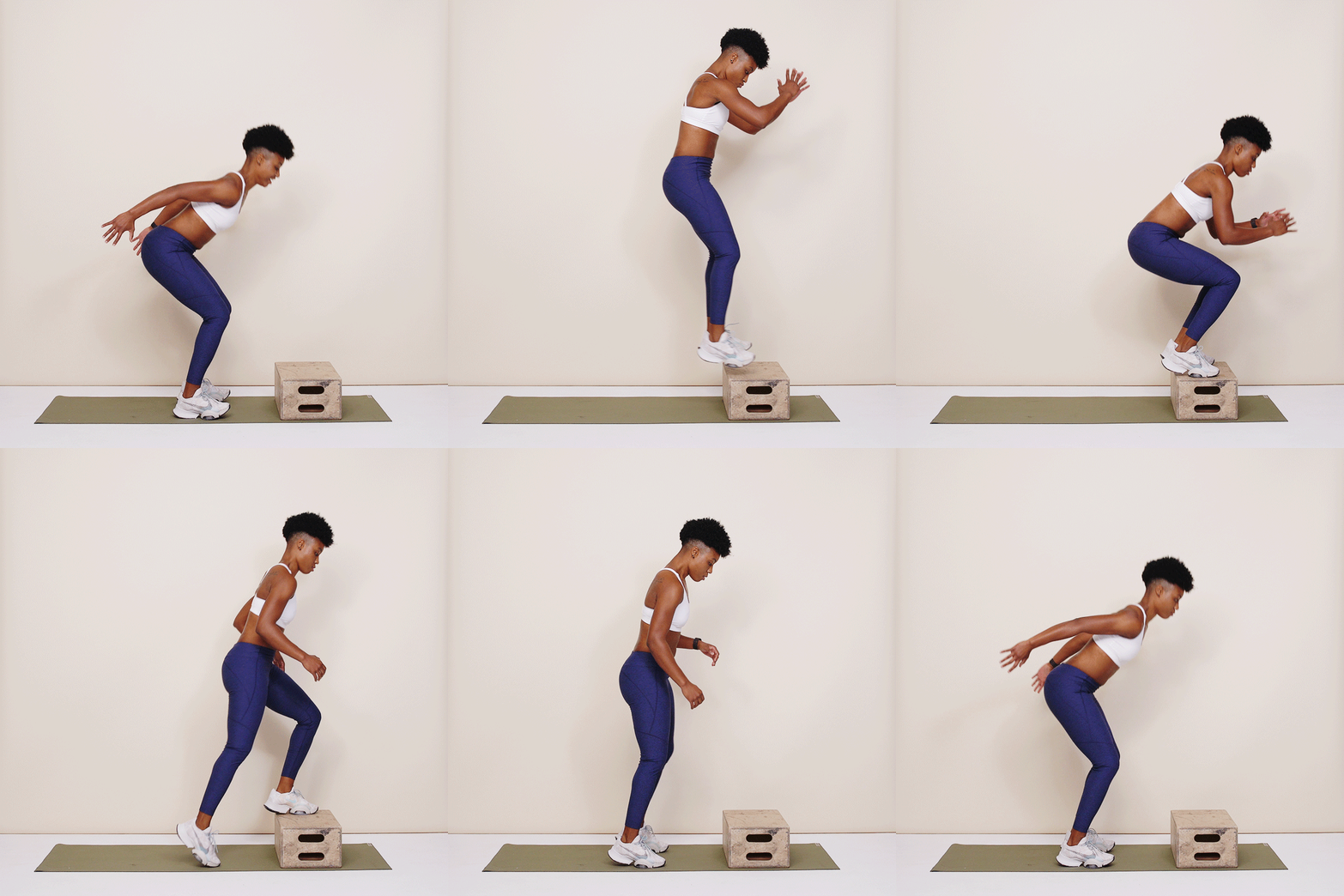
Box Jumps
Box jumps are a high-impact plyometric exercise that builds explosive power while placing beneficial stress on your bones, helping stimulate bone growth and improve overall lower-body strength.
Katie Thompson
-
Stand facing a sturdy, secure box or platform with feet shoulder-width apart.
-
Bend your knees slightly and swing your arms back, then explosively jump onto the box, landing softly on the balls of your feet.
-
Stand tall at the top, then step or lightly hop back down to the starting position.
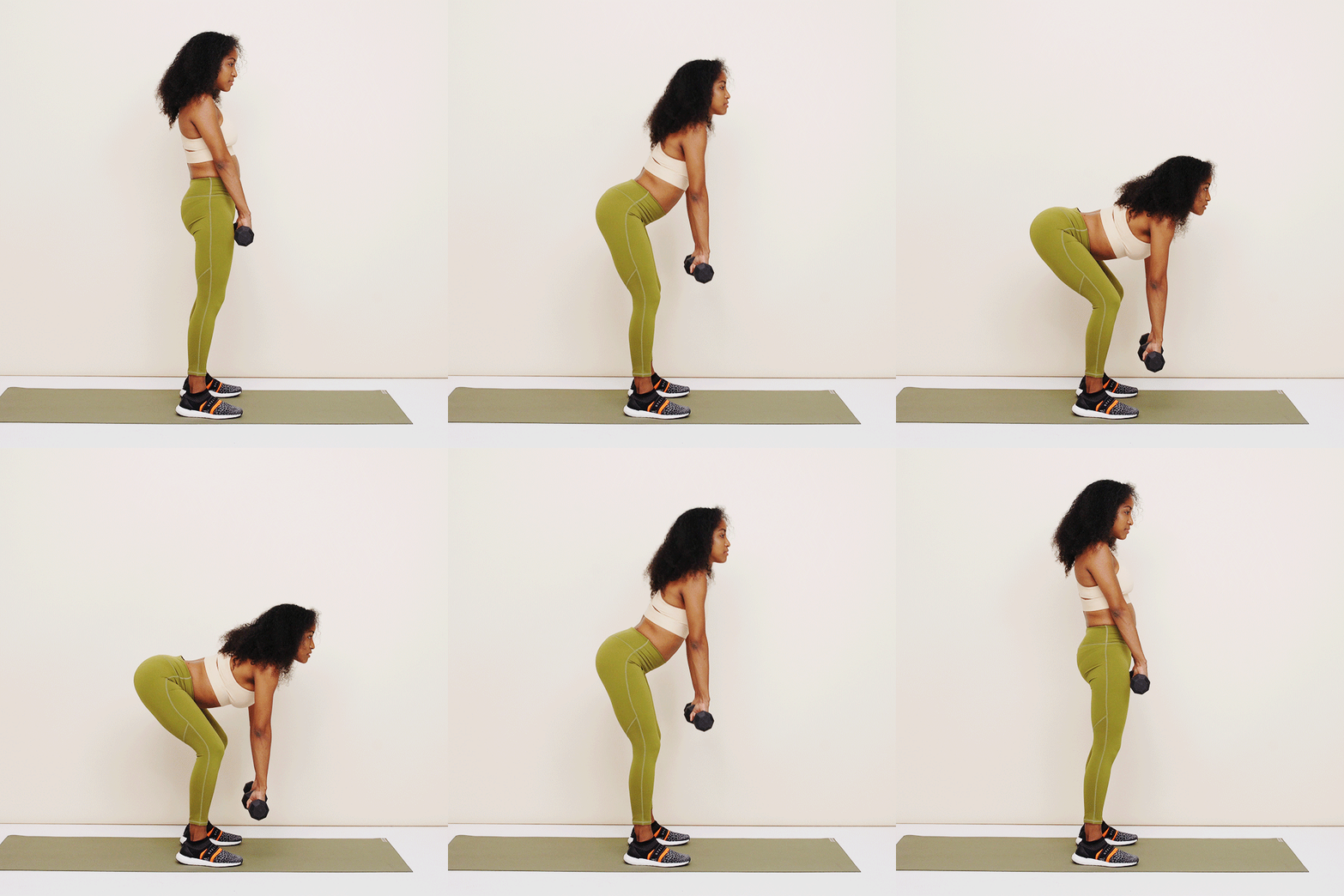
Deadlifts
Dumbbell deadlifts are a compound hinge exercise that strengthens your glutes, hamstrings, and core while applying load through your hips and spine.
Katie Thompson
-
Stand with your feet hip-width apart, holding a heavy set of dumbbells over the middle of your feet. Bend at your hips and knees to grip the dumbbells just outside your legs.
-
Keep your back flat, chest lifted, and core engaged as you drive through your heels to stand up, extending your hips and knees fully.
-
Pause at the top, then hinge at your hips and bend your knees slightly to lower the weight back to the floor with control.
-
Complete three to eight reps. If the weight is too heavy, pick up your lighter option.
Set #2: Unilateral Movements
Unilateral movements are exercises that train one side of your body at a time—like lunges, single-leg deadlifts, or single-arm presses. They help correct muscle imbalances, improve stability and coordination, and ensure each side is pulling its weight, which can reduce injury risk and build more balanced strength.
Split Squats
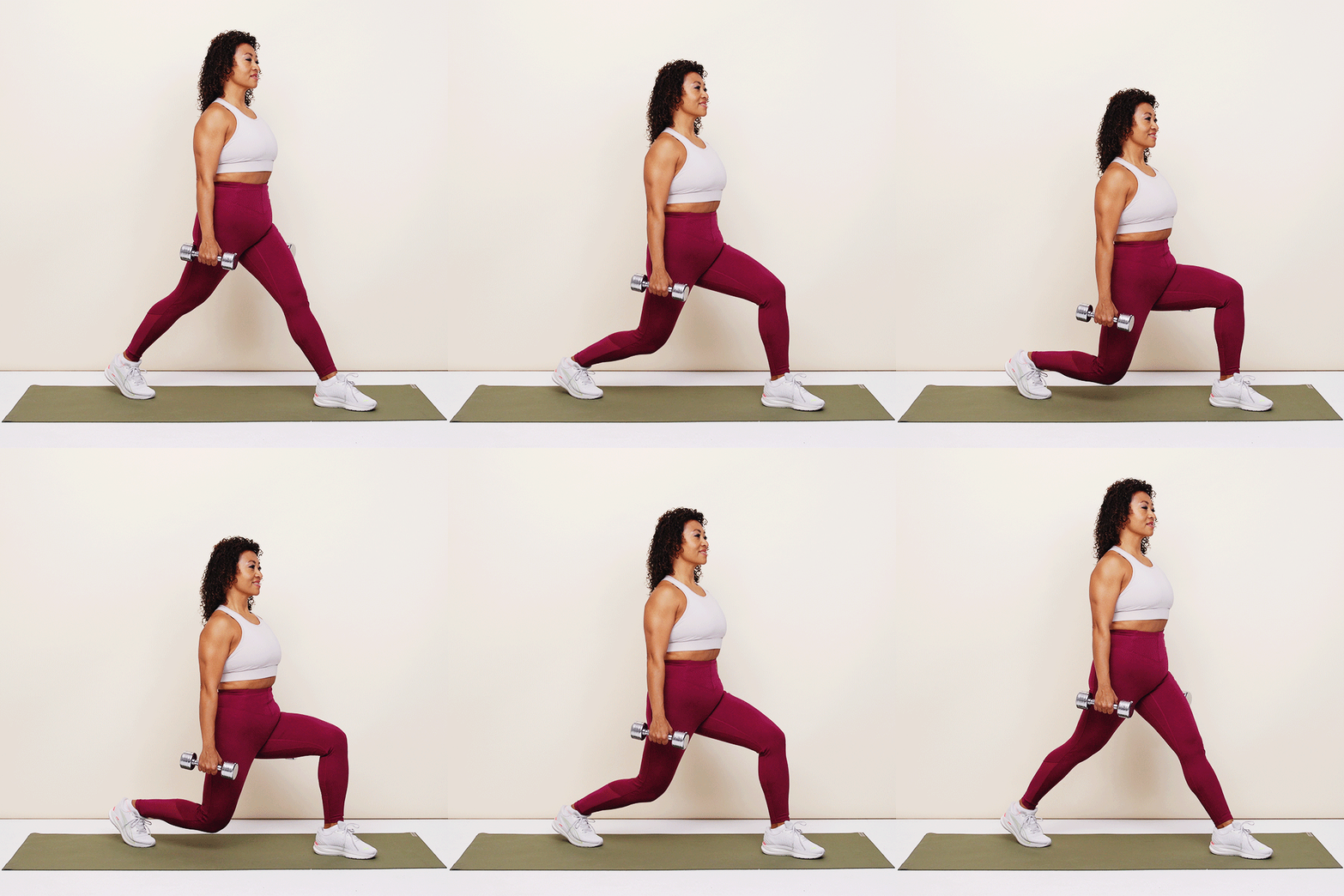
Dumbbell split squats are a unilateral lower-body exercise that targets your quads and glutes while improving balance and stability.
Katie Thompson
-
Stand with one foot forward and the other foot back, about two to three feet apart, keeping both feet pointing forward.
-
Lower your back knee toward the floor by bending both knees, keeping your front shin vertical and your chest upright.
-
Press through the front heel to return to the starting position.
-
Complete five to 10 reps on each side.
Single-Arm Chest Press
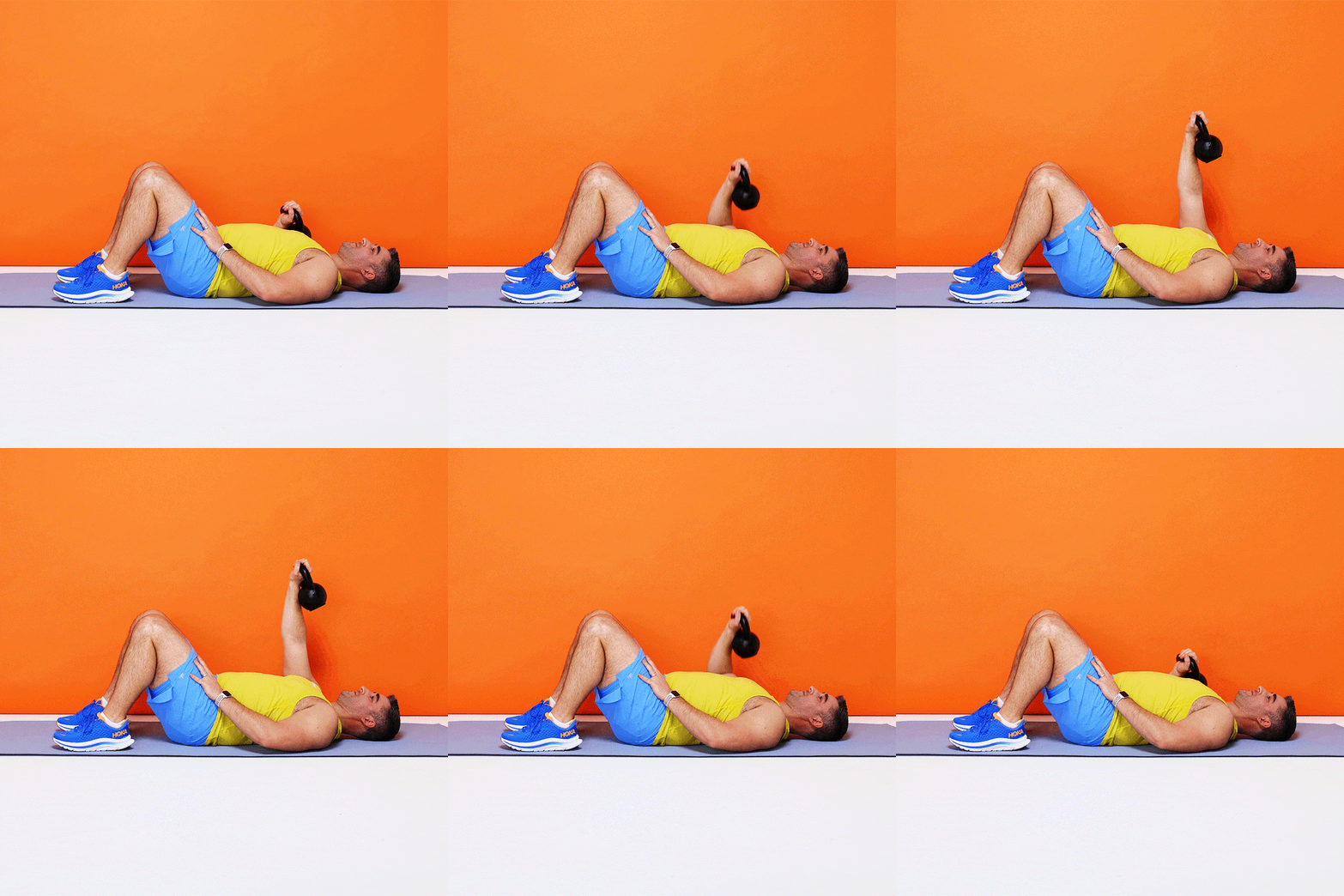
The single-arm chest press strengthens your chest, shoulders, and triceps while engaging your core for stability, making it a powerful move for balanced upper-body strength and bone support.
Katie Thompson
-
Lie on a bench or the floor with a dumbbell in one hand, arm extended above your chest, and the other arm resting at your side.
-
Engage your core and slowly lower the dumbbell toward your chest, keeping your elbow at about a 45-degree angle from your torso.
-
Press the dumbbell back up to the starting position, fully extending your arm without locking the elbow.
-
Complete five to 10 reps on each side.
Finisher
Farmer’s Carry
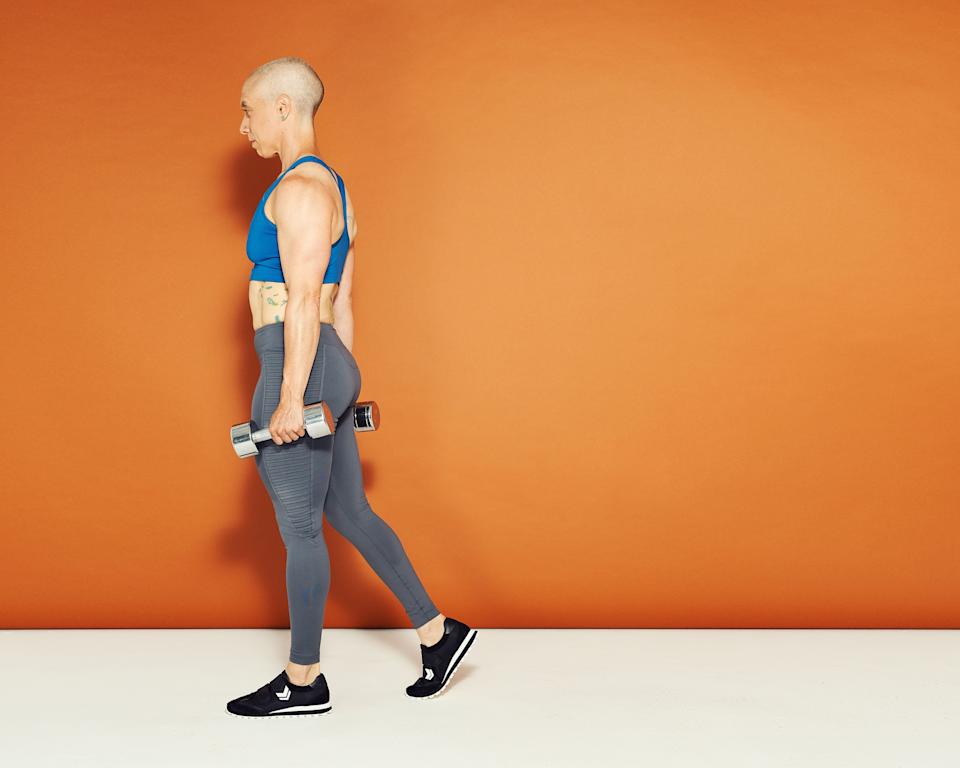
The farmer’s carry is a full-body strength and stability exercise that challenges your grip strength, core, and shoulders.

Katie Thompson
-
Stand tall holding a heavy dumbbell in each hand at your sides, palms facing your body.
-
Engage your core, keep your shoulders back and down, and walk forward at a controlled, steady pace.
-
Maintain an upright posture without leaning or swaying, keeping your gaze forward.
-
Continue for 30 seconds to one minute, then carefully set the weights down.
Bent-Over Row
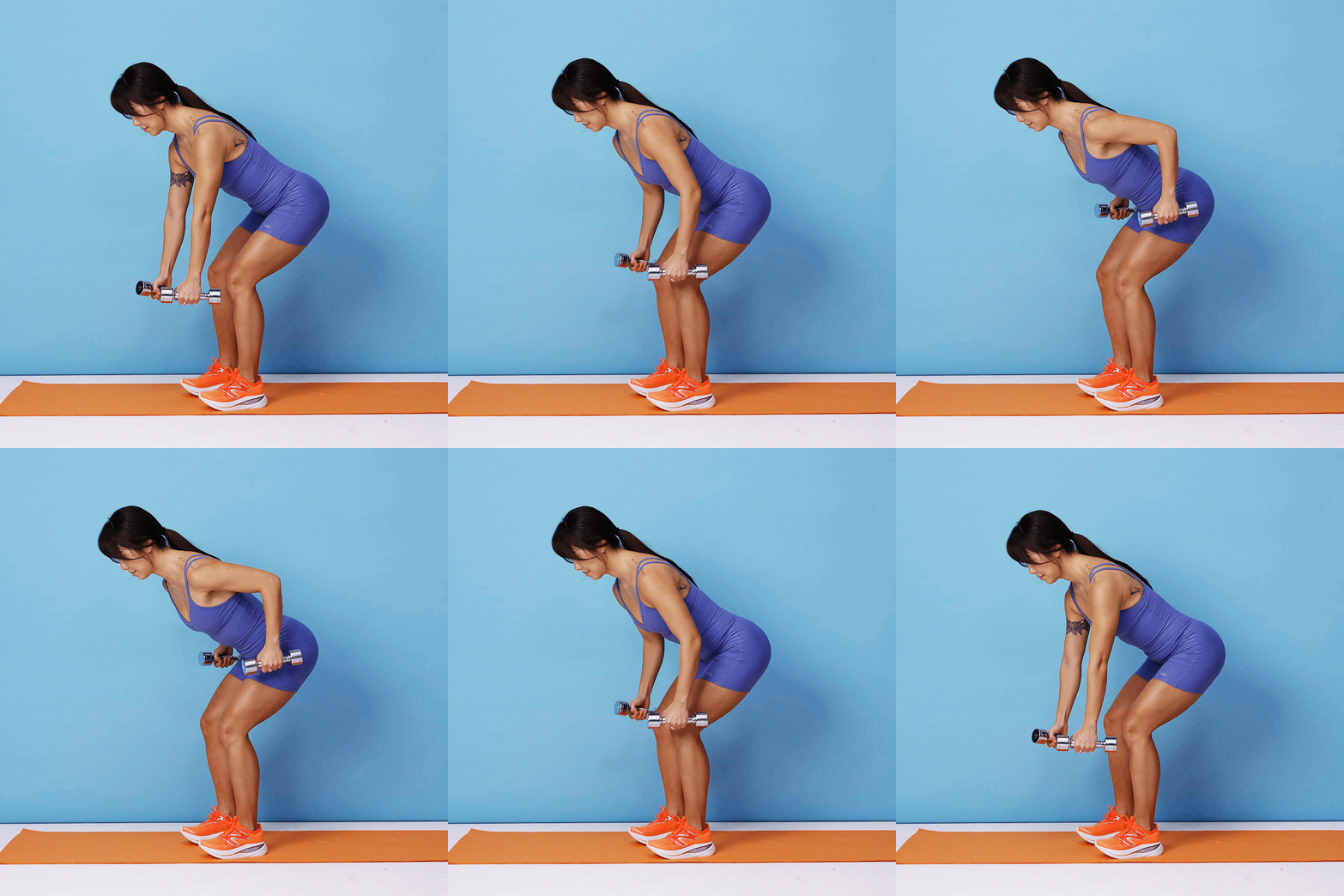
The bent-over row targets your upper back, lats, and rear shoulders while engaging your core, helping build strength and stability that supports posture and bone health.
Katie Thompson
-
Stand with your feet hip-width apart, holding a heavy dumbbell in each hand with palms facing your body.
-
Hinge forward at the hips, keeping your back flat and chest lifted, until your torso is almost parallel to the floor.
-
Pull the dumbbells toward your ribcage by driving your elbows straight back, squeezing your shoulder blades together at the top.
-
Slowly lower the dumbbells back down with control, maintaining a flat back throughout.
-
Complete as many reps as possible in 30 seconds.
Related:
Get more of SELF’s great fitness coverage delivered right to your inbox—for free.
Originally Appeared on Self