


When you buy through links on our articles, Future and its syndication partners may earn a commission.

Credit: Getty Images
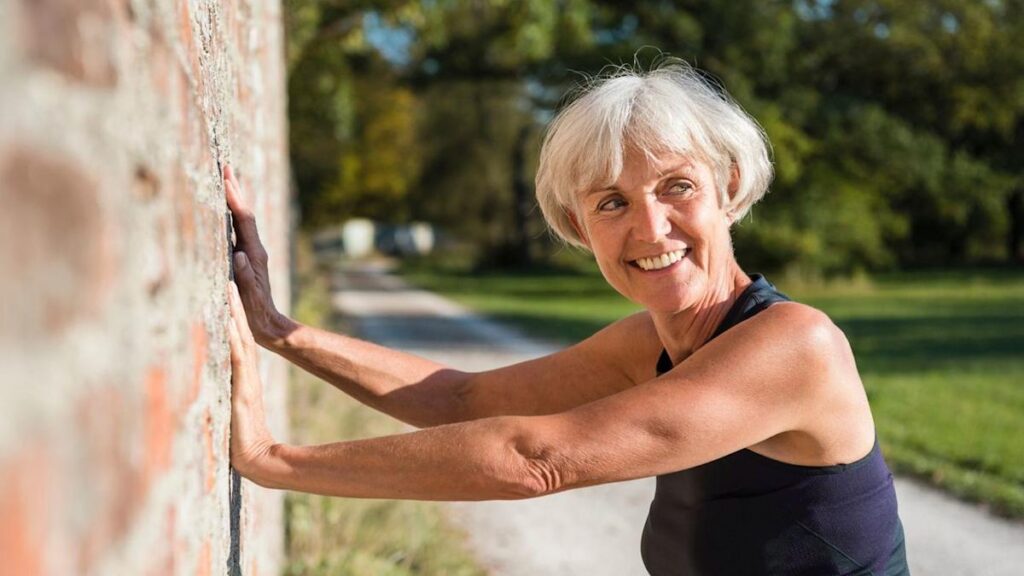
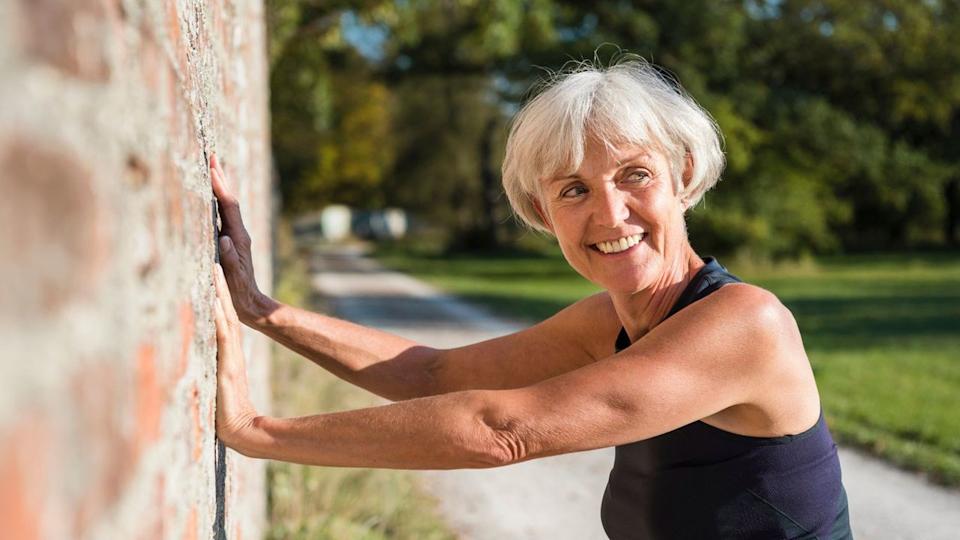
When I start working with a new senior client, the first exercise I introduce to them is the wall plank.
This simple exercise is great for strengthening the deepest muscles in our core, which are responsible for supporting the back and hips, maintaining proper posture, and stabilizing the entire body.
And because muscle mass, bone density and balance all diminish as we age, having good deep core strength is all the more important for preventing injuries and falls.
The wall plank is appropriate for all fitness levels, easy to modify or progress, and safe to do every day. As long as you have a section of bare wall and a few minutes to spare, you can give wall planks a try.
Check in with your doctor before starting any new activity. A certified trainer can provide form guidance and exercise modification, if needed.
How to do wall planks
Sets: 1-3 Time: 15-60sec
-
Stand facing a wall, position yourself about six inches away from it with your feet hip-width apart.
-
Lean forward and place your forearms against the wall, making sure your elbows, forearms and shoulders are aligned.
-
Your body should form a straight line from your head to your feet, don’t allow your hips to pop back or sink towards the wall.
-
Gently push the muscles in your midsection out to engage your core muscles and keep them braced throughout.
-
Hold for the desired length of time.
Start by holding the wall plank for 15 seconds, incrementally working your way up to 60 seconds over subsequent workouts. Beginners should aim to do one set of wall planks two to three times a week. Once you’ve built up the appropriate amount of strength, aim for two to three sets of wall planks, five to seven times a week.
Make it easier: If this exercise feels tough, modify by placing your hands against the wall instead of your elbows, or by placing your feet closer to the wall.
Make it harder: Make the exercise more challenging by walking your feet further away from the wall. Once you’re able to hold the wall plank for 60 seconds with good form, consider trying the plank on a lower elevated surface, like a chair or your bed.
Why wall planks are beneficial for seniors
Standard planks performed lying face down on a yoga mat are one of the best exercises to target the transverse abdominis, a deep-lying muscle in the core that stabilizes and supports your spine and pelvis.
Deep core strength is especially important for seniors, because age-related changes can jeopardize overall balance and stability.
Unfortunately, injuries or mobility issues can make it difficult for many seniors to do exercises on the floor. Wall planks are done standing upright instead, engaging the transverse abdominis in a similar way to standard planks.