

The night fell in South Luangwa National Park like a curtain. Our guide, Lams, cut the engine with a soft click, then the headlights, and our open-air Land Cruiser sank into the darkness. “They’re staging a hunt,” he whispered, barely audible. He was referring to a pride of 11 lions that lay just ahead. I slid forward, quite literally at the edge of my seat.
Somewhere in the blackout, the lions were closing in. A minute passed, then more. I barely blinked despite the pitch-black surroundings. Even the sky seemed to hold its breath—until a flicker of lightning illuminated the scene like a camera flash: lions fanned out, eyes locked on a cluster of impalas who stood frozen. We waited in silence for the next burst of light, and when it arrived, everything had shifted: the lions had inched closer, the impalas more alert. Then came a symphony of alarm calls. Lams turned on a muted red light—nearly invisible to animals to avoid disturbing their natural behavior—unveiling a new tableau: the lions pouncing forward, impalas scattering in a frantic spray. No kill.
The lions, defeated, pivoted toward another shape in the distance: giraffes. Lams—a master of the park’s every curve and corner and a fountain of animal knowledge—followed the pride with confidence. For a moment, the lions moved in step alongside our vehicle, no more than an arm’s length away. My chest hammered, but I couldn’t move. I felt myself shrink and grow at once: small in the animals’ land but profoundly connected to it. After roughly 30 minutes, there was another attempted ambush, another escape, the giraffes dissolving into the dark. A miss—yet nothing about it felt like a loss. South Luangwa National Park in Zambia is one of the world’s best places for a night game drive, and this was the theater I had traveled nearly 24 hours for.
Alisha Prakash/Travel + Leisure
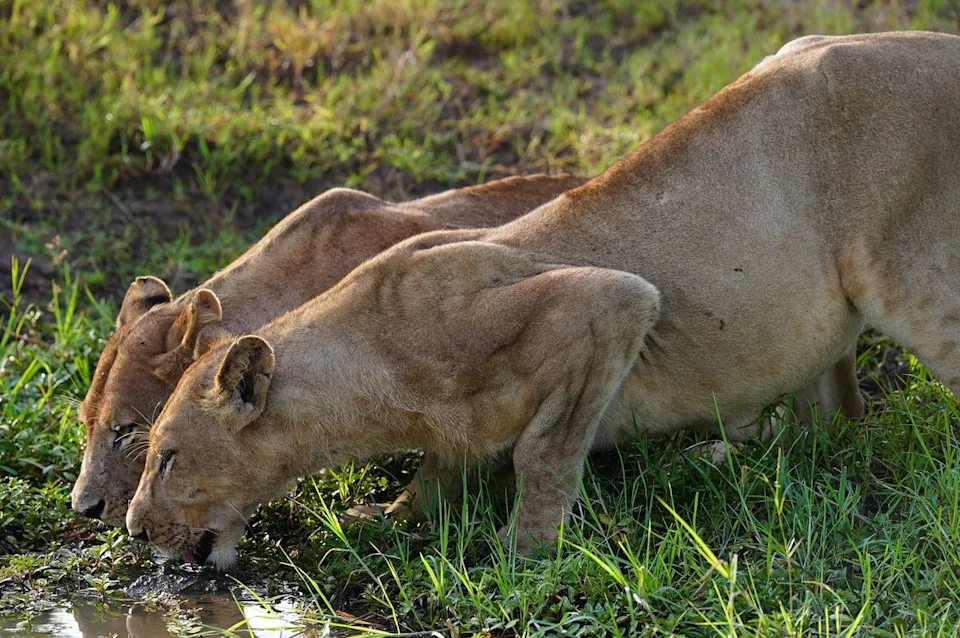
Two lionesses drinking from a watering hole.
High off the evening’s events, we began our journey back to Chichele Presidential, a lodge that opened in April 2025 under Chiawa Safaris. Returning to camp after time in the bush—day or night—feels like coming home. Awaiting us were warm smiles, cold towels, and enthusiastic questions about the day’s sightings. Even the initial arrival here begins not with a formal check-in, but a joyful song and dance performed by the staff.
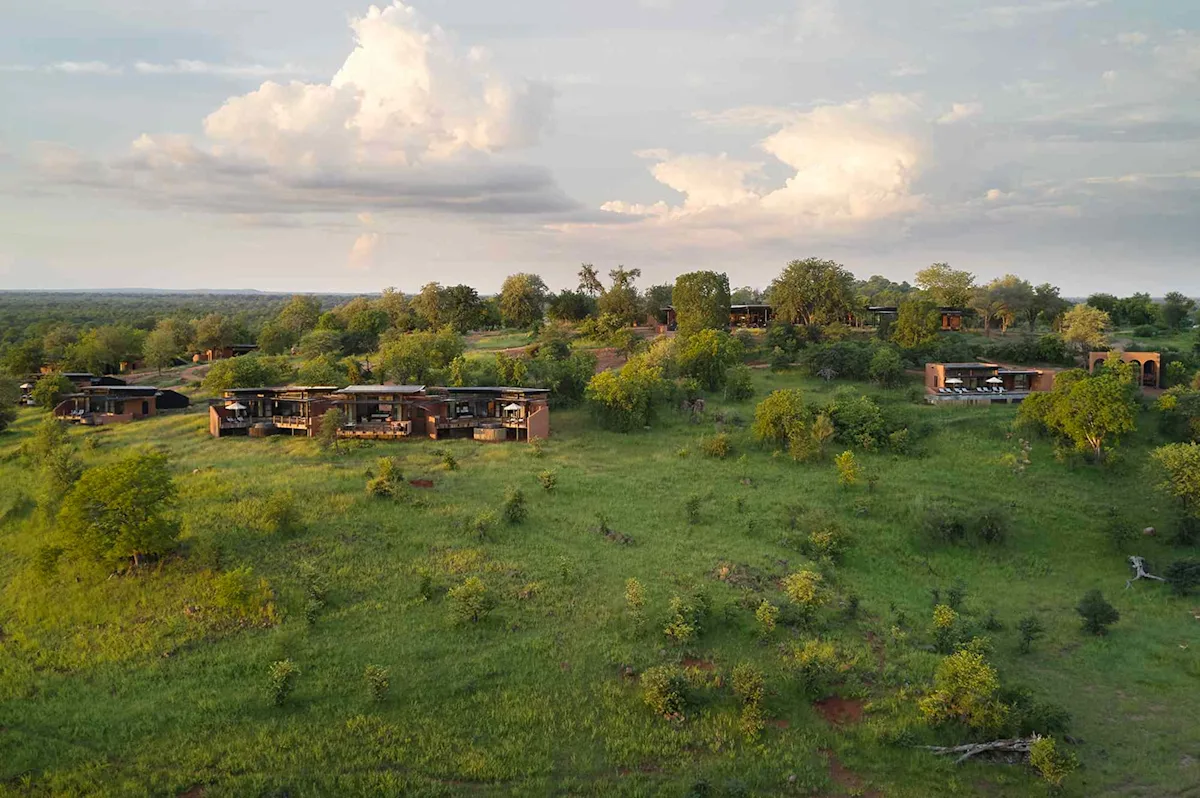
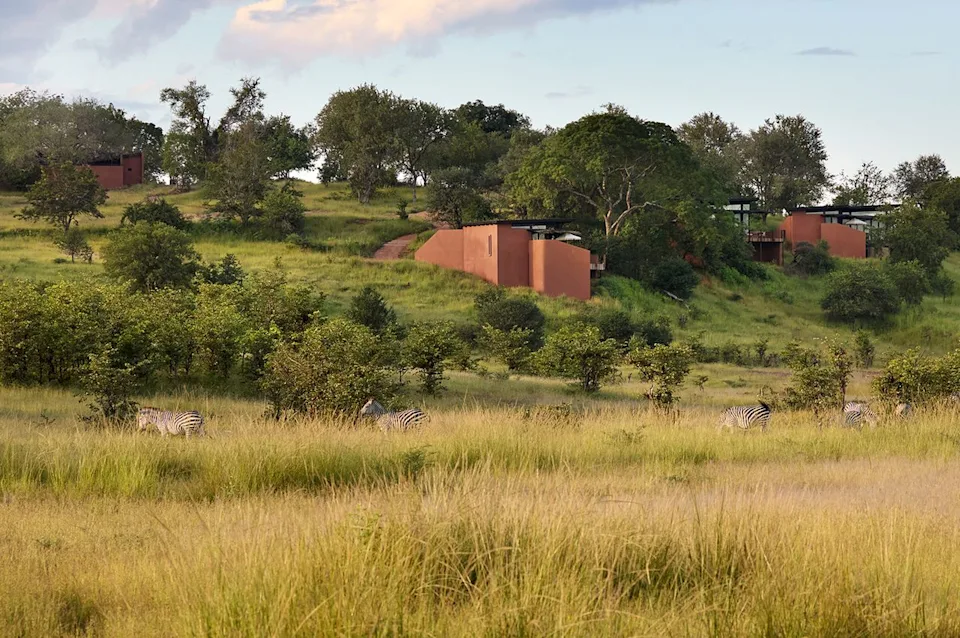
“It’s magic in the middle of nowhere,” Miriam, one staffer, told me. Part of that magic lies in Chichele Presidential’s story. The property was originally built in 1972 for Zambia’s first president, Dr. Kenneth Kaunda, who came here to rest and hold important meetings; Queen Elizabeth II is among the high-profile guests who have spent the night. It eventually fell into ruin, and after a seven-year closure, the lodge reopened this year, with a look that’s not only rooted in the landscape but also its legacy: a terra-cotta façade, massive glass doors that open to wide-screen views of valley below, interiors awash in earthy tones, and nods to its previous life—including a pair of wingback chairs used by Kaunda himself. Chichele, Miriam tells me over lunch, means “salt” in the local Chewa dialect. She gestures to the mineral-rich pans across the landscape. From its hilltop perch, I look out at the far-reaching, 360-degree views and see endless savanna, rivers, and floodplains. It’s the kind of unfiltered vantage point that makes me wonder repeatedly over my four-night stay how Zambia has managed to stay so wonderfully under the radar as a safari destination.
Alisha Prakash/Travel + Leisure
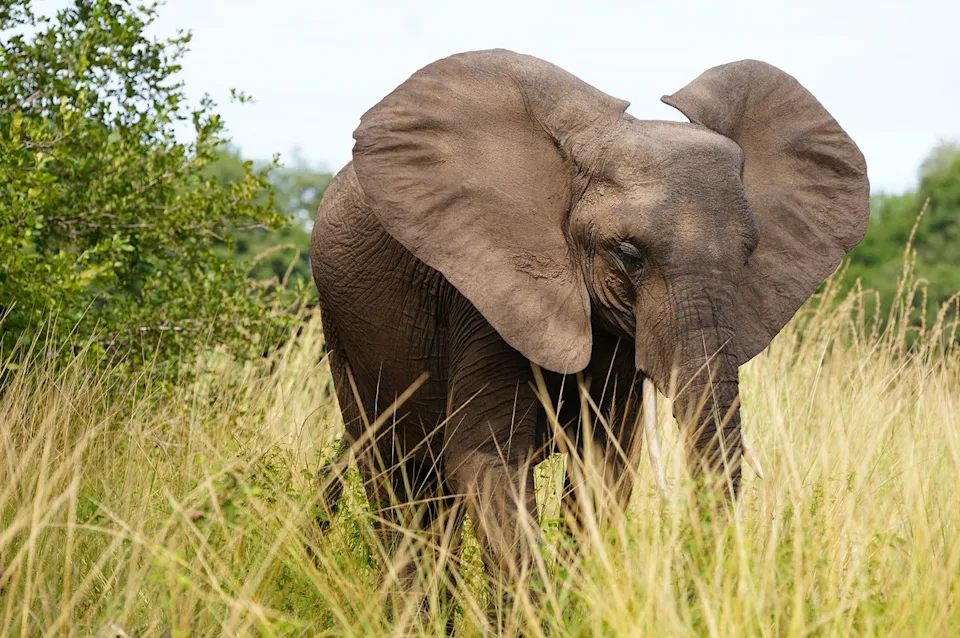
An African Elephant seen through the tall grass.
While the night drives here feel electric, mornings are equally magnificent. The land wakes gently. Days for guests begin before sunrise with a quiet knock on your suite door and a delivery of coffee or juice. By 5:30 a.m., I make my way up to the main lodge for breakfast. (Guests are encouraged to call for a ride as the property is open to the elements—and animals.) There’s a beautiful spread of fresh fruit, yogurt, granola, cereals, warm muffins, jams, pressed juices, coffee, tea, and if you wish, made-to-order eggs, bacon, and grilled tomatoes. The guides drift between tables, murmuring about the moans from wild dogs they overheard in the night. Excited about what’s to come, I take my last swig of coffee, climb into the Land Cruiser, and we venture out into the golden light.
We’ve driven no more than 10 minutes when a pack of copper-coated puku appears. The rest of the morning reveals an impressive cast, too: looming giraffes, including a newborn still trailing its umbilical cord; a herd of elephants fanning their ears; warthogs and waterbucks skittering through grass; wild dogs sprawled across patches of sun; baboons tumbling after each other; zebras grazing; and hippos grunting in the water. We even find the pride of lions from the night before swaggering toward the shade, their bellies full this time. “They were successful last night,” Lams tells me.
A safari in many ways is a lesson in timing—a balancing act between chance and instinct. Nothing is guaranteed, no two moments are ever the same, and much of the thrill lies in the anticipation—of not knowing if you’re in the right place at the right time.
Alisha Prakash/Travel + Leisure
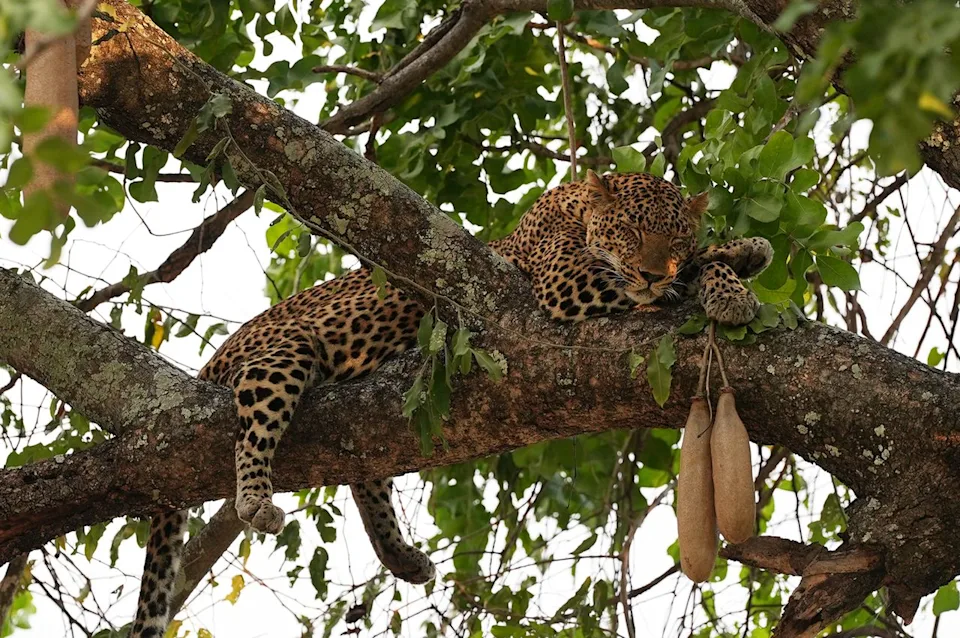
A leopard lounging in a tree in South Luangwa National Park.
It had been three days, and I had not yet witnessed a leopard. For all its reputation as the Valley of Leopards, the 3,500-square-mile South Luangwa had kept its most famous residents hidden. On my final game drive, Lams scanned the landscape carefully, and we had all but given up. We began our journey back when Lams got a call on his radio: a mother and two cubs had been spotted on the other side. Swiftly and safely making the bumpy drive over, we finally saw a family of leopards—a mother draped over the limbs of a tree, her two cubs slinking through the grass. There are moments on safari that feel almost staged by the universe—surreal. This was one of them.
Just like the long journey to Chichele Presidential, and dreaming of seeing these animals in the wild for the first time, it was worth the wait, and I was finally in the right place at the right time. “Africa gets in your blood,” a former chef at Chichele Presidential told me. And after four days in the bush, I understood why.
The Rooms
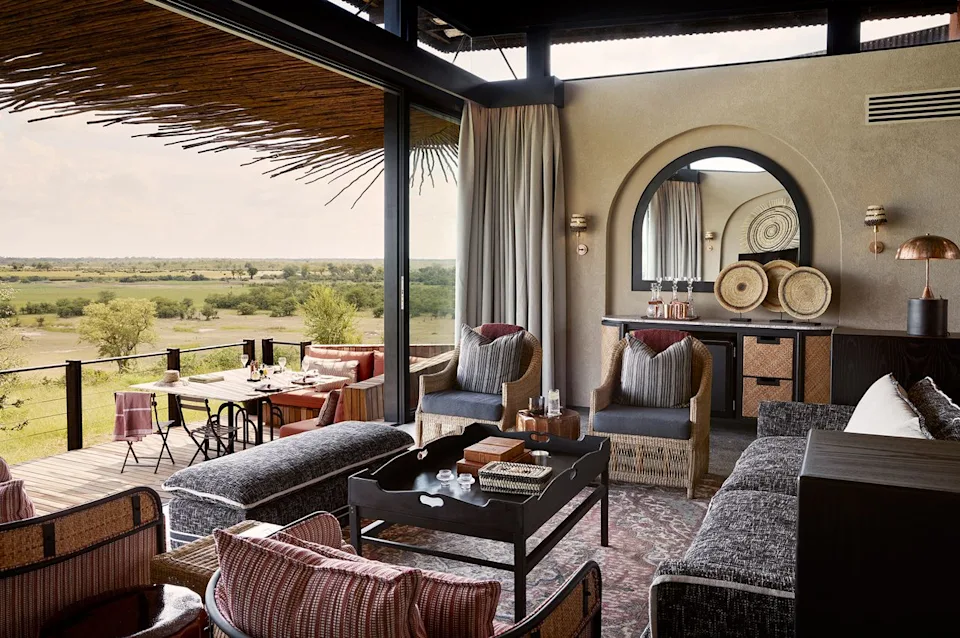
As with everything else at Chichele Presidential, the accommodations here are designed to intimately immerse you into the wild—without a tent. The floor-to-ceiling glass doors in each of the 10 airy suites open to private decks with loungers and plunge pools gazing over the dramatic landscape and a sky so vast, it’s overwhelming. Inside, there’s a living area; a bathroom with indoor/outdoor showers and a bathtub; and a mini bar stocked with local gins and wines, fresh biscuits, and spiced cashews. Even the decor—African prints and a large map of South Luangwa—offers a sense of place. There’s bug spray, boots for muddy walks, and a bag to carry your essentials. And at night, I’d return to my suite to find a neatly drawn mosquito net over my bed and lights set to a soft glow—all small gestures that make it a soft place to land.
Food and Drink
Safaris are filled with moments that feel delightfully unpredictable, and meals at Chichele Presidential have that same element of surprise. After one afternoon game drive, Lams pulled up above a river with hippos idling in the water and set up a surprise arrangement of sundowners (wine, cocktails, soft drinks) and snacks (warm nuts, biltong, chicken wings). For a mid-morning bite in the bush, there were homemade cookies, breads, and copper cups with hot tea or coffee. Another evening concluded with an unexpected boma dinner under the stars: a barbecue of meat and vegetables, a roaring fire pit, and a long communal table.
Otherwise, all meals are served on the breezy veranda, though there’s a dining room with a piano for more formal gatherings. For lunch, I feasted on soft poached eggs in a warm garlic yogurt and a mezze of beef skewers with chimichurri, grilled halloumi with crispy spinach, chargrilled green beans topped with dukkah, and blistered cherry tomatoes. For dinner, the multicourse menu included options like pan-fried bream with crispy potato gnocchi, broccoli, and lemon butter; grilled beef with potato croquettes and cauliflower puree; and a cauliflower steak with dates, feta, pistachios, and harissa. There’s also afternoon tea, with a hot beverage or a glass of Champagne and some cakes. Great dishes all around, but the service was an even bigger treat. After an offhand comment that I enjoyed the homemade chimichurri sauce, Limbi, my waiter, made sure my table was never without it.
Activities and Experiences
Game drives are the obvious highlight of a stay at Chichele Presidential. These excursions happen in the cool, early-morning hours and again in the late afternoon. The Land Cruisers can accommodate up to six guests, with plush seats, plenty of pockets for storage, blankets and ponchos for changing weather, and even a personalized water bottle for each guest. Out in the wild, when you bump into others—though it rarely happened during my April visit—the standard greeting becomes, “See anything good today?” Here, that answer might entail lions, leopards, buffalo, wild dogs, giraffes, zebras, or a variety of stunning bird species. Speaking of, South Luangwa National Park is a birder’s haven, with some 400 species who call the place home, and you can go on guided bird-watching adventures.
Alisha Prakash/Travel + Leisure
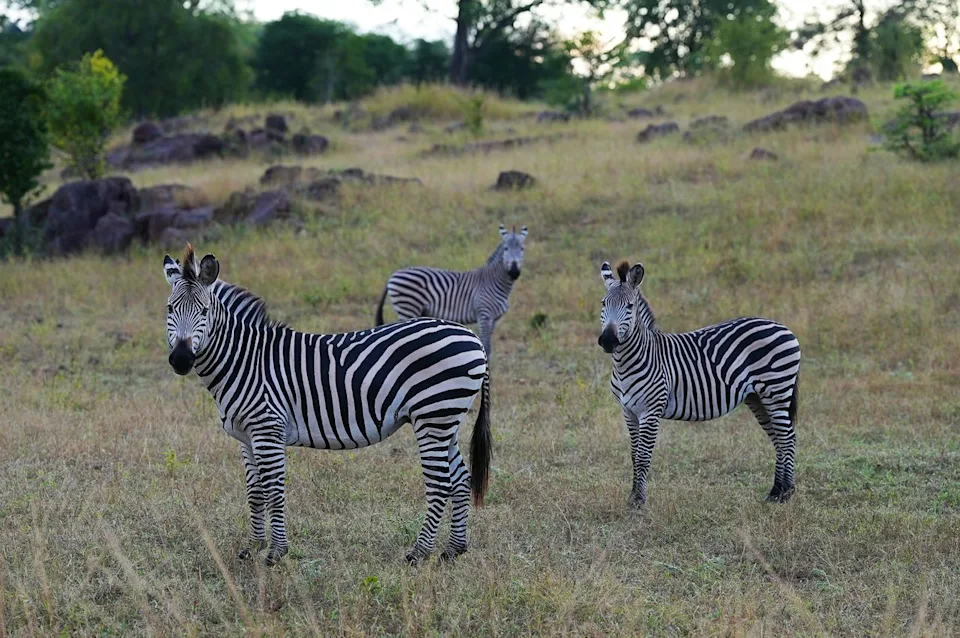
A small herd—or dazzle—of zebras.
South Luangwa is also considered the birthplace of the walking safari, and these experiences—led by highly trained guides—are a slower, more intimate, yet no less exhilarating way to explore the wildlife—analyzing the tracks, scents, and sounds.
Between adventures, there’s an infinity pool where you can enjoy a swim while looking for game below, plus a fitness center and a spa with massages, yoga, and other wellness treatments.
Location
Elsa Young/Chichele Presidential Lodge Zambia
Zebras outside the Vista Suites.
The truth is, I had never considered a safari in Zambia—so often it’s overshadowed by wildlife-rich destinations like Botswana and Kenya. But, as I quickly discovered, that’s precisely the point. The ecosystem of South Luangwa National Park is every bit as varied as others. It’s home to nearly all of the “Big Five”—rhinos being the exception—as well as one of the highest concentrations of leopards in Africa, a distinction that has earned it the nickname Valley of Leopards. In three days, I saw lions, leopards, zebras, giraffes, elephants, wild dogs, and hippos—but all without the pile of Jeeps vying for the same view.
Yes, the journey is long. I took three flights—New York to Lusaka, with a connection in Nairobi, followed by a domestic hop to Mfuwe Airport. (Others may route through Johannesburg before reaching Lusaka.) Upon arrival, lodge staff meet you for the 90-minute transfer to the property, where even the road becomes a wildlife corridor—we spotted puku, impalas, and hippos en route. Getting here isn’t easy, but it’s worth every mile.
Family-friendly Amenities
Elsa Young/Chichele Presidential Lodge Zambia
The safari lounge sits between two Vista Suites and is perfect for families.
Throughout my solo stay at Chichele Presidential, one thought kept returning: I can’t wait to bring my son back. The property welcomes families with kids of all ages, and even has a children’s program, Chichele Cubs, for 4- to 11-year-olds that encourages exploration of the world around them through engaging activities. Little ones get a backpack with a coloring book and pencils, binoculars, a water bottle, and a passport that’s stamped after each activity, which might include identifying birds or stargazing.
The unfenced grounds mean children must be supervised at all times, though; staff happily whisks guests to and from the main lodge by golf cart. Families are also supported with two suites that can be connected and have a generous shared living space.
Alisha Prakash/Travel + Leisure
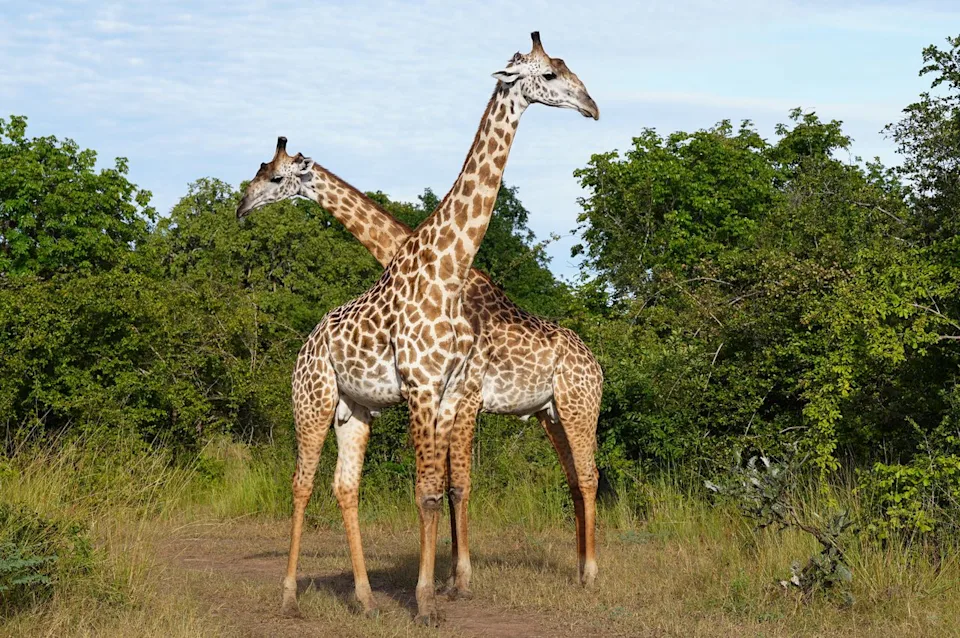
Giraffes seen in the national park.
Accessibility and Sustainability
The main lodge at Chichele Presidential, which shelters the restaurant, cocktail bar, dining room, and lounge areas, is on one level and can be reached by a staff-driven golf cart. One of the two adjoining family rooms has fewer steps, making it a better fit for guests who need easier access. Note all rooms have some steps, and everyone must be able to climb in and out of the safari vehicles. Inside, the design by Fox Browne Creative (behind Lolebezi and andBeyond camps such as Phinda) leans on locally sourced materials and partnerships with artisans like Tribal Textiles and Collective Hands, supporting nearby communities while giving the hotel a distinctively Zambian feel.
How to Book
Stays can be booked via The Luxury Safari Company, which crafts personalized itineraries in Zambia and beyond, often combining multiple destinations. Rates start at $8,000 per person for four nights, and includes international flights from the U.S., internal transfers, all meals, drinks, park fees, game drives, and laundry service.
Read the original article on Travel & Leisure