


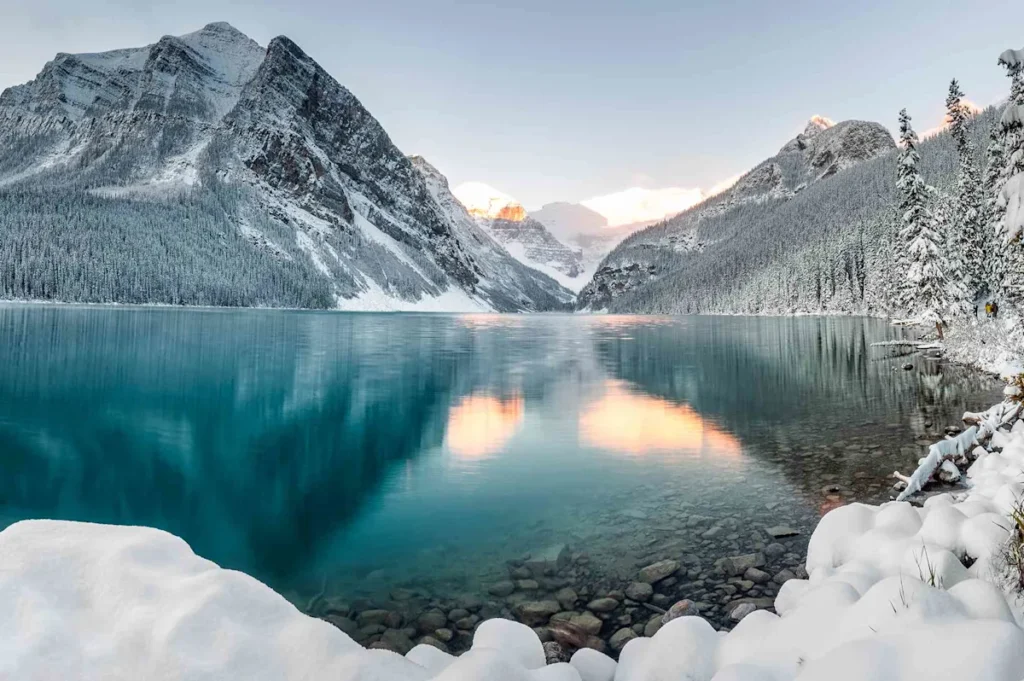
Key Points
-
Hit the slopes and marvel at the snowy scenery at Banff’s trifecta of ski resorts, the SkiBig3: Mt. Norquay, Banff Sunshine, and Lake Louise Ski Resort.
-
Palatial, well-appointed properties like the Fairmont Banff Springs and Fairmont Chateau Lake Louise provide decadent places to dine and unwind after long days roughing it outdoors.
-
Bars like the Fairview and restaurants like Bluebird are snug spots for après refreshments and hearty, warming meals.
Before I travel, I tend to remind myself that my perception of a place is rarely the reality—particularly in a destination like Canada’s Banff National Park, which is world-renowned for its jagged peaks, glaciers, turquoise lakes, and picturesque alpine villages. I told myself it couldn’t be that great, especially since I was visiting in the heart of winter.
It turns out, I didn’t need to spend all that time tempering my expectations. Banff and Lake Louise, even under a blanket of snow—or perhaps because of it—are everything you see in photos and then some. As Clare McCann, my cross-country ski guide, summed up so perfectly: “It’s the magic of water and ice and snow and crystals.”
But Banff National Park wasn’t just about stunning landscapes—it was a journey of firsts, challenges, and personal discoveries. (My first time in this winter wonderland entailed many firsts like ice climbing a frozen waterfall and skiing along a grizzly bear refuge.) And with my brother by my side, I learned that sometimes the best adventures happen when you least expect them.
Best Winter Months
Summer is Banff National Park’s busy season, especially for outings like hiking to the park’s hidden tea houses, so winter visitors will be pleasantly surprised by the lack of crowds. “I think in the winter it becomes a really special community of people that love to be outside,” Maddie McCrady, former marketing and snow communications coordinator at Lake Louise Ski Resort, told Travel + Leisure. “It’s still a little bit of a secret gem.”
Winter typically runs from November to May, and so do the main cold-weather activities like ice climbing, downhill skiing, and snowboarding. For ice climbing, the best ice is generally found in mid-December, January, and February. Meanwhile, the best snow is usually found in February or March, when there’s a solid base and typically more on the way.
The three-week SnowDays Festival takes place in January and February. It’s a great time to visit for those looking to watch or participate in unique events—from ice sculpting on a frozen Lake Louise to skijoring down Banff Avenue.
Things to Know

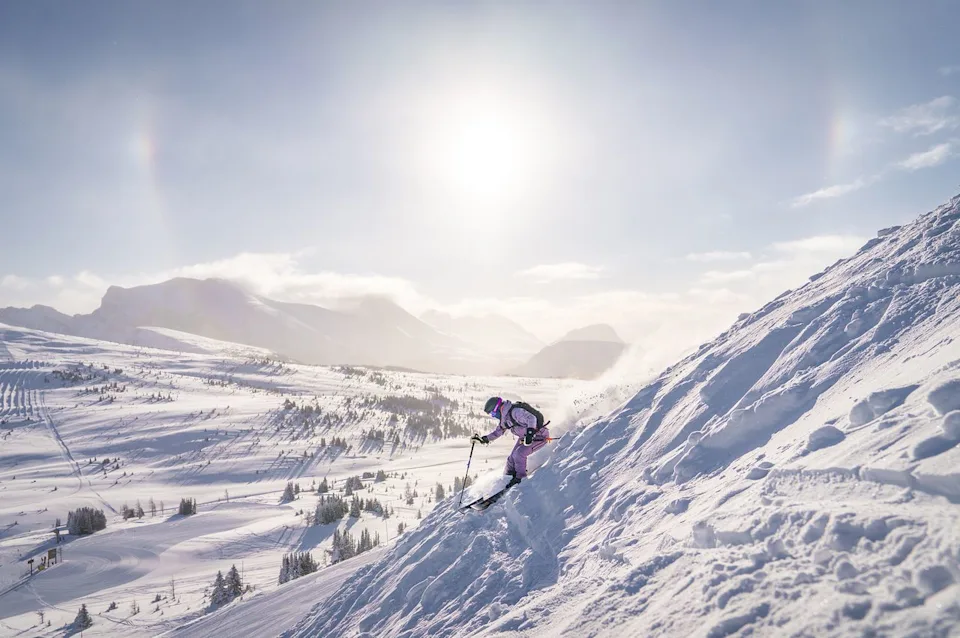
Jill Tester/Courtesy of Banff & Lake Louise Tourism
A skier going down a mountain at Sunshine Village.
The towns of Banff and Lake Louise are both located within Banff National Park, hailed as one of the best national parks in Canada, which means that every visitor needs a park pass.
-
You can pick one up at the park entrances (I never saw a line or wait during my late January visit) or buy one online in advance.
-
Day passes are CA$11 for an individual and CA$22 for a family pass (roughly $8 and $16, respectively).
-
Day passes provide access to Banff National Park and all the neighboring parks: Jasper, Kootenay, Yoho, Mount Revelstoke, Glacier, Waterton Lakes, and Elk Island.
Banff and Lake Louise may be within a national park, but there’s everything you might expect from a resort town, from high-end hotels to international cuisine. However, the national park limits development, so pristine wilderness surrounds the towns. As a result, visitors can enjoy modern comforts while also being surrounded by nature.
How to Get Around
If you’re just planning to explore the park and won’t be traveling elsewhere in Canada, consider booking one of the many shuttles that run from Calgary International Airport to Banff and Lake Louise. Once you’re in Banff, you can take the park’s Roam Public Transit service almost anywhere, including the village of Lake Louise and Johnston Canyon. Plus, a free shuttle can take you to all three local ski areas. If you choose to drive, you’ll find significantly more parking and quieter roads than you might expect from a summer visit.
Winter Activities
Downhill Skiing
It’s not every day you get the chance to ski within a national park, but in Banff, that’s the norm. All three local ski areas are located within the park, are accessible via a free shuttle, and are part of the SkiBig3 family: Banff Sunshine, Lake Louise Ski Resort, and Mt. Norquay.
My brother and I skied all three mountains during our visit. Here’s what they offered:
-
Mt. Norquay is more of a small, local hill, but still has some steep groomers and one of the best views. From the ski resort, you can see Banff and enjoy a panoramic view of the Bow Valley.
-
Banff Sunshine is much larger than Norquay and has the longest ski season—it tends to open in early November and close in late May. At Sunshine, you can also ski the Continental Divide and stay at the on-mountain Sunshine Mountain Lodge, the only ski-in, ski-out hotel in Banff National Park.
-
Lake Louise Ski Resort is the largest of the three ski areas and looks out toward Lake Louise and the surrounding mountains. From the ski area, you can see a handful of glaciers, including those that feed into Lake Louise. With over 4,200 acres of terrain, this is one of the best ski resorts in Canada.
“We’ve got a lot of park skiers out here. For big mountain skiers, we have a lot of good options—our West Bowl and our Back Bowls are popular for freeride skiers,” McCrady said. “We’ve got a great learning area. I would say we have the best learning area in the Bow Valley; we have a progressive magic carpet.”
Ice Climbing
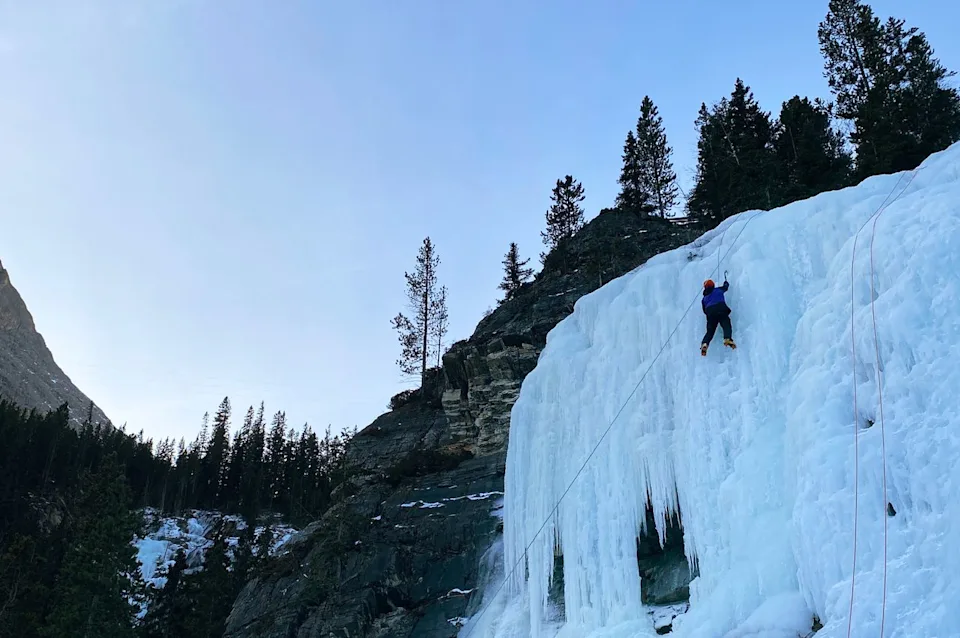
Evie Carrick/Travel + Leisure
Ice climbing in Banff National Park.
I had never ice climbed in my life, but I found myself trying this new, somewhat intimidating sport during my time in Banff. The team at Alpine Air Adventures took me and my fellow climbers (all newbies to the sport) on a full-day excursion climbing a frozen cascade in “The Junkyards,” so named for its previous use as a junkyard for the former coal mining town of Canmore.
“The ice climbing [in Banff National Park] is really good, arguably the best in the world in terms of access and the length of the season and the quantity and quality. It’s pretty hard to beat,” Braeden Ennis, an apprentice guide at Alpine Air Adventures, told T+L.
Cross-country Skiing
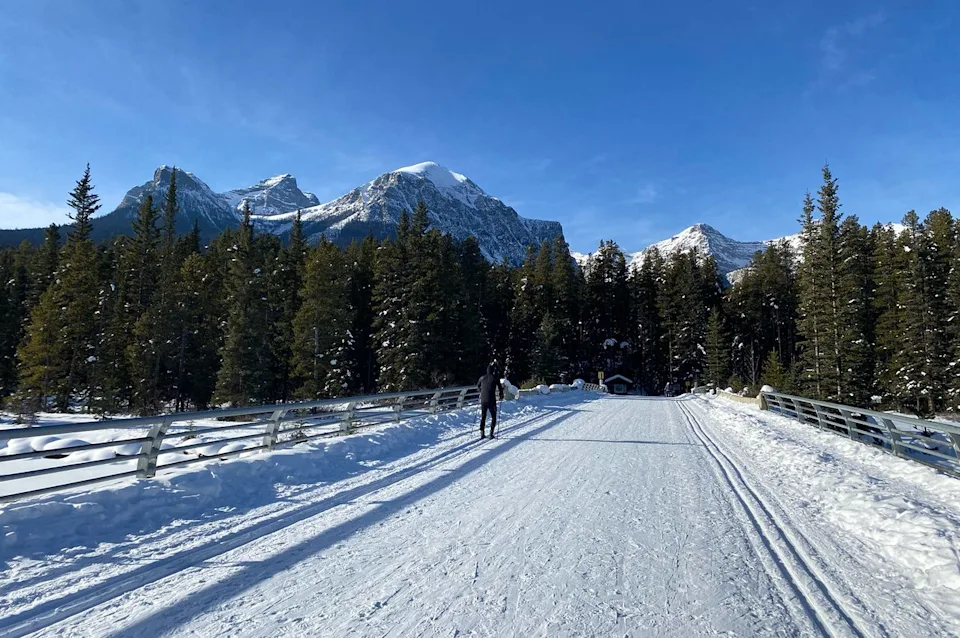
Evie Carrick/Travel + Leisure
Cross country skiing in Banff National Park.
Cross-country skiing is one of my favorite ways to explore in the winter, as it’s relatively easy to do and lets you access places many people never get to visit in the colder months. My brother and I found ourselves skiing along the Bow River in Lake Louise with McCann, my ski guide from Bikescape. “I’ve rediscovered Lake Louise and the magic of it,” McCann said, gesturing to the partially frozen-over river and the picturesque wooden bridge we had just crossed.
Unlike some of the other winter activities in Banff National Park, “cross-country skiing is a sport where you can take a four-year-old, take a 70-year-old, put them together on the trail, teach them how to ski and send them on their way,” said McCann, who also leads fat bike tours in the winter and summer as well.
Nightrise at the Banff Gondola
If you’re looking for something to do after the sun goes down, head to the Banff Gondola to experience Nightrise, a display of light and sound that carries you to the top of Sulphur Mountain. At the top, you can look down at Banff and interact with the installation before beginning a calming descent down the mountain in the gondola. Nightrise was created with the Stoney Nakoda Nation and pays tribute to the mountains and the first people to live in the Banff area.
Ice Skating
Arguably the most beautiful place you can ice skate is in Banff National Park. The iconic turquoise waters of Lake Louise freeze over in the winter, providing skaters with a wild ice rink rimmed with mountains and glaciers. You can rent ice skates from the nearby Wilson Mountain Sports or at Fairmont Chateau Lake Louise, which is located directly on the lake. If you’d rather skate somewhere a bit more wild, check out the outdoor skating pathway at the Fenlands in Banff.
Where to Stay
There is no Canadian hotel more iconic than the Fairmont Banff Springs, which was one of the earliest of Canada’s grand railway hotels. The hotel looks more like a castle, and if you happen to get a room facing the Bow River, the wild nature of the park will be on full display.
The Fairmont Chateau Lake Louise is Banff Springs’ sibling property to the west, and it comes with a gorgeous view of Lake Louise, which is perched under towering peaks and blue-tinted glaciers. Both Fairmont properties are among Banff’s best hotels.
For hardcore skiers, a night at the Sunshine Mountain Lodge, only accessible by gondola, is a must. As the only ski-in, ski-out property in Banff National Park, it offers riders direct access to the ski area.
If you’re traveling with family, like I was, the Lake Louise Inn may be the more realistic choice. The inn is in central Lake Louise and has larger rooms, some with full kitchens, fireplaces, and hot tubs. It offers free snowshoe rentals, has three restaurants, and runs a complimentary shuttle to Lake Louise Ski Resort in the winter. I loved the hearty, no-frills breakfast served at Legends Restaurant and the property’s welcoming, low-key vibe.
Where to Eat
The Bison
The best thing I ate during my week in Canada was a meal at The Bison. The Arctic char served with white beans and roasted garlic in a Parmesan broth was everything I wanted after a cold day. Beyond that, the eatery is on the second floor overlooking Banff’s Bear Street, and I recommend requesting a table by the window if you enjoy people-watching.
Shoku Izakaya
I love a good izakaya, and Shoku Izakaya in downtown Banff did not disappoint. It was casual and low-key with a stellar spicy shrimp roll and an even more memorable maple miso crème brûlée. I arrived expecting a cold, contemporary restaurant and was pleasantly surprised by the izakaya’s cozy interior and seating overlooking the street.
Bluebird
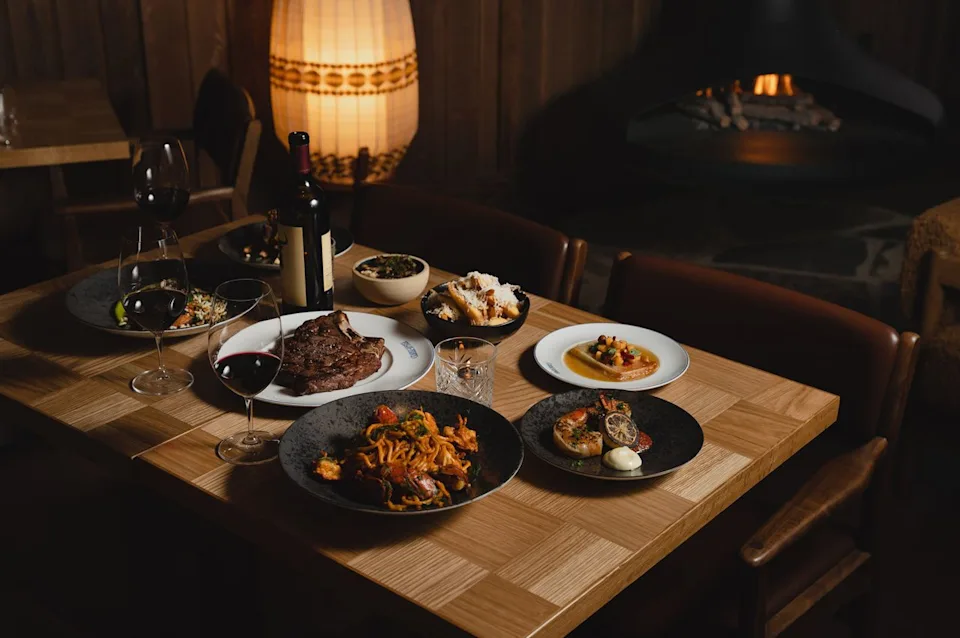
One of my favorite meals in Banff was my breakfast at Bluebird, which also has a happy hour and dinner menu. I had my first fluffy, fat soufflé pancake and my only regret is that I didn’t order an entire plate for myself. The ambience at Bluebird is perfect for winter; the tables sit around a fireplace and everything from the seating to the decor is well thought out.
Courtesy of Banff & Lake Louise Tourism
A full dinner table from Bluebird.
Where to Après
Lupo Italian Ristorante
Lupo has an excellent dinner menu—just take a peek at the list of house-made pastas—but I dropped by for dessert and after-dinner drinks. I was told to try the tiramisu, one of the restaurant’s specialties, and enjoyed every last bite, even though tiramisu is typically not one of my favorites. Lupo also has a great drink menu, including a list of Italian after-dinner drinks, and a lively, vintage feel.
Fairview Bar & Restaurant
If you’re in Lake Louise, a drink at the Fairview is a must. The Fairmont Chateau bar overlooks the lake and has a great cocktail menu. You can order dinner here as well, or head over to the hotel’s Walliser Stube, which is known for its fondue.
Hello Sunshine
Nolan Haas, one of my ice climbing guides, recommended Hello Sunshine. During its happy hour, you can get cheap pints and 50 percent off sushi, plus sing your heart out in one of the private karaoke rooms. The restaurant also has a killer matcha colada and a long sake menu.
Read the original article on Travel & Leisure