

Key Points
The Capitol Corridor runs from Auburn through Sacramento and the Bay Area to San Jose, with the full journey taking about three hours and 15 minutes.
Spring brings Sierra foothills wildflowers, while autumn offers Gold Country foliage and comfortable conditions for sightseeing along the route.
Stops like Sacramento, Davis, Berkeley, Oakland, and San Jose have museums, restaurants, waterfronts, bike paths, and other attractions.
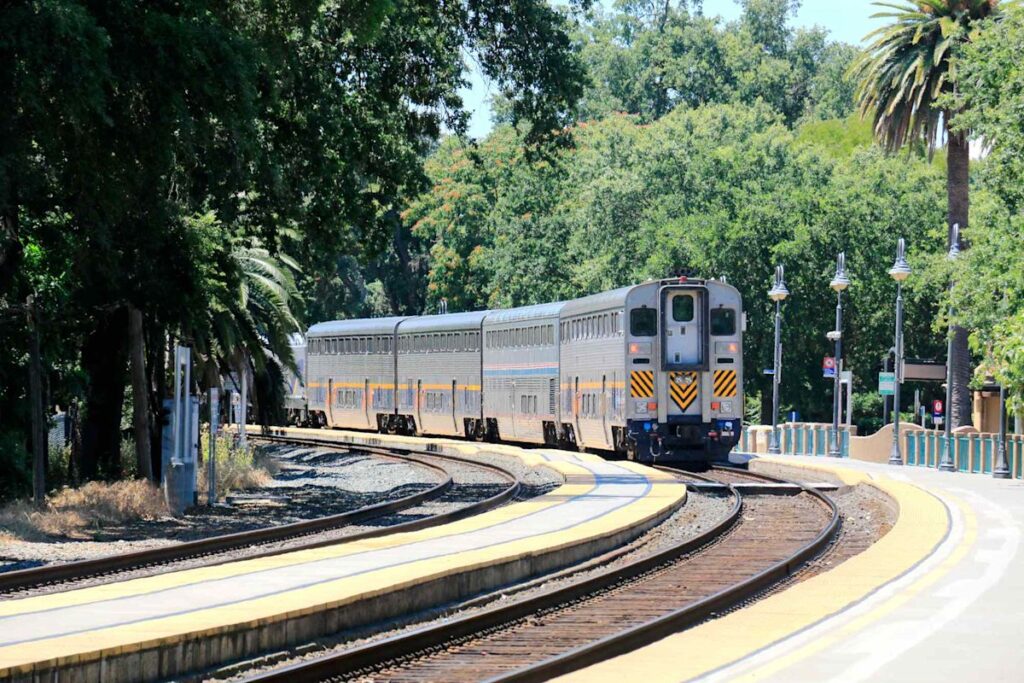
Trains are arguably one of the best ways to see California. And while the Golden State is home to plenty of iconic routes—such as the Coast Starlight and the Pacific Surfliner—one of the most overlooked train journeys connects some of its most exciting cities. Running between the Sacramento suburb of Auburn and the “Capital of Silicon Valley,” San Jose, the Capitol Corridor is one of the busiest rail networks in the country. The full route takes just three hours and 15 minutes to ride, passing everything from foothills and farmland in the Central Valley to scenic views of the San Francisco Bay and surrounding coastal marshland as the train heads west.
Sojourner White, a blogger and content creator who specializes in train travel and has been on more than 20 Amtrak routes, recommends sitting on the right side of the train, facing forward, for the best views. The ride out of Sacramento passes through tree-lined stretches and rolling, drier hills before the train reaches Martinez, California, where the route hugs San Pablo Bay and the Carquinez Strait. You’ll be able to enjoy up-close views of the water as the train nears the small coastal city of Richmond.
Advertisement
Advertisement
Here’s what you need to know before riding Amtrak’s Capitol Corridor.
Best Time to Ride
Amtrak’s Capitol Corridor train making a stop at the Sacramento station.
Credit: Felipe Sanchez/Getty Images
Spring and fall are the best and most beautiful times to ride the Capitol Corridor. Wildflowers, especially poppies and lupine, bloom in the Sierra foothills around Auburn from March through May, while the flowers at UC Davis Arboretum and Public Garden tend to reach peak bloom around that time as well. It’s a colorful, cheerful time to ride the train. Fall color arrives in Gold Country from early October through late November, making it a great time to ride to Roseville’s Mountain Mandarin Festival for a zesty time.
Summer isn’t necessarily a bad time to ride the Capitol Corridor. That said, summers are hot and dry in the Central Valley, and Sacramento afternoons regularly top 95 degrees Fahrenheit, so an early morning ride can beat the worst of the heat. Winter is the rainy season, and tule fog (a thick, ground-level fog common in this part of the state) can blanket the Central Valley and Bay Area.
Sports fans, rejoice: The Capitol Corridor runs nearly directly to Levi’s Stadium, home of the San Francisco 49ers.
Know Before You Go
Fall colors at the UC Davis Arboretum and Public Garden.
Credit: AlessandraRC/Getty Images
Amtrak’s Capitol Corridor sells tickets with three options: by the ride, in 10-ride booklets valid for 60 days, and by the month for regular commuters. Riders can buy them on the Capitol Corridor website, through the Amtrak app, at a station kiosk, or from an agent at staffed stations, including those in California cities such as Sacramento, Davis, Martinez, Emeryville, and San Jose. Riders boarding at an unstaffed station can also buy a ticket from the conductor once on board, although those transactions are cash only.
Advertisement
Advertisement
Service is unreserved, so any ticket works on any train between the listed stations. Seating is first come, first served. Table seating, in two-tops and four-tops, runs along the upper level and is spread across multiple cars. Lining up for boarding typically begins 30 to 40 minutes before departure, though you’ll only have about two to three minutes to enter the train once it pulls into the station. White also recommends arriving at the platform early to secure a table on busier weekend trains.
Every train has a cafe car with food, alcohol, and snacks, plus free Wi-Fi throughout. Two cars per train are marked for bikes. Cats and dogs under 20 pounds ride for $29 one-way in a carrier. Bring a government-issued photo ID, as conductors and bus drivers may ask to see your ID during the trip.
A final note: Riders traveling to San Francisco should select “San Francisco” as their final destination and not Emeryville. This way, the fare includes an Amtrak Thruway bus across the bridge. Riders who skip that step are better off with a rideshare rather than public transit, since the connecting bus and train options can take close to an hour depending on your final destination in San Francisco.
Stops Along the Route
Auburn
Sunrise in Auburn, California.
Credit: Jason Doiy/Getty Images
The route’s eastern end drops you into Gold Country, at the edge of the Sierra Nevada foothills. Old Town Auburn keeps its Gold Rush-era storefronts largely intact, and you can wander through its antique shops and art galleries. If you’re up for a hike, the Auburn State Recreation Area encompasses the confluence of the North and Middle Forks of the American River, with trails for hiking and mountain biking and swimming holes below the historic No Hands Bridge.
Advertisement
Advertisement
Time your visit for November to catch the Mountain Mandarin Festival in nearby Roseville, a celebration of the citrus that grows across the region. For dinner, Monkey Cat Restaurant & Bar serves steaks and seafood in a downtown storefront, while The Hillmont serves empanadas stuffed with lamb and cherry and specialty cocktails out of one of Auburn’s oldest buildings. Book a room at the Hotel Vista Sierra, and you’ll be within easy reach of all the area has to offer.
Sacramento
California’s capital sits about 90 minutes from the Bay Area by train and has branded itself as “America’s Farm-to-Fork Capital” thanks to its easy access to Central Valley produce. Start your day at the Crocker Art Museum, founded in 1885 as the first public art museum in the western U.S. It’s home to an impressive collection of California Impressionist work and European master drawings. A few blocks away, Old Sacramento Waterfront holds the California State Railroad Museum, which covers about 100,000 square feet and traces the transcontinental railroad through restored locomotives.
When it’s time to eat, hit up Mulvaney’s B&L, which has a menu made from produce sourced from nearby farms. Frank Fat’s has anchored the city’s Chinese food scene since 1939, while Chicha Peruvian Kitchen, run by chef-owners Giancarlo Zapata and Marleny Chávez, is known for its ceviche and leche de tigre. Finish your night at The Snug, a speakeasy-style cocktail bar in Midtown. The Citizen Hotel, Autograph Collection and the Kimpton Sawyer Hotel (the latter with a rooftop pool overlooking downtown) both put you within walking distance of the Capitol and the Old Sacramento waterfront.
Davis
A cyclist on the University of California-Davis campus in Davis, California.
Credit: Kevin Koeppen/Getty Images
Known as the “Bicycle Capital of America,” Davis is famous for installing the country’s first standardized bike lanes in 1967 and now has more than 100 miles of lanes and paths threading through town and the UC Davis campus. Rent a bike downtown and ride the roughly 12-mile Davis Bike Loop for an easy half-day between train connections.
Advertisement
Advertisement
The Davis Farmers Market runs Saturday mornings in Central Park, with Wednesday evenings adding the Picnic in the Park series from spring through summer. The UC Davis Arboretum also offers a place to roam for free across 100 acres near Putah Creek. Refuel at Sudwerk Brewing Co. or Mishkas Cafe, a coffeehouse and roastery open since 1995. The Hyatt Place UC Davis or the Hilton Garden Inn Davis Downtown are both solid options for an overnight stay.
Berkeley
The Berkeley train station sits under the University Avenue overpass, a short ride from both the UC Berkeley campus and the Fourth Street shopping district. Fourth Street mixes home-design showrooms with national retailers and local restaurants across roughly 80 storefronts, all located close enough to the tracks that you can watch trains roll by from the patios. Situated on Northern Shattuck Avenue, Chez Panisse is credited with starting the farm-to-table movement—reservations are recommended.
A few doors down, The Cheese Board Collective serves one vegetarian pizza flavor per day and hosts live music performances on some afternoons. A stroll to the Berkeley Marina, a short walk or bike ride west of downtown, gives you unobstructed views of the Golden Gate Bridge at sunset. For an overnight, Hotel Shattuck Plaza, a 1910 landmark building two blocks from campus and across the street from the Downtown Berkeley BART station, is the perfect place to enjoy a historic stay.
Oakland
The USS Potomac docked at Jack London Square in Oakland, California.
Credit: Salahuddin Galib/Getty Images
Oakland’s Jack London Square has turned a working waterfront into a dining and entertainment district—it’s named after the famed author who spent part of his youth on these docks. Heinold’s: First and Last Chance Saloon, open since 1884, still pours drinks in the same wood-frame building London frequented. You’ll also find the USS Potomac near the square, which was once Franklin D. Roosevelt’s presidential yacht.
Advertisement
Advertisement
A short ride away is The Black Panther Party Museum, run by the Dr. Huey P. Newton Foundation in downtown Oakland. For dinner, Scott’s Seafood has served the waterfront since 1984 and keeps a Sunday jazz brunch buffet running alongside its regular seafood and steak menu. White recommends Lucy Blue for its catfish bao buns, and if you’re in search of a caffeine fix, Soul Blends and Kinfolx are the perfect spots. Staying at the Courtyard by Marriott Oakland Downtown puts you within easy walking distance of all that downtown has to offer, including the Museum of Art and Digital Entertainment, dedicated to retro and vintage video games.
San Jose
San Jose closes out the route at Diridon Station, a hub that also serves Caltrain and the Altamont Corridor Express. A short light-rail ride away, San Jose’s Japantown is one of only three that remain in the United States. For a caffeine fix, stop by Roy’s Station Coffee and Teas, a family-run coffee shop built into a former gas station. The Tech Interactive has hands-on exhibits where you can view innovations in robotics and healthcare. For a quiet walk between the station and downtown, take the Guadalupe River Park path. Signia by Hilton, Downtown San Jose sits across the street from the Tech Interactive and is only about an eight-minute walk from the dining options at San Pedro Square Market.
Read the original article on Travel & Leisure
Source link