

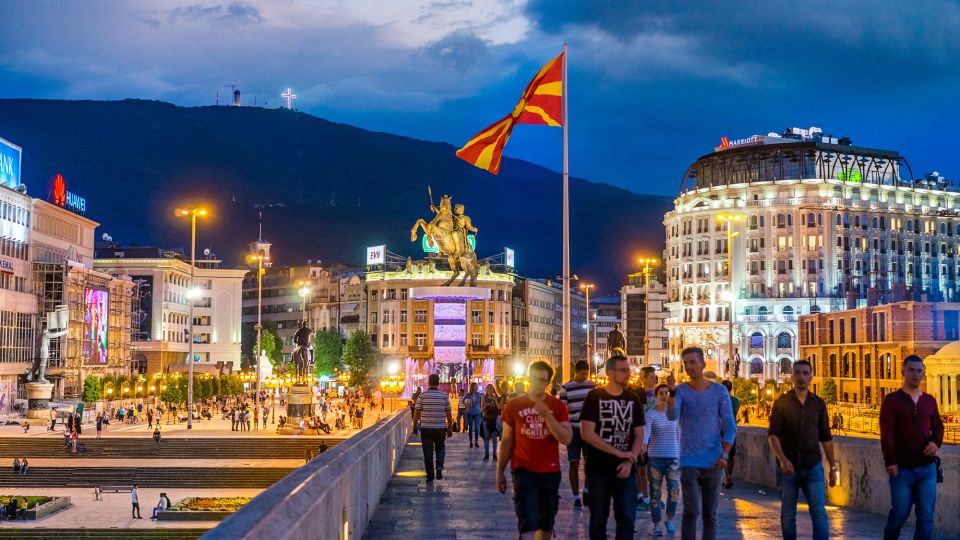
Spiked with ridges and peaks that deliver scenery running the full four-seasons gamut — from electric green slopes to snow-capped crags — North Macedonia offers one of Southern Europe’s final chances to take the path less-traveled.
Previously known as Macedonia after declaring its independence from Yugoslavia in 1991, North Macedonia is an underexplored pocket of the Balkans whose layered history, from the Byzantine and the Ottoman to the Yugoslav eras, has combined with its omnipresent mountains to produce a set of regional cultures with a staunch commitment to tradition, and a warm, bottom-of-the-heart hospitality.
Located directly north of Greece, this landlocked nation is one of the world’s most mountainous countries, and the dramatic terrain is central to its identity.
“When I enter my car, whichever direction I want to drive, I have a mountain in front of me and a mountain behind me,” said Frosina Pandurska-Dramikjanin, who lives in the nation’s capital, Skopje, and works with rural development and community empowerment. “I think this is the best way to describe my country.”
The country of 2 million people, that’s slightly larger than Vermont, has yet to experience the throngs of tourists that choke much of Southern Europe every summer. Those involved in the travel industry are wary of courting that kind of mass tourism, which could adversely affect the quality of life for residents. But they know that the country has much to offer and the tourism sector still has room to grow.
Aleksandar Bogoevski, owner of Sustainable Adventure Travels, a travel agency that reinvests a share of its profits in the infrastructure of the communities it partners with, says that many tourists drive through the country every year on their way to nearby hotspots like Greece or Albania. He wants them to know that Macedonia is a destination all by itself.
“Approximately one million passengers are transiting Macedonia during the summertime. They don’t stop,” said Bogoevski. “I think there is so many other things that can be seen.”
Monasteries, spring-fed lakes and hiking
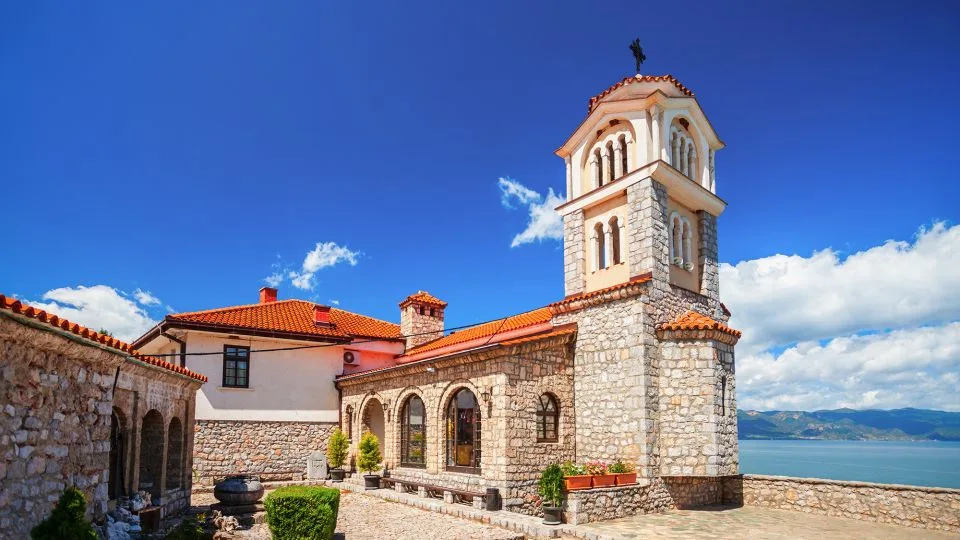
The Monastery of Sveti Naum, one of many Byzantine religious sites, is on Lake Ohrid, the country’s crown jewel. – saiko3p/iStockphoto/Getty Images
Much of what can be seen in North Macedonia lies along the sides of the small, winding roads that carve their way through the countryside along valley floors.
These routes are studded with immaculately preserved Byzantine monasteries, some more than 1,000 years old, replete with ornate woodworking inlaid with mother of pearl, gold-plated chandeliers and ancient frescoes. Among the best known is Bigorski Monastery, where an affordable guest house welcomes weary trekkers from nearby Mavrovo National Park. There, the brilliant ruby and topaz treetops on a meandering October drive can put any New England postcard to shame.
Sveti Naum, which has stood at the edge of Lake Ohrid since the year 905, is another well-known — and well worth visiting — monastery. Lake Ohrid, whose glittering waters are located south of Mavrovo on the Albanian border, is North Macedonia’s crown jewel.
A UNESCO World Heritage site ringed by mountains, the Lake Ohrid area pulls in visitors from across the Balkans every summer. Some come for ecotourism. The spring-fed lake boasts around 1,200 species of plants and animals. Others come for a more traditional tourist experience: shopping for freshwater pearls along the bazaar street in the historic town of Ohrid on the lake’s northeastern shore, or sipping on spritz cocktails at beach bars tucked along the shoreline. Another stunning national park, Galicica, hugs the eastern shore with spectacular Lake Prespa just southeast of that park.
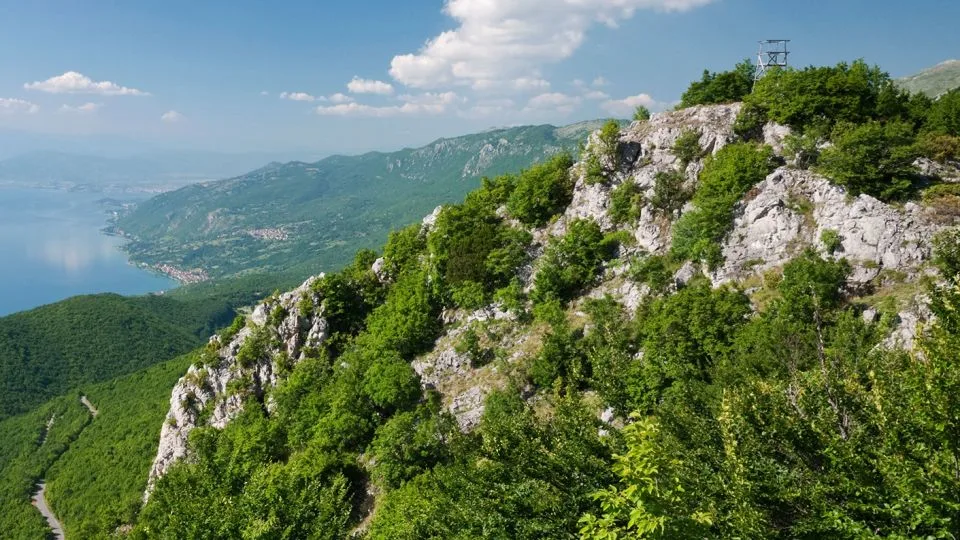
A view of Lake Ohrid with a watch tower in Galicica National Park. The spring-fed lake is a UNESCO World Heritage site. – Julian Cartwright/Alamy Stock Photo

A shepherd with a flock of sheep is seen near Prilep. The mountains that distinguish the country also preserve distinct cultural regions and traditions. – BettinaRitter/iStock Unreleased/Getty Images
More than a hundred miles north in the Šar Mountain range, on the country’s northwestern border with Kosovo, eager hikers and mountaineers can find an abundance of challenging routes. Some villagers in the mountains still practice an ancient shepherding practice known as transhumance by leading their sheep on seasonal migrations down to the villages in winter and up to the mountaintops in the summer.
Pandurska-Dramikjanin is grateful that the increasingly rare practice still exists in her country and thinks conscientious tourism could help sustain it. But she’s cautious about the overcommodification of a traditional way of life.
“In other countries, I have seen very, very bad examples of how mass tourism killed the local culture,” Pandurska-Dramikjanin said. “We want to keep tourists that will really appreciate our nature and our culture.”
Natural beauty and preserved cultural traditions
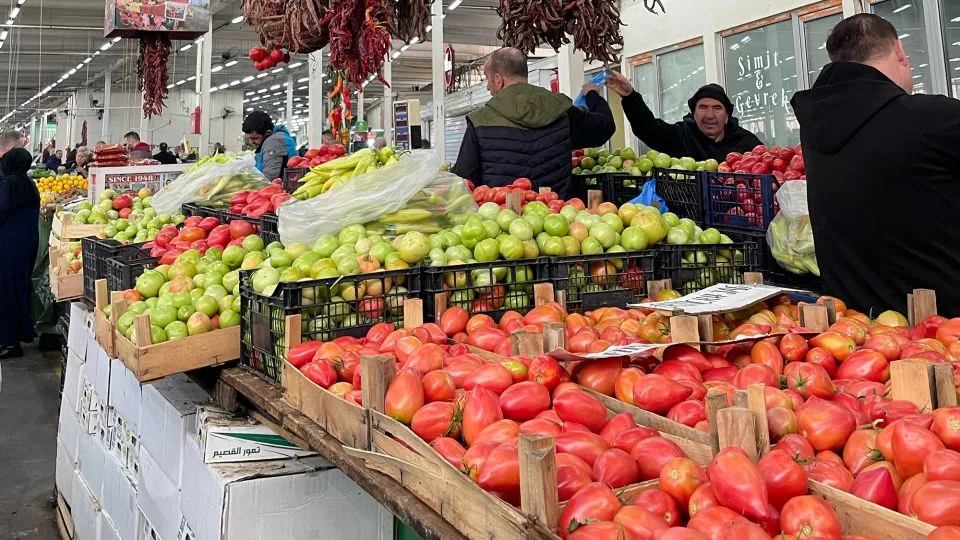
Visitors to North Macedonia enjoy the bounty of small family farms that remain common across the landlocked country, located just north of Greece. – Cy Neff
Ana Labor manages Spirit of Prespa, an agritourism business on her family’s apple orchard north of Lake Prespa, which sits on just five hectares, or about 12 acres. Small family farms are the norm in Macedonia, which Labor says allows farmers to spend more time tending their crops.
That attention means the average Macedonian diner chows down on produce that would look extraterrestrial in an American supermarket — three-foot long leeks, softball-sized tomatoes, and red peppers you can smell from around the corner.
Labor also works on building rural tourism infrastructure across the country, and she’s helping other farmers add to their family income through agritourism. She likes manageable crowds of tourists, where, similar to her apple trees, she can give each enough individual attention. Large groups don’t allow for the same level of local hospitality.
“I don’t spend enough time with them … because you can’t pay attention to each and everybody. And then when the group leaves, I’m not happy with myself, because they didn’t see the best version of the farm,” Labor said.
The same mountains that are the bedrock of North Macedonia’s natural beauty have also served as physical barriers that form distinct cultural regions, thereby cultivating and maintaining traditions that have died elsewhere. Labor says that she can visit a region of the country just over 60 miles away and not recognize half the dishes on a table.
Although the food varies immensely by region, visitors to North Macedonia can expect some commonalities in the cuisine, which typically forgoes heavy spices in favor of letting the farm-fresh ingredients sing.
Ajvar, a creamy red pepper spread found across the Balkans, is treated with particular reverence here, with families toiling from dusk till dawn over smoky backyard grills in the fall months to make enough jars for the year. Rakija, a high-proof Balkan moonshine that Macedonians typically make from grapes, is served neat alongside heaping portions of salads, grilled meats, and oven-fresh breads.
North Macedonia’s sunny climate can take credit for one of the region’s largest wine countries, with a particular concentration in the Tikves region. Other items travelers should seek out include the buttery phyllo dough pastry borek, most often served at breakfast and grilled meat kebapi. Other local delicacies include the pork and egg boat-shaped pastry pastirmalija, with similarities to Turkish pide, and a range of hearty soups known as corbas.
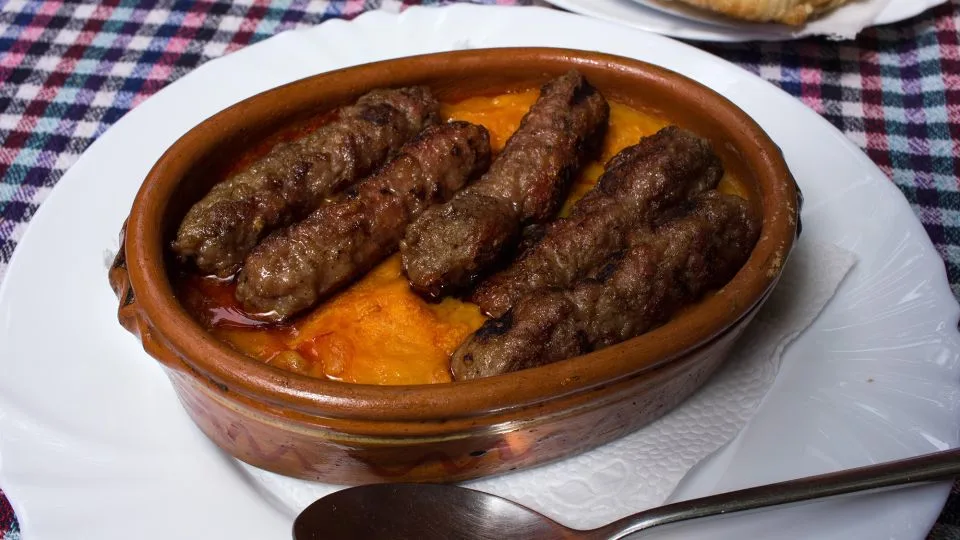
Grilled meat is a staple of meals in North Macedonia. Geography and history have helped the country retain local culinary delicacies that vary widely depending on the location. – CC151/Alamy Stock Photo
Visitors hoping to enjoy a wide variety of traditional food should look no further than the nearest kafanas, local pubs where diners are packed shoulder to shoulder in front of platters large enough to feed a village. Kafanas often feature local bands wandering table to table mariachi-style playing favorite songs for paying patrons. Mitko Panov, a Macedonian film director, sees the endurance of kafana musicians as emblematic of the persistence of Macedonian grassroots culture.
“Many countries had already lost their grassroot entertainment,” Panov said. “How many places in the States you can go to a cafe and you can have live music, and you can pay the guy and ask him, ‘Look, sing this song, because I love it, and you sing it well,’ so they can sustain themselves?”
Kafanas are abundant in Skopje, especially in the cobblestone corridors of the Debar Malo neighborhood and the nearby Karposh and Bunjakovec districts of the capital city, which is located in the north of the country.
A funicular and a labyrinthine bazaar
Nearly leveled in a 1963 earthquake, Skopje was part of a massive international rebuilding effort, with heavy emphasis on traditional Yugoslav brutalism. The city’s Old Bazaar layers that brutalism next to centuries-old Ottoman designs and a newer Vegas-style neoclassicism. Visitors looking for anything from fresh produce to dive bars and antiques will find it in the bazaar’s tangle of alleys, and they just might get lost along the way.
Cafe tables in the bazaar and beyond are packed from early morning to late night, and matcha lattes have a home alongside Turkish coffee.
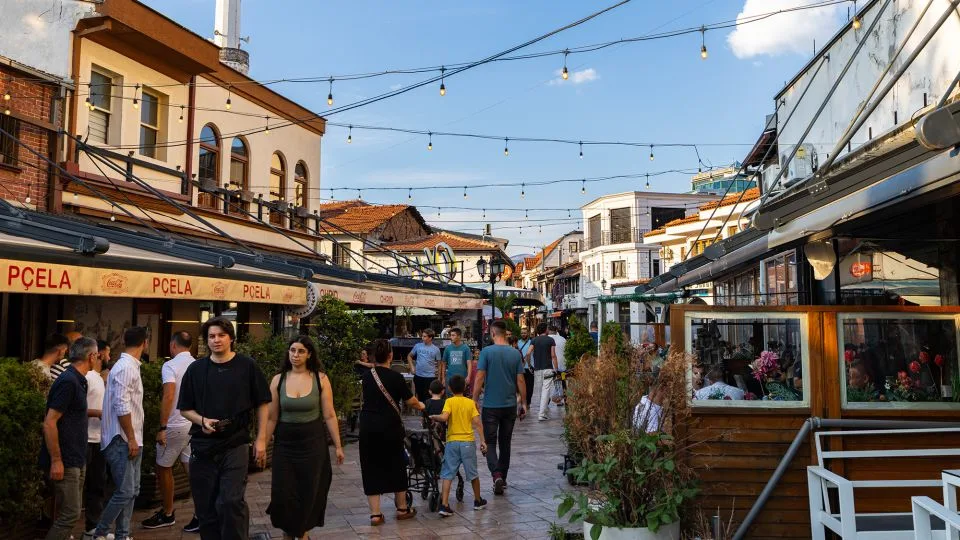
Visitors to the traditional stalls at the Old Bazaar in Skopje will find anything from fresh produce to dive bars and antiques in the market’s tangle of alleys. – JackF/iStock Editorial/Getty Images
The mid-sized city punches above its weight in terms of cultural events, including jazz, film, and music festivals. Much of this is a holdover from the country’s Yugoslavian days, when the government heavily subsidized cultural centers and arts programming.
For travelers looking for a break after long nights of kafanas and hopping between the city’s numerous cocktail bars, the countryside just beyond Skopje is full of attractions, including the funicular to Vodno Cross, a towering steel cross that sits on a peak offering panoramic views of the city and mountains in the distance. Visitors can also kayak across billiard-green waters in Matka Canyon or visit the canyon’s numerous Martian-like caves, home to surrealist dripping stalactites and a regular stop on the global cave-diving circuit. Ambitious hiking tours on offer navigate the spines of the mountains, taking tourists to all three.
There’s a lot to love, says Pandurska-Dramikjanin.
“It’s a multi-layer rural experience with the most beautiful natural landscapes that you will ever see in such a small country.”
For more CNN news and newsletters create an account at CNN.com