

This is a tale about four friends – all successful 40-something professionals hungry for fun and adventure – who set out to break a world record. More specifically, it is the tale of how they sought to lug two boats 17,000ft up a snow-bound Himalayan mountain in Nepal last month so they could sail across one of the world’s most remote lakes – thereby sailing at a higher altitude than anyone had ever done before.
It was a venture that began as a jape, a wheeze, a bit of quintessentially English eccentricity designed to raise some money for charity in the process. But it certainly did not end up that way. It became a story of resourcefulness in the face of adversity, of remarkable tenacity and perseverance despite repeated setbacks; and of what some would describe as splendid derring-do but others would condemn as life-threatening recklessness.
Lamjung Himal mountain in Nepal. Note the avalanche at the centre of the image
Joe Radmore, a stocky Devonian freight trader, was the expedition’s driving force and animating spirit. Married with two young children and a passion for restoring historic boats, buildings and follies, he is an irrepressible force of nature whose motto (borrowed from Hannibal’s alleged response when told he could not cross the wintry Alps on elephants) is: “We will find or make a way.”
Advertisement
Advertisement
In late 2022 he met his old friend Ed Gribbon, a shipbroker from Clapham in south London, for a pint at the Scolt Head pub in Hackney. Physically, Gribbon is the polar opposite of Radmore – a great bear of a man who stands 6ft 5in tall and weighs 17st. He too has two children, and 26 years ago he spent six months of a gap year working for an NGO in Nepal. Gribbon would become the expedition’s indispensable fixer.
Both were keen sailors and, that evening, inspired by the story of a Camden piano tuner who, eight years prior, had delivered a piano to a remote village school high in the Himalayas, the two men hit on the idea of sailing at a higher altitude than anyone had ever done before. “It was a eureka moment,” says Radmore. “As soon as we thought of it, we knew we were going to do it.”
To the extent that anyone had previously claimed the altitude record for sailing, it was Tristan Jones, a Liverpudlian mariner and author who, in the early 1970s, sailed a boat first in the Dead Sea, the lowest body of water in the world, and then on Lake Titicaca, 12,507ft up in the Andes.
Radmore and Gribbon proceeded to recruit Radmore’s old university friend Jamie Chatterton, a super-fit property developer from West Mersea, Essex, who is married with three young children. Chatterton had sailed three times across the Atlantic, and on a fourth voyage his mast snapped in mid-ocean.
Advertisement
Advertisement
They also enlisted Chatterton’s old school chum Ben Bland as the expedition’s photographer and videographer. A tall, thin tech consultant who lives with his wife in Belfast, Bland had survived colon and lung cancer a few years earlier.
And then there was me – a friend of Gribbon’s parents whom he invited along this summer to chronicle the expedition. I am no sailor, but I agreed partly because I thought it would make an uplifting story amid the gloom of present-day Britain and partly because I turned 70 this year and wanted to prove I could still hack it. I had no idea what I was letting myself in for.
The ‘Compass Rogues’ team (L-R): Ben Bland, Ed Gribbon, Jamie Chatterton and Joe Radmore, with writer Martin Fletcher (far right) – Ben Bland
My colleagues proved an engaging, high-spirited, hard-living, close-knit bunch united by a love of adventure – not for the bragging rights, but for the fun and excitement.
During the 10 days we were away, I heard countless stories of them collectively or individually being arrested in Mongolia, stranded in North Korea, playing chess with Siberian mafia bosses, attending voodoo ceremonies with the king of Benin, horse riding in Nicaragua, cycling around Kyrgyzstan, swimming in the Ganges, rowing through London on a child’s inflatable boat, driving a black cab across Europe and much else besides.
Advertisement
Advertisement
Child rearing had interrupted that long sequence of escapades, but they now had a chance to resume it. They seized the opportunity, and while their goal was light-hearted, they were deadly serious about achieving it.
The first task was to find a suitable lake. Tilicho, 16,138ft up a Himalayan mountain, was an obvious and eminently accessible contender, but the Nepalese government refused to let the team sail on it because Hindus regard it as sacred.
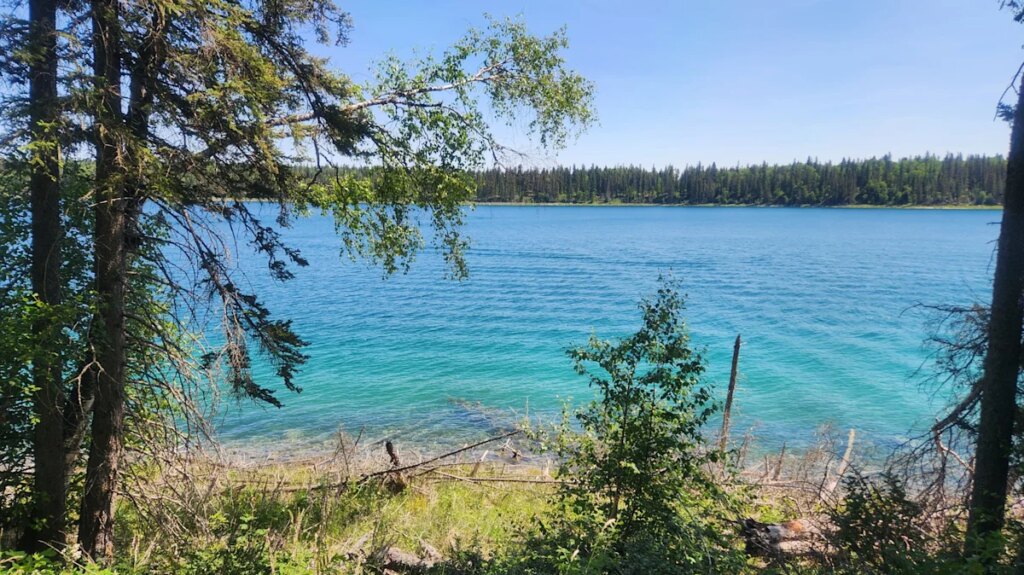
Bland then read of a lake called Kajin Sara, less than a mile long, which a mountaineering team had first discovered in 2019. Fed by a glacier and far from the usual trekkers’ trails, it lies approximately 17,200ft up a mountain in the Annapurna range named Lamjung Himal, making it the highest known lake in Nepal and one of the highest in the world. This time the team prudently sought approval from the provincial government, not the national one, and was given the go-ahead.
Radmore, Gribbon, Chatterton and Bland during their ascent of Lamjung Himal – Ben Bland
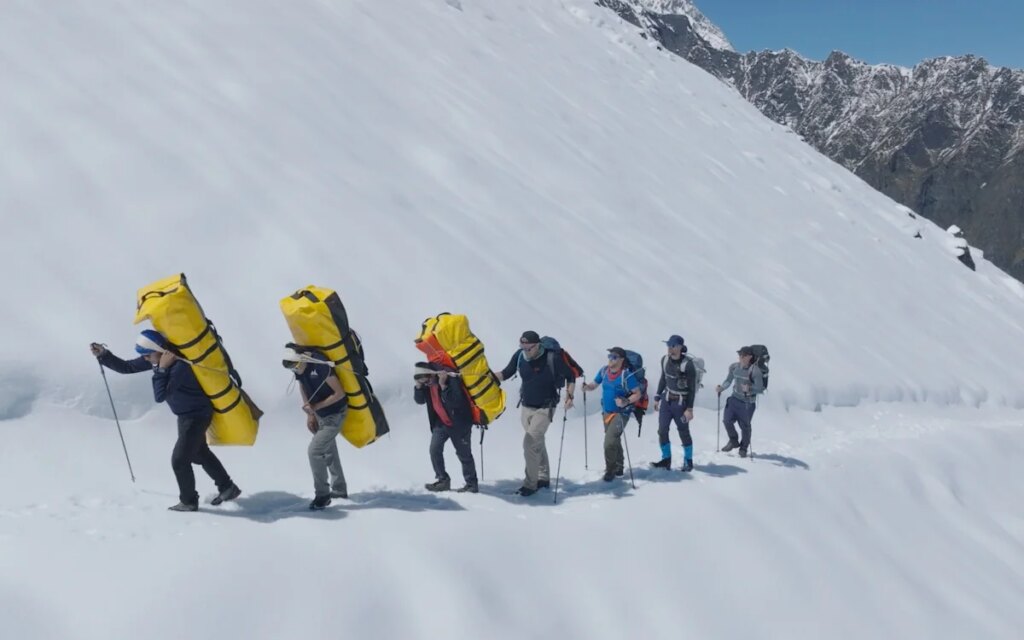
Next came the problem of transportable vessels. Radmore solved that when he tracked down a French company, Tiwal, that makes inflatable sailing boats, each weighing 114lb and packing into two long yellow bags. He duly acquired two at preferential rates.
Advertisement
Advertisement
The team then contacted Guinness World Records, which gave the attempt its blessing but set strict requirements: the boats would have to sail a minimum distance of 1km and be on the water for at least 10 minutes; the team would have to provide irrefutable altitude measurements, video and photographic evidence and a witness statement (mine); and the attempt would also have to take place “in a public place or venue open to the public” – a bit of a stretch in Kajin Sara’s case.
The friends identified a window in late September of this year that offered the best chance of fine weather, and of Kajin Sara being ice-free. As that date approached, they stepped up their preparations.
They found a charitable cause to support – Pahar Trust Nepal, which builds and repairs schools in rural Nepal – dubbed themselves the “Compass Rogues” and created an eponymous website on which they described themselves as “a crew of friends who take on extreme, novel, wacky, dangerous or just downright inexplicable activities in boats”.
They engaged an experienced guide, Bigraj Tamang, and a team of porters and mules. Together they practised sailing the boats on the Blackwater estuary near Chatterton’s West Mersea home and sought advice on altitude sickness from a doctor linked to the Himalayan Rescue Association. They trained on the South Downs Way and Brecon Beacons, while Radmore and Gribbon underwent altitude acclimatisation sessions at a city clinic.
Advertisement
Advertisement
They found a company willing to ship the boats out to Kathmandu at a knock-down rate and persuaded Gill Marine, a sailing equipment company, to give them drysuits, life jackets and other gear. They bought altimeters, oximeters and even a scanner to detect fish in Kajin Sara.
Confident of breaking the record, they planned a victory ceremony on the lake’s shore: they would peel off their drysuits to reveal white shirts, waistcoats and cravats, then run specially created burgees (pennants) up the masts to inaugurate the “Kajin Sara Yacht Club”.
But then, in late August, a glacier collapsed in the Langtang region of the Himalayas, sending a tsunami of water, rocks and other debris roaring down a 50-mile stretch of the Trishuli river valley. It killed more than 5,000 people, caused immense destruction and destroyed 18 schools serving 18,000 students. Suddenly, the Rogues’ expedition risked looking frivolous and disrespectful.
They briefly considered cancelling or postponing their attempt, but that would have deprived Nepal of tourist dollars and the Pahar Trust of funds. “We had meetings with all the people concerned and asked, ‘Should we pause this?’ All of them said no,” says Chatterton.
Advertisement
Advertisement
Instead the team threw itself into fundraising. A jolly escapade became a mercy mission. “It really put rocket boosters on it,” says Radmore.
The Rogues solicited donations from employers, friends and family, and the money poured in. “It’s phenomenal how many people have donated,” says Radmore. Gribbon’s nine-year-old daughter, Emilia, set up a lemonade stall on the quay at Orford, Suffolk, and Radmore’s eight-year-old son, Linton, even contributed his £5 pocket money.
The expedition was back on track, albeit with a new purpose, and after so much preparation, what could possibly go wrong? The answer was pretty much everything.
By the time the Rogues and I flew out from Heathrow in late September, accompanied by a small mountain of gear, we were aware that Nepal had experienced several days of unseasonal rainfall, but the forecast was good and we were not unduly worried.
Advertisement
Advertisement
That changed on arrival in Kathmandu, where Tamang greeted us with the news that the road to our starting point, Chame, a nine-hour drive north-west of the capital, was closed because of heavy rain and would not reopen for another day or two.
Flood damage on the road to Chame, including a felled bridge – Ben Bland
Fortunately the Rogues had built a couple of spare days into their itinerary, but that night, torrential rain drummed down on the roof of our guesthouse. Little did we realise that the downpour was triggering landslides across Nepal, washing roads away and blanketing the mountains with snow.
Tamang was raised in a small village near Mount Everest, became a porter at 14 and had risen to become a respected guide with his own company, Ascent Adventures. He had bought into the Rogues’ crazy venture, and was desperate to make it work, but the next morning he was despondent.
The road to Chame had suffered more landslides, he said, and one 220-yard stretch had been completely washed away. Heavy snow had fallen on the mountains. An avalanche at Himlung Himal killed 16 climbers, and trekkers were being evacuated. There was no longer any prospect of us reaching Chame by road, and even if we could, the danger of proceeding with the expedition had risen exponentially. “This rain is very unusual. We didn’t expect this weather. Everywhere there are landslides and blocked roads,” Tamang lamented.
Advertisement
Advertisement
That evening brought more bad news. The authorities in Chame had closed the trail up to Lamjung Himal because of landslides. They said the local guide, porters and mules that we had booked were now needed in the clear-up operation. We could proceed with the expedition at our own risk, but should expect no help if we ran into trouble.
Others would have given up at that point, but not the Rogues. They merely switched to plan B. They decided to hire a helicopter to fly them to a base camp high above Chame. “We have to throw everything at it,” Gribbon declared.
It was hard to find a helicopter willing (or big enough) to take the five of us, Tamang, the two new porters he had hired in Kathmandu, a drone operator, the boats and all our gear. So we ended up taking two helicopters, one of which would make two journeys, at $3,000 (£2,250) per flight. Fortunately, a wealthy benefactor in the UK agreed to foot half the bill.
Following landslides in the area, the team hired two helicopters to take them to the summit from Kathmandu airport – Ben Bland
Thus, on the morning of our fourth day we took off from Kathmandu airport with – bizarrely – the sailing boats on our laps. We flew over some dramatic scenes of destruction to the Lamjung Himal base camp – a bare wooden hut with a red tin roof, rudimentary kitchen and string of prayer flags, perched on a green ridge high above Chame where the treeline stopped.
Advertisement
Advertisement
There was nobody else there, and the first helicopter had to frighten away several yaks before it could land. The second stopped to refuel in Chame and was commandeered by the Nepalese army to fly two bodybags containing avalanche victims back to Kathmandu.
By then the rain had stopped, the skies were blue, and the scenery was spectacular, with snowy peaks all around us. But it was also ominous. As we ate our rice, dahl and potato that evening, we watched three huge avalanches cascade down an almost-vertical flank of Lamjung Himal as if in slow motion, the roar reaching us several seconds later.
The team, including their guide, Bigraj Tamang (seated, in blue), and porters, were dropped by helicopter at Lamjung Himal base camp, with blue skies and spectacular scenery – Ben Bland
The next day was supposed to be an acclimatisation day, as we had now reached an altitude of 12,200ft, but the delays and the loss of mules and porters meant we no longer had that luxury. We – or rather, our superhuman porters – used it instead to carry the boats, drysuits and life jackets two miles farther up the mountain.
Nepali team members lead the ascent with inflatable boats weighing up to 40kg strapped to their backs – Ben Bland
That was also a sobering experience. We hit snow much lower than expected, and it quickly became slushy and unstable in the midday sun. We therefore decided to set off before dawn the following morning, while the snow was still hard and crunchy, for the ascent to our next stop – a shelter beside Love Lake, 15,500ft above sea level. From there, to the best of our knowledge, Kajin Sara was just a short hike away – ready and waiting for our record attempt the next day.
I hardly slept that night, partly because of the altitude but also from foreboding. The threat of avalanches felt very real. We would be alone on the mountain without a local guide. We had one malfunctioning satellite phone but no proper mountaineering equipment and little prospect of rescue in an emergency. Lacking any mobile phone link, we could not even get a weather forecast, and in the circumstances our insurance policies would almost certainly be invalid.
I was, however, a mere chronicler of the expedition, not a decision maker, and by now the Rogues had invested so much in its success that turning back was not an option. We duly rose at 4.30am, ate porridge, donned our backpacks and set off in semi-darkness for what would prove the defining day of the entire enterprise.
The Nepali porters continued to carry the boats on their backs in the hazardous conditions, seemingly unfazed
We climbed slowly, stopping every few minutes to catch our breath in the thin air. The higher we went, the deeper the snow became. After we passed the rock beneath which we had stored the boats, the track grew increasingly perilous as it zigzagged upwards. At times it was no wider than a single footfall as it led us across vertiginous slopes: one misstep, one slip, and we would have tumbled hundreds of feet.
For five hours we plodded upwards, unsure how far away Love Lake actually was. Eventually we sent Tamang ahead to find it as we followed at a slower pace. Not long after that we rounded a bend and there he was – standing in the shallow valley where the Rogues’ dream finally died.
He pointed to an expanse of churned-up snow and rocks. That was Love Lake, covered by a small avalanche, he said. He pointed to four wooden sticks protruding forlornly from the snow. That was the shelter where we were supposed to spend the next two nights, destroyed by the same avalanche. He pointed to a ridge covered in deep, virgin, trackless snow. Somewhere beyond that, he said, was Kijin Sara.
Sticks protruding from the snow indicate the position of the team’s intended camp by Love Lake, buried beneath an avalanche
We put up our drone and sure enough, beyond the ridge, scarcely three quarters of a mile away and barely 1,000ft above Love Lake, we spotted that elusive body of water on which the Rogues had hoped to sail: though there were cracks in the ice, it appeared to be frozen solid.
Having got so tantalisingly close to Kajin Sara, Radmore, Chatterton and Bland wanted to complete the trek – if only to break the ice, don their drysuits and briefly swim in the fabled lake. Gribbon and I demurred because the round trip would take at least three more hours, and without the shelter we now had to return to the base camp before dark, exhausted and in much more dangerous conditions.
It was Tamang who ended the debate, calling time on the expedition. Crossing the ridge was too dangerous, he ruled. The snow was more than 5ft deep. There was a real risk of avalanches and crevasses, and he would not risk the porters’ lives. “I always wanted to make this happen,” he explained with evident emotion, “but it’s too risky. Life is more important than any records. We have to respect nature.”
The team were forced to abandon their record attempt when they discovered that Kajin Sara lake was frozen solid – Ben Bland
And that was that. We ate some of Radmore’s mother’s Christmas cake. He and Chatterton played a game of Twister to set an altitude record of a different sort. And then we set off on the long journey back to safety, home and families, defeated by freak weather, disappointed but not entirely despondent.
The Rogues had clearly failed in their bid to set a world record. But they had had their adventure, and even as we descended they were planning another attempt next June when the snows would be gone and the climb should be relatively straightforward. “It was the maddest thing we’ve ever tried, but if nature hadn’t conspired against us we’d have done it,” said Radmore.
In another sense, however, the expedition had been a great success. At the last count it had raised more than £100,000, which is nearly enough to build two new schools in a country where so many have been destroyed. “We tried our hardest and raised enough to build a school,” said Bland. “We will break the record – just not today.”
To donate to Pahar Trust Nepal, visit the team’s JustGiving page
Try full access to The Telegraph free today. Unlock their award-winning website and essential news app, plus useful tools and expert guides for your money, health and holidays.
Source link