


You know Olympic athletes work hard in the gym. But the crucial role of physical therapy for these athletes often gets overlooked.
“With elite athletes, there’s obviously a large emphasis on the strength, power and endurance of their muscles, because that’s what spectators see,” Dr. Jared Vagy, a spokesperson for the American Physical Therapy Association, tells TODAY.com.
But what people don’t see is all the work going on in the background, like physical therapy, rehabilitation and nutrition, says Vagy, a physical therapist who specializes in working with elite athletes, including Olympic medalists and world champions.
And while we often assume that elite athletes face physical issues that are different from the rest of us, Vagy says, in reality, there are “a lot of similarities that I think people would be surprised by.”
In particular, anyone who sits for long periods of time probably has tight hips. That’s why Vagy finds himself recommending a simple hip flexor stretch to almost everyone — including Olympians.
You Probably Have Tight Hip Flexors
The same way we all have jobs, an elite athlete’s job is athletics, Vagy says. But when they’re not training or working out, an athlete’s days don’t look all that different from the rest of us.
“Oftentimes, a lot of the athletes are going back to their homes and they’re just sitting after their training,” Vagy says. “They might spend some time with friends or sit on their couch and watch Netflix for four hours.”
That’s not dissimilar from those of us who sit at a desk all day, commute home sitting in a car and then spend the evening in front of the TV or on our phones.
But that kind of pattern leads to tight hips, Vagy explains, especially the group of muscles in front of the hips called the hip flexors.
“I find quite a bit of flexibility deficits in the hips of athletes,” Vagy says. “And those are similar to what I find in your kind of everyday adult.”
The 1 Stretch Everyone Should Be Doing
Because so many of us have tight hips, stretching and increasing the mobility of our hip flexors is key.
“The main hip flexor muscle is called the iliopsoas, and it attaches from the hip to the spine,” Vagy explains. But when people stretch this muscle, often with a 90-degree half kneeling position, it only targets the part of the muscle at the hip, he says.
“In order to get full mobility or elongation in the muscle, it’s recommended to stretch it through the spine as well,” he says.
To effectively target the entire muscle, Vagy shared a three-part variation on the classic half-kneeling hip flexor stretch. You’ll feel it in the front of the hips, as well as your lower back.
3-Way Hip Flexor Stretch
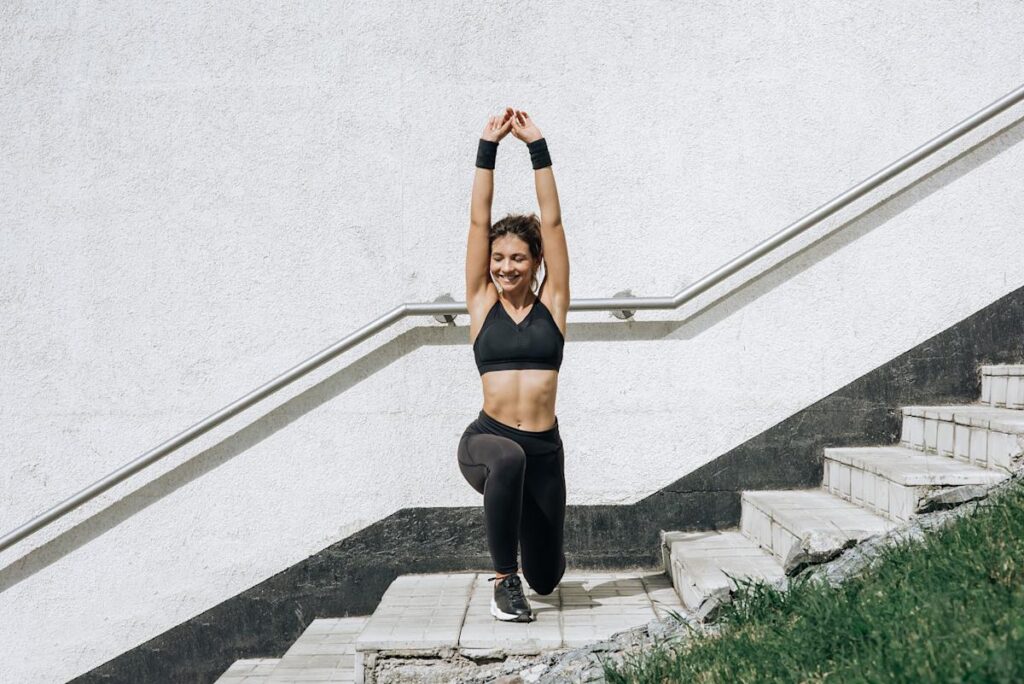
To start, get into a comfortable half-kneeling position. You’ll have one knee on the ground and one up in front of you, forming a 90-degree angle.
Engage your core and glutes, level your pelvis and gently bring your hips forward. You should feel a stretch in the hip flexors in the front of the hip of the leg that’s on the ground.


The first position involves a gentle backbend. (Stephanie Mansour)
For the first position, raise your arms straight up over your head and gently bend backwards. This stretches the attachment of the psoas muscle in the spine, Vagy says.


In the second position, you’ll twist your torso to one side. (Stephanie Mansour)
In the second position, raise your arms in front of you and gently twist your arms and upper torso in the direction of the knee that’s up.


Finally, in the third position, you’ll add a side bend. (Stephanie Mansour) (Stephanie Mansour)
In the third position, raise your arms straight up over your head and side bend your body in the direction of the knee that’s up.
Rather than thinking of this stretch in terms of sets and reps, Vagy says he likes to “do the stretch with movement and motion” because it’s usually recommended for someone who’s been sitting for long periods of time.
So, he says, go through all three positions on one side six times. Take a quick 30-second break to switch sides, then go through each position six times on the other side. Perform that three times for a full routine.
When you’re done, your hips and back should feel more mobile and less tight. You might even feel a release of pain in your knees, all the way down to your feet. Stronger, well-supported and more mobile hips are essential for athletes, but also everyday movements like walking up and down stairs.
This article was originally published on TODAY.com