


When you think of the beautiful islands of Greece, scuba diving isn’t the first thing to come to mind. I recently traveled to Greece where I received my PADI rescue certification in scuba diving. I’ve been diving in more than a dozen different countries, and before traveling to Greece, I didn’t know what to expect.
As a Greek-American, and PADI Ambassadiver it was truly something special to get to dive in my homeland–to see what these beautiful islands have to offer beneath the surface. You don’t need to be on a remote island either. Seahorse Dive Center in Athens takes divers and snorkelers in some of the clearest waters not far from the coast.
What makes Seahorse special: their small-shop, family-run vibe brings personal attention (whether you’re diving solo or with a group), and their conservation-minded approach gives divers a chance to appreciate, and help protect the clear Mediterranean waters.
Here’s just a few reasons why Greece should be your next underrated diving vacation…
The water clarity is surreal
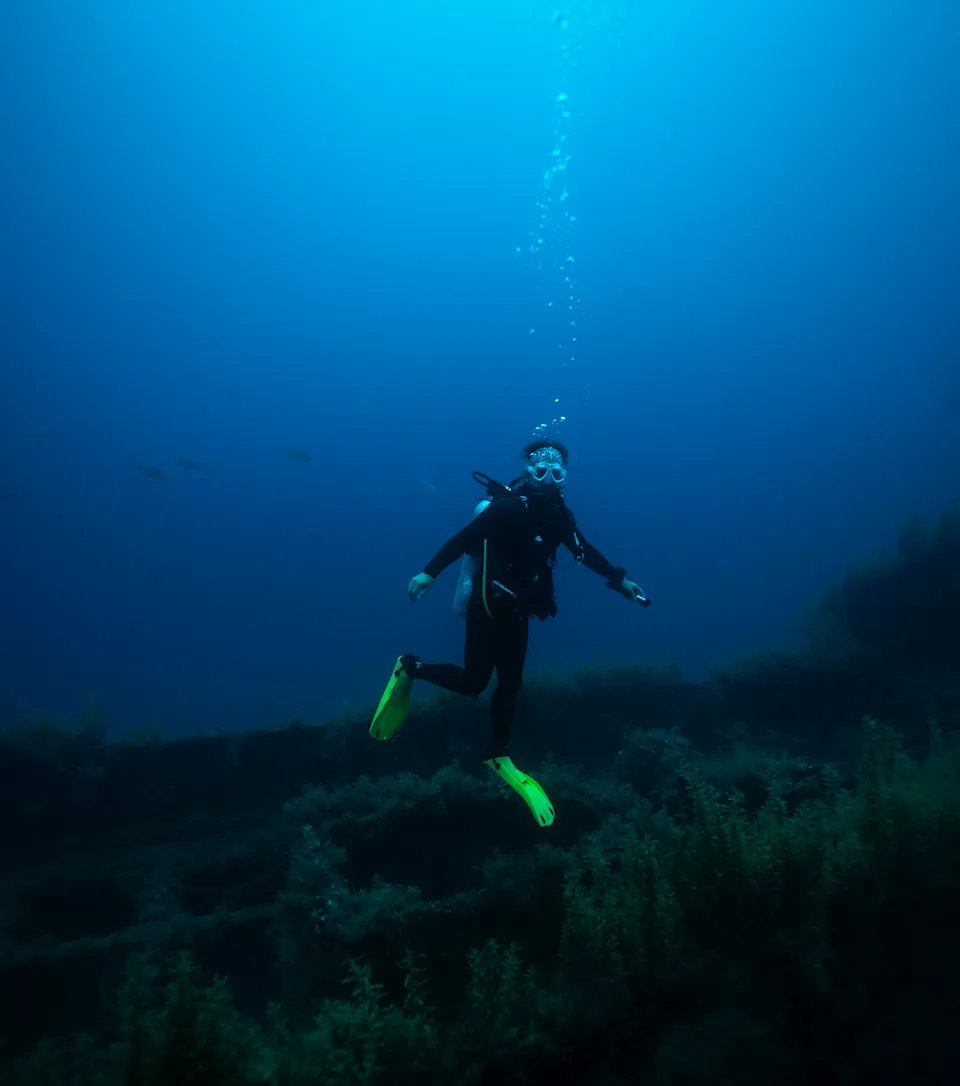
Greek waters are among the clearest in Europe, thanks to the region’s geology and low sediment levels. The lack of large rivers means there isn’t much silt clouding the water, and constant sunshine keeps light streaming down even at depth. Most dive sites in summer and early fall offer 80–130 feet (25–40 meters) of visibility — the kind of conditions that are usually associated with the Red Sea or Maldives, not the Mediterranean.
The most underrated scuba destination in Europe? Go to Greece
(Brandee Anthony)
That transparency makes Greece especially great for new divers: you can keep an eye on your dive buddy, spot marine life from afar, and fully appreciate the dramatic rock formations and ancient seagrass meadows under you.
Discover centuries-old Posidonia Oceanica
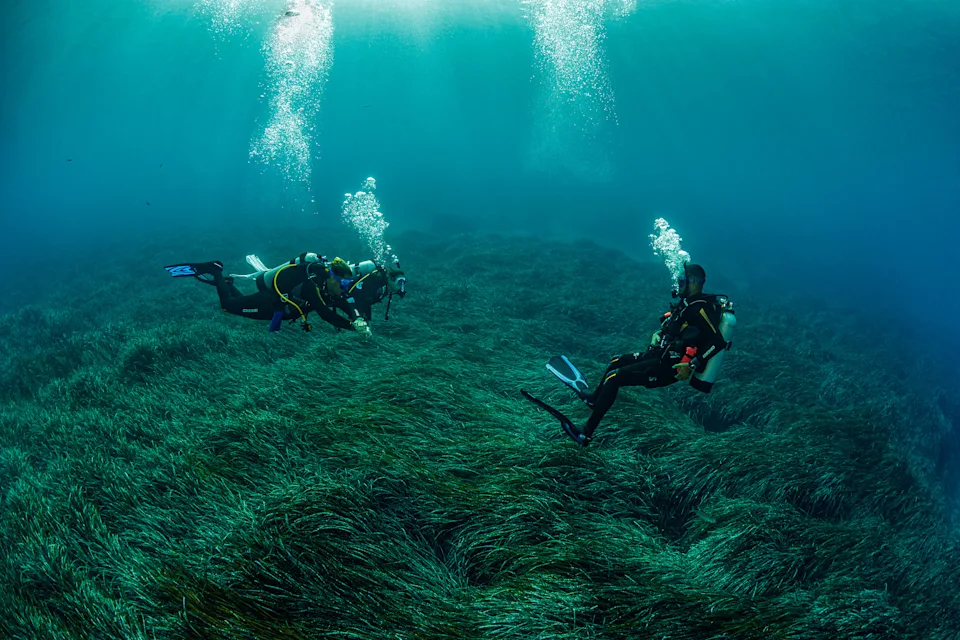
One of the coolest parts of diving in Greece is that the ocean floor isn’t just sand–it’s a living, ancient landscape. The Mediterranean Sea is home to Posidonia Oceanica, a seagrass species found nowhere else on the planet, and some of these meadows are hundreds, even thousands of years old. They grow slowly, building thick, root-like mats that act almost like underwater architecture. Fish hide in it, pipefish camouflage themselves as leaves, and sea turtles nap right on top of it.
The most underrated scuba destination in Europe? Go to Greece
(PADI)
When you fin over one of these meadows, you’re hovering above an ecosystem that has been quietly shaping the coastline and supporting marine life since long before any resort or beach town existed on shore. It’s like swimming over a natural, ancient city that’s still very much alive.
On Crete, Dive2gether dive shop offers more than just fun dives: they give divers a chance to become part of something meaningful. Under the guidance of their marine-biologist team, you can join conservation dives where participants assist in monitoring the health of Posidonia oceanica meadows, the ancient seagrass that forms the underwater “rainforests” of the Mediterranean. On some dives, you may even help with replanting efforts, gently adding new shoots to damaged patches to support meadow recovery and marine biodiversity.
Explore hidden caves if you’re brave enough
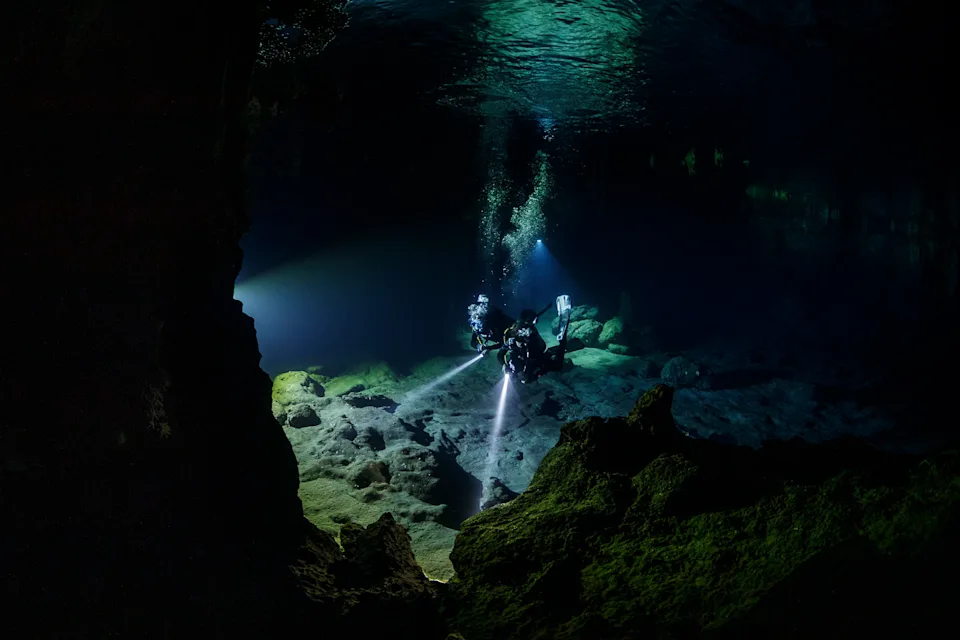
There’s a variety of diving in Greece from reef dives, shipwrecks, deep walls, but Crete is where things get truly adventurous. Off the north coast, dive centers like Blue Adventures Diving offer once-in-a-lifetime cave dives. We boarded a small boat and zipped to the cave entrance, then dropped into the water and switched on our flashlights before descending through a 200-foot tunnel. Swimming through the darkness, you start to see the space open around you until suddenly you’re inside a massive underwater chamber glowing in surreal shades of blue.
The most underrated scuba destination in Europe? Go to Greece
(PADI)
This is Elephant Cave, named for the prehistoric elephant bones discovered here—some still visible on the dive floor if you look closely. The water casts an ethereal light across the rock formations, and the stillness inside the cave makes you feel like you’ve uncovered a secret world few people ever get to see.
You’ll most likely see an octopus in the wild
Greece is one of the easiest places in Europe to spot octopus on your dive. They love the rocky coastline here, slipping in and out of crevices or changing color to blend perfectly with the seafloor.
The most underrated scuba destination in Europe? Go to Greece
(Brandee Anthony)
Because the visibility is so good, you don’t have to be an expert to find them. Pro tip: just look for a cluster of shells piled outside a hole in the rock, which is usually the octopus’s dinner leftovers. On a single dive, you might catch one stretching a tentacle to scope you out, drifting along like a tiny alien. Remember–respect the ocean and don’t touch any wildlife or coral!
There’s plenty of eerie shipwrecks to explore
If you think Greek diving is all about fish and seagrass, think again. The seas around Thessaloniki and northern Greece offer access to a surprising number of shipwrecks–sunken relics that might be as interesting as the ruins on land.
The wrecks lie on mostly flat seabeds or gentle slopes, making them accessible to intermediate divers, often surrounded by crystal-clear water, so you can take in the entire structure from bow to stern. Whether it’s a fishing boat, a merchant vessel, or even remnants of an airplane, these underwater time-capsules make any dive that much more exciting.
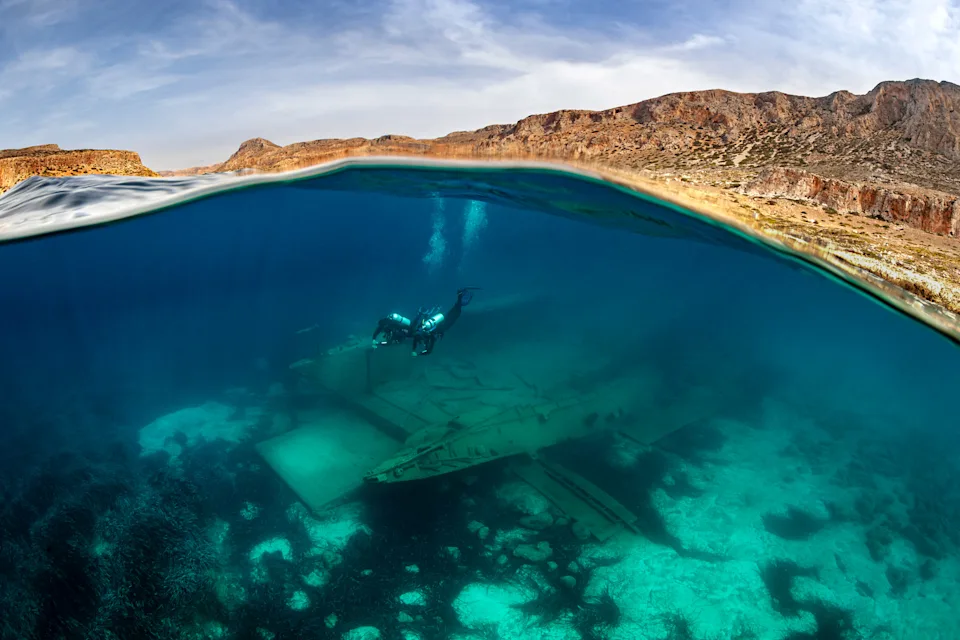
The most underrated scuba destination in Europe? Go to Greece
(PADI)
If you stay at Sani Resort on Halkidiki’s Kassandra peninsula in Thessaloniki, you won’t have to travel far to dive. The resort’s onsite dive operation, Sea World Scuba Diving Center is a full-service, PADI-certified dive shop offering everything from try-dives to advanced courses.
That means even if you don’t arrive with gear or a dive certification, you can get set up and go under the waves. They run regular dives in the clear Aegean waters nearby, ideal for divers looking for wrecks and reefs. The staff is friendly and will make you feel as comfortable as you can be 60-feet below the surface.
You don’t have to worry about sharks
If you’ve ever hesitated to try scuba because of sharks, Greece is the place to finally dive in. The Mediterranean is home to a few shy shark species, but encounters with divers are extremely rare.

The most underrated scuba destination in Europe? Go to Greece
(PADI)
You’re far more likely to see colorful wrasses, curious octopus, or a passing sea turtle than anything with a fin straight out of a movie. It’s one of the reasons Greece is such a comfortable destination for beginners: you can relax, breathe, and actually enjoy the underwater scenery instead of waiting for a cameo from Jaws.
Treat yourself after a dive to all the baklava
Scuba burns more calories than you might expect—you’re moving constantly, your body is keeping warm, and you’re breathing denser air, so you finish a dive with a real appetite.
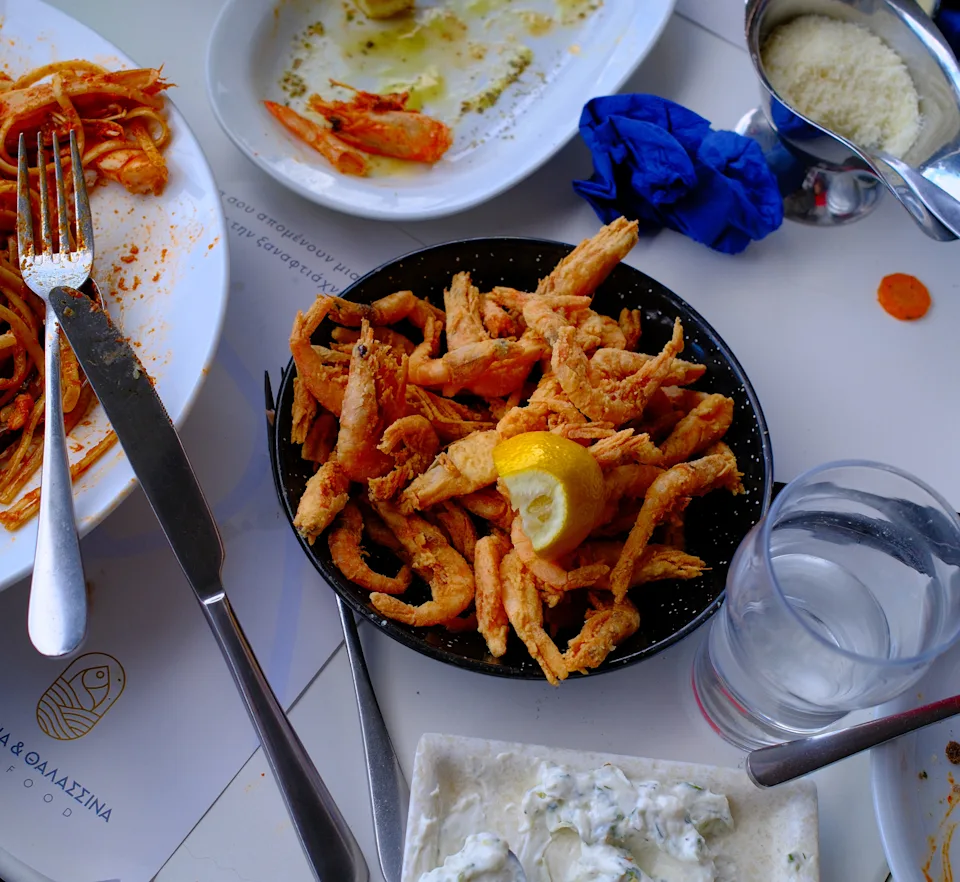
Greek food
(James Barrett @jimmyrox)
Fortunately, Greece might be the world’s finest place to feel hungry. Fresh grilled fish, octopus pulled straight from the sea, tomato-rich Greek salads, creamy tzatziki, and fresh gyros… it tastes even better when you’ve spent the morning underwater. Just make sure you leave room for dessert because you can’t pass up authentic, homemade baklava.
Diving in Greece surprised me in all the best ways. Beneath those postcard-perfect islands is a world that feels both ancient and alive—where history doesn’t just sit in museums, it swims right past you. And you don’t have to be an expert, travel to the ends of the earth, or hunt down a luxury liveaboard to experience it.
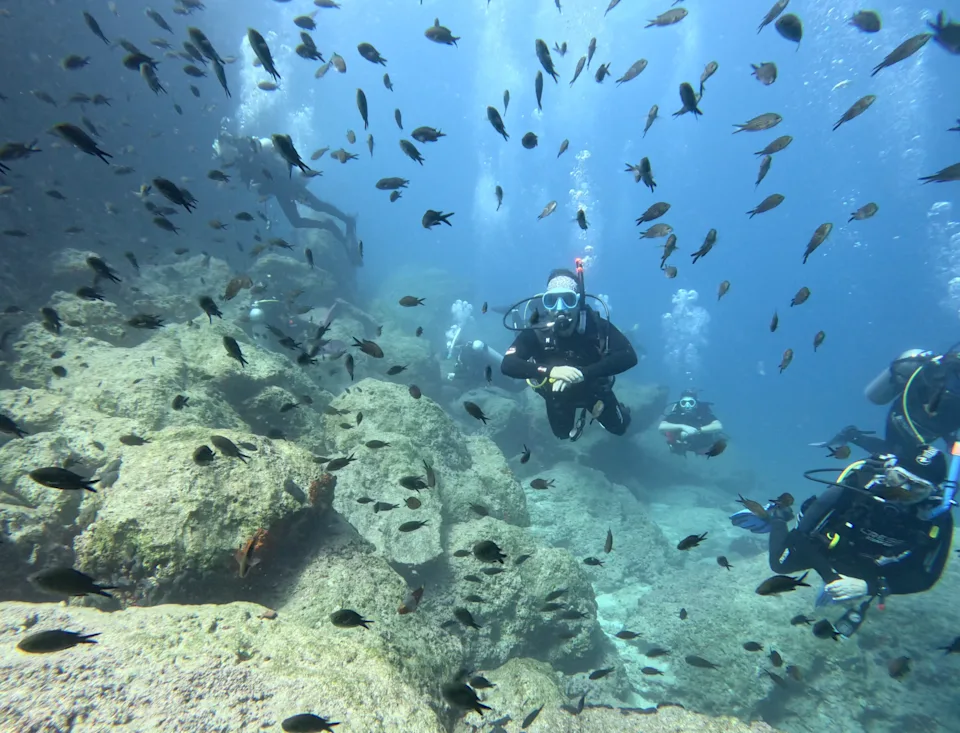
Scuba diving in Greece
(James Barrett @jimmyrox)
With easy access from major cities like Athens, well-run local dive shops, and some of the clearest visibility in Europe, Greece makes the underwater world feel inviting rather than intimidating. For a destination famous for what’s above the surface, the real secret is what you’ll find below. That’s why the most underrated scuba destination in Europe deserves a spot at the top of your dive list.