


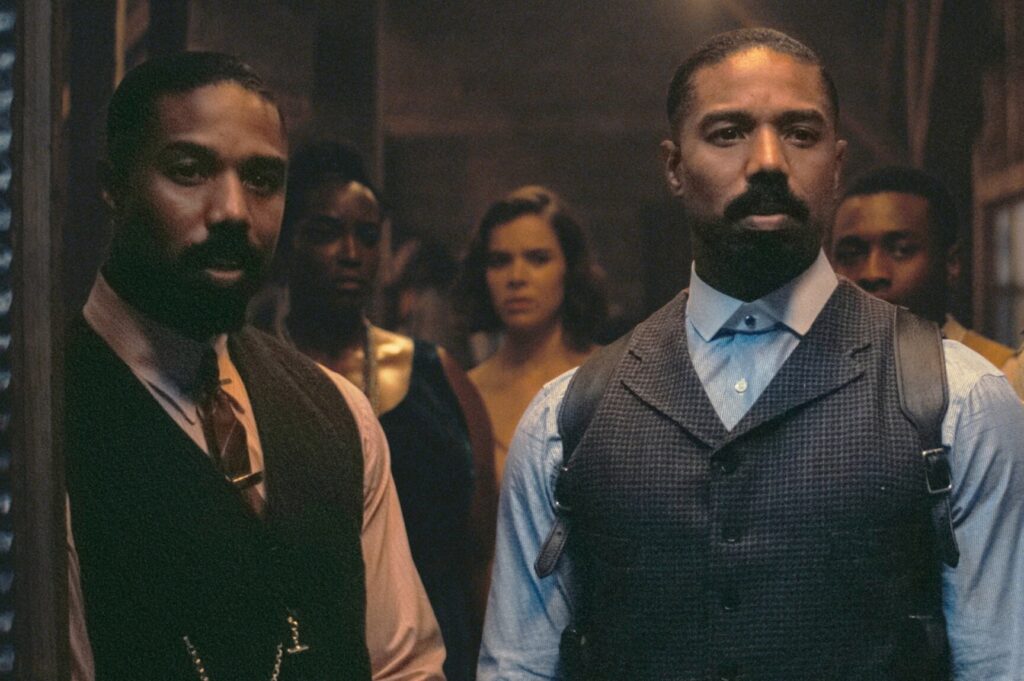
The score from “Sinners” reveals the blues’ deep cultural and historical connections.
What would the movie “Jaws” have been without the music? How about “Grease,” “Dirty Dancing” or any of Quentin Tarantino’s pictures?
The horror movie “Sinners,” written and directed by Ryan Coogler, opened last April.
It topped the box office that opening weekend, but little did anyone know that, less than a year later, it would go on to earn 16 Oscar nominations — the most in Academy Award history — and win four.
Not only has “Sinners” been a critical success, it was popular with moviegoers, bringing in nearly $370 million worldwide.
A lot of those who saw “Sinners” were so captivated by its music that they downloaded and streamed the Grammy-winning and Oscar-winning score.
The story of twin brothers in the early 1930s leaving Chicago and returning to their home in Mississippi lent composer Ludwig Göransson a wide variety of music genres to choose from.
Patrick Salmons, a graduate program coordinator and instructor of Appalachian Studies at Virginia Tech, said one of the lessons from the movie is “how the blues is at the heart of all of our music.”
Salmons pointed out that during the movie you hear blues, rock ‘n’ roll, banjos and fiddles.
“It’s a great way to kind of illustrate how all these songs we hear, we can always trace it back to the blues in one way or the other,” Salmons said.
There is one instrument heard in “Sinners” that is associated with country and bluegrass music, but really traces its roots far outside Nashville.
“The banjo is an African instrument, and the original players were African griots,” Salmons said. “There’s this long history of blackface minstrelsy too, in the U.S., where you have white people hearing the banjo and kind of at first not liking it.”
Salmons compared it to a more modern genre of music.
“Very similar to hip-hop too and the ways in which white people saw hip-hop, and they’re like, ‘ah, this is horrible. We hate it’,” Salmons said. “Then they’re like, ‘you know, I actually like it.’ And then we find out hip-hop’s the biggest music in the world.”
Salmons said he believes “Sinners” is able, through the unlikely vehicle of horror, to “illustrate the complexities of race and class and music in the U.S.”
“The metaphors speak very loudly about our history and the ways in which these things aren’t just happening then, but also impact present day,” Salmons said. “And how we think about present day practices and musical history, as well as race and class issues in the U.S.”
Get breaking news and daily headlines delivered to your email inbox by signing up here.
© 2026 WTOP. All Rights Reserved. This website is not intended for users located within the European Economic Area.