


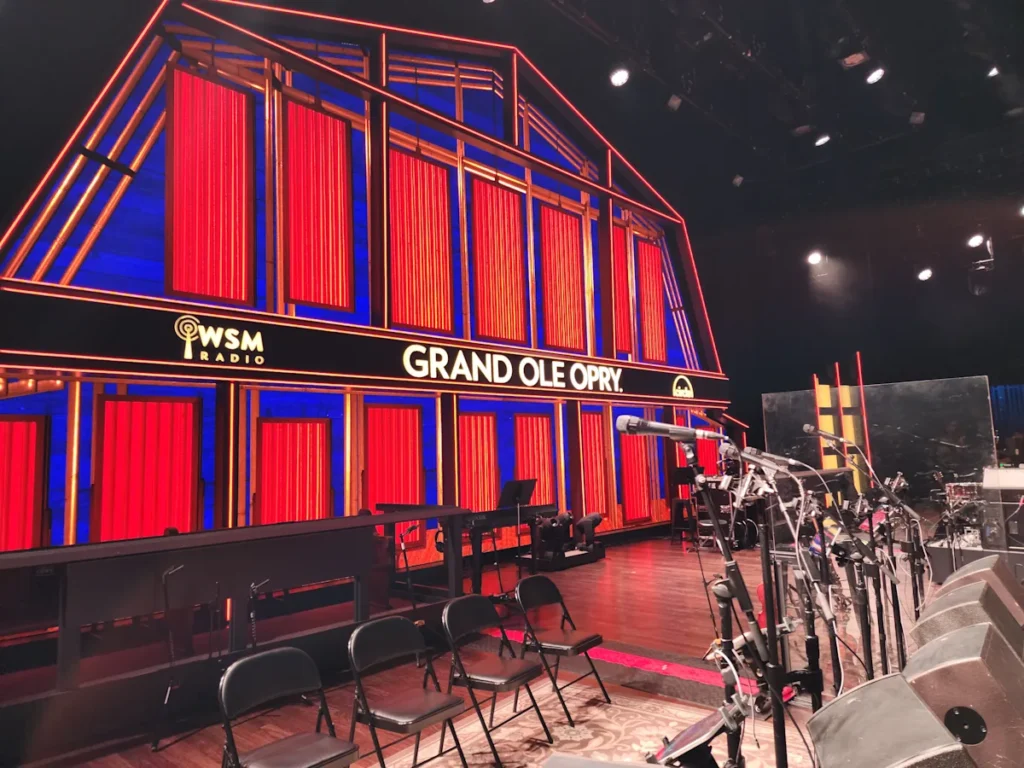
A hundred years ago, a fiddler named Uncle Jimmy Thompson walked into a small WSM studio with a bow and a bottle of homemade hooch. Somehow, he had the confidence to tell producers he could play “longer than you got power.” His performance on November 28, 1925, is considered the official start of what became a national institution. It aired under the name “WSM Barn Dance” until 1927, when announcer George Hay joked on-air that the program followed a classical music segment called the Grand Opera. His offhand remark about “the grand ole opry” stuck, and the name has never changed.
The early years were unpredictable. The performers came with fiddles, banjos, harmonicas, and even the occasional farm animal. Cousin Oscar’s infamous dancing pig was one of the Opry’s first true backstage distractions, especially when it got loose in the halls.
In the 1930s, DeFord Bailey, the Opry’s first Black superstar, won fans with “Pan American Blues.” The train-inspired tune was so vivid that listeners swore they heard a locomotive outside. His segment was so popular that some fans tuned in only when they knew Bailey was scheduled to play.
As radio signals expanded, the Opry grew from a local broadcast to the Saturday night anchor for families across nearly 30 states. WSM increased its power to 50,000 watts and, by the early 1930s, could be heard from Minnesota to Florida. People sat around their living rooms the same way they now gather around to watch Netflix or HBO.
The Ryman years

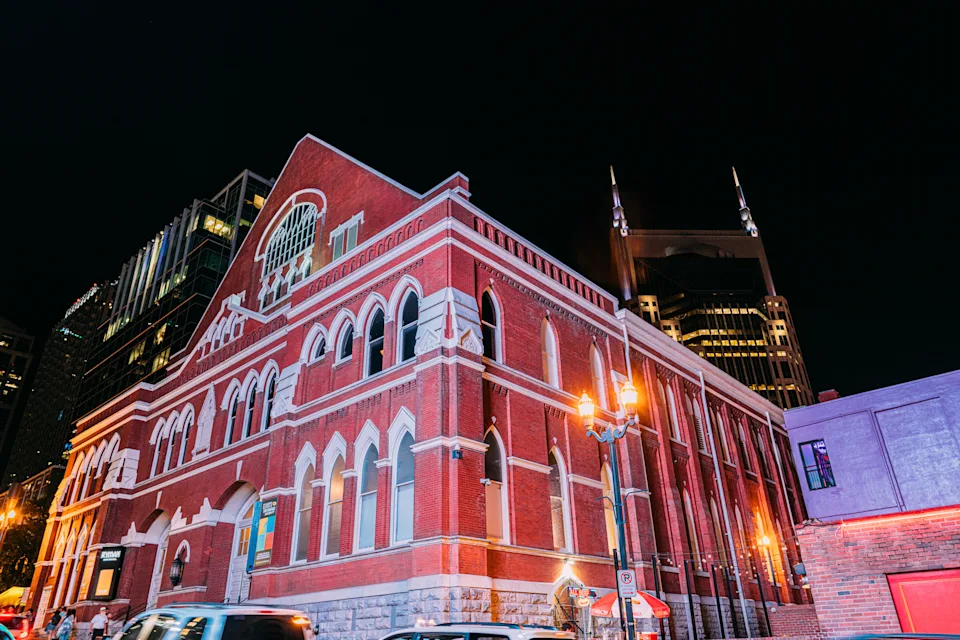
Vibrant-Colored neon lights on a busy night at the bars and honky-tonks illuminate the Ryman Auditorium just off Broadway, the tourism center of Downtown Nashville, Tennessee
(Jeremy Poland via Getty Images)
Soon, crowds began appearing outside the studio, begging for entry. WSM moved the show several times before permanently settling into the Ryman Auditorium in 1943.
The Ryman years carried the Opry’s mythology to a whole new level. Minnie Pearl stepped out with a price tag dangling from her hat and delivered a comedic character so beloved she remained a fixture for more than half a century. Little Jimmy Dickens became a star thanks to his humor, rhinestone suits, and ability to fire off one-liners seconds before a heartfelt ballad. Dolly Parton made her Opry debut in 1959 at age 13 when her Uncle Bill Owens drove her to Nashville in a borrowed car. She returned countless times, eventually logging more than 400 appearances.
A new home for the Opry

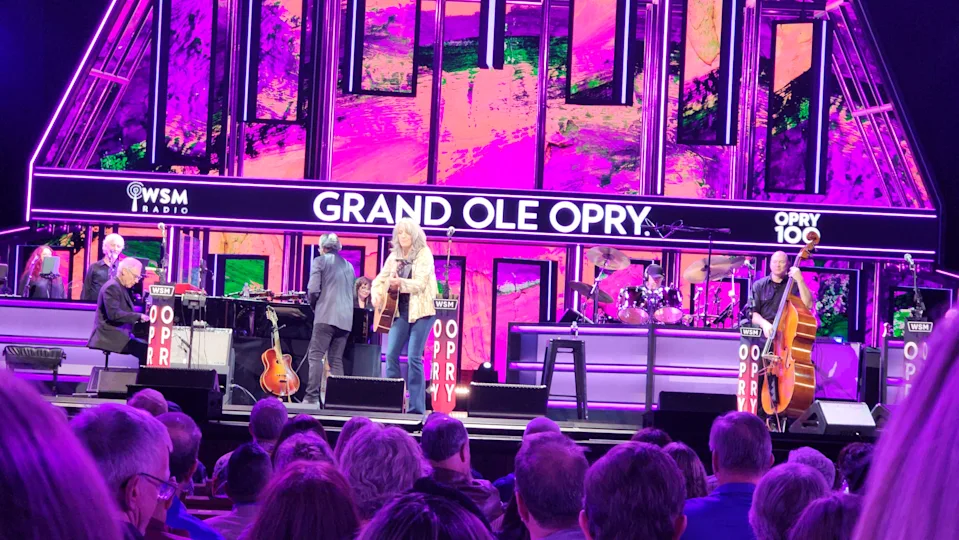
The Grand Ole Opry is still just as vital today
(Tamara Gane)
The 1970s brought another turning point. In 1974, the Ryman was in disrepair, and the Opry moved to its current home, a modern theater several miles east of downtown. To preserve continuity, a six-foot circle of oak was cut directly from the Ryman’s worn stage and installed into the new one. Every performer who steps into that circle stands on the same wood used by Monroe, Cline, Cash, Wagoner, and the others who defined the genre. Standing in that circle is considered one of the most emotional moments of a country artist’s career, and some have cried, shaken, or forgotten lyrics the first time they felt the historic boards beneath their feet.
What it takes to become a member

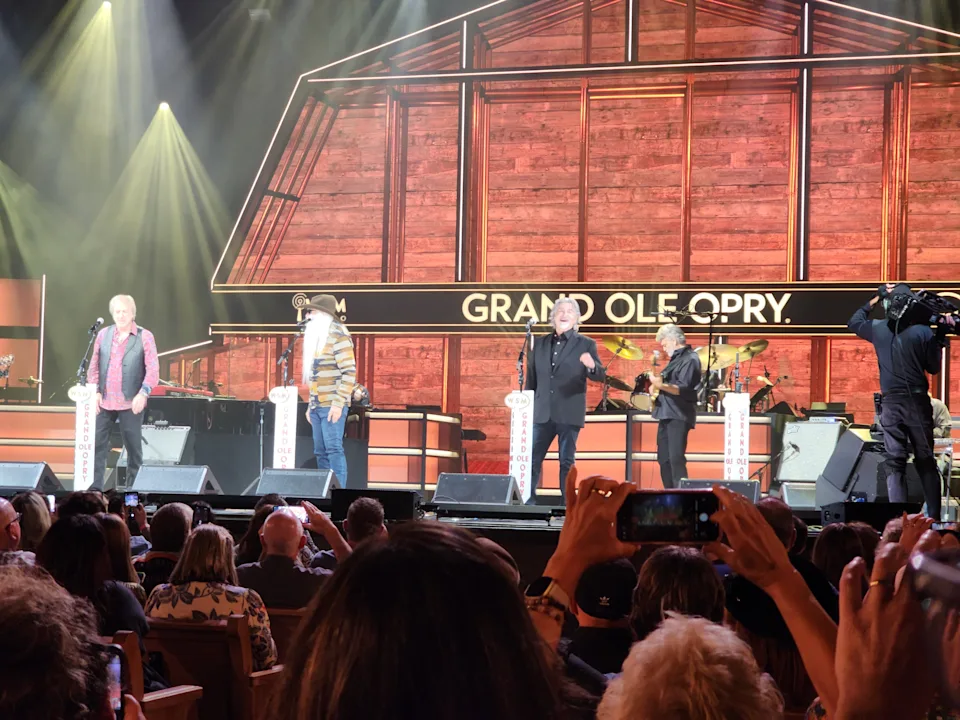
Members continue to play the Opry
(Tamara Gane)
Membership adds another layer of significance. More than 225 artists have been inducted since the beginning, and the process remains one of the most closely guarded rituals in country music. There are no public applications. No one campaigns for it. The invitation comes directly from Opry leadership and current members, almost always live on stage, almost always as a surprise.
Garth Brooks once accepted the honor barefoot because he’d kicked off his boots backstage and didn’t expect to be called out. Carrie Underwood cried so hard she could barely finish her performance. Kelsea Ballerini was invited by Little Big Town after singing an emotional tribute to Keith Whitley, whose widow stood in the wings. Membership isn’t symbolic. Members are expected to perform regularly and stay part of the Opry’s ongoing story.
A century of stories
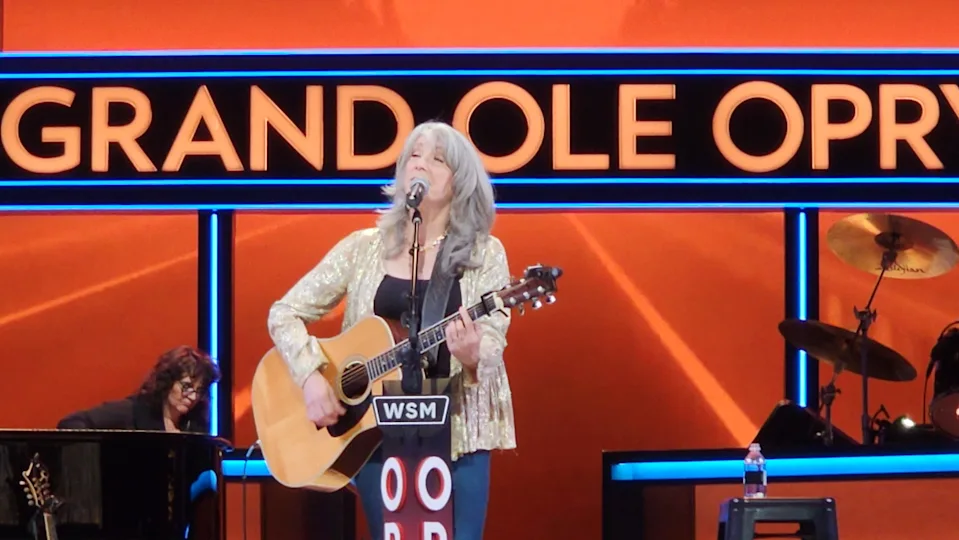
The stars play their biggest hits
(Tamara Gane)
A century also brings its share of unusual facts and lesser-known stories. In 1973, the Opry nearly banned drums because some traditionalists thought they were too loud and too “city.” (They eventually relented.) Roy Acuff, one of the show’s earliest stars, became so synonymous with the Opry that President Nixon asked him for a tour of the backstage area. The show has rarely missed a performance, broadcasting through wars, recessions, flooding, and the 2020 shutdown year, when socially distanced performers kept the tradition alive for millions of people watching from home.
The Opry today
For visitors, the Opry House offers one of the most immersive experiences in Nashville. Backstage tours run daily and include a walk through themed dressing rooms designed around different eras and styles of country music, a visit to the broadcast studio where live announcements still happen, and a look inside the green room where artists gather before stepping into the circle. The tour ends on stage, which is why so many guests walk away with unexpectedly emotional reactions. The VIP version includes private lounge access and a pre-show escort to the artist entrance, offering a closer look at how the Opry operates today.
A hundred years after Uncle Jimmy played his first tune, the Opry still feels as alive as ever. New artists debut almost weekly. Legends return for milestone performances. Fans fill the auditorium night after night because the show remains what it has always been: a gathering place shaped by real people, real stories, and a century of unscripted memories.
The anniversary reinforces that the Opry is going strong after a century of history. It preserves the past as it dances its way into the future.