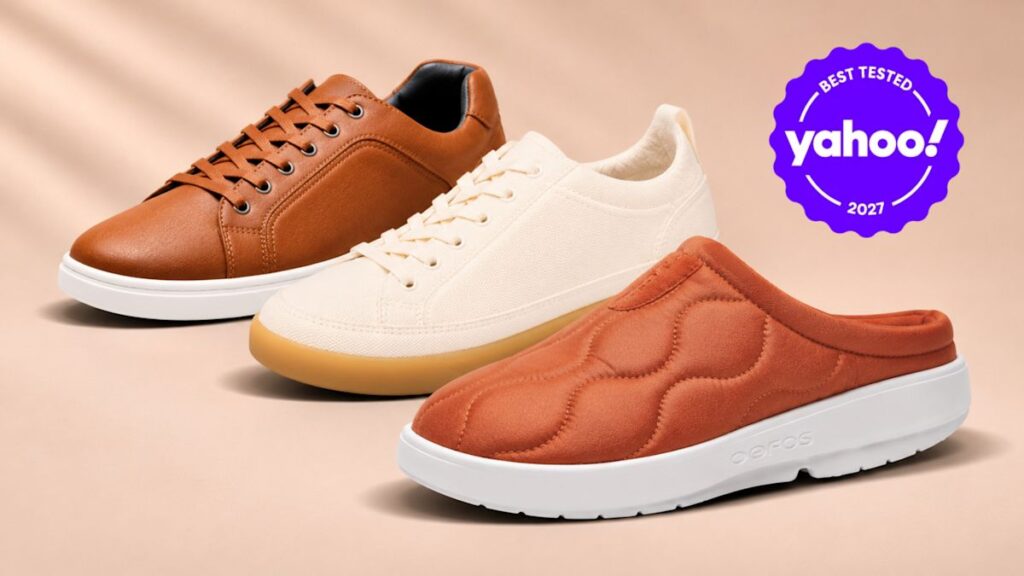


If you spend a lot of time on your feet, have high or flat arches or deal with nerve or joint pain, finding the best orthopedic shoes can feel like a kick in the shin. Many shoes marketed as comfortable don’t offer the support, cushioning or room your feet need. Orthopedic shoes do: They’re designed with arch support, shock absorption and roomier toe boxes. And they’re no longer stuck in medical supply catalogs. Brands like Nike, Hoka and Kuru now make stylish options, often at prices that won’t make you wince more than your feet already do. Still, there’s no one-size-fits-all pair; the right choice depends on your feet, your symptoms and how you’ll wear the shoes.
Quick Overview
Not sure you need them? Podiatrist Samantha Landau, assistant professor at the New York College of Podiatric Medicine, says “most people with foot pain can benefit” from orthopedic shoes. The right pair may improve your movement, stability and confidence on longer walks while helping reduce pain. “They also can help reduce falls,” she adds.
To find the best orthopedic shoes, we consulted foot surgeons and podiatrists, then put top-rated pairs through hands-on testing across a range of foot conditions, price points and styles. I tried several pairs alongside two other testers with different needs, from everyday aches to more complex issues. In all, we tested 19 pairs (plus a set of insoles), from running shoes to high heels, on long walks, workouts and daily errands. The goal: Does this shoe actually help?
Best orthopedic shoe overall
Best for: Plantar fasciitis, hammertoe, pinched nerves and arch pain | Style: Walking, cross training, everyday wear | Sizes: Women’s 5–12, Men’s 6.5–14, both in full and half sizes and wide fit
🏆 Also won:Best walking shoes for all-day comfort
Kuru’s Atom athletic sneaker quickly became my go-to for everyday tasks like running errands and light workouts. The extra cushioning in the heel and midsole, solid arch support and a deep heel cup work together to hug the foot, helping to prevent slippage and relieve pain.
That last part really matters: stiffer, more stable heel counters “help limit side-to-side movement,” says Landau. Here, a supportive structure along the sides, paired with lightweight mesh on the forefoot, holds the foot in place without restricting toe movement.
The wide toe box’s anatomical fit can help reduce pressure linked to hammertoes and pinched nerves, conditions often seen in people with wider feet. Strong arch support and stability also make the Atom a good option for overpronators, whose feet roll too far inward.
There’s just enough cushion to be comfortable without feeling thick or unstable — you can still feel the ground underfoot, which matters for balance. My arches felt supported all day, even during long stretches on my walking pad. And the breathable mesh helps feet stay cool and dry.
One caveat: if bunions are your primary concern, Kuru may cause discomfort. Other Kuru styles also earned high marks in our testing for plantar fasciitis relief shoes.
- Arch-supporting insoles
- Plush cushioning in heel and midsole
- Deep heel cup and wide toe box
- May take time to break in
- Not ideal for bunions
Other top orthopedic shoes we recommend for 2027
Amazon
Best for: Joint pain, overpronation, flat feet, plantar fasciitis | Style: Walking, everyday running | Sizes: Women’s 5–12; men’s 7–16; available in regular, wide and extra-wide widths
🏆 Also won: Best supportive Hoka shoes
The Hoka Gaviota, which holds the APMA Seal of Acceptance, is built for walkers who need extra support without giving up cushioning — a harder balance to strike than it sounds. Our tester, who has gait issues, hammertoe and ankle pain, had spent years looking for that combination. “I’d wear them every day with every outfit for every activity, if I could,” she said.
A structured midsole keeps the foot aligned while a high stack of soft foam absorbs impact and eases pressure on the joints. Our tester found it curbed her excessive inward rolling, or overpronation, “but it didn’t overcorrect my stride,” she said.
A roomy fit, padded collar, breathable mesh upper and enough depth for a custom orthotic make these a strong pick for long days on your feet. The tall stack and rocker sole do leave you with little sense of the ground underfoot, though, and the lighter colors show dirt.
- APMA Seal of Acceptance
- Stability without a stiff ride
- High foam stack eases joint impact
- Deep enough for custom orthotics
- Tall stack and rocker sole leave little ground feel
- Light colors show dirt
Nike
Best for: Bunions, hammertoe, joint pain, wide feet | Style: Athletic, walking| Sizes: Women’s5-15 with half sizes available from 5.5–11.5
The Nike Motiva strikes a rare balance of stability and cushioning, easily outperforming most pairs I tested — and I put in the miles: a couple of hours daily on my walking pad, plus track sessions and dog walks. It’s remarkably comfortable, with plenty of room in the toe box, solid arch support and no heel slip. The upper is stretchy and flexible yet still structured.
That combination makes the Motiva a solid choice for bunions, hammertoes or wide feet — and for people looking for a cushioned walking shoe after foot or ankle surgery, with their doctor’s OK. The cushioned sole reduces impact on joints, so it also helps with joint pain or arthritis. You can also add custom orthotics if needed.
Just don’t use them for strength training or anything requiring lateral stability — I stumbled forward during bent-over rows. Stick to walking. Nike recommends sizing up half a size, but I found them true to size.
- Plush foam cushioning
- Rocker outsole minimizes pressure points
- Roomy forefoot and toe box, solid arch support
- Not for strength training or lateral movement
- Not stable enough for severe pronation or supination
Amazon
Best for: Plantar fasciitis, heel pain, overpronation, flat feet, wide feet | Style: Casual| Sizes: 5–13, with half sizes from 6.5–9.5; wide sizes from 5–12
🏆 Also won: Best women’s casual shoes for flat feet
The Winny sneakers are stylish yet genuinely supportive and comfortable without relying on overly thick or wobbly cushioning — a rare combo for a flat sneaker. A deep heel cup keeps feet secure and helps control pronation, while the built-in arch support feels natural from the start. The Winny also carries the American Podiatric Medical Association’s (APMA) Seal of Acceptance, awarded to footwear that supports normal foot function and foot health.
I tested the B width in white leather, which fit well, though the toe box felt slightly snug. If you have wider feet, you’ll likely want the D width. They also come in lighter canvas options (like the pair pictured), which feel especially suited for warmer weather.
While they feel durable and clean up well, reviews on sizing are mixed. Double-check your measurements before ordering. If you prefer highly cushioned, maximalist foam shoes, though, these may not be the best fit (try Oofos or Hokas instead).
See more Vionic picks in our roundup of the best flats.
- APMA Seal of Acceptance
- Removable footbed for custom orthotics
- Deep heel cup and built-in arch support
- Firm, minimal cushioning
- May rub at the heel until broken in
- Some reports of sole separating
Amazon
Best for: Joint pain, wide feet, arthritis, plantar fasciitis, metatarsalgia, bunions and hammertoes | Style: Walking | Sizes: Women’s 6–11 (half sizes 6.5–9.5); men’s 7.5–13 (half sizes 7.5–11.5)
🏆 Also won:Best cross-training shoes under $100
If you’re a fan of highly cushioned shoes, you’ll likely love the Nortiv8 Active Float, a much more affordable take on the max-cushion silhouette. I certainly did. The shock-absorbing EVA foam midsole eased impact on my joints, especially my knees, and they stayed breathable enough that my feet never got sweaty on long walks.
The wide forefoot and toe box gave my feet room without letting them slide — a plus for wide feet, bunions or hammertoes. The cushioning and rocker sole may also help ease plantar fasciitis and metatarsalgia (ball-of-foot) pain.
That plushness has a cost: the sole may feel too soft if you need stability or have balance concerns, and there’s little ground feel — less ideal on uneven terrain.
- Plush cushioning
- Wide toe box and forefoot
- Under $50
- Too soft for rough terrain or balance concerns
- Not for strength training
- Limited arch support
Oofos
Best for: Joint pain, heel pain, plantar fasciitis, arthritis, post-surgery or injury | Style: Walking, daily wear | Sizes: Men’s 8–14 (half sizes 9.5–12.5); women’s 5–11 (half sizes 6.5–9.5)
The easy-on Oofos Stride became our tester’s must-wear shoe through several weeks of pain and limited mobility from a knee injury. Even though they’re lace-ups, the elasticized collar let him slip them on for errands and kid-chauffeuring runs. “I liked how springy and cushioned the sole felt, particularly at the heel. It’s like wearing a pair of shock absorbers, which is great for my knees,” he said. The soft upper also accommodated his wide feet, and the shoe carries the APMA Seal of Acceptance.
The arch support felt firm and took getting used to, and the mesh showed some damage after extended wear — suggesting these are best suited for lower-impact use.
That aside, Oofos styles have performed well in our broader testing, particularly for comfort and shock absorption, with other pairs earning top spots among the best walking shoes and most comfortable sandals.
- APMA Seal of Acceptance
- Easy slip-on design
- Highly cushioned heel
- Mesh material may not be durable
- Light colors stain easily
- Firm arch support takes getting used to
Puma
Best for: Joint pain, neutral pronators, plantar fasciitis, metatarsalgia, arthritis | Style: Running | Sizes: Women’s 5.5–11 (half sizes 5.5–10.5); men’s 7–15 (half sizes 7.5–12.5)
🏆 Also won: Best overall running shoe
Another APMA Seal of Acceptance holder, the Puma Deviate Nitro is a deeply cushioned yet stable and responsive running shoe. Extra foam in the midsole minimizes joint impact while still propelling you forward, and a carbon-fiber plate helps prevent excessive bending and twisting.
The upper is durable, breathable and flexible, reflective accents add visibility for early-morning or evening runs, and the outsole’s grippy traction adds confidence on the road. That makes it a strong option for neutral runners or light overpronators, especially those dealing with foot or joint pain who still want a lightweight, efficient ride.
Runners with more severe pronation or supination — or anyone who prefers minimalist, zero-drop or very flexible shoes — may want something more specialized.
- APMA Seal of Acceptance
- Deep cushioning with a responsive ride
- Carbon-fiber plate limits excessive bending and twisting
- Lightweight and breathable
- Not ideal for severe overpronators or supinators
- Too structured for minimalist or zero-drop fans
Amazon
Best for: Heel pain, joint pain, plantar fasciitis, metatarsalgia, arthritis | Style: Walking| Sizes: Women’s 6–11; men’s 7.5–13.5
When you need a slip-on shoe that offers real support — not just convenience — the MBT Modena stands out, especially if you have limited mobility or are recovering from an injury. A curved sole and extra heel cushioning promote better alignment and a more natural walking pattern, and it carries the APMA Seal of Acceptance.
It may look like other thick-soled shoes, but the Modena feels noticeably firmer underfoot, thanks to an X-shaped shank (a supportive structure that helps stabilize the foot). This is a shoe built for more than shock absorption: the structure is firm but comfortable, setting it apart from softer, plusher styles — though a lace-up would give you more support still.
On my walking pad, my feet rolled naturally, from heel to midfoot to forefoot, without the exaggerated motion of some rocker-style shoes. Side-to-side stability was excellent, with zero wobble — I could walk straight without holding on, something I struggled to do in cushier pairs.
- APMA Seal of Acceptance
- Rocker sole promotes a natural gait
- High stability for a slip-on
- Takes time to get used to
- Less supportive than lace-ups
Amazon
Best for: Bunions, hammertoes, joint pain | Style: Casual| Sizes: Men’s 6.5–13 with half sizes available from 6.5–10.5; all sizes available in standard and wide widths
Our tester was a big fan of the breathable padding around the heel, midfoot and under the tongue, which kept his feet secure without feeling tight. The soles grip well and offer some cushioning, though less than you’d find in more maximalist designs. That mix — supportive without the bulk — is what earns the Bruno Marc Casual Dress Sneaker our pick for the best men’s casual orthopedic shoe.
It looks the part too, in easy-care vegan leather and five colors, with every size available in both standard and wide widths.
With that, men with very wide feet may find it snug across the ball of the foot, though the upper is soft enough that toes shouldn’t pinch. And the insole may not offer enough arch support for flat feet or overpronation — but it’s removable, so you can swap in custom orthotics.
- Padded heel, midfoot and tongue
- Removable insole takes custom orthotics
- Sleek, easy-care vegan leather
- Under $50
- Less cushioned than maximalist designs
- Mild arch support
- Snug across the ball of the foot for very wide feet
Oofos
Best for: Plantar fasciitis, arthritis, joint pain | Style: Casual, indoors| Sizes: Women’s 5–11 (half sizes 6.5–9.5); men’s 8–14 (half sizes 9.5–12.5)
🏆 Also won:Best recovery slippers of 2026.
Slippers, aka house shoes, aren’t just about being cozy. They can help support your arches and take pressure off your joints while you’re at home — which is exactly what the Oofos Primaloft Slippers (also sold as the OOcoozie Thermo Mule in black on Amazon) do.
I found them extremely comfortable, as did our male tester. We both liked the open-backed mule design, which makes them easy to slip on and off. Like other Oofos styles, they use a cushioned foam footbed to absorb impact and reduce stress on your joints. The soft, insulated upper accommodates a range of foot widths without feeling restrictive.
A few drawbacks: there’s no ankle support, and the insulation works so well that your feet may get warm and sweaty. They’re machine-washable, at least.
- Cushioned footbed absorbs impact
- Easy on/off mule design
- Machine washable
- No ankle support
- Insulation can leave feet sweaty
Amazon
Best for: Joint pain, arthritis, wide feet, bunions and hammertoes | Style: Hiking | Sizes: Women’s6–11, with half sizes from 6.5–9.5; available in wide widths from 6–9.5
Even on gentle hikes, you need a shoe that’s comfortable, supportive and built for uneven ground. The Nortiv8 Lightweight Hiking Shoes deliver. They’re well-cushioned and supportive around the ankle, which helps reduce the risk of twists, with plenty of room in the toe box and a heel that still feels secure. A pull tab and sloped back make them easy to get on and off.
They’re water-resistant, come in wide widths and have removable insoles for custom orthotics. The upper is warm but breathable, and a rubber toe guard protects against stubs. On a cold, gravelly hike, the firm support and solid traction held up well on groomed trails.
I’d be cautious on more technical terrain with lots of rocks or roots, where the slight rocker toe can feel unstable. But they’re durable, lightweight, true to size and need no break-in — and for the price, they feel better and look better than many similar shoes I’ve tried.
- Sturdy, padded ankle support
- Roomy toe box with a secure heel
- Removable insoles for orthotics
- Rocker toe feels unstable on rocks and roots
- Water-resistant, not waterproof
Amazon
Best for: Joint pain, foot fatigue, metatarsalgia, bunions, hammertoes | Style: Hiking, outdoors, work | Sizes: Men’s7–14, with half sizes from 7.5–10.5; all sizes available in wide widths
A good outdoor shoe needs to handle rough terrain, protect your feet and stay comfortable over long stretches. The Nortiv8 Lightweight Military Tactical Boots do all three, with a side zipper for easy on/off, a water-resistant outer shell and grippy tread to minimize slips.
Our tester wore the wide-width version and was impressed by the ankle padding — cushy but supportive — and the spacious toe box, roomy without feeling sloppy. The contoured insole offers some arch support; if you need more, it pops out for custom orthotics.
As tactical work boots, they feel stiff at first, but that structure is what holds you up over a long day on your feet.
- Side zipper for easy on/off
- Roomy toe box and padded ankle
- Lightweight yet sturdy construction
- Breathable lining and footbed
- Stiff until broken in
- Modest arch support
Cadense
Best for: Foot drop, mobility challenges, joint pain, balance issues | Style: Walking, everyday wear | Sizes: Women’s 5–12; men’s 8–15; available in regular and wide widths
🏆 Also won: Best adaptive walking shoes for women
The Cadense Adaptive Shoe isn’t a typical orthopedic sneaker, and isn’t meant to be. It’s designed for people who stumble or shuffle — including those who’ve had a stroke or live with multiple sclerosis, cerebral palsy or Parkinson’s disease, and people with foot drop, like our tester.
Rather than relying on cushioning, the sole combines low- and high-friction zones so the foot glides forward and then grips as your weight shifts, which the company notes helps reduce toe drag and stumbles.
Our tester felt the difference right away. “It felt strange — there’s definitely a learning curve,” she said; the slight glide can feel unsteady at first. After a short adjustment, the motion felt more natural and she settled into a steadier stride. The shoes also make a soft tap if you shuffle, which she welcomed as a reminder to lift her foot.
A wide opening and hook-and-loop strap make them easier to get on and off — a real help if bending, balance or hand strength is a challenge. The roomy, deeper fit takes orthotics or braces without cramping, and they’re lightweight and breathable.
The glide does feel slippery on tile and hardwood, and they aren’t made for wet conditions. Our tester found they worked best outdoors on dry pavement.
- Friction-zone sole designed to reduce toe drag
- Wide opening and hook-and-loop strap
- Deep enough for orthotics or braces
- Slippery on tile and hardwood
- Not for wet conditions
- Takes time to adjust to the glide
Amazon
Best for: Joint pain, mild plantar fasciitis or metatarsalgia, general foot fatigue | Style: Dress, semi-casual| Sizes: Men’s8-13 with half sizes available from 8.5–10.5; standard and wide widths
These have the features of traditional orthopedic shoes — a removable insole with arch support, a secure heel cup and light ankle padding — without the look, or the maximalist cushioning you’ll find on many other styles. “They’re really smart and professional looking without sticking out,” said our tester. “I love having a pair of shoes that I can wear to dress up or down.”
The thermoplastic rubber sole (TPR) feels firm and grippy underfoot, our tester said, without being stiff. Laces are standard on a dress shoe, but they earn their keep here: you can loosen them as your feet swell over the day. Padding under the tongue adds some comfort, though anyone who wants a plusher ride will find it thin, especially under the heel.
- Firm, grippy sole
- Adjustable lace-up fit
- Removable insole with arch support
- Under $50
- Thin cushioning, especially at the heel
Dr Liza
Best for: Wide feet, bunions and hammertoes, overpronation, flat feet, plantar fasciitis | Style: Dress, work| Sizes: Women’s5–12 with half sizes from 5.5–9.5
I only wear heels about once a month — mostly for fancier date nights — because they tend to trigger twinges in the balls of my feet. Dr. Liza’s booties changed that. They’re a rare heel that actually delivers orthopedic features: a wide toe box, deep heel cup, orthotic insole and rocker sole, plus a shock-absorbing three-quarter-inch platform that cuts the effective heel height and eases the angle of the foot.
They aren’t as plush as a cushioned sneaker, but they’re surprisingly easy to wear. I felt supported, with none of the heel slipping that leads to blisters. My feet had room to spare and no pain at the end of the night. And they look fantastic.
For heel-wearers who need orthopedic support, these are a real option — an expensive one. But the 3-inch heel rules them out if you have balance problems or ankle instability.
- Platform cuts the effective heel height
- Wide toe box and deep heel cup
- Orthotic insole and rocker sole
- By far the priciest pick here
- Not for balance problems or ankle instability
Amazon
Best for: Plantar fasciitis, heel pain, mild to moderate overpronation | Style: Insole | Sizes: Men’s 3–16+; women’s 5–12
If you’re not ready to replace your favorite shoes yet, the PowerStep Pinnacle insoles can give them a little more backup. Their firm-but-flexible arch support and deep heel cradle help steady your foot, while two layers of cushioning soften the step. The full-length insoles can easily slide into shoes with removable factory inserts, and the top fabric helps reduce heat and friction.
The support feels firm, so give your feet a little time to adjust: PowerStep recommends starting with a few hours of wear a day. Some Amazon reviewers say it took a couple of days to get used to the feel; others say they wore them comfortably through long shifts and walks.
- APMA Seal of Acceptance
- Widths up to 2E
- Holds shape well
- Lasts 6 months or longer
- Firm arch can feel uncomfortable at first
- May feel bulky in snug-fitting shoes
Factors to consider when choosing orthopedic shoes
The right pair comes down to a handful of features — and the label on the box isn’t one of them. Here’s what to look for.
Advertisement
Advertisement
Fit: Your shoes can’t be too tight. “There shouldn’t be any pinching or rubbing,” says Dr. Cary Chapman, an orthopedic surgeon with Baptist Health Orthopedic Care in Coral Gables, Fla. They can’t be too big or too wide either — both can lead to slipping, poor gait and chafing. To help ensure a good fit, measure your feet at the end of the day, when they’re generally their biggest due to swelling.
Support: Shoes with good arch support “help keep your feet aligned and distribute your weight evenly, which can prevent pain,” Chapman says. A firm arch is also a must-have for easing pain from foot conditions such as plantar fasciitis.
Stability: Look for a wide outsole and a firm heel counter — the stiff cup at the back of the shoe that wraps your heel. “Shoes with a firm heel counter and stable base can help prevent your feet from moving around too much, providing better support,” says Chapman. To check, squeeze the back of the shoe: a good heel counter resists rather than collapses.
Toe box: Shoes with a wide toe box give your toes room to move freely, reducing crowding and pressure and promoting a more stable, supportive fit. The added space can make walking and standing more comfortable and help prevent problems linked to narrow shoes, like blisters, calluses and ingrown toenails.
Adjustability: Look for features like laces, straps or Velcro, which allow for a more customizable, secure fit. “If you use orthotic inserts, make sure the shoes have removable insoles and enough space to accommodate them comfortably,” Chapman says.
Cost: While budget often drives decisions, keep in mind that orthopedic shoes are typically an investment. “High-quality materials and construction mean your shoes will last longer and continue to provide support,” Chapman says.
Style: Today’s orthopedic shoes don’t have to sacrifice style for function, but it’s still worth choosing a pair that works with your everyday needs so you’ll actually wear them. If your budget doesn’t allow for multiple pairs, consider an orthopedic insole (like the PowerStep Pinnacle Insoles above) that you can swap between shoes for added support.
How we tested
We researched dozens of top-rated orthopedic shoes and consulted podiatrists and orthopedic surgeons to guide our picks. After narrowing the field, we selected 19 pairs to test, ensuring each aligned with expert recommendations.
Advertisement
Advertisement
From there, we moved into real-world testing over several months. I tried several pairs alongside two additional testers, each with different needs — from everyday aches to more complex issues. As someone with wide feet, leg length differences and a background in pain-free performance, I had both a personal and professional stake in the results.
We evaluated each for pain relief, arch support and cushioning, then refined our final list based on performance, price, quality, style, size range and durability.
Other orthopedic shoes we tested
Hoka Bondi 9: A strong contender for best orthopedic walking shoe. The breathable mesh and memory foam collar make it a comfy choice, but the padding was more than I wanted — and that much cushion left me feeling less steady, which could be a drawback if you have balance concerns.
Oofos Londoner: An insulated wool-blend upper and cozy foam sole make this another good pick for cold climates. Toasty, but they run narrow.
Advertisement
Advertisement
HT Runners Red: These force you onto the balls of your feet rather than striking heel-first, a design the company says reduces joint impact and injury. I liked them, but they’re too niche for this roundup. If you’re a heel striker or want to work on running efficiency, they’re worth a look.
FAQs
How do I know if I need orthopedic shoes?
If you are an overpronator (your foot rolls in when you’re walking), have high or low arches, or experience any degree of foot, knee, hip or back pain, you may benefit from orthopedic shoes, according to Landau.
What conditions do orthopedic shoes help with?
Chapman notes that orthopedic shoes are designed to support people dealing with a range of foot issues and chronic conditions, such as:
Advertisement
Advertisement
Because many styles offer features like extra cushioning, arch support and a roomier toe box, they can ease pressure on the feet and reduce strain on the knees, hips and back — while helping prevent issues like pinched nerves.
What’s the difference between orthopedic shoes and orthotics?
Orthopedic shoes and orthotics often work hand in hand, but they serve different roles. Orthopedic shoes are built to support your entire foot — helping improve alignment while providing stability, cushioning and arch support. Orthotics, on the other hand, are inserts that go inside your shoes. You can buy them over the counter or have them custom-made by a podiatrist.
Put simply, orthotics are one piece of the puzzle, while orthopedic shoes offer more comprehensive, all-around support — from the inside of the shoe to the outer sole. They’re also typically wider and deeper than regular shoes, making it easier to accommodate orthotics or braces, says Brad Schaeffer, board-certified foot surgeon and podiatrist in New York City.
How do orthopedic shoes work?
Orthopedic shoes are designed to make walking feel more comfortable and supportive from the ground up. They typically combine shock-absorbing cushioning to ease pressure on your joints, built-in arch support to help ward off issues like plantar fasciitis and a wider toe box to reduce crowding that can lead to bunions or hammertoe.
Advertisement
Advertisement
Many also include features like a firm heel counter to limit side-to-side movement, balanced cushioning and a slight rocker shape to help guide your stride forward, says Landau. Together, these elements can improve alignment and make your gait feel more natural — which, over time, can help support overall foot health.
Meet our experts
Samantha Landau, DPM, assistant professor at the New York College of Podiatric Medicine
Cary Chapman, MD, orthopedic surgeon with Baptist Health Orthopedic Care in Coral Gables, Fla.
Brad Schaeffer, DPM, board-certified foot surgeon and podiatrist in New York City
Update, Nov. 18, 2026: We rechecked prices and availability across all picks, updated images and included “Also Won” categories where applicable.
Our health content is for informational purposes only and is not intended as professional medical advice. Consult a medical professional on questions about your health.
Source link