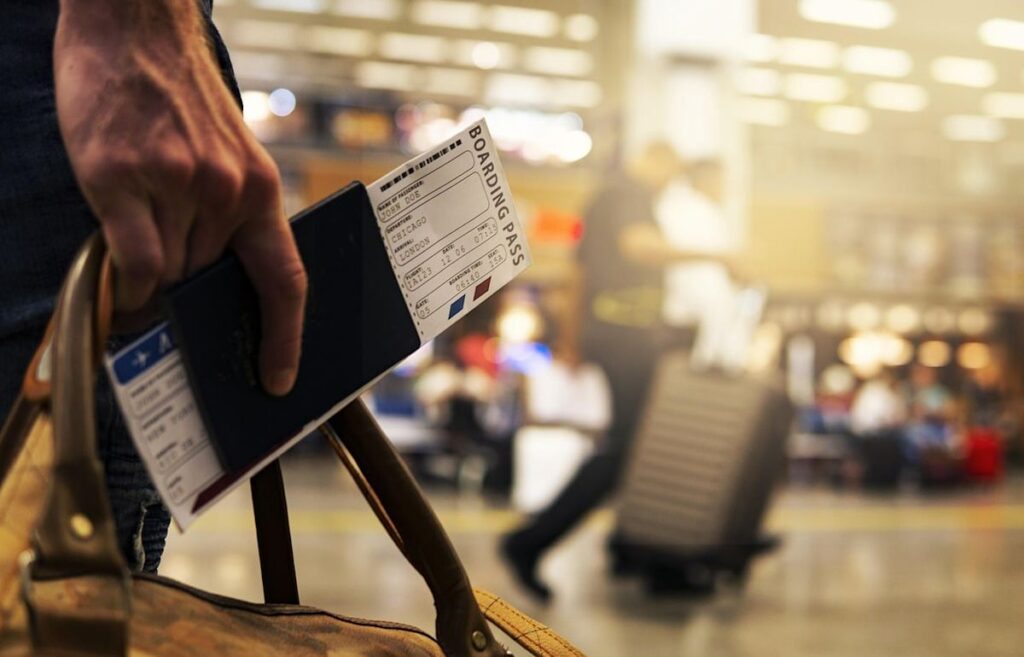


Ask people what gives a tourist away and you’ll hear the usual suspects. Fanny packs, oversized maps, a souvenir T-shirt worn on the way home. Airports show a different kind of giveaway, and it has nothing to do with clothes.
It’s about how a person moves, or more exactly, when they stop moving. Frequent flyers and airport regulars notice it within seconds, and it says more than any luggage tag could.
The Sudden Stop in the Middle of the Walkway
The Sudden Stop in the Middle of the Walkway (Image Credits: Unsplash)
The habit is simple. A traveler steps off an escalator, a moving walkway, or a jet bridge and halts right there. They might be answering a text or hunting for a sign.
Advertisement
Advertisement
One airport etiquette roundup points out that this creates a physical bottleneck and a safety hazard for the hundreds of people moving behind you[1]. Another writer, a full time traveler who has flown hundreds of times, describes the same scene: the person in front stops and stares up at a sign[2]. Everyone behind has to swerve.
Why It Matters More in Crowded Terminals
Why It Matters More in Crowded Terminals (Image Credits: Unsplash)
A sudden stop costs more when there are more bodies around, and airports have been packed lately. TSA screened 64.2 million passengers in January 2026 alone[3]. On March 13, 2026, 2,854,704 passengers went through TSA checkpoints[4], which was the busiest screening day of the year at that point.
Late in October, the numbers hadn’t cooled off much. In the seven days to October 29, 2026, 16,904,661 passengers were screened, which was up on 2019[5]. Abroad it’s similar: Dubai recorded 324,000 passengers in a single day on January 3, 2026[4].
Standing in the Wrong Lane
Standing in the Wrong Lane (Image Credits: Unsplash)
The sudden stop has a close cousin, which is parking yourself in the wrong lane. Airport etiquette guides describe a simple rule for escalators and walkways. Standing in the middle of the escalator steps is one of the biggest signs of an inexperienced traveler[1].
Advertisement
Advertisement
The usual advice is to treat a terminal like a road. Stand to the right and walk on the left, and keep the passing lane clear. It’s a small courtesy, though it’s easy to forget when you’re tired and holding a coffee.
Digging for the Passport at the Last Second
Digging for the Passport at the Last Second (Image Credits: Pixabay)
Watch a check in line for a few minutes and you’ll spot the next giveaway. Some travelers bury their most vital items at the bottom of a packed tote or carry on[2]. Then comes the scramble to find a passport that has slid to the bottom of the bag[2].
Seasoned travelers do the opposite. One airport guide contrasts them with first timers by noting that smart travelers keep the passport easily accessible[6]. Even a trick that sounds clever can backfire, such as wearing a hidden money belt or stashing a passport somewhere hard to reach[7].
Hovering at the Gate Before Your Group Is Called
Hovering at the Gate Before Your Group Is Called (Image Credits: Unsplash)
Boarding groups exist for a reason, yet plenty of people crowd the door as soon as they arrive. An etiquette piece says that hovering at the boarding lane before your group is called creates stress and congestion for everyone else[1]. The industry even has a nickname for the crowd, which is gate lice.
Advertisement
Advertisement
Seasoned travelers stay seated until their specific group is announced[8]. They also tend to have the pass ready. Some screenshot the boarding pass, since airport wifi and cell service near crowded gates can lag[8].
Confusing Boarding Time With Departure Time
Confusing Boarding Time With Departure Time (Image Credits: Rawpixel)
This one is a classic. The departure time is when the plane is scheduled to leave the gate. Boarding starts 30 to 45 minutes before that[9].
The deadlines are firm. One travel guide notes that American Airlines requires passengers to be at the gate and ready to board 15 minutes before domestic departures, and aircraft doors close at least 10 minutes before takeoff[10]. For checking bags, travelers generally need to arrive at least 45 minutes before a domestic departure and 60 minutes before an international one[10], though some airports ask for more.
Starting to Undress at the Front of the Security Line
Starting to Undress at the Front of the Security Line (Image Credits: Pixabay)
Security is where preparation shows most. Nothing stalls a line faster than someone reaching the bins and only then realizing they’re wearing a metal buckle belt, a heavy jacket, or a watch[11]. Regulars start getting ready a few people back.
Advertisement
Advertisement
Outfit choice plays a part too. One boarding guide says experienced flyers wear slip on shoes and no belt, with pockets already emptied into a jacket or bag[8]. The old laptop rule also varies now. It depends on which airport and even which lane a traveler goes through[11], so it’s worth checking the signs rather than following habit.
Crowding the Baggage Carousel
Crowding the Baggage Carousel (Image Credits: Pexels)
The same logic applies after landing. Among the habits frequent flyers notice, crowding the baggage claim carousel[1] is one of them. Experienced travelers usually stay back until they actually see their bag coming.
Telling bags apart helps, too. Black suitcases are the most common on carousels, which makes them harder to tell apart[12]. A distinctive tag or strap saves you from grabbing the wrong one.
Trusting Memory Instead of the Screens
Trusting Memory Instead of the Screens (Image Credits: Unsplash)
Gates change, and assuming they won’t is another sign of a newcomer. One airport guide lists assuming your gate will remain the same[6] among the biggest mistakes. Its fix is to check the airport information screens every 20 to 30 minutes, especially before boarding begins[6].
Advertisement
Advertisement
Apps help here. A guide on smoother travel days suggests you check security wait times in the airport’s app so you can switch to a faster checkpoint[13]. The differences can be big. At JFK in April 2026, Terminal 4 averaged 29.1 minutes in standard security while Terminal 7 averaged just 9.2[4].
The Takeaway
The Takeaway (Image Credits: Unsplash)
The giveaway is stopping short in the flow of people, usually to figure out what to do next. The fix is to decide before you move. Know your gate, keep your documents within reach, and step aside to check your phone.
Pull over to the side of the concourse for any pause longer than a few seconds. The people behind you will keep moving, and no one will guess it’s your first trip.
Source link