

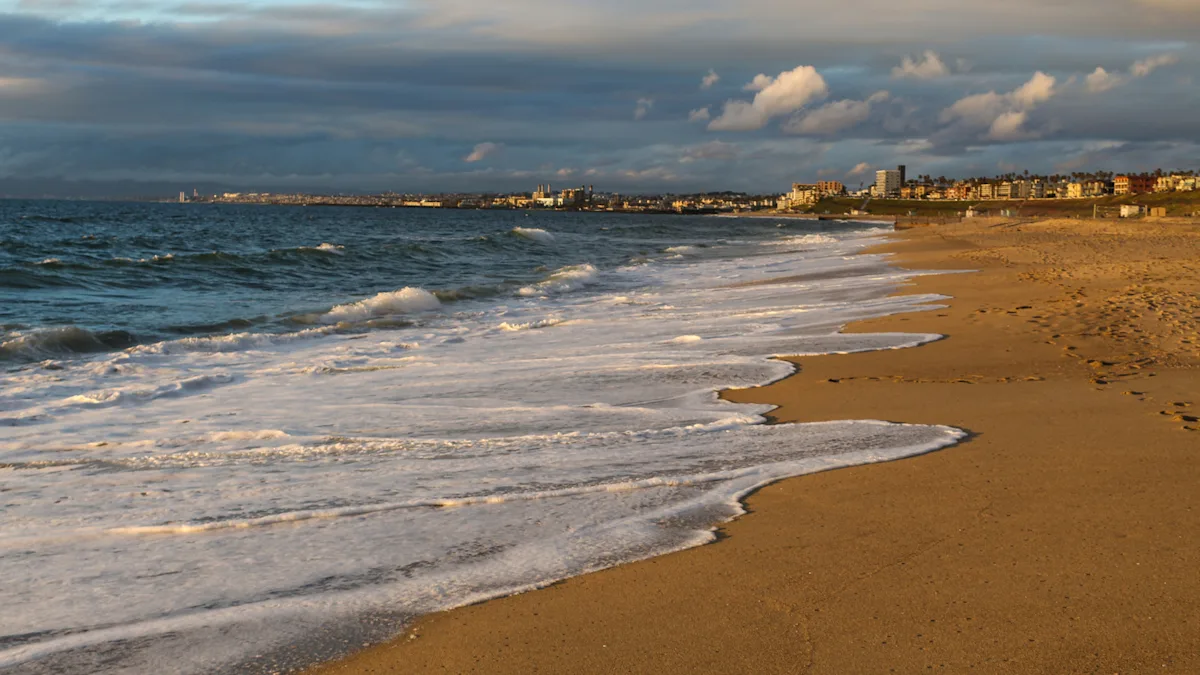
Imagine hearing waves crashing along the shore and being able to feel the sand in between your toes daily. This could be your life if you make the move to a beach town. I have lived in Redondo Beach, a coastal city in Los Angeles’ South Bay, for all of my life. I can truly say that there is nothing like it, nor have I had the desire to move inland. Living in a beach town means your days will be filled with stunning sunsets and summers. Not to mention that the distinct smell of the sea air will invigorate your senses and make you appreciate your surroundings even more.
And that’s not all. A study conducted by The Ohio State University in 2025 states that living by the ocean may increase your lifespan. That is to say that beach town living is both mentally and physically restorative. Impressive, right? But this lifestyle is not for everyone, and admittedly, it’s not all sunshine and rainbows. Beach town living may be a major life goal for many, but it could go awry if you don’t know what you’re getting yourself into, especially if you’ve never lived on the coast.
Take it from me, living in a beach town requires patience and, in some cases, deep pockets. So, before you start scrolling through Zillow and booking house tours, here are the worst drawbacks to consider if you aspire to move to the coast.
Read more: Research Says You Should Skip These Dangerous Beaches When Visiting Florida
Parking can be a nightmare

A close-up shot of a parking meter – Steven White/Getty Images
There is peace in knowing you have a parking spot waiting for you at home. However, this is not necessarily a privilege you’ll have in a beach town — especially if you live in an apartment building without assigned parking, as I do, or a neighborhood where the houses are packed together like sardines. It’s perhaps no coincidence that San Diego and Long Beach, two coastal cities in Southern California, have previously been named some of the worst places for finding parking in America. What does this mean for residents who live in a bustling beach town without a garage or assigned parking space?
They will have to circle the streets until, by some miracle, they come across an open space, even if it’s a few blocks away from their abode (I have personally done this countless times). In fact, I rarely leave the house if I don’t have to, so I don’t lose my coveted street parking. It goes without saying that this is not an ideal situation. No one wants to come home from a long day at work or being out and about only to be met with no parking. Plus, this could make things difficult when hosting guests.
Depending on the beach town you move to, you could have to pay for a parking permit (something you will have to include in your household budget). You may also have to deal with metered parking around town when running errands. This is the case in my hometown and in other coastal cities like Myrtle Beach, South Carolina.
When the weather warms up, expect a large influx of people
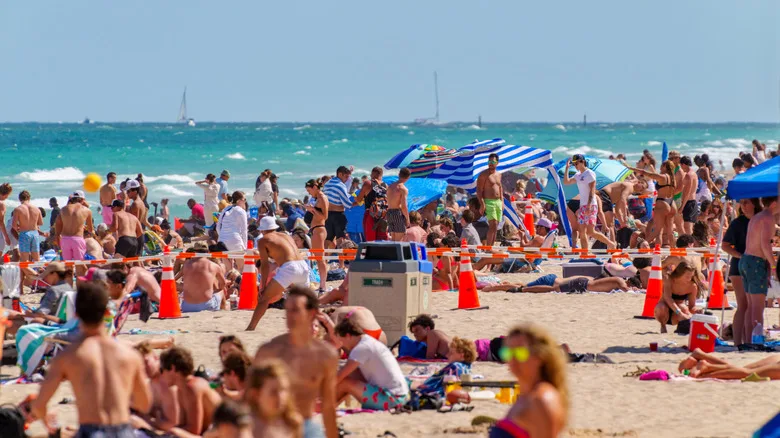
A crowded beach in Fort Lauderdale, Florida – Felix Mizioznikov/Shutterstock
Beach towns are often associated with a leisurely and quieter pace of life. This has been my experience living in Redondo Beach, where the hustle and bustle of Los Angeles and the rest of Southern California feel far away. Then comes summer and holidays like Memorial Day and the Fourth of July. Without fail, as soon as the weather warms up, hordes of tourists make their way to the coast (after all, the beach is inextricably linked with this season). Take, for example, Ogunquit, Maine, named one of the best beach towns in the U.S. in 2024 by Thrillist. According to Ogunquit’s official website, its population can grow substantially — 90% to be exact — during this season.
Ultimately, all this could disrupt the tranquility you’ve grown accustomed to, and the influx of tourists can, at times, make it difficult to enjoy the beach to its fullest. It can be a struggle to find a spot on the sand where you can spread out and relax. Inevitably, you’ll have to contend with busy streets, distracted pedestrians, and greater difficulties securing parking if you live close to the shore. It’s sad to say, but some beachgoers also have habits that can put a damper on everyone else’s day, like littering and being intoxicated in public.
If you desire to move to a beach town in a highly sought-after state like Florida, where temperatures tend to be warm and mild year-round, note that it’s notoriously overrun by snowbirds in the winter. Then come the spring breakers later on, who are known to create a hectic environment in the Sunshine State.
Your forever home might not last forever
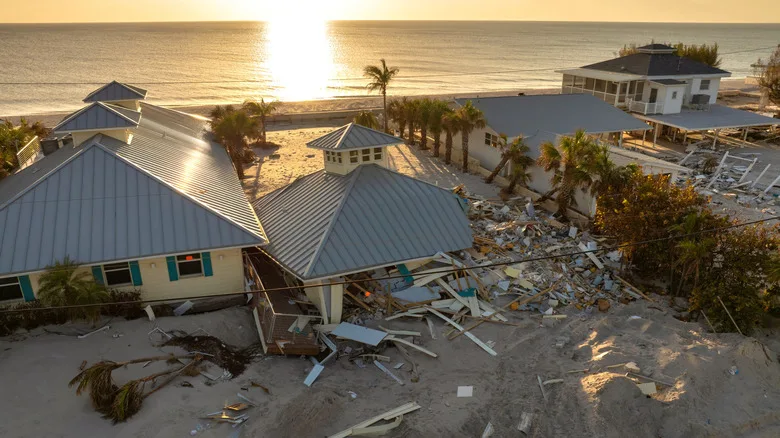
Florida homes destroyed by Hurricane Milton – Bilanol/Shutterstock
Many purchase a home with the intention of staying in it for years to come or even a lifetime. Nevertheless, you should take into account that if you move to a beach town, your forever home could potentially be damaged or destroyed in a natural disaster. This is something I have observed occur in Rancho Palos Verdes, situated minutes away from Redondo Beach. Home to Terranea Cove Beach, a cliffside escape with water activities, Rancho Palos Verdes is prone to landslides, ravaging structures to the point where a property buyout program was created for residents. Of course, there are plenty of other natural disasters that can transpire on the coast, like hurricanes.
This is something to be wary of if you’re interested in moving to the East Coast. States like North Carolina, South Carolina, and Florida, all famed for their beach towns, are just some of the destinations in America that are most likely to get hit by hurricanes. As Laura Adams, a former real estate broker in Florida, explained in an article for Realtor.com, “The hurricanes are deadly. The native Floridian knows that it’s part of life, to be prepared to pull up and evacuate. The newcomer may not realize this.”
Additionally, living in a beach town means your abode could be vulnerable to coastal erosion. If you purchase a waterfront property, this phenomenon could cause it to eventually fall into the ocean, an occurrence that is not uncommon in North Carolina. Like hurricanes, coastal erosion will continue to be exacerbated due to climate change.
Coastal living is not synonymous with affordability

A for sale sign at the beach – Courtneyk/Getty Images
Living in a beach town can be extremely expensive. I have had several friends, many of whom were raised in Redondo Beach, whose families have moved inland, and some have left out of state seeking affordability. As someone who has been a lifelong renter, I have given up the prospect of ever being able to afford real estate in my hometown, where the median sale price of a home is around $1.5 million (via Redfin). Unfortunately, a study by the University of Southern California (USC) found that living on the beach in Southern California will become up to five times more expensive over the next few decades due to coastal erosion.
Naturally, there are a number of beach towns across the U.S., including in the South, where you can purchase a home for under $500,000. However, this cost is only one piece of the financial puzzle. You’ll also need to factor in home insurance, the price of which is on the rise due to climate change, and even more so for properties near the beach. That is all to say that if you’re interested in buying a home on the coast, you may need a larger budget than you think. Based on where you want to move, renting might not prove to be an economical option either. For instance, in 2025, Santa Cruz, located on California’s Central Coast, was ranked the highest in the country for rental prices.
Depending on the beach town, there could be limited attractions and opportunities

A lone woman sitting at the beach – Draganab/Getty Images
I technically live in Los Angeles, but sometimes, it doesn’t feel like it. I rarely visit other neighborhoods or cities within the county. This is common among other South Bay locals, and the region is often referred to as “The Bubble” for this very reason. All of Los Angeles’ biggest attractions require a lengthy drive to get to, and the closest freeway entrance (which more often than not you have to traverse to get anywhere in L.A.) is about 20 minutes away from the coast. Put simply, it takes quite a bit of effort to leave the area and visit friends who live elsewhere.
There is a sense of seclusion with beach living, and if you move to a beach town, whether it’s in Southern California or anywhere else in the country, you could very well experience the same thing. Perhaps isolation is precisely what you seek, but undoubtedly, there are some disadvantages to this. You might have a long commute to a larger city for work, school, shopping, etc. Boredom can seep in, too.
Yes, there’s plenty to do at the beach when the weather is cooperative, but this isn’t always the case, which can be frustrating when the nearest indoor attractions are far away. Likewise, some beach towns may limit their offerings during the off-season, something else to be mindful of depending on where you’re interested in moving to.
Ready to discover more hidden gems and expert travel tips? Subscribe to our free newsletter and add us as a preferred search source for access to the world’s best-kept travel secrets.
Read the original article on Islands.