


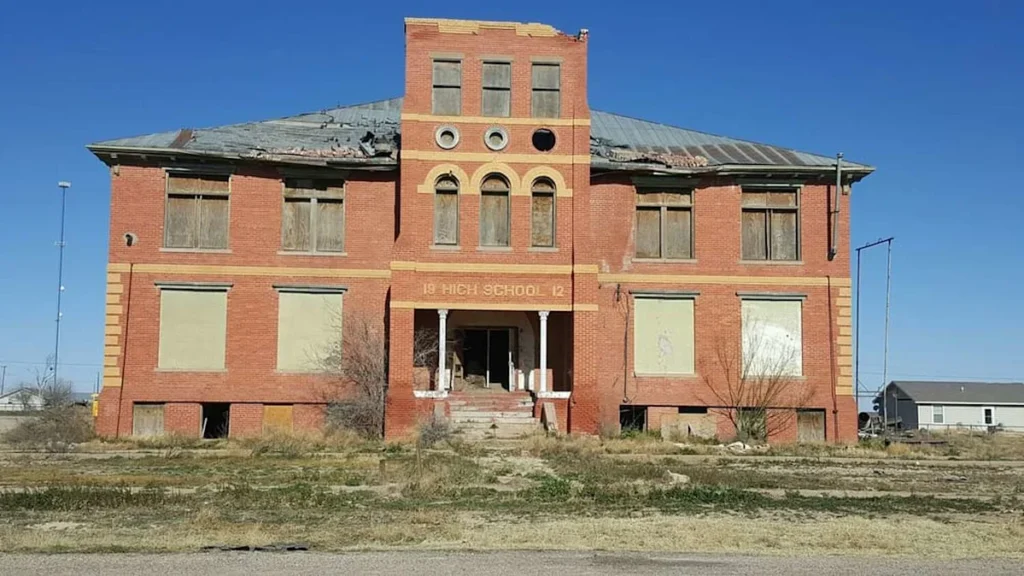
If you’ve ever taken a drive down Interstate 35, you may have noticed the sensation of the hair on the back of your neck standing on end as you get closer to San Antonio. That eerie feeling is one many people experience while riding through Texas-and for good reason. A study conducted by GeoTab found that there are 511 ghost towns scattered throughout Texas – more than in any other state in the United States – and quite a few of these towns can be found along I-35. The greatest concentration of these ghost towns is clustered in Wilson County, just outside of San Antonio. Travelers to New Braunfels also have a chance to catch a glimpse of a ghost town, as 25 are located within 25 miles of the charming city.
You may be familiar with the ghost tours invading Galveston, but do you know the history behind Texas’s ghost towns and where to find some of the best ones in the Lone Star State? Keep reading to learn more about the mystery and history around some of the most popular ghost towns in Texas, and why they’re worth the trek from Houston to see.
Why are there so many ghost towns in Texas?
At the turn of the 20th century, an energy-dependent boom-and-bust economy paved the way for the proliferation of ghost towns. In a statement on the GeoTab website, Peter Ling, a professor of American Studies, said, “Texas and California top the list thanks to mining and oil towns, with Texas surging after 1901’s Spindletop discovery and California towns booming in the rail expansion of the 1880s.” In the span of only three months in 1901, the Spindletop oil gusher increased Beaumont’s population threefold, from 10,000 to 30,000. These population increases created towns where there was once nothing, and when an inevitable downturn hit, the bustling settlements were abandoned.
Texas ghost town tours offer glimpses at history, and possibly ghosts
Ghosts have been a source of fascination for people for centuries, if not millennia, before Texas’s first oil gusher came into play. Many people blamed haunted spirits for unexplained events and mysterious apparitions. Today, ghost towns and ghost stories still spark considerable curiosity. Anna C. of Sisters Grimm Ghost Tours in San Antonio says that their guests are initially drawn to their tours because they are interested in the macabre. “Many guests book a tour because they are curious about ghosts, but afterward, they are fascinated by the historical aspects they learn about during the tour.” And although Sisters Grimm never guarantees paranormal events during their tours, sometimes visitors are in for a treat. “Guests are always really excited to show us their tour photos with orbs of light or silhouettes,” says Anna.

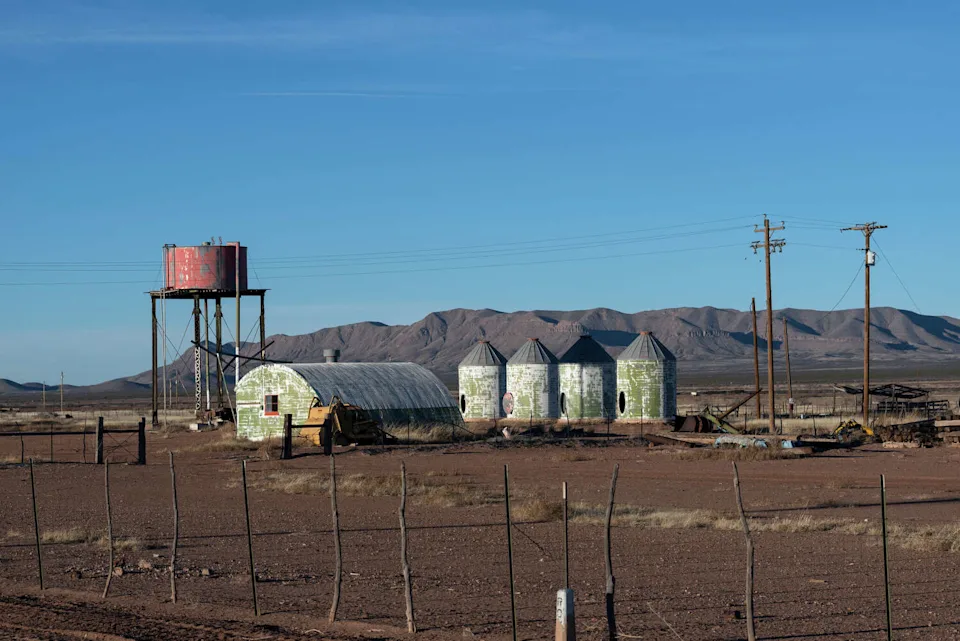
Weathered metal structures are seen in the mostly deserted town of Lobo, south of Van Horn on U.S. 90 in Culberson County, Texas. (Buyenlarge/Getty Images)
A Texas ghost town recently sold for a bargain price
Those with a love of the supernatural beyond unearthly photos had the opportunity to buy an entire ghost town when Lobo in West Texas hit the market for $100,000. The abandoned town between Van Horn and Valentine on U.S. 90 was for sale by its owners due to the expense of upkeep and the scarcity of water on the land. According to Stripe Realty, who handled the Lobo listing, the sale was finalized in October 2023. At $100,000, the West Texas ghost town was a bargain compared to Cerro Gordo, a ghost town in California that sold for $1.4 million in 2018.
According to a 2019 Ipsos poll, 46 percent of respondents believe in ghosts. If you are part of the “I ain’t afraid of no ghosts” crowd and exploring Texas ghost towns to conjure up spooky excitement is your idea of a good time, add these five ghost towns in the Lone Star State to your must-see list.
BEST OF CHRON
Wildlife | Rare visitor seen in Texas again for the first time since 1961
Gulf Coast | This popular Texas beach is closing for months
Sports | Fans are not happy about Texas school’s new logo
Food | Texas restaurant chain files for bankruptcy amid $12M debt
Music | Petition calls for Texas country star to take Super Bowl stage
For the latest and best from Chron, sign up for our daily newsletter here.
Old Bluffton
About an hour northwest of Austin in Burnet County is Bluffton, well, new Bluffton, that is. Old Bluffton is usually submerged 30 feet under Lake Buchanan. In the 1800s, it was home to about 50 families before the Buchanan Dam project brought electricity to the Texas Hill Country. When the dam was completed in 1937, flooding and a series of storms filled the lake much quicker than anticipated, leaving the town underwater.
It wasn’t until 1984, when a severe drought struck Texas, that Old Bluffton emerged from the depths of Lake Buchanan. Preserved by years spent underwater, the remains of homes, tombstones, a bank, and the town’s hotel are visible when the lake levels are low. History buffs or those interested in ghost towns can hear more about the area on a tour of Lake Buchanan. Drought or not, don’t try to take any submerged artifacts; the Texas Historical Commission protects them.
Find it: Lake Buchanan Chamber of Commerce, 19611 E. TX-29, Buchanan Dam, TX 78609; 512-793-2803
Indianola
Located in Calhoun County on Matagorda Bay, what was first known as Karlshafen and later named Indian Point functioned as a deep-water port during the Mexican-American War and was the main landing point for European immigrants arriving by ship. The area’s first post office opened in 1847, and stagecoach service connecting the growing area to the rest of the state began the following year. By 1849, Indian Point was renamed Indianola and quickly became the county seat for Calhoun County. In 1874, Indianola had a population of over 5,000, was the second-largest port in Texas, and was a terminal for the Morgan steamship line.
However, 1875 marked a sharp decline in the once-prosperous area when a hurricane devastated the town. Although the residents of Indianola attempted to rebuild, another hurricane hit in August of 1886, and by 1887, Indianola had been abandoned.
Today, history buffs can still visit remnants of the once-booming area, including the old cistern, the original courthouse location, and the town marker. Many artifacts from that time period have also been preserved, including medicine bottles, porcelain dolls, inkwells, and clay pipes.
Find it: TX-316, Port Lavaca, TX 77979
Indian Gap
The small abandoned town of Indian Gap is about two hours south of Fort Worth, between Priddy and Pottsville in Hamilton County. A bustling town in the late 1800s and early 1900s, it was eventually deserted, and now all that remains are the columns of the schoolhouse and the weathered buildings. If going to church in a ghost town interests you, the Indian Gap Baptist Church is still active with a small congregation that meets on Sundays and Wednesdays.
Find it: FM 1702, Pottsville, TX 76565
Toyah
In West Texas, near the intersection of I-10 and I-20, is Toyah, the oldest town in Reeves County. It was once a trading post for ranchers and then a railroad hub for the Texas & Pacific Railroad in the late 1800s. After the Great Depression, many families abandoned the town, and it never recovered. It went from a peak population of 1,052 in 1910 to less than 60 today. Many old buildings have been demolished or destroyed by floods, but several still stand and are worthy of a ghostly glimpse, including the town’s high school and numerous old businesses.
Find it: Toyah is located 21 miles southwest of Pecos, Texas, just off Interstate Highway 20.

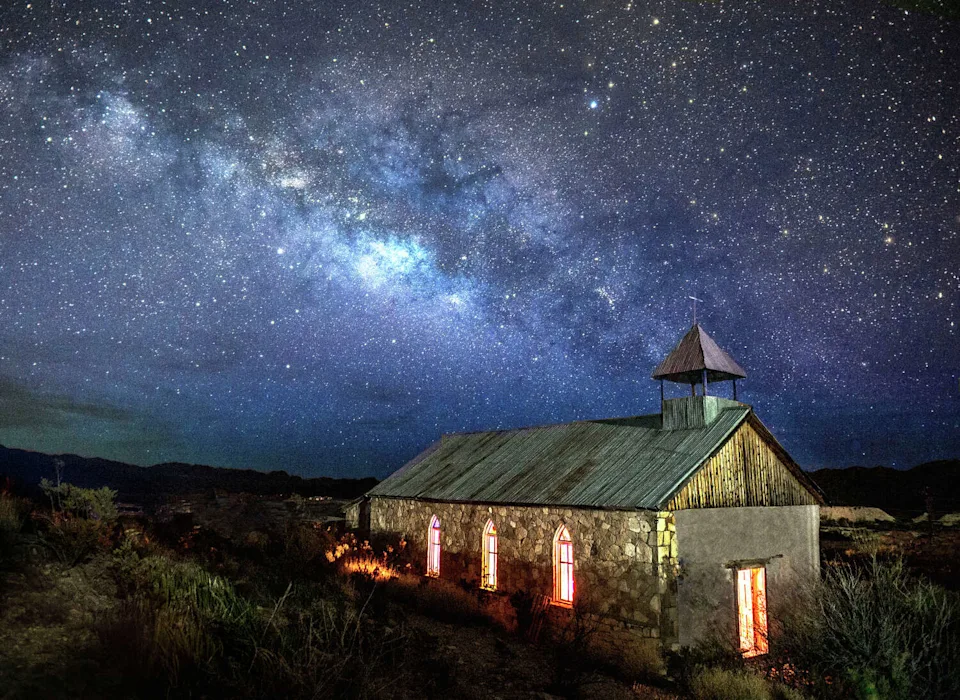
The Milky Way looms over an abandoned church in the ghost town of Terlingua, TX. (tomwachs/Getty Images)
Terlingua
Tucked in the lowland desert between the national and state parks lie the small communities of Study Butte, Terlingua, and Lajitas. The remains of the Mariscal Mine are at the base of Study Butte. Today, motels, restaurants, shops, and outfitters occupy the streets where miners once struggled to survive on meager wages.
The name Terlingua has been applied to three different settlements in this area, with the current version founded after the discovery of quicksilver in the late 1800s. In 1906, wealthy businessman Howard Perry built a mansion overlooking the town. The Chisos Mining Company employed hundreds of workers, many of whom lived in the simple, stacked-rock structures that still stand. Quicksilver mining peaked by the end of World War I. Many of the original mining buildings are now filled with saloons, eateries, and small shops, and a number of the tiny rock structures have been restored to serve as residences for Big Bend’s desert dwellers. The Perry Mansion underwent a 2015 restoration, and guest rooms are available in the historic building.
Find it: Terlingua Ghost Town, Terlingua, TX 79852
Freelance writer Kristi Eaton contributed to this story.
This story was edited by Hearst Newspapers Managing Editor Kristina Moy; you can contact her at kristina.moy@hearst.com.
This article originally published at Texas has more ghost towns than any other state-these 5 are worth exploring.