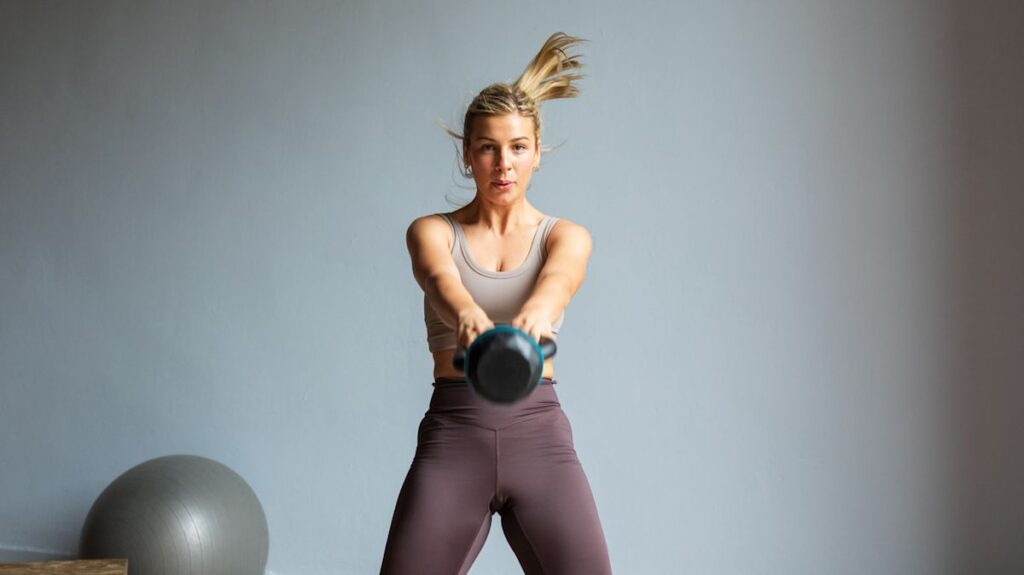


When we think about improving our fitness as we get older, we often focus on getting stronger, improving our cardiovascular health or maintaining a healthy weight. But there’s another important part of fitness that deserves our attention: balance.
Good balance helps us move with confidence, navigate uneven ground, climb stairs, reach an overhead cupboard and genuinely enjoy the activities we love. It also plays an important role in reducing our risk of falls as we get older.
Balance isn’t something that works in isolation. It relies on several systems working together, including our vision, inner ear, nervous system, core and lower-body muscles. As we age, changes in any of these areas can affect how steady we feel on our feet.
Advertisement
Advertisement
This is one reason maintaining strength is so important. A strong core helps us control our posture, while strong hips and legs help us respond when we lose our footing or need to make a quick adjustment.
In my online classes, I incorporate balance exercises throughout the week, because I believe fitness is about more than how we look or how much weight we can lift. It’s about building the strength, stability and coordination we need to keep doing the things we love for years to come.
That’s what long-term functional fitness is all about – and the best time to start is now.
Caroline recommends adding balance-focused exercises to your daily routine to build your strength and confidence consistently – Elena Sigtryggsson
How to check your ‘balance age’
One simple way to assess your balance is to see how long you can stand on one leg.
Advertisement
Advertisement
A 2022 study published in the British Journal of Sports Medicine looked at adults aged 51 to 75 and found that those who couldn’t stand on one leg for 10 seconds had an 84 per cent higher risk of death during the follow-up period than those who could.
It’s important to understand that this was an association with, not proof of a connection between, poor balance and an increased risk of death. A balance test cannot tell you your biological age or predict your future health on its own. However, it can be a useful starting point for checking your stability and tracking your progress over time.
Try this simple balance test
Stand on a flat, non-slip surface near a sturdy chair or worktop.
Keep your eyes open and, if comfortable, place your hands on your hips.
Lift one foot off the floor and start timing how long you can hold the position.
Stop when your raised foot touches the floor or you need to grab your support.
Stay close to your support and use it whenever you need to. Safety is more important than achieving a particular time.
What is a good balance time for your age?
The figures below are approximate targets to help you think about your balance and set a personal goal. Different sources use different age groups and testing methods, so treat these as a guide rather than a definitive measure of your balance or biological age.
Use your result as a personal baseline rather than a definitive measure of your age, and focus on gradual improvement.
Advertisement
Advertisement
If you find standing on one leg difficult, don’t worry. Balance is a skill you can practice, and small, consistent efforts can help you build confidence over time.
Four exercises to improve your balance
You don’t need complicated equipment or long workouts to get started. Try adding these simple exercises to your weekly routine, adapting them to suit your current ability. I would aim for 10 minutes of balance practice a day and make a note of how you progress.
1. Single-leg stand
Once you’ve completed the balance test above, use it as an opportunity to practise.
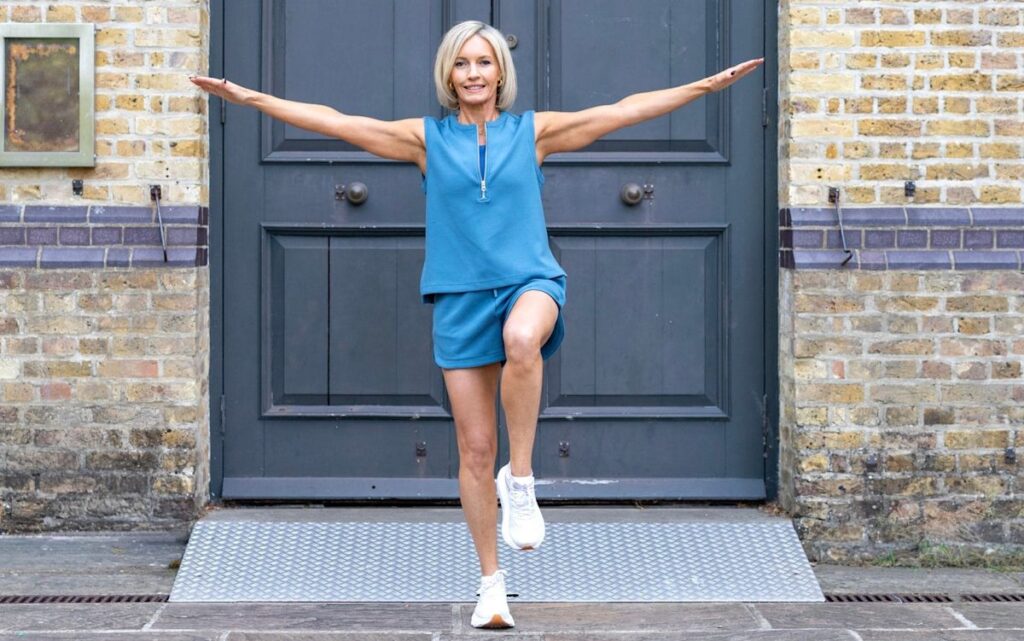
Stand tall with your feet hip-width apart, then slowly lift one foot off the floor. Keep your standing knee slightly bent, your torso upright and your core gently engaged. Hold for around 10 seconds, then change sides. Aim for three holds on each leg, gradually working towards 20 to 30 seconds as your confidence improves.
Advertisement
Advertisement
Use a chair or worktop for light fingertip support if needed.
Caroline demonstrates a single-leg stand – Elena Sigtryggsson
Why it helps: This exercise challenges your ability to stay upright while making small adjustments through your ankles, hips and core.
2. Tandem walk
Stand tall and place one foot directly in front of the other, so the heel of your front foot touches or comes close to the toes of your back foot. Take five to 10 slow steps in a straight line, then turn carefully and repeat. Stay near a wall or sturdy support if you need it.
Why it helps: Walking heel-to-toe challenges coordination and moving balance, which helps you feel steadier when walking in everyday situations.
3. Single-leg calf raise
Stand on a low step with a secure handrail or support within reach. Keep the ball of one foot on the step and lift the other foot slightly. Slowly raise the heel of your standing foot, then lower it with control.
Advertisement
Advertisement
Start with five to eight repetitions on each leg. If using a step feels too challenging, practise on the floor instead. Avoid unstable surfaces.
Why it helps: Your calf muscles and ankles play an important role in controlling your balance, particularly when standing and walking.
4. Reverse lunge to knee drive
Stand with your feet hip-width apart. Step one foot backwards and lower into a lunge, bending both knees only as far as feels comfortable. Push through your front foot to return to standing, then bring your back knee forwards and upwards.
Complete around five repetitions on each side, using a chair or wall for support if needed. Keep the movement slow and controlled.
Advertisement
Advertisement
Why it helps: This exercise builds leg strength and hip control while challenging your ability to stabilise yourself on one leg.
Make balance part of your routine
Like strength and cardiovascular fitness, balance can be improved with practice. You don’t need to spend a long time on it – a few focused minutes, repeated consistently, is a great place to start.
For the best results, combine balance exercises with resistance training to maintain the strength that supports you. Squats, lunges, dead lifts, bridges (especially with a resistance band) can all help strengthen the muscles around your legs and glutes to increase stability.
Remember, the aim isn’t to achieve a perfect score on a test. It’s to feel more confident moving through everyday life, whether that means walking on uneven ground, climbing stairs, playing with your children or grandchildren, travelling or continuing to enjoy your favourite activities.
Advertisement
Advertisement
Midlife is an ideal time to build these habits. You don’t need to wait until you feel unsteady or notice a decline. Starting now means you’ll begin to develop the strength and stability that can support you in the years ahead.
If you experience a sudden change in your balance, repeated falls or persistent unsteadiness, speak to your GP or a physiotherapist to check whether there may be an underlying cause.
For live strength-training classes, see carolinescircuits.com
Try full access to The Telegraph free today. Unlock their award-winning website and essential news app, plus useful tools and expert guides for your money, health and holidays.
Source link