


By Dan Walters, CalMatters
This commentary was originally published by CalMatters. Sign up for their newsletters.
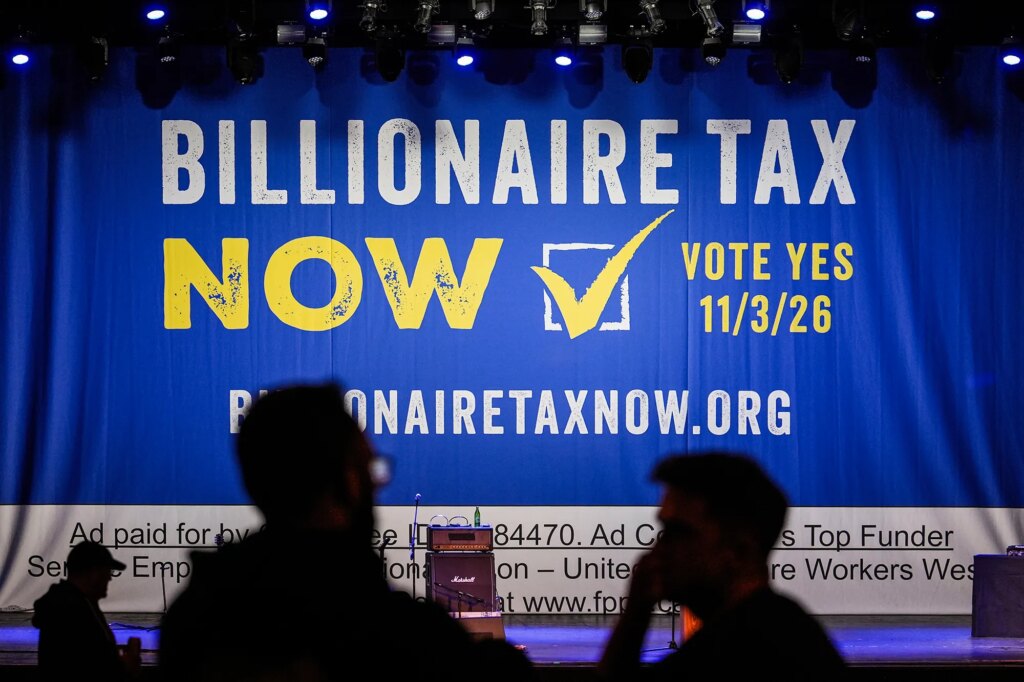
Proposition 40, which would impose a 5% tax on the wealth of California’s billionaires, is arguably the most important measure placed before voters in this century.
It is also probably the most confounding.
While it’s sponsored by a healthcare union, it’s opposed by several other major unions, who are in an odd bedfellows alliance with the billionaires it targets. Meanwhile, the leader of the sponsoring union faces allegations of personal misconduct.
And even if Prop. 40 passes, two other measures on the ballot could nullify it. Finally, the measure contains complex language, raising questions that would probably generate extended legal battles even if it does pass.
Given all that, it’s not surprising that, with mail voting beginning in just a couple of weeks, a new poll indicates Prop. 40 could go either way.
A Public Policy Institute of California survey found that 52% of likely voters favor the measure and 46% are opposed, which in the real world of campaigning means it’s too close to call.
Meanwhile, the two measures placed on the ballot by Prop. 40’s wealthy opponents are doing fairly well. Proposition 41, which would indirectly nullify Prop. 40 by prohibiting levying any new taxes outside of the state’s spending limit, and Proposition 42, which would prohibit taxes on personal property, each have narrow leads in the PPIC poll.
Were all three measures to gain approval, the one with the most votes would prevail — meaning that if Props. 41 or 42 outdoes Prop. 40, the billionaire tax would be void.
None of that intertwining complexity was explained to the people PPIC polled. They were just given the official summary of each proposition before being asked their preferences.
Prop. 40 is sponsored by the Service Employees International Union-United Healthcare Workers West. If it becomes law, a 5% tax would be levied on the assets of about 200 California billionaires, with almost all of the proceeds being spent on healthcare.
However, Dave Regan, the union’s fiery leader, is facing allegations by leaders of other unions under the Service Employees International umbrella of having “a pattern and history of bullying, threats, harassment, physical violence and attempted extortion.” They said an independent investigation has confirmed the allegations, and they called on him to step down.
“Our first responsibility as an organization is to lead with our values,” the other union officials said in a statement. “We stand with all those who are bullied, harassed, or targeted at work, and we stand by our charges. Our national union must now act swiftly to carry out our internal due process and ensure accountability to our values. Every leader is responsible for their role in protecting and promoting respect, workplace justice, gender equity, racial justice, and nonviolence in our union and beyond.”
Regan denies the allegations.
But they give Prop. 40’s opponents potentially potent campaign ammunition. The split within Service Employees International and in the larger union movement reflects both long-standing feuds and resentment that the measure’s revenues would be largely confined to services that Regan’s members provide.
As the multifaceted campaigning over Prop. 40 picks up steam, one figure is noticeably absent: Gov. Gavin Newsom.
Prior to the measure’s qualification for the ballot, Newsom was publicly attempting to derail it, worrying aloud that if passed, it would encourage wealthy Californians to leave the state and discourage new investment. High-income Californians pay most of the state’s income taxes, the state’s most important source of revenue.
However, Newsom is also a likely candidate for president after his governorship ends. Opposing taxes on the rich could alienate voters in the ultra-progressive wing of the Democratic Party.
Thus, he now says taxing wealth should be a national matter, not confined to one state.
This article was originally published on CalMatters and was republished under the Creative Commons Attribution-NonCommercial-NoDerivatives license.