

When you buy through links on our articles, Future and its syndication partners may earn a commission.
Credit: Getty Images
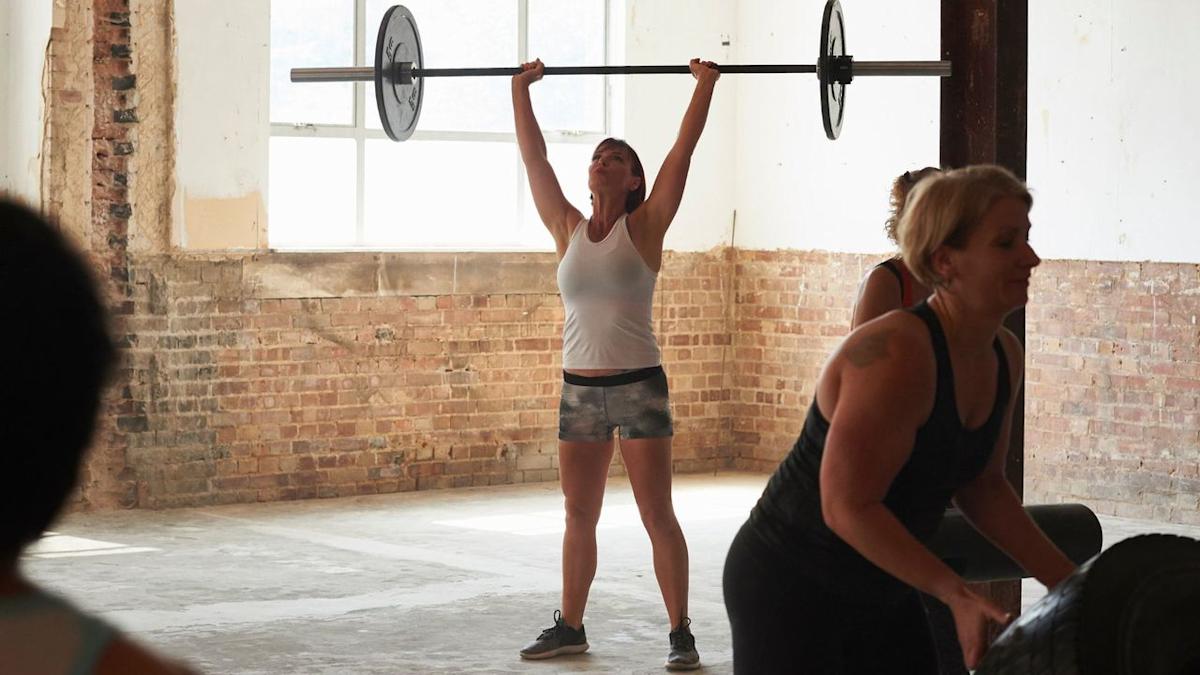
Few exercises do as much good for the body as strength training. It’s the gold standard for looking after your bones, joints, and muscles as you age. But how long should you lift weights for?
A study has suggested a link between how often women do strength training (also known as resistance training) and major longevity benefits. The study, published in the Journal of Biology (Basel), reviewed just under 5000 men and women (with an average age of 42) to examine how this type of exercise affects the ageing process.
Researchers found that lifting weights three times a week can provide health benefits equal to being almost eight years younger – provided you do it for one hour each time.
How long should you lift weights for?
To save almost eight years from your biological age (7.8 years to be exact), researchers concluded that an hour of strength training three times per week is needed. This works out to 180 minutes total.
To complete the study, researchers examined participants’ telomeres (protective DNA caps that prevent genetic material from unravelling or being damaged) through blood samples. The participants were also asked how often they lifted weights.
Telomeres shorten with age. This shortening is associated with cell transformation that affects our health and lifespan. The longer the telomeres, the better. This study aimed to discover whether strength training could impact the length of these telomeres.
“In this national sample, 90 minutes per week of strength training was associated with 3.9 years less biological ageing, on average,” the study found. “Because each year of chronological age was associated with telomeres that were 15.47 base pairs shorter in this national sample, 90 minutes per week of strength training was associated with 3.9 years less biological ageing, on average.”
“This interpretation suggests that an hour of strength training three times per week (180 total minutes) was associated with 7.8 years less biological ageing.”
However, the researchers also found that those who lifted weights for less than one hour per week also experienced benefits. They still had “significantly longer telomeres than the non-strength trainers”, the study says. At least 140 base pairs were longer than those who did no strength training at all, and less than 100 base pairs shorter than those who did the ideal amount of strength training.
Why is this important?
We know that doing a simple weights workout, whether that be callisthenics for beginners, going to the gym, or doing a dumbbell workout at home, can have so many benefits for our mental and physical health – but the results of this study show just how important lifting weights is for longevity.
Longevity is about not only living longer and exceeding standard life expectancy, but living better in those years with good health.
Several studies have shown this over the years – but this is the first one to pinpoint just how long you should lift weights for, how many times over one week, and what benefits to your biological age you can expect to see if you do it.
“Strength training mitigates some of the damage caused by such chronic diseases, reversing muscle loss, raising resting metabolic rate, promoting fat loss, and improving cardiovascular health,” the study summary says.
“In short, by reducing the effects of chronic disease and metabolic risk factors, resistance training appears to slow the biological ageing process and reduce cell senescence, which is evidenced by longer telomeres.”
Lifting weights for an hour, three times a week, is ideal – but the study also promotes the benefits of doing less than this. So, even if you only have time to lift your pick of the best dumbbells or do a weighted Pilates workout for 20 minutes a couple of times a week at home, you’ll reap the benefits in the years to come.