Cate Twining-Ward is, by her own admission, an all-or-nothing, “zero-to-one-hundred” kind of person. She’s also a lifelong fitness buff. So when she got into running — following her rock-climbing phase — she didn’t just want to take up casual jogging through the park. She wanted to compete in a marathon and use metrics to fine-tune her training and measure her progress.
So, naturally, she bought a fitness tracker. A Garmin smartwatch, in particular. “I got really into the watch,” Twining-Ward says. But within two years of taking up running, the injuries started. She incorporated strength training and physical therapy into her routines, hoping to prevent new or worsening issues, but her watch had other plans. “The watch became a bit of a contentious relationship,” Twining-Ward says. “I’d be looking at my watch, and it would be telling me one thing” — namely, what she should be doing to continue her progress as a runner — “and I would use that to minimize the real cues I was getting from my body.”
Twining-Ward had linked her Garmin data to the popular app, Strava, where other athletes could see her runs, routes and times, which only added to the pressure to keep going. “These were all factors that contributed to me ultimately pushing past what my body was telling me,” she says.
Advertisement
Advertisement
After a doctor discovered four stress fractures in her ankle, Twining-Ward did take a break, but returned to running — and being glued to her smartwatch — the next year. Once again, she got injured: Twining-Ward suffered a hip injury one month before another race. “The physical therapist was like, ‘You can cross-train and still try to do the race, you won’t be 100%, but you can participate,'” she recalls.
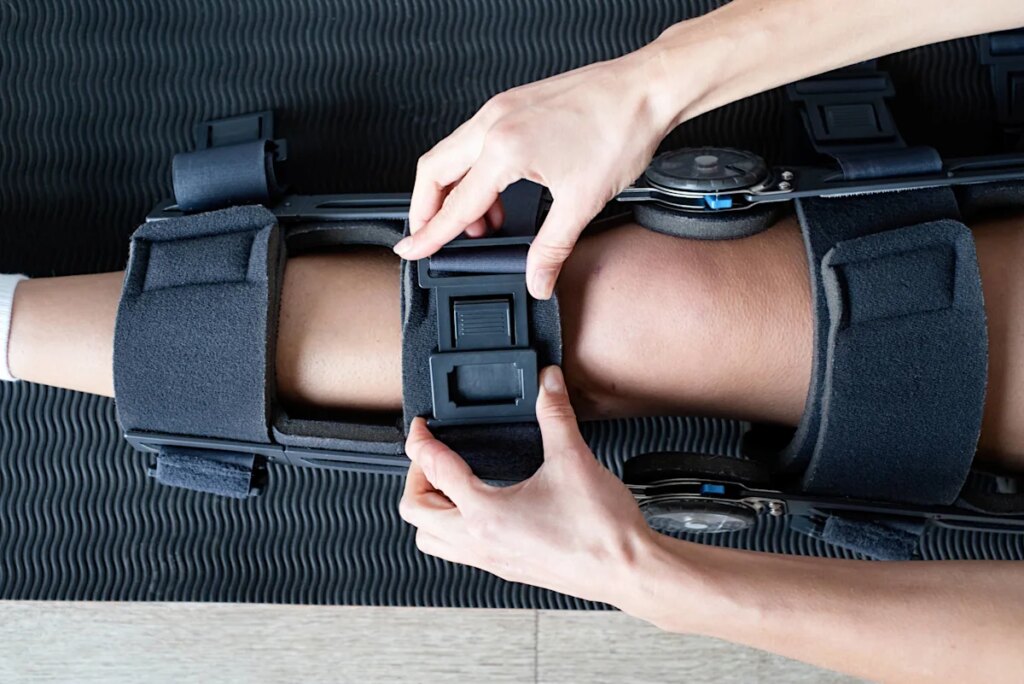
She did. And then she fractured her tibia before reaching the finish line. “I was so determined to finish that I pushed through, and then immediately went to the emergency room,” Twining-Ward says. She spent months on crutches recovering from the injury. She then sold the Garmin, threw out all of her race medals and deleted the Strava app.
Twining-Ward has a different approach to fitness now. Instead of following the data, she follows the day. If it’s nice out, she’ll go for a walk or jog. She’s back in touch with what she loved before she started tracking — namely, “being present in the moment because you’re so focused on doing something physically challenging,” Twining-Ward says. Tracking every health and fitness metric “puts us further away from being truly in touch with our physical bodies,” she adds.
Health-tracking devices — from the Garmin watch and the Oura Ring to continuous glucose monitors, Whoop bracelets and the MyFitnessPal app — are a massive market. Fitness apps are worth an estimated $13.8 billion, while wearable health trackers are valued at more than $71 billion. And that’s to say nothing of the less easily categorized fitness programs, coaching sessions, peptides and more aimed at helping people optimize their health, also known as healthmaxxing.
Advertisement
Advertisement
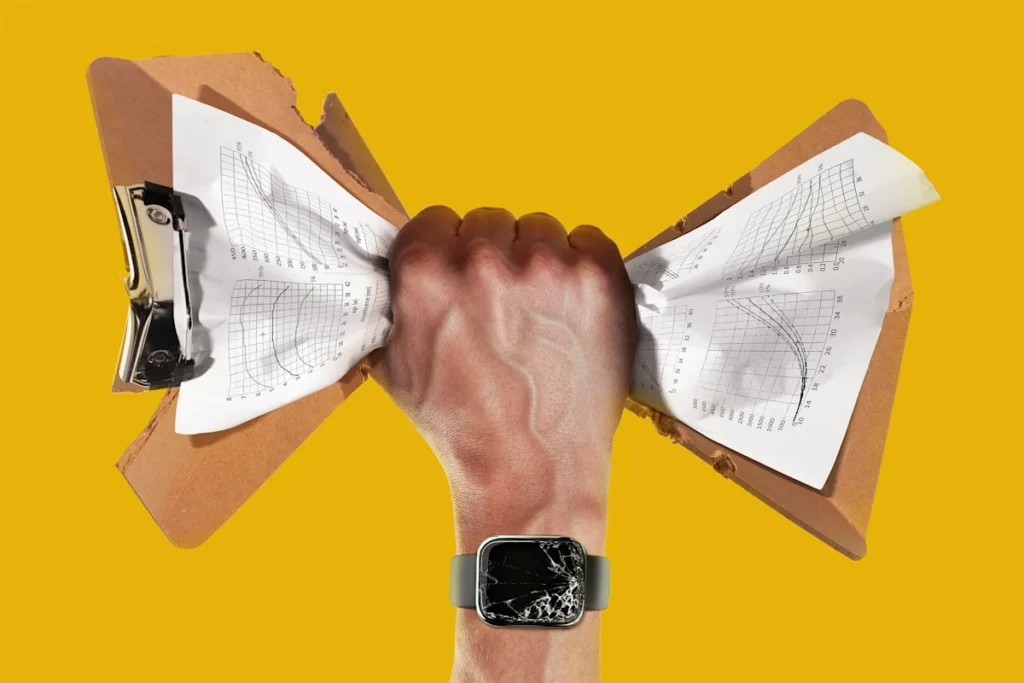
Yet, a rebellion is brewing. Like Twining-Ward, people are breaking up with their health and fitness trackers. One of the 10 trends flagged by the 2026 Future of Wellness report, published in January, is the “over-optimization backlash.” And brands are taking note and “riding the anti-optimization wave,” Vogue Business recently reported. Instead, some health-focused folks are turning to a more intuitive approach. Instead of chasing metrics, they’re logging off of apps and devices and tuning in to what their bodies are telling them.
When wellness became a numbers game
The concept of tracking our own activity and health for improvement is certainly not new; Leonardo da Vinci sketched an early concept of a pedometer to track the distances traveled on foot by soldiers. But the idea of the “quantified self” really took off in the 2000s. The term was coined by two Wired editors who observed consumers’ growing desire to track and understand themselves and their health — and the growing number of tools promising to do just that.
Smartphones helped make this movement possible. The advent of smart wearables, especially the Apple Watch, supercharged it. “All of a sudden it became possible to really track things that it wasn’t possible to get firsthand as individuals … or even at all,” Liz Rosenbaum, executive strategy director at the branding agency Red Antler, tells Yahoo.
For many, that data is empowering and, in some cases, even life-saving. The Apple Watch can detect four times as many cases of the potentially dangerous heart arrhythmia, atrial fibrillation, as would otherwise be discovered. Continuous glucose monitors have helped people with diabetes learn what foods and activities may spike their blood sugar. And studies show that activity trackers can be effective at encouraging people to move more.
Advertisement
Advertisement
That’s thanks in part to the well-established psychological tendency for people to behave differently when they know they’re being watched. We’re less likely to litter, cheat — or, apparently, skip a workout — when someone, or something, is holding us accountable.
That can be useful, but it has a downside: More recent research shows that being watched can kick our nervous system’s fight-or-flight response into high gear, causing stress and impacting our ability to process and remember information.
Some users find their smart health devices provide information that they don’t know how to use or didn’t want in the first place. Saketh Kalathur recently purchased an Eight Sleep smart bed for himself and a Nanit camera for his newborn baby. He got what he wanted — a bed with temperature controls and a built-in alarm clock, and a baby monitor with a high-definition camera — plus a lot of features he didn’t.
Companies “just sneak in all these things like, ‘What’s the baby’s sleep score? Are you putting the baby to bed too late?'” he says. “It’s not just that they’re tracking us, but they’re trying to boil it all down to a score … it creates this gap in trusting your own intuition.”
Advertisement
Advertisement
Kalathur even found himself worrying over his dog’s fitness score. He knew he was walking her enough, but the data from her Fi GPS collar made him question himself. “It was one more metric in my life that I needed to worry about,” he says.
Data, data everywhere — how useful is it?
Casey Steiner got an Oura Ring in the hope that figuring out how to get better sleep would help ease the health anxiety that she developed after quitting bodybuilding to try to start a family with her husband. The 34-year-old credits the combination of her Oura Ring and the menstrual-tracking app Natural Cycles with helping her get pregnant. In fact, it was during the first month she paired the two technologies that she conceived her son.
But after her son’s birth, “my sleep score was trash because babies don’t sleep through the night,” she tells Yahoo. She knew, logically, that poor sleep was inevitable while caring for a newborn, but Steiner still felt discouraged whenever she saw her metrics tanking. “My husband calls it my adult mood ring,” she says. No amount of data would solve the sleep problem of a baby who can’t yet sleep through the night.
So Steiner took off the ring. “I noticed a difference in not only my mental health, but also my physical health,” she says. “My blood pressure is lower, and I’m not stressing about reaching all these different things,” such as a perfect readiness score, a measure some devices provide for how prepared your body is to handle mental or physical stress, Steiner adds. Ironically, her resting heart rate — one of the metrics the Oura Ring tracks — is now lower than it was while she was using the device. Steiner realized: “The numbers aren’t telling me whether I’m doing a good job. It’s what I’m feeling.”
That intuition has become a substitute metric for those rebelling against data-driven optimization. Dazed magazine dubbed this the era of the “unquantified self,” with followers believing that numbers can’t tell them as much about their health as how they feel.
Advertisement
Advertisement
And they have a point. Some argue that much of the information collected by popular wearables isn’t always useful. “That data in and of itself isn’t a solution for what we’re all craving and looking for when it comes to being our most well, vibrant and healthy selves,” Rosenbaum, the Red Antler brand strategist, says. The sheer volume of it “becomes overwhelming, and it’s not clear what to do with it,” she adds.
In some cases, that can even be harmful, according to research by Lindsey Rosman, an assistant professor of psychiatry and behavioral sciences at the Northwestern University Feinberg School of Medicine. She studied how wearables affected the wellbeing of people with atrial fibrillation. Rosman and her colleagues found that those with trackers experienced “significant anxiety in response to wearable alerts about their heart rhythm and heart rate,” she says. They were more likely to go to the hospital or see a doctor and have expensive tests done. What wasn’t clear was whether they actually needed those workups.
“So I think the question becomes: Is this information helpful?” Rosman wonders. “And is it helpful more broadly to our consumers who are being inundated with so many fancy new sensors?” she adds.
While some wearables have been reviewed and authorized by the U.S. Food and Drug Administration for specific purposes, most consumer products have not. And, Rosman adds, they may not be accurate, and furthermore, doctors don’t necessarily know what to do with the data.
Advertisement
Advertisement
A patient at the cardiology department, where Rosman recently worked, came in asking about their heart rate variability (HRV) score. It’s a metric that many smartwatches and fitness bands provide, but “we don’t even necessarily use that clinically,” Rosman says. “So if we’re not sure what to do with it, and we study hearts all day long, how is the everyday consumer supposed to digest that information?”
The business of doing less
New products, programs, services and influencers are, of course, ready to fill in the gaps left by abandoned health trackers and optimization apps. As Vogue Business reported, apps like Kic promise “holistic” wellness over perfect fitness scores, while wearables such as the Pulse Ring are designed for mindfulness rather than metrics. According to the Future of Wellness Global Trends 2026 report, even Nike and On are shifting their marketing campaigns to focus on joy rather than performance.
Anti-optimization has also hit the podcast circuit. A few months ago, Dr. Zach Bush, a physician specializing in internal medicine, endocrinology, and hospice care, went on Joe Rogan’s show and discussed his theory that modern life’s disconnection from nature and exposure to certain chemicals like glyphosate may play a role in chronic disease. He believes that reconnecting with our bodies and nature can help restore wellbeing, and describes biohacking as a “distortion” of what it means to be healthy. “We are constantly looking outside the body for a solution,” Bush tells me.
Bush is also selling guidance — via his book, supplements, online community and trainings — to show people how to correct this “incoherence.” He’s among the influencers and experts tapping into a growing market for anti-optimization wellness, including somatic therapy, which focuses on how experiences feel in the body and has exploded in popularity. There are also mindful fitness programs that have participants focus on intention and what feels safe for their bodies, rather than recovery scores or gains. And social media is rife with health coaches promising greater balance and connection through intuitive or holistic approaches to wellness.
Finding the balance
Trusting your own body can help cut out the extra noise of over-optimization. But there are, of course, limitations and some risks. When former MTV VJ Ananda Lewis was diagnosed with stage 3 breast cancer, she declined to have the double mastectomy her doctors recommended. “I felt like my body is intelligent, I know that to be true. Our bodies are brilliantly made … I decided to keep my tumor and try to work it out of my body a different way,” she told CNN. Lewis pursued an integrative approach that included alternative therapies, but the cancer spread. Before her death at age 52 in 2025, Lewis reflected on her decision not to have the surgery, saying, “Maybe I should have.”
Advertisement
Advertisement
Your body can’t tell you everything, but tracking countless metrics can only tell you so much. “We definitely want a balance,” says Rosman. “We want folks going to their [primary care provider] annually to get those FDA-approved tests that we know are good markers of health.”
But tracking every health data point you can from wearables? “I kind of view that as the full-body MRI on a daily basis,” Rosman says — meaning that the onslaught of information is likely to cause anxiety, rather than providing actionable guidance. Instead, she zeros in on the metrics that matter most to her patients and advises them to turn off the sensors or tracking modes that are unlikely to serve them.
And some experiences just don’t need to be quantified. Twining-Ward recently went to Chile to hike volcanoes with her father and says she had no idea how many steps she took. “If I had come down and seen I only took 6,000 steps,” she says, “that would have diminished it: the beauty of being in that moment and being in that place and the whole experience, as opposed to, ‘How much energy did I burn?'”