

“Hearst Magazines and Yahoo may earn commission or revenue on some items through these links.”
IMAGINE A DAY when all of your biometrics are measured on a daily continuous monitor, when you take a pill that slows down your aging process on a cellular level and when you have an AI “personal longevity assistant” that guides you for food and nutrition needs, sleep and the healthy (or not) impact of your conversations, mood and social media intake.
Welcome to the era of the New Longevity and the factors that will drive projected growth in life expectancies over the next decade, pushing human healthspan and lifespan beyond our present reality.
Many studies around the world suggest that today’s 5-year-old will have a 50 percent chance of reaching 100 years old. It may also be possible for today’s healthy adult. While there are just over 700,000 centenarians in the world now, the U.N. projects that there may be 25 million by the year 2100.
What will drive this major human accomplishment is a combination of new health diagnostics, data, the emergence of new medications and treatments and longevity technology that is all being enabled by artificial intelligence.
That in combination with the right lifestyle choices that include exercise, good sleep, the right diet, community and a sense of purpose may be your roadmap to your own longer, healthier 100-year life.
To get a sense of what innovations are already here and those on the horizon, I visited the Digital Health Pavilion at the Consumer Electronics Show (CES) in Las Vegas this past January. I also spoke to several doctors and experts who are tracking what is happening in this exciting moment in the longevity medicine sector.
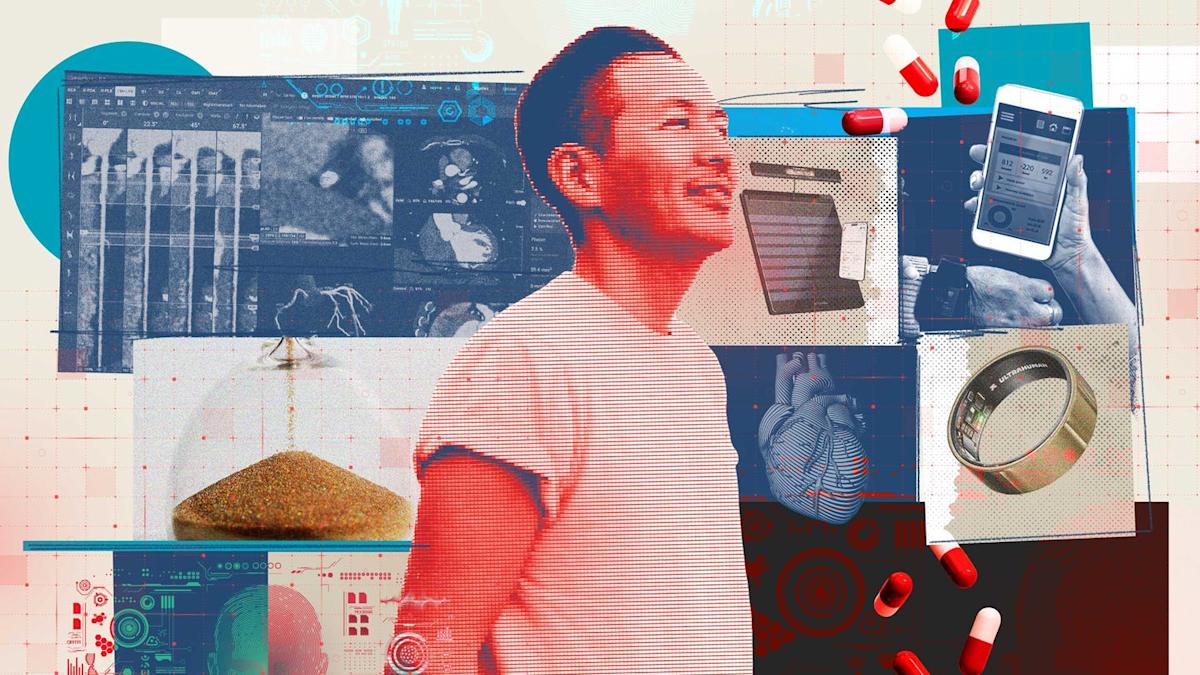
“This year, there were almost 100 exhibitors that self-identified that they are in the longevity space,” said Rene Quashie, Vice-President for Digital Health at CTA, the organizer of the show. It included devices like the new Ultrahuman Ring AIR, a next-gen sleep-tracking wearable that uses high-resolution audio analysis and biomarker data to track snoring and respiratory issues and Ascentiz modular exoskeleton providing hip and knee support.
According to him, one of the major trends includes precision, proactive healthcare products enabled by data and AI leading to personalized predictive care. With advances in genomics, biomarker detection and analytics, health risks can be identified earlier and interventions tailored to the individual.
The second trend was continuous, remote and patient-empowered care through wearables, connected diagnostics, telehealth and remote patient monitoring. Add to that ElliQ, an AI companion that helps older adults stay connected and it was an environment where it became apparent that technology will drive the future of our health.
One of the crowd-pleasing products that also won a CES Innovation Award was the Body Scan 2 from the French-owned company Withings, which sells an array of products including body smart scales and watches to track personal data.
Billed as the first science-backed longevity station, the Body Scan 2 measures and collects multiple health data points on an ongoing basis.
“When you stand on the scale, you have two hand contacts and two feet contacts, “said, Paul Buckley, head of North America retail sales, adding that “It enables the scale to measure muscle and fat mass and blood flow in six regions of your body.”
The scale is also powered by data from more than 60 biomarkers, provides hypertension notifications, metabolic and cellular assessments and cardiovascular data.
“The scale can also measure the speed of blood in and out of your heart identifying if there is something that needs to be discussed with your doctor. Since all of our data goes right to your phone, it can then be sent on to the doctor’s office,” said Buckley.
With the ability to gather so much data, some doctors predict that we are at a pivotal moment in how data will drive targeted therapeutics for healthier longevity.
“The tools that are coming out will allow us to digest the huge proliferation of data that is available. We want to be able to take all of those insights to create a whole new category of tests, leading to solutions on the cellular level, “said Rafid Fadul, M.D., a Washington-based physician who is also the Chief Medical Advisor to Cenegenics, a medical group with almost clinics nationally that specializes in science-based longevity medicine.
“What’s around the corner, for example, is the ability to compare an individual’s prostate cancer with millions of datapoints from others of the same age and same stage. It will lead to a personalized subset of therapeutics that will be given to the individual,” he added.
A new technology called Cleerly is another new development to look at different plaque density in the heart. “Most men die of heart disease. Cleerly is an AI algorithm that is applied to a CCTA scan to identify what’s preventable before there are any issues,” he explained.
David Luu, M.D., a trained cardiac surgeon is the founder of Longevity Docs, a global longevity medicine platform educating and connecting over 600 doctors across 50 countries.
“The trend of an ongoing stream of health data with products like continuous glucose monitors or lab testings are more available to more people. It will inform the patient, as well as the physicians and hospitals for better decisions,” he explained.
A new approach is with Noom, the weight loss platform, where a consumer wears a device to collect blood samples and track 17 biomarkers without visiting a clinic, according to Luu. The technology then allows for tracking to see how biomarkers improve while using a GLP-1. What really excites Dr. Luu is the prospect of what he calls the measurement of “ambient longevity”, it’s an AI enabled approach that seamlessly gathers signals from everyday life: your behavior, how you eat, how you sleep, how you spend your money, the news that you watch.
“It will ultimately lead to a personal longevity assistant that will provide individualized recommendations based on the collection of data that is physical, mental and environmental, “he explained. “That’s when longevity medicine truly becomes proactive, personalized, and democratized.
Nir Barzilai, M.D., Ph.D., is a Professor of Medicine and Genetic at Albert Einstein College of Medicine in New York. Like many of his colleagues, he continues to track the effectiveness of new drugs that are impacting longevity.
“There are four drugs that are FDA approved that also happen to be longevity drugs. In preclinical trials, we want to show that if we put the drug in cells, it changes the biology of aging. When the drugs are given to animals, they live healthier and longer lives,” he said, adding that, Clinical studies need to show that they prevent other age-related diseases than the diseases they were intended to treat, an all cause mortality (death, rather than disease specific mortality.”
The four FDA approved drugs to fight aging are metformin, a group called SGLT2 inhibitors like Farxigia, GLP-1s like Ozempic and Mounjaro and bisphosphenate like Zolendronic acid. According to Dr. Barzalai, all of them in the lab (preclinical) and in clinical study have shown a delay in aging.
What excites him is the idea that this emerging class of drugs may extend human lifespan in the future. “Right now, potential life expectancy is around 120. I’m not saying that we cannot break it, but we probably will,” he said, acknowledging that death is the end state, but slowing down the process is the key. “A 12-month study published in the Journal of the American Medical Association indicated that patients on Ozempic or Mounjaro has already shown a decrease in hospitalization by 50 percent and death by 50 percent,” he explained to make the point.
Since 1998, Dr. Barzilai has studied 850 centenarians of Ashkenazi Jewish backgrounds who share exceptionally close DNA to determine what might be the longevity factors for such long lives. While he has identified genetics as a key contributor, there is now an effort to develop a drug that may be able to replicate some of the characteristics for some type of genetic enhancement to help others become centenarians too. “One is a drug from Merck which is a CETP inhibitor. We’ve already seen that it has some benefit for improved cognitive function,” he explained.
In a world where drug development is fueled by AI capabilities and technology, there are exciting new approaches to impact diseases that are most associated with aging. Mark Lachs, M.D., from Weill Cornell Medicine in New York agrees that the emerging new classes of drugs may have a profound effect for longevity. “The onset of the 200 chronic diseases associated with obesity (and aging) will be delayed. If you’re destined to get arthritis at 70, now you’ll get it at 90, if at all,” he said. “Both GLP-1s and other new emerging drugs (most of which influence both aging and weight) will be a major driver for this change. For example, some people who might not lose weight on a GLP-1 may still have improvements in certain chronic diseases,” he says. “We will also learn that certain GLPs and other obesity drugs will be better for some chronic diseases versus others.”
Along with obesity and chronic diseases, there are also significant inroads in addressing Alzheimer’s Disease (AD), the sixth leading cause of death for men over age 65, according to Diane Ty, Managing Director of the Future of Aging at the Milken Institute. “Today, we have two FDA-approved disease-modifying drugs, leqembi ™ and kisunla ™, both amyloid-clearing therapies administered by infusion and shown to slow cognitive decline in people with early symptoms of AD,” she says.
There is a robust pipeline of about 140 drugs in various stages of development, according to Ty, including those with subcutaneous delivery (potentially administered at home) and progress toward an oral therapy, both of which would greatly increase access and affordability.
“There is an early-stage set of trials for an Alzheimer’s vaccine that will also be underway in the near future. While many of these advances won’t cure the disease, they could meaningfully slow progression for some patients-especially when paired with earlier diagnosis enabled by biomarkers, “she said.
Some say that we are in a new golden age of medicine with all of the preventative tools that are at our disposal. It is now up to the individual to take advantage of them and to have the will to pursue all that is available. Your longevity may depend on it.
You Might Also Like
-
The Best Hair Growth Shampoos for Men to Buy Now
-
25 Vegetables That Are Surprising Sources of Protein