
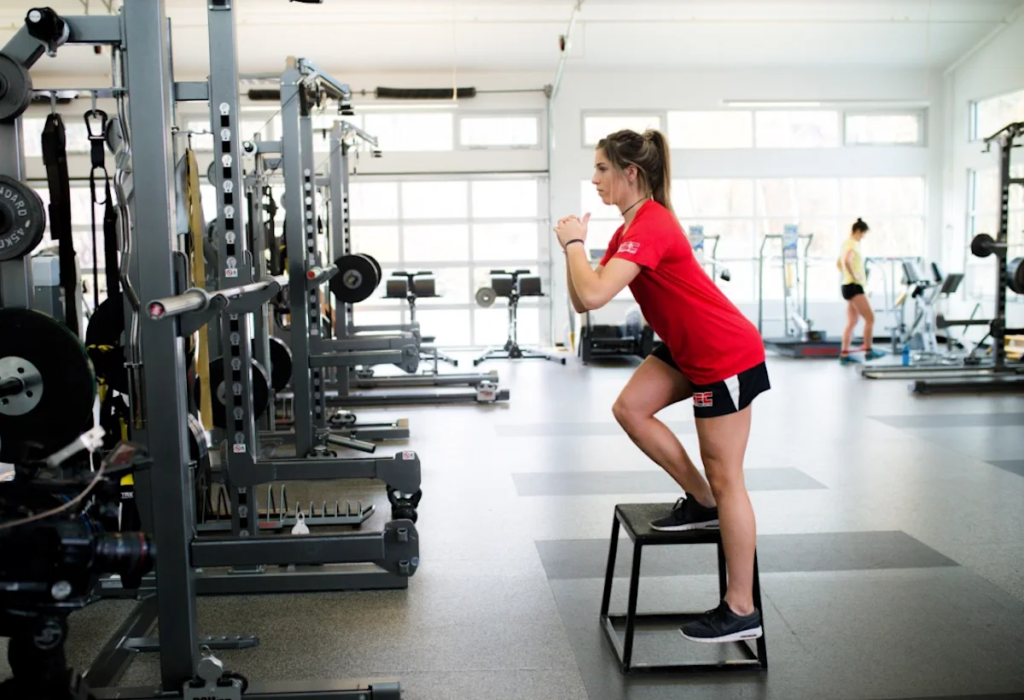
Strong legs are essential for skiing without injury. But many traditional strength training programs focus on the bigger muscles in your lower half, including the quads, hamstrings, and gluteus maximus (your largest butt muscle).
That means the smaller guys often get neglected. And one small guy in particular-the gluteus medius, which forms part of your side butt-is worth paying attention to if you actually want to reduce your risk of knee pain and injury this winter.
Because ACL tears are among the most common ski injuries, Dr. Gregory Lichtman, an orthopedic surgeon in northern California and a physician for the U.S. women’s ski team, puts heavy emphasis on strengthening the glute medius. In his view, it’s one of the most important muscles for staying safe and skiing well.
Advertisement
Advertisement
Unfortunately, even high-level athletes can have a weak glute medius, according to Lichtman. That’s because unlike the quads, hamstrings, calves, and glute max-which can naturally get strong from activities like road running and hill climbing-the glute medius typically needs to be intentionally strengthened.
Read on to learn why this small muscle is so important, Lichtman’s favorite way to strengthen it, and other essential fitness tips for injury prevention.
What does the glute medius do in skiing?
The glute medius is a small muscle on your outer hip that fires up when you bring your leg out to the side, a motion known as hip abduction. It also helps control the knee by preventing it from caving inward (a position known as valgus) as you perform various movements. And it assists you in balancing on one leg, which is important when loading your downhill ski, Lichtman says.
In skiing, if you get into the back seat (meaning, you shift your body weight backwards, instead of staying centered over your skis) and the knee goes into valgus, the tibia can internally rotate, “and that’s where the ACL tears occur,” Lichtman says. Even if you don’t get a full-blown ACL tear, going into valgus when you ski can contribute to patellofemoral pain syndrome, a fancy term for pain at the front of the kneecap, Lichtman says.
Advertisement
Advertisement
By strengthening the glute medius, you can make it more resistant to valgus in the first place, which decreases your chances of both ACL tears and general knee pain.
There are also performance benefits: “A strong gluteus medius also really allows you to stand on your downhill ski a little bit more aggressively and really make a more aggressive turn,” Lichtman says. That’s because when you place most of your weight on your downhill ski (the one that’s closest to the bottom of the hill), your G-forces will want to throw you down the mountain. But having a strong glute medius-in addition to strong quads and core muscles-helps form a strong pillar on your outer hip, which “really allows you to withstand those G forces the best,” Lichtman says.
How to strengthen the glute medius
One of the classic ways to target the glute medius is to strap on ankle weights, lie on your side, and lift and lower your top leg. Lichtman says. This exercise can absolutely strengthen your glute medius, but it’s not Lichtman’s go-to. That’s because it primarily just isolates that muscle and doesn’t mimic how we move in sports.
A better bet, Lichtman says, is to focus on exercises that simultaneously activate the gluteus medius and other muscle groups because that better resembles how we use this muscle during athletics. His favorite exercise that ticks that box? The monster walk. Not only does this move really fire up the gluteus medius, but it also works the core, hamstrings, quads, and glute max, he says.

“Monster walks” are a banded exercise that activates the gluteus medius and other muscle groups. (Photo: Tory Powers)
Monster Walks:
-
Standing with feet hip-distance apart, loop a resistance band around your thighs, just above your knees, and bend both knees to about 45 degrees. Engage your core.
-
Step out to the side with one leg and then follow with the other leg. This is one rep. Continue this pattern, stepping in the same direction, for about five to 10 reps (or as many reps as you have the physical space for), then repeat in the other direction. Keep your legs spread apart the whole time so that you constantly feel tension from the band. Continue until your muscles are too fatigued to carry on. As Lichtman puts it: “Go till you blow.”
-
Once you’ve gone to fatigue, rest, then repeat. Complete three total sets.
Advertisement
Advertisement
Incorporate this exercise into your workouts three days a week, with at least one day off in between each session so that you give the muscle the downtime it needs to recover and build back stronger. To stave off boredom-and also work different parts of your hips and quads-incorporate different variations of the monster walk throughout the week. For example, instead of stepping straight out to the side, step forwards and backwards, or diagonally forward and diagonally backwards. As long as you have good form and keep your legs spread apart so that you feel tension from the band the whole time, “all directions can be effective,” Lichtman says.
Lichtman suggests doing monster walks during both pre-season and throughout ski season. “One of the big pitfalls is that we will all get ready for ski season, and then taper off our dry land training,” he explains. “If you’re one of the fortunate few who can ski five or six days a week, you’re probably getting enough exercise, and you probably don’t want to stress your body out any more than that. But for those of us who are skiing two to three days a week, finding some time to do some cross-training and continue to work on our core and our hip abductor strength is really important because those are the less commonly used muscles during skiing.”
Once this exercise becomes easy, level up the challenge by using a stronger resistance band.
A strong glute medius is just one component of injury prevention
A strong glute medius can keep you safe on the slopes. But it’s not the only fitness-related aspect of injury prevention.
Advertisement
Advertisement
Having a strong core and quads, along with good overall endurance, is also key. That’s because one of the essential components of an ACL tear pattern in skiing is getting kicked into the back seat. And while the gluteus medius helps guard against knee valgus in this position, it doesn’t prevent you from getting into the back seat in the first place, Lichtman explains. What does help? Having strong core and quad muscles, plus overall endurance. This trifecta, Lichtman says, is “fundamental” to staying out of the back seat.
On the endurance front, the goal is to be as fresh after lunch as you are after breakfast, Lichtman says. “Fatigue is definitely a risk factor for ACL tears,” he says, explaining that fatigued skiers more frequently get into the back seat and sustain injuries than those who aren’t zapped. So make sure your dryland training doesn’t just focus on lifting weights: “A balance of endurance and strength training is integral for a skier preparing for ski season,” Lichtman says.
For exclusive access to all of our fitness, gear, adventure, and travel stories, plus discounts on trips, events, and gear, sign up for Outside+ today.


