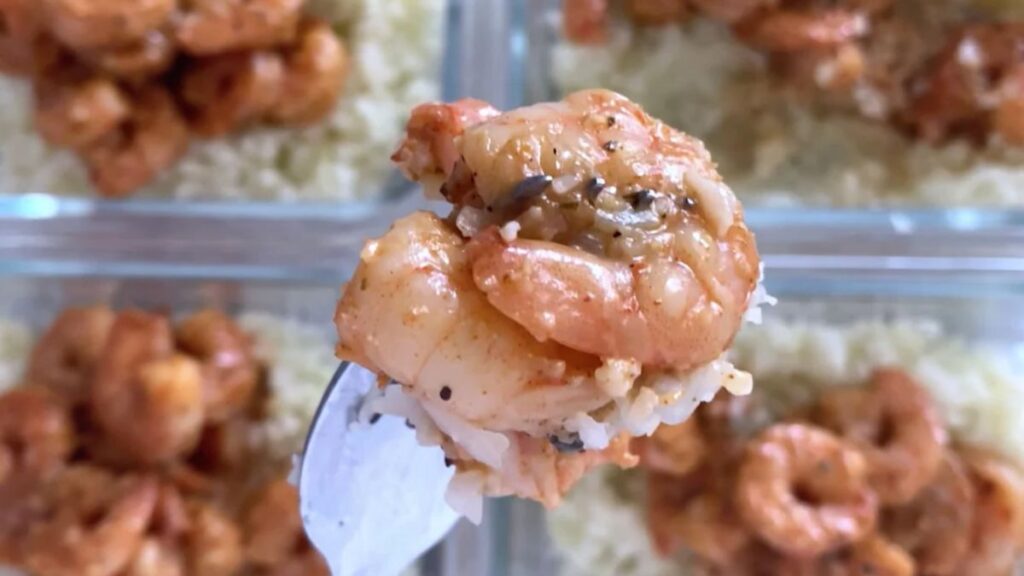
Shrimp is one of the fastest proteins to cook, and that speed is exactly why it gives people trouble in a meal prep container. In the meal prep Cajun shrimp and cauliflower rice, seasoned raw shrimp go into melted butter over medium heat for about 2 minutes per side. Then heavy cream goes into the pan and thickens into a sauce in a minute or two, and the pan comes off the heat. That is the whole cook. By the time the containers go into the fridge, the shrimp are done.
So every reheat is a second round of cooking on a protein that had very little margin to begin with.
Why shrimp tighten up
Shrimp is lean, and its proteins firm up quickly with heat. The gap between just cooked, when the flesh turns opaque and curls into a loose C, and overcooked, when it pulls into a tight O and turns chewy, is short. A microwave at full power heats unevenly. The shrimp sitting on top of the container can tighten while the cauliflower rice underneath is still lukewarm, and running the microwave longer to fix the rice only makes the shrimp tougher.
Reheat in short bursts at lower power
Cover the container loosely, heat it at half power for about 30 seconds at a time, and stir between rounds so the cream sauce carries heat into the rice. Moving the shrimp to the side of the container, rather than leaving them piled in the center, also helps them heat at the same rate as everything else. Leftovers should reach 165°F all the way through, so check the middle of the rice, not just the shrimp. A quick-read thermometer settles it in a few seconds.
Take the shrimp off the heat on time on prep day
The biggest favor to a day-three lunch happens on the day the shrimp are cooked. Cook them until they are opaque all the way through, then stop. The recipe pulls the pan off the heat as soon as the cream thickens, and that step matters more for prep than for a dinner eaten right away. Shrimp that sit in a hot pan for an extra five minutes start out halfway to rubbery before the microwave ever touches them.
Some containers reheat better than others
Ground beef is far more forgiving. The Korean ground beef meal prep bowls are browned, then simmered for 2 to 3 minutes in beef broth, coconut aminos, sesame oil, and spices, and spooned over cauliflower rice with shredded carrots, green onions, and sesame seeds. The recipe reheats them for about 30 seconds to a minute, depending on the microwave. Crumbled beef coated in sauce doesn’t toughen the way whole shrimp do, so it holds up better later in the week.
Some prep skips reheating entirely. The Greek salad meal prep jars layer cucumber, green pepper, tomatoes, red onion, kalamata olives, and feta with an olive oil, red wine vinegar, and oregano dressing, and they are eaten cold. The recipe keeps them in the fridge for up to 2 days, which puts them at the very start of the week.
Order the week by how each container holds
Cooked leftovers keep three to four days in the refrigerator under USDA guidance, and within that window some foods hold their texture better than others. Put the containers that are most sensitive to time and reheating at the front of the week: salad jars first, shrimp next. Save the most forgiving containers, like the ground beef bowls, for the end.
That order does more for a week of lunches than any change to the recipes themselves. A shrimp container eaten on Monday or Tuesday and warmed gently in short rounds tastes close to the day it was made. The same container blasted for two minutes on Thursday is where the rubbery shrimp come from.