

SANTA MARIA ZOQUITLAN, Mexico (AP) — Mexico’s agave spirit mezcal is still produced much as it has been for generations.…
SANTA MARIA ZOQUITLAN, Mexico (AP) — Mexico’s agave spirit mezcal is still produced much as it has been for generations. The work is slow and physical, guided by knowledge passed down within Indigenous families.
In many villages in the Mexican state of Oaxaca, the country’s largest mezcal producer, the spirit has long been used as a home remedy and offered as a gesture of hospitality. It is at every wedding, funeral and community celebration. It remains not only a drink, but part of daily life.
Here is how it’s made:
Harvesting agave
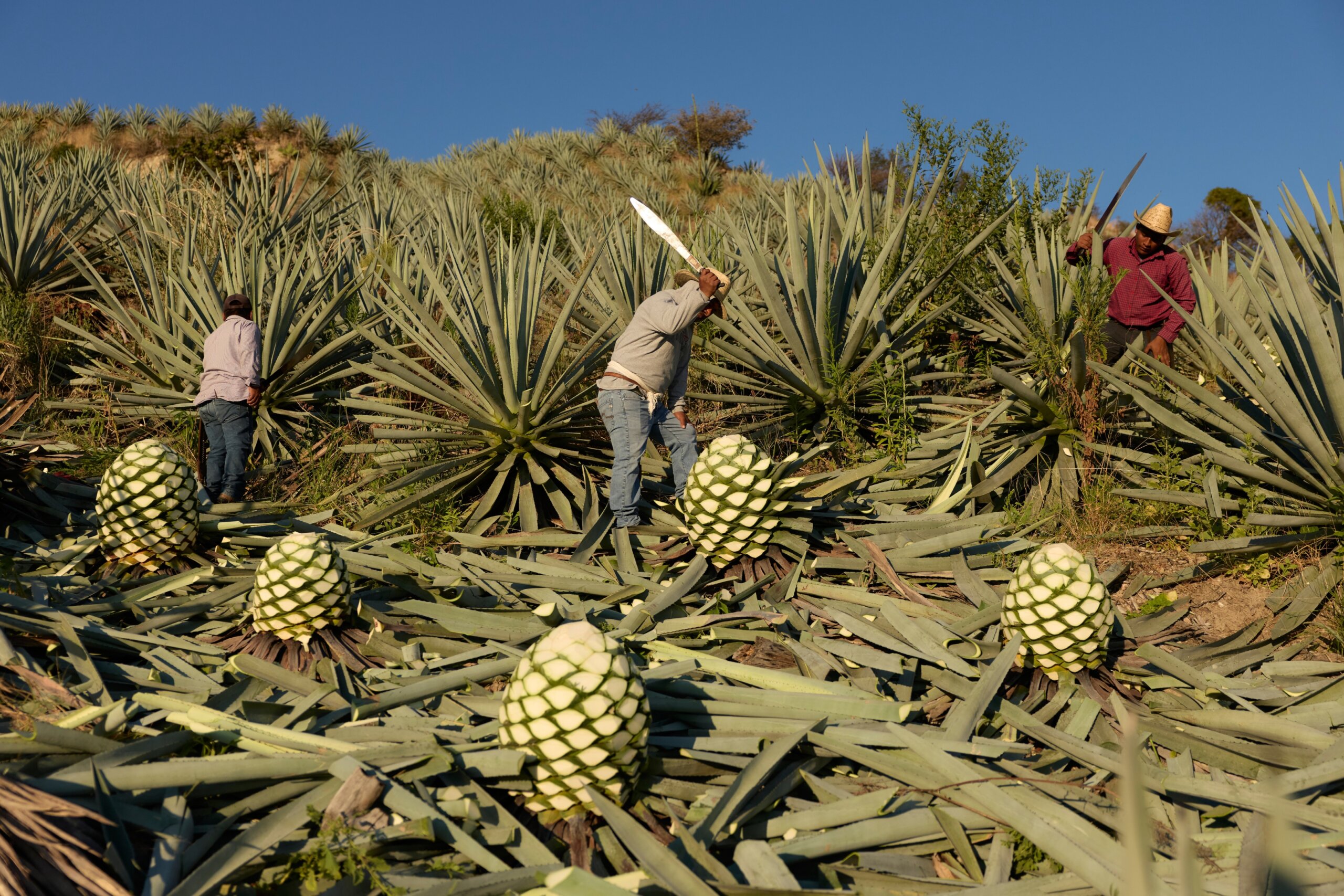
The process begins in the fields. Workers known as jimadores cut mature agave, locally known as maguey, by hand, often on steep hillsides. Using machetes and sharp blades, they slice away the spiny leaves to reveal the pineapple, which can be carried by trucks or donkeys to the distillery.
The work is physically demanding and sometimes dangerous. The terrain can be uneven and remote, and the agave’s pointed spines can easily injure workers.
About 40 species of agave can be used to make mezcal, out of roughly 200 that exist. The species known as espadin is the most common because it matures faster than many wild varieties, and it is often cultivated in monoculture.
Cooking the agave
Plants are buried in pits lined with hot stones and covered with soil. Firewood heats the stones beneath the ground, and the agave roasts for several days. The slow cooking gives mezcal its distinctive smoky flavor.
“Since I was a little girl, I spent days helping my father at the distillery,” said Elena Aragón Hernández, referred to as a “mezcal master” thanks to her expertise, from Santa Maria Zoquitlan. “Women have always been part of the process and we are now demanding our place in this industry.”
Crushing the agave
Once cooked, the agave is crushed beneath a massive circular stone known as a tahona. In many towns, a horse pulls the stone in circles, grinding the agave into a fibrous mash.
Some producers have begun using mechanical shredders to speed up the process. While industrial equipment makes the work easier, some traditional producers say the tahona breaks the fibers differently and produces a flavor that cannot be replicated by machines.
“When I grew up, I realized making mezcal was much harder and physical than I thought,” said Luis Cruz Velasco, who learned the craft from his family in San Luis del Rio. “We spend all day at the palenque working from sunrise to sunset, Monday to Sunday.”
Fermentation
The crushed agave is transferred to open wooden vats and mixed with water by hand. Fermentation can take days or weeks depending on temperature and humidity.
Mezcal production requires significant amounts of water and firewood. Some have also begun buying certified wood, and installing systems to cool and reuse water, as well as biodigesters to treat waste from fermentation and distillation.
Armando Martínez Ruiz, a producer from Soledad Salinas, said his distillery uses roughly 30,000 liters (7,925 gallons) of water and more than 15 tons of firewood each month to produce about 5,000 liters (1,320 gallons) of mezcal.
Distillation and tasting
The fermented mash is distilled in small batches in copper stills, a method commonly known as artisanal mezcal. A smaller number of producers continue to distill in clay pots, known as ancestral mezcal, a slower and older technique.
The spirit goes through two rounds of distillation before it’s ready for drinking. It is measured by sight, smell and taste rather than tools, shaped as much by tradition as by the land where it is made.
Every year, thousands of visitors travel to Oaxaca to taste the spirit at local bars known in Spanish as mezcalerias. Mezcal is typically sipped slowly rather than taken as a shot, allowing drinkers to experience the differences between its many varieties.
___
Reporting for this story was supported by the Pulitzer Center. The Associated Press’ climate and environmental coverage receives financial support from multiple private foundations. AP is solely responsible for all content. Find AP’s standards for working with philanthropies, a list of supporters and funded coverage areas at AP.org.
Copyright
© 2026 The Associated Press. All rights reserved. This material may not be published, broadcast, written or redistributed.