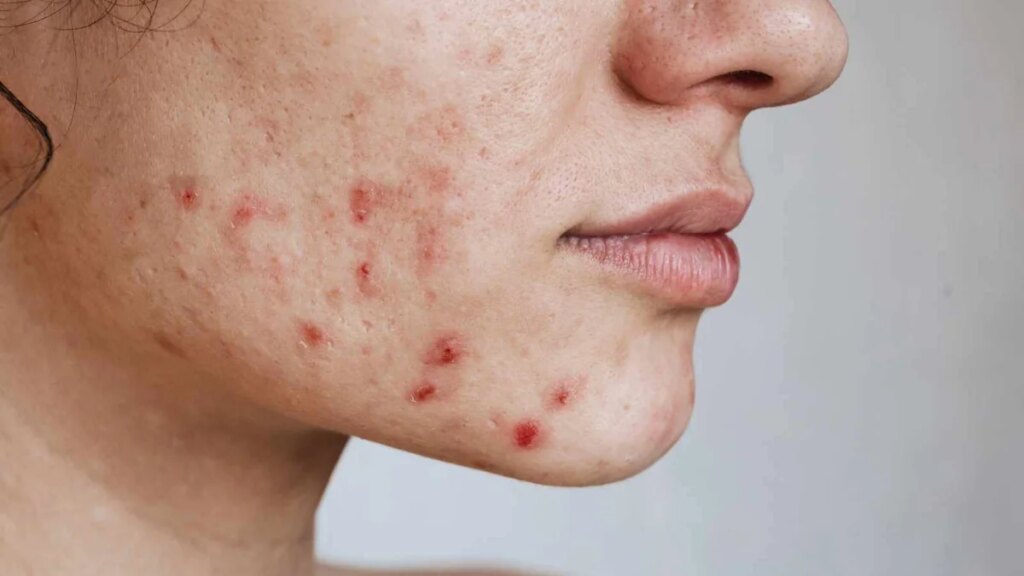
Female skin repairs cuts faster than male skin because estrogen synchronizes stem cell division, while testosterone pushes male cells to mature and exit the repair zone early.
Anyone who has watched a paper cut vanish in days on one person while lingering on another knows skin repair isn’t always fair. A landmark study published on October 14, 2026, in Nature reveals that biological sex dictates how skin rebuilds itself from the ground up.
Researchers led by Professor Cédric Blanpain at the Université Libre de Bruxelles and Professor Benjamin Simons at the University of Cambridge discovered that female wounds generate 50% more dividing repair cells within 48 hours than male wounds.
Advertisement
Advertisement
This discovery matters far beyond everyday scrapes. According to the National Institutes of Health, chronic wounds like diabetic foot ulcers affect 6.4% of diabetic patients globally and cost the U.S. healthcare system $9.7 billion annually. Understanding why male and female skin cells follow different rulebooks could transform how doctors treat burns, surgical incisions, and chronic ulcers.
Coordinated Cell Division Gives Female Skin A Built-In Head Start
Female skin stem cells divide and mature in synchronized pairs like tandem rowers, whereas male stem cells operate like solo freelancers.
To solve a decades-old debate over how the epidermis renews itself, the team used high-resolution microscopy to film living mouse skin continuously for five months. They tracked 718 stem cell lineages in females and 418 in males across 140 days. The footage confirmed that deep basal stem cells first divide into intermediate transit-amplifying cells before moving upward to seal the surface barrier.
What shocked the researchers wasn’t the hierarchy itself, but how male and female cells behaved differently within it. First author Dr. Dan Engelman noted that the team was “surprised to discover strong differences in the way stem cells renew the skin in females and males.” In females, twin “sister” cells born from the same division stay in lockstep, dividing or maturing at the exact same moment like two rowers synchronizing their strokes. Because female sister cells act in pairs, their cell families grow in neat even numbers, jumping from two to four cells together.
Advertisement
Advertisement
When two cells exited the bottom layer simultaneously, 98% of those pairs in females were actual sisters, compared to 84% in males. Over 140 days, only 52% of female cell families stayed small, at three cells or fewer, while 65% of male families stayed in that smaller range.
Related: 9 Morning Skincare Habits for Healthy, Radiant Skin
Estrogen Orchestrates Cellular Teamwork While Testosterone Speeds Up Exit
Sex hormones, not X or Y chromosomes, act as master switches that either keep stem cells in synchronized reserves or send them to the surface.
To figure out what was bossing these cells around, the scientists tested whether sex hormones were pulling the strings. Skin cells carry hormone receptors that let estrogen and testosterone bind directly.
Advertisement
Advertisement
When researchers surgically removed the ovaries from female mice to cut off estrogen, the synchronized even-number cell pattern nearly vanished. Without ovarian hormones, the share of female stem cells dividing within a four-hour window dropped from 7.2% to 4.9%. Giving those mice estradiol, a potent form of estrogen, bounced their division rate right back to 7.6% and restored sister-cell harmony.
Testosterone does the opposite, rushing male stem cells toward the exit door. Just four days after researchers tagged dividing cells, 47% of male daughter pairs had already sent one cell upward out of the stem cell layer, compared to only 21% in females.
Castration slowed the male exit rate to a female-like 14% and, within weeks, caused male cells to adopt the female even-numbered pairing pattern. Injecting active dihydrotestosterone (DHT) into castrated males pushed their early cell exit rate back up to 31%.
To rule out genetic differences, the team tested “Four Core Genotypes” mice engineered to have testes regardless of whether they carried XX or XY chromosomes. Every animal with testes showed rapid stem cell exit, proving that circulating hormones, not sex chromosomes, set the tempo.
Advertisement
Advertisement
These experimental findings reveal a fundamental trade-off between cellular teamwork and rapid turnover. While estrogen builds a synchronized reserve of stem cell clones ready for tissue repair, testosterone forces male skin cells to differentiate and exit the basal layer prematurely.
Faster Wound Closure And The Jump From Mice To Human Skin
Within the first 48 hours of injury, female wounds recruit 50% more dividing cells across a repair zone one-third wider than males.
All that cellular coordination pays off the moment an injury strikes. When researchers created 6-millimeter round wounds on mice backs and tracked healing over 12 days, female wounds closed noticeably faster, taking a decisive lead in the first few days. By day two, the ring of dividing cells around female wounds was one-third wider and had 50% more dividing cells than in males.
For years, dermatologists blamed slower male healing mainly on heavier inflammation or differences in skin thickness. This study shows that female skin also gets a direct mechanical head start because its stem cells activate earlier and move in formation. After that initial repair surge, the healing gap gradually narrows as the wound closes.
Advertisement
Advertisement
To see whether human skin follows the same hormonal rules, the team grew 3D human skin equivalents in the lab using donated primary keratinocytes. Adding 100 nanomolar DHT pushed 37.2% of tagged human cells into upper layers within 72 hours, compared to 24.6% in untreated skin, while switching on maturation genes like EVPL and TGM1. Whether living human stem cells maintain synchronized pairs over months, as mouse cells do, remains an open question for future trials.
Clinical data in humans strongly echo these lab findings. In human punch-biopsy studies, both young men and naturally cycling young women with higher testosterone levels experienced delayed wound closure between days three and seven (p<0.05). Clinical trauma cohorts also show that men face a 58% higher risk of major post-injury infections than women due to androgen-driven immune suppression.
Scientific And Regulatory Context In Precision Dermatology

Photo Credit: Ananago/123RF
Despite decades of federal mandates to study sex differences, nearly 90% of preclinical wound-healing trials still ignore biological sex in their efficacy data.
For generations, biomedical science treated male biology as the universal default, assuming non-reproductive organs like skin worked identically in everyone. Although the U.S. National Institutes of Health (NIH) mandated female enrollment in clinical trials in 1993 and later required studying “Sex as a Biological Variable” in lab animals, major blind spots persist. Even after the Food and Drug Administration (FDA) issued updated draft guidance in 2025 urging sex-specific evaluation of medical products, dermatology lags behind.
Advertisement
Advertisement
A recent audit of 25 preclinical studies testing bioengineered and nanomedicine wound dressings found that only three studies, just 12%, compared safety or efficacy between males and females. Ignoring sex hormones in wound care is a costly mistake as global diabetes cases climb toward a projected 1.31 billion by 2050.
Aging also flips the hormonal script for women after menopause. Human epidermal thickness shrinks by 6.4% per decade, dermal thickness drops 20% in old age, and postmenopausal women lose 1.5% of their facial skin elasticity each year as estrogen plummets. Without estrogen to coordinate stem cells and calm the NLRP3 inflammasome, older women lose their early healing edge; a setback that topical estrogen therapy can reverse.
The Cellular Blueprint For Sex-Specific Healing
Skin has a distinct biological sex, and tuning treatments to a patient’s hormonal profile could revolutionize everything from post-surgical recovery to skin cancer prevention.
The ULB and Cambridge study proves that skin isn’t just a passive wrapper; it’s a hormonally tuned organ where estrogen builds synchronized stem cell teams and testosterone drives rapid cell turnover. Because epidermal stem cells also start skin cancers, Professor Blanpain noted that his team will next investigate “the differences between males and females during the formation and progression of skin cancers, as well as the molecular mechanisms responsible for these differences.”
As medicine moves away from one-size-fits-all bandages, how should doctors and skincare innovators adapt wound care and post-surgical recovery to match a person’s age and hormonal profile?
More Articles You Might Like:
Advertisement
Advertisement
The post Scientists May Have Found Why Women’s Skin Heals Faster Than Men’s appeared first on FODMAP Everyday.