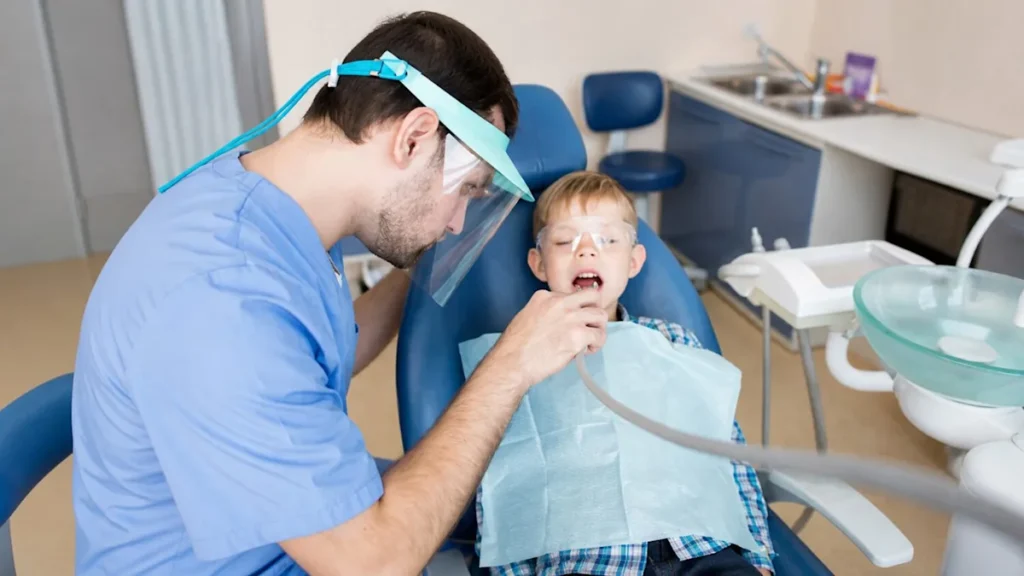
For generations, treating a cavity has often meant sitting in a dentist’s chair for drilling and a filling. Now, researchers at the University of Michigan have confirmed that a liquid called silver diamine fluoride can stop tooth decay from progressing in many young children without conventional drilling.
In a clinical trial involving 830 children, the treatment stopped decay in 54% of treated cavities after six months, compared with 22.5% in the placebo group. The findings could eventually change where American children receive dental care, including the possibility of treatment in pediatric clinics and early childhood programs.
Published in JAMA Pediatrics on July 27, 2026, the research provides stronger evidence for a treatment dentists have used for years. The findings received renewed attention in October, raising questions about how simpler dental procedures could improve access to care.
Beyond avoiding a dental drill, the research points toward a future in which some childhood cavities could be treated earlier and in more familiar healthcare settings.
A Major Trial Shows How Well the Liquid Works
Silver diamine fluoride significantly outperformed a placebo in preventing existing cavities from worsening, offering researchers strong evidence that a simple liquid treatment can help control tooth decay in young children without the need for conventional drilling.
The liquid, commonly called SDF, contains silver, which has antimicrobial properties, and fluoride, which helps strengthen tooth structure.
Advertisement
Advertisement
A dental professional applies it directly to the affected tooth surface using a small applicator, without drilling away decayed material.
Researchers tested a 38% SDF concentration in children aged 12 to 71 months with severe early childhood tooth decay.
Participants were recruited through medical and dental clinics and early childhood programs in Michigan, New York, and Iowa. They received either SDF or a placebo, with applications at enrollment and again after six months.
At three months, 57.5% of cavities treated with SDF had stopped progressing, compared with 18.8% in the placebo group.
After six months, the figures were 54% and 22.5%, respectively. By eight months, 50.2% of treated cavities remained arrested, compared with 17.4% among those receiving placebo.
Advertisement
Advertisement
These percentages describe individual cavities, not the proportion of children completely free of active decay.
Of the 830 participants, 584 completed the trial, which was disrupted by the COVID-19 pandemic.
Why the Treatment Could Reach Beyond Dental Offices
Researchers believe the liquid could eventually expand access to dental treatment by allowing certain childhood cavities to be treated in familiar healthcare settings, such as pediatric clinics and early childhood programs, where young children already receive routine care.
Dr. Margherita Fontana of the University of Michigan School of Dentistry, who led the research, described its potential in comments reported by the National Institutes of Health.
Advertisement
Advertisement
“This is a very effective and safe treatment—even in children as young as 1,” Fontana said.
In the United States, routine pediatric medical care and dental treatment generally operate through separate systems. Some children visit pediatricians before establishing regular dental appointments.
Researchers have suggested training pediatricians to identify cavities and, when appropriate, administer SDF.
Because applying the liquid doesn’t require conventional drilling equipment, it may create opportunities for treatment in medical clinics and early childhood programs.
However, the trial did not show that pediatricians nationwide already provide this treatment. Wider implementation would require appropriate training and systems for dental follow-up.
Related: 6 Foods Dentists Say Cause The Most Hidden Tooth Damage
An Established Treatment Gets Stronger Scientific Support
Silver diamine fluoride is not a newly discovered treatment, but the major clinical trial provides stronger scientific evidence of its effectiveness in stopping tooth decay, reinforcing its potential as a simpler alternative to conventional dental procedures for certain childhood cavities.
In 2014, the U.S. Food and Drug Administration cleared an SDF product for treating tooth sensitivity. Dentists subsequently used it to arrest cavities, an off-label application because it falls outside that specific authorization.
Advertisement
Advertisement
The University of Michigan research program began in 2018 to investigate its effectiveness.
Following disruptions during the COVID-19 pandemic, statistical analyses were completed in 2024. Researchers published the findings in July 2026, and an October 25 ScienceDaily report drew renewed attention to them.
Dr. Amr Moursi, a co-principal investigator at New York University College of Dentistry, said approval specifically for cavity arrest could improve insurance reimbursement, wider adoption, and product consistency.
Those changes remain potential outcomes, not established results.
The Treatment Comes With a Permanent Tradeoff

Image Credit: photochicken via 123RF
Silver diamine fluoride can stop tooth decay from progressing without conventional drilling, offering a less invasive treatment option for young children. However, the liquid permanently darkens the decayed areas of the teeth, creating a visible cosmetic tradeoff that parents should consider before choosing the procedure.
The staining can be visible, particularly when cavities affect teeth near the front of the mouth.
Advertisement
Advertisement
The liquid also cannot rebuild tooth structure already lost to decay, meaning some children may still require fillings or other dental procedures.
Researchers found no statistically significant difference in reported dental pain between children receiving SDF and those given placebo.
Treatment-related adverse events were reported at similar rates in both groups.
The study followed participants for eight months, leaving questions about how long the effects may last beyond that period.
These limitations make professional dental assessment essential when deciding whether SDF is appropriate for a particular cavity.
What This Could Mean for American Families
The findings suggest that treating certain childhood cavities could become simpler and more accessible in the future, potentially allowing more children to receive early dental care through familiar healthcare settings without always needing conventional drilling and filling procedures.
The trial provides evidence that SDF can stop decay in many affected baby teeth without conventional drilling. Its potential use in pediatric settings could create more opportunities for children to receive treatment.
Advertisement
Advertisement
Still, broader availability will depend on professional training, regulatory decisions, and how healthcare systems incorporate the procedure.
The research also focuses on young children with decay in their primary teeth, not adults.
For families, the bigger significance is that some dental problems could be addressed before more involved procedures are needed.
How could making this simple cavity treatment available during routine pediatric healthcare visits change the way American families access dental care for their children?
More Articles You Might Like:
Advertisement
Advertisement
The post Scientists Confirm a Simple Liquid Can Stop Tooth Decay Without Drilling appeared first on FODMAP Everyday.