

WEST PALM BEACH, Fla. (AP) — Corralling a wild rhinoceros into a small chute to give it eyedrops might seem…
WEST PALM BEACH, Fla. (AP) — Corralling a wild rhinoceros into a small chute to give it eyedrops might seem like a crazy plan. But if it’s crazy and it works, then it’s not crazy.
Animal behaviorists partnering with the Palm Beach Zoo & Conservation Society in Florida traveled to Africa in August to help an endangered white rhino with a life-threatening, parasitic eye infection.
Daniel Terblanche, a security manager with Imvelo Safari Lodges, said no one in Zimbabwe would have come up with the plan.
“Believe me, we didn’t think of it; it was a completely ridiculous idea to us,” Terblanche said. “But without trying all of the things that we could to rectify that situation, we would have been in trouble, I think.”
Outside of Zimbabwe’s Hwange National Park, the Community Rhino Conservation Initiative, with support from Imvelo Safari Lodges, engages local communities to reintroduce southern white rhinos to communal lands for the first time in the nation’s history.
Palm Beach Zoo CEO and President Margo McKnight was visiting the area last year when Imvelo Safari Lodges managing director Mark Butcher told her a health scare with a male rhino named Thuza could jeopardize the future of the program.
“This rhino had bleeding eyes. He was rubbing his eyes,” Butcher said. “And I was looking at a potential where this guy was gonna lose his eyesight. And this is in a pilot project that’s got fantastic vision for a future for conservation throughout Africa.”
Thad and Angi Lacinak, founders of Precision Behavior, traveled to Zimbabwe to work with the anti-poacher scouts. They developed a plan based on lessons learned at Palm Beach Zoo, where animals are taught to voluntarily participate in their own care.
“With this few animals in this location in Africa, it was essential that we save all of them,” Angi Lacinak said. “So when they called and said, Thuza is going to lose his eye, a blind rhino is a dead rhino. So no matter what it took, we were going to go over there and try.”
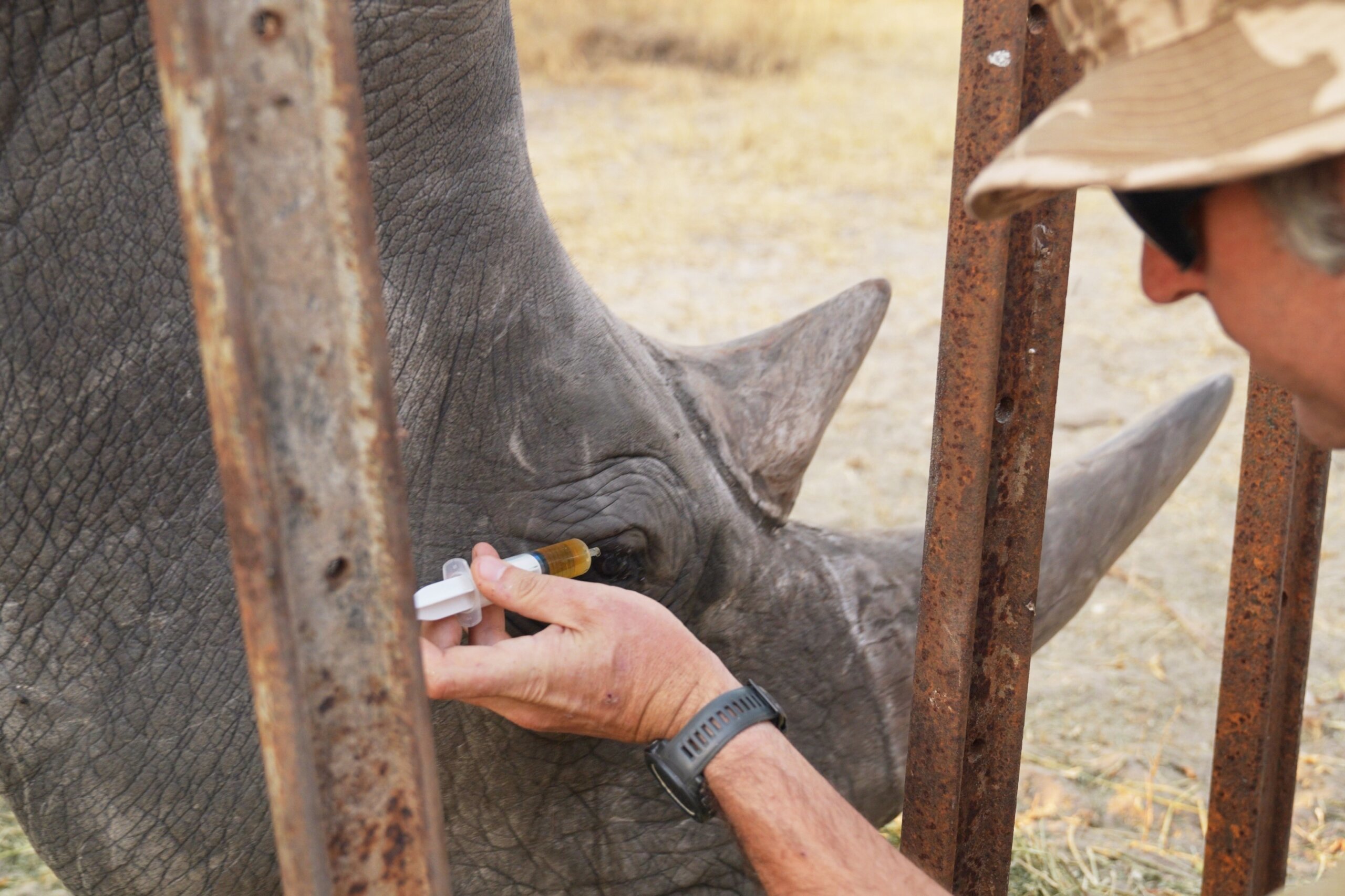
The idea was to coax Thuza into a tight space with his favorite foods and then to desensitize him to humans touching and squirting water on the face.
“Within about a week, we were actually putting the eye drops strategically in his eyes while he held for it,” Lacinak said. “And by the end of two weeks, we had transferred that skill set to not only Daniel, who was in charge of leading their guards, but to the guards.”
The conservation status of southern white rhinos is listed as near threatened, with about 16,000 animals living in the wild. Poaching and habitat loss remain significant sources of danger. So while Thuza and other rhinos continue to face challenges in the wild, at least the animal’s eyes have been protected.
“They’re consistently getting the medications into his eyes every day,” Lacinak said. “And the rhinos are just thriving now and they feel really, really confident that this solved their problem.”
Copyright
© 2026 The Associated Press. All rights reserved. This material may not be published, broadcast, written or redistributed.