



European travel expert Rick Steves isn’t just one of the most trustworthy authorities on making the most of a vacation to Europe. He’s also a brilliant source of tips, tricks, and advice on how to travel in a more frugal, affordable way. He doesn’t claim to be a shoestring traveler, and his guides aren’t designed for backpackers or couch–surfers, but he is a great source of information on what is worth spending money on, and what isn’t. Whether it’s dining well in Spain on a budget, haggling in local markets in Greece, or finding the best budget accommodation all over Europe, Steves is a trusted expert. Staying connected to loved ones back home is important, and Rick Steves’ guides are filled with ideas on keeping in contact while on the road. But there’s one traditional area of vacation communication that he thinks has been overtaken by technology —sending a postcard.
Postcards used to be the best and most affordable way to stay in touch with folks back home. It was a cheap, simple method of reassuring your parents that you were still fine and dandy, and a charming souvenir of your travels as well. Steves says that when he first traveled to Europe solo in 1973, postcards were “the only way of communication with my folks back home … since paying for international calls was beyond my Europe-Through-the-Gutter budget.” Throughout his trip, Steves says he “managed to send a postcard covered in cramped writing nearly every day.” But five decades later, he says that online communication has replaced the old-school hobby of sending postcards.
Read more: The Biggest Tourist Traps In Europe, According To Rick Steves
Staying in touch has never been easier

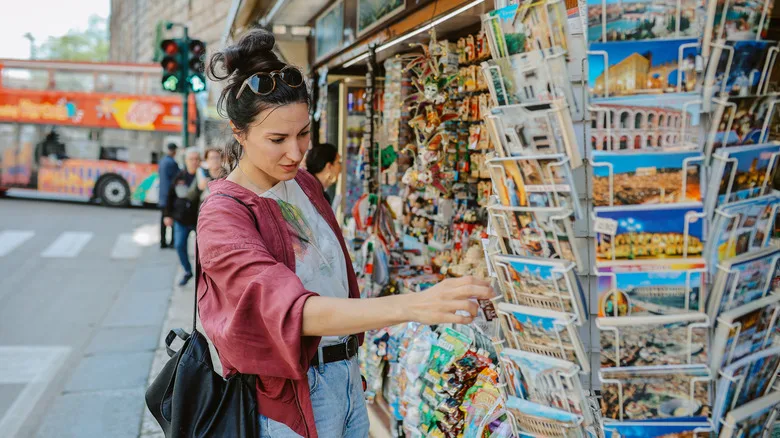
Woman shopping at a tourist shop in Verona, looking at souvenirs and postcards – Lechatnoir/Getty Images
Sending postcards might be quaint, charming, and delightfully retro, but it can also be surprisingly expensive. Postcards at tourist attractions tend to be expensive — upwards of $1 each — and the postage to send your card by airmail will cost around $2 to $5, depending on which country you are in. As a result, postcards just aren’t a cost-effective way of staying in regular contact, particularly if you are away for a serious length of time.
Luckily, online communication means that it has never been easier to connect with friends and family, even if you are halfway around the world. Rick Steves says “for the cost of a postcard and a stamp, you can be online in a cybercafé for about 15 minutes. Many libraries, hotels, and hostels offer free Internet access.” And that’s for people who don’t travel with a smartphone! Steves states that “traveling with a smartphone or tablet makes it easier than ever to keep in touch, from video-calling friends to sharing pictures on social media to keeping up to date with the family group text.”
It is important to remember that international calling costs can be prohibitively expensive, and your cell plan from back home is unlikely to cover you while you are traveling in Europe. Rick Steves recommends getting a European SIM card or buying international phone cards, which are readily available at newsstands.
Ready to discover more hidden gems and expert travel tips? Subscribe to our free newsletter for access to the world’s best-kept travel secrets. You can also add us as a preferred search source on Google.
Read the original article on Explore.