

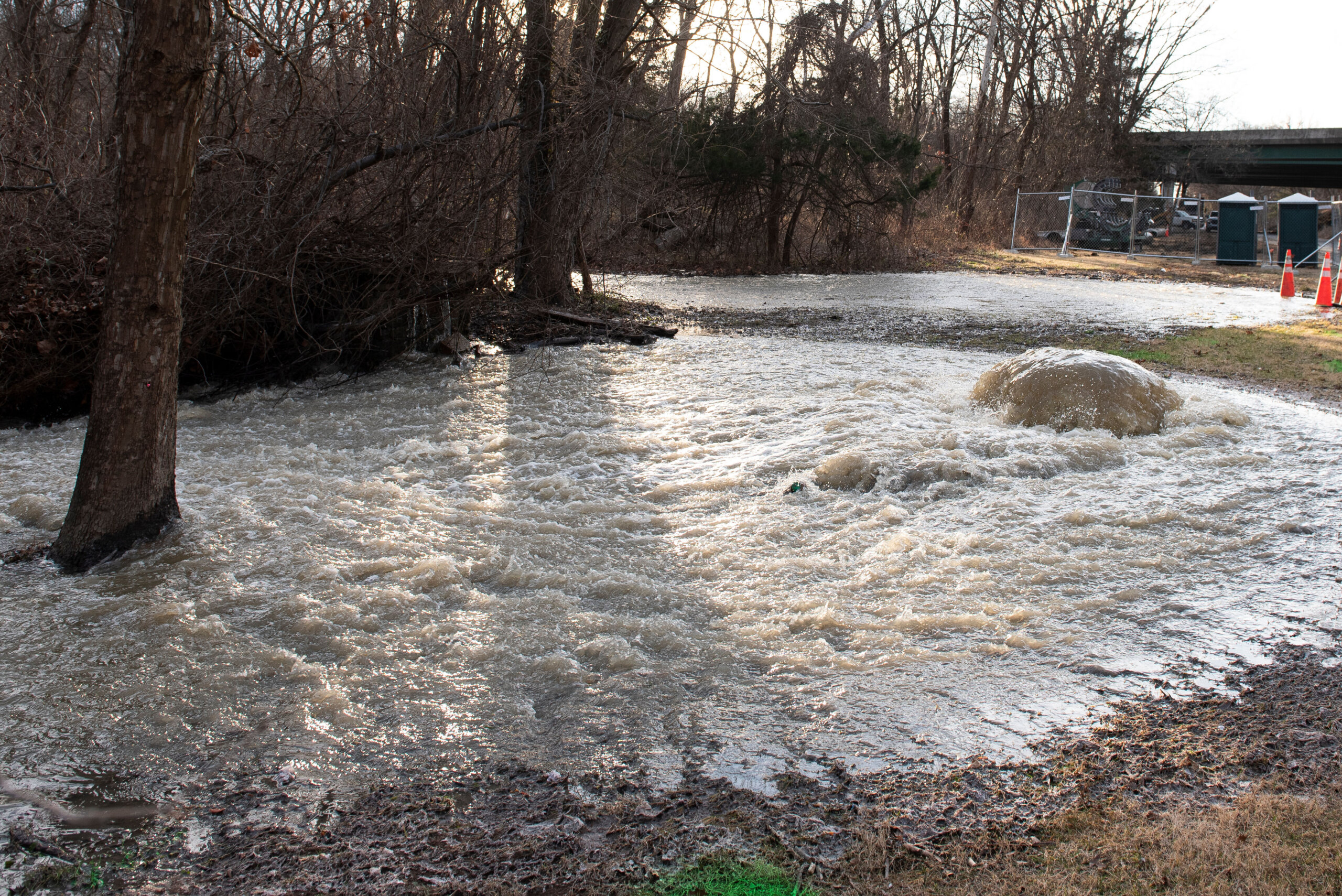
People who kayak, row, fish and paddleboard on the Potomac River may soon get the all clear to return after the massive sewage spill earlier this month.
This page contains a video which is being blocked by your ad blocker.
In order to view the video you must disable your ad blocker.
Massive sewage spill flowing into Potomac River upstream from Washington
People who kayak, row, fish and paddleboard on the Potomac River in the D.C. area may soon get the all clear to return after the massive sewage spill earlier this month.
D.C. Health said recreation advisories on the river could be lifted as early as March 2, and testing has shown improving conditions in parts of the river. But river advocates said there are still concerns as that decision approaches.
“We’re still seeing high E.coli levels at the spill site and directly downstream from that,” Potomac Riverkeeper Dean Naujoks said.
Naujoks said that while he has been critical of how long it took to issue the original advisory, he supports letting public health experts make the reopening call.
“If public health experts are saying that they are comfortable about lifting the ban to allow recreational use, these health advisories, then you know, we’ll stand by that,” he said.
Still, Naujoks said the sewage spill has created a perception issue for families and groups that regularly use the river. Naujoks said that he has received messages from area residents declining to attend sailing schools or participate in rowing.
Naujoks said that even as bacteria levels drop, the scale of the spill could create issues later in the year as temperatures rise.
“243 million gallons of sewage just doesn’t go away because the E.coli levels say it’s safe,” he said.
He also noted that algae blooms tend to appear when conditions are warmer and slower moving.
“If we’re going to see algae blooms, it’s usually like late August and September, when the water is its hottest and its slowest and low flow,” he said.
He also, said his concern that possible impacts of the spill could be seen further down the river as we move into the summer.
“It might be farther down river, like Mason Neck, or even way down river as you get near the (Chesapeake) Bay,” he said.
Naujoks said ongoing testing will be important to rebuild public confidence.
“We’re going to continue to advocate for ongoing monitoring daily throughout the entire summer,” he said.
Get breaking news and daily headlines delivered to your email inbox by signing up here.
© 2026 WTOP. All Rights Reserved. This website is not intended for users located within the European Economic Area.