


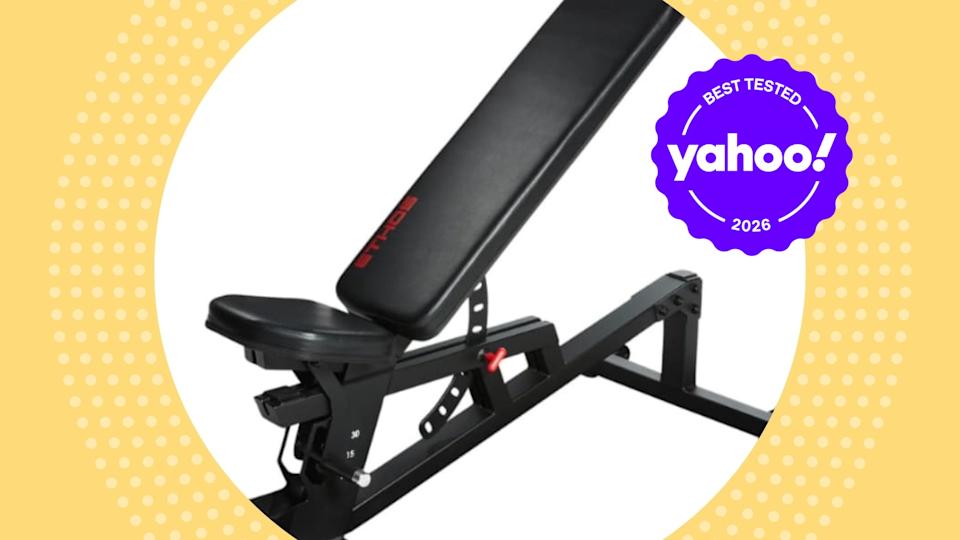
Space, portability, comfort and durability are all factors to consider when selecting a weight bench. (Ethos/Yahoo)
A workout bench is the backbone of any at-home gym setup. From chest presses and bicep curls to triceps dips and dumbbell rows, this simple tool unlocks countless workout routines. But lifting weights offers benefits beyond just big muscles — research shows that resistance training can also boost your metabolism, strengthen your bones and even help you live a longer, healthier life. Whether you’re a serious weightlifter or simply looking to improve your fitness, it’s worth doing the research to find the best weight bench for your needs.
Besides helping you perform upper-body weightlifting movements, like a bench press or chest fly, sports performance coach Raymond Agostino, PT, DPT, notes that workout benches can also be used for lower-body exercises, such as weighted step-ups and hip thrusts. If you’re looking to add a weight bench to your home gym, Agostino recommends looking for an adjustable one — ideally, with incline, flat and decline positioning options. To keep you comfortable and stable while you lift, he encourages choosing a bench with strong padding and a nonslip base. As for how heavy-duty your bench should be, it ultimately depends on your priorities. Agostino notes that a heavier base will be sturdier and better for plyometric exercises, though moving it around may be more challenging; a potential dealbreaker if you’re short on space.
When it comes to building a home gym, a weight bench is one of those must-have items that opens up a wide range of exercise options. But not everyone needs the highest-end bench on the market. To help you identify the right option for your space, we tested 11 benches with a range of features and gathered tester feedback from trainers, powerlifters and casual exercisers. We focused on adjustability, weight capacity, ease of assembly and foldability to determine the best weight benches to buy in 2026.
Looking to round out your home gym? Consider adding our best barbells and best plate weights too.
Best overall weight bench

_6193.jpg)
Ethos
Type: Fully adjustable flat/incline/decline | Dimensions: 53.5″ L x 26.5″ W x 17.9″ H | Weight capacity: 1,000 lbs. | Bench weight: 88 lbs. | No. of adjustment options: 9 backrest, 3 seat | Standout features: Integrated wheels and handle for easy moving
Casual lifters, professional bodybuilders and certified personal trainers agree: Dick’s Sporting Goods Ethos Bench is the best overall workout bench. During testing, it stood out for its sturdy steel frame, comfortable padding and multiple adjustment options, including nine backrest angles and three seat positions. It also offers a convenient handle and wheels for effortless mobility — particularly useful if you have limited space.
The base is wide, providing plenty of stability, and accommodates users of varying sizes. Located just below the seat, the ergonomic knob handle was easy to use, providing smooth and seamless adjustments, making it one of the best adjustable weight benches we tried.
While assembling the bench was mostly straightforward, the diagram wasn’t the easiest to follow, especially if you haven’t put a workout bench together before. The personal trainer who put the bench together explained that some pieces weren’t mentioned in the instructions at all, so he wasn’t sure where to put them — a complaint echoed in some of the online reviews for the bench.
- High weight capacity
- Handle and wheels for easy moving
- Multiple adjustment options
- Accommodates a variety of users
- Comfortable and stable to use
- Assembly instructions could’ve been better
More weight benches we like for 2026
_2162.jpg)
FED Fitness
Type: Fully adjustable flat/incline/decline | Dimensions: 46.5” L x 13.8″ W x 18.8″ H | Weight capacity: 880 lbs. | Bench weight: 30.1 lbs. | No. of adjustment options: 8 backrest, 4 seat |Standout features: Foldable; steel-frame, arrives assembled
The Flybird WB6 Foldable Adjustable Weight Bench Classic earned high marks for its space-saving design and user-friendly functionality at a highly affordable price, making it an excellent pick for home gyms. The Flybird stands out for being quickly foldable, collapsing to a compact 30.1″ L x 13.8″ W x 9.5″ H — small enough to slide under your bed or get tucked away in a closet. Just note: It must be stored flat or propped against a wall — it can’t stand up on its own when folded.
During testing in a home gym setting, the Flybird bench proved to be lightweight, straightforward and easy to use. Our tester described adjusting the inclines as “super easy and convenient,” calling it “the best bench” they’ve ever used for seamless adjustments. The bench offers versatile functionality, with four seat angles and eight back pad angles, including inclines of 20°, 35°, 50°, 75° and 90°, plus flat and decline settings of -10° and -30°. While the foot stability bar initially caught our interest, we found it less essential during regular use — though it remains a nice bonus feature.
One major perk of this bench is its hassle-free setup. It arrives 96% assembled, requiring next to no effort to get started. However, the lack of an instruction manual was a noticeable drawback, especially for first-time users (although there is one available online). Our tester, a 63-year-old man, appreciated the simplicity of the setup but expressed frustration with the absence of directions for the foot bar and any in-box guidance on potential exercises.
With a weight capacity of 880 pounds, this budget-friendly bench is well-suited for average home gym users but falls short of the higher limits found in some other models. It also lacks wheels or a handle for transport, though its lightweight design of just over 30 pounds makes it relatively easy to pick up and move.
Noelle McKenzie, a correctional exercise specialist and certified personal trainer, recommends the adjustable and collapsible Flybird bench “for anyone training from home because it doesn’t take up much space, it’s versatile with the adjustments and easy to transport so you can get a lot of use out of it.”
Amazon users are also impressed. One happy weight lifter calls it an excellent value, praising it for its comfortable padding. They add, “Can’t be beat for less than $200. Adjusts from flat to incline to decline in 1–2 seconds. With the foot pads, it is also good for incline situps and crunches. Easily folds down to a very compact storage size. Very satisfying purchase.”
- Lightweight at 30.1 pounds
- Compact, foldable design
- Easy adjustment and locking mechanism
- Incline, flat and decline positions
- Arrives assembled 96% — can be put to use immediately
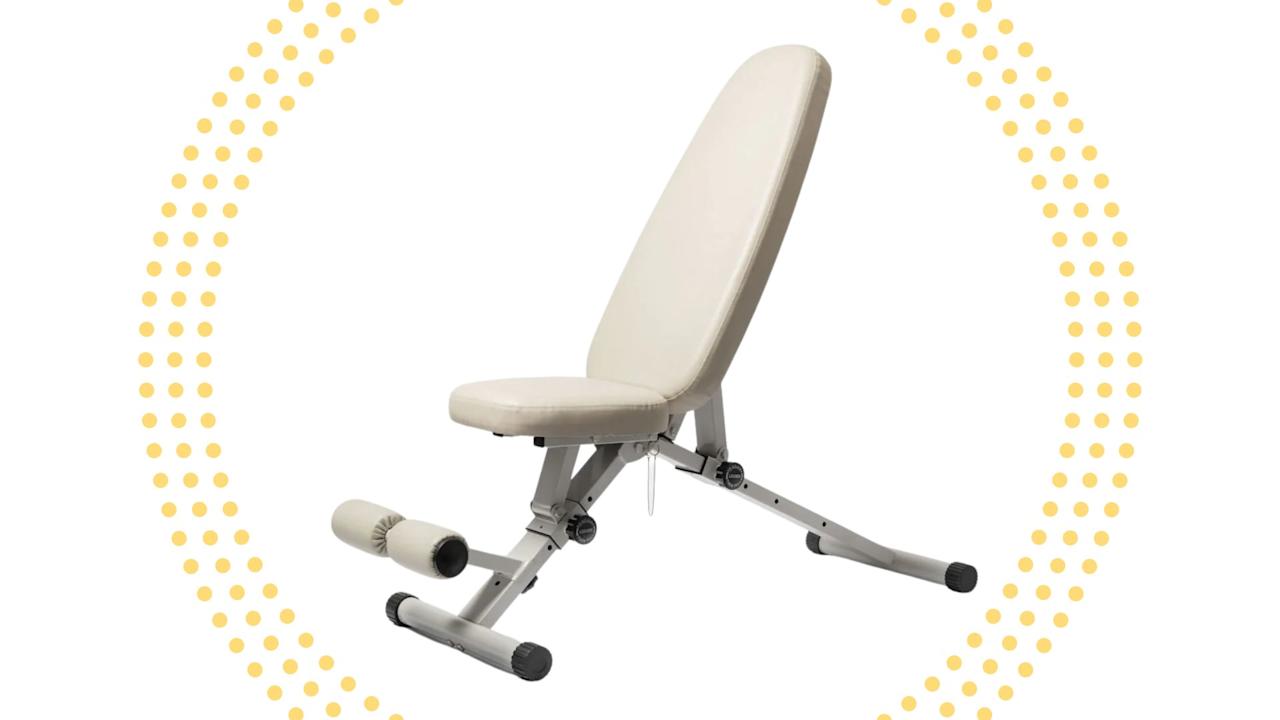
WeGym
Type: Fully adjustable flat/incline/decline | Dimensions: 55.5″ L x 17.9″ W x 17.9″ H | Weight capacity: 800 lbs. | Bench weight: 38.6 lbs. | No. of adjustment options: 5 backrest, 5 seat |Standout features: Foldable, clean and crisp colors
In a sea of weight benches that come in “any color [you] want so long as it’s black,” (shout out to Henry Ford and the Model T for that quote), the WeGym Fitness Bench stands out for its more modern aesthetic, with colors including a clean and crisp sandstone or a more traditional-looking slate. But if the benefits of this bench stopped at just the color, it wouldn’t have made a spot on this list. In addition to the appealing appearance, the bench also offers high-quality functionality that’s worth considering for your home gym.
First, our tester assembled three separate benches on the same day and said, “This one was by far the easiest to assemble.” She got it pieced together in about 20 minutes, with the biggest challenge being posed by her toddlers, who kept trying to run off with the hardware and tools.
The bench is also fully adjustable with incline, decline and flat settings and can fold down between uses for easy storage. Its folded size isn’t quite as compact as our “best budget” Flybird bench, but it’s still small enough to slide under a taller bed frame or to be placed in a closet. The weight capacity of 800-pounds is also more than enough for most casual exercisers, and the bench feels sturdy — you don’t need to worry about it moving around if you use it for step ups or hip thrusts.
Our tester also mentions the comfort of the padding as a pro for most people. “I’m testing a few different benches, and this one is particularly plush,” she said, although she adds a caveat that, “for heavier lifters though, the extra ‘give’ of the cushion might not be as ideal — a firmer seat and back rest, while not as comfortable, may be more appropriate for heavy training.”
Finally, while the bench is relatively lightweight at under 40 pounds, our tester shares that the lack of integrated wheels is an oversight. “I would love to be able to roll this bench up to my rack and use the incline settings for an incline press, but I can’t do that quite as easily without wheels. I’m using another bench for that purpose now.”
- Colors are clean and crisp — the aesthetic is pleasing
- Light weight and folds down to a compact size
- Easy to assemble
- Comfortable seat and padding
- No wheels
- More expensive price compared to some options
- Plush cushioning may not be ideal for very heavy lifting
_0249.jpg)
FED Fitness
Type: Fully adjustable flat/incline/decline | Dimensions: 48” L x 13” W x 17.7” H | Weight capacity: 1,200 lbs. | Bench weight: 49.8 lbs. | No. of adjustment options: 6 backrest, 3 seat |Standout features: Commercial-grade steel frame with dual support design, integrated wheels
When it comes to durability and heavy-duty performance, the Flybird WB7 Adjustable Utility Weight Bench sets itself apart as the ultimate choice for serious lifters. Featuring a robust build and exceptional weight capacity, this bench isn’t just a contender — it’s the one that earned a permanent spot in our tester’s home gym. Supporting a household that includes a teenage football player and a 250-pound cabinet builder, this bench had to withstand significant wear and tear, and it exceeded expectations.
Crafted with commercial-grade materials, the bench can handle an impressive 1,200 pounds of weight. Its stability and size immediately stood out during testing, giving it a clear edge over the competition. However, it’s worth noting that the bench’s length is just 48 inches — sufficient for most users, but may feel short or limiting for taller individuals.
The bench uses open bracket adjustments, which testers preferred because it means there’s no messing with pins or turning handles — you just lift the bench and seat up and down to adjust. Testers also liked that this design eliminates any guesswork. With the pin or turn adjustments on some benches, it’s possible to fail to secure them correctly, which could lead to the bench collapsing mid-set. For heavy lifters, having the security of open bracket adjustments can offer peace of mind. This bench has six backrest positions and three seat positions, providing plenty of flexibility for inclined, declined and flat exercises.
While the bench doesn’t have a handle, it does have wheels for easier transport. Our tester found it manageable to move solo by grasping the bottom support bar and using the wheels, although navigating it on top of an elevated rubber gym floor required a bit of maneuvering. One small hiccup: The bench arrived with a faint white residue on the backrest, likely glue from manufacturing. The issue was resolved with rubbing alcohol and some elbow grease, and it didn’t affect performance.
It’s also worth pointing out the exceptional value of this bench. At $252, it’s an affordable choice, especially considering the weight capacity and overall functionality.
- Commercial-grade frame
- 1,200 lbs. weight capacity
- Easy to adjust with secure, open-bracket design
- Integrated wheels make it easy to move
- No handle for moving
- Not as long as some of the other higher weight capacity benches; may not be ideal for taller users
_5249.jpg)
Centr
Type: Adjustable, incline/flat positions only | Dimensions: 45′ L x 15′ W x 18′ H | Weight capacity: 1,100 lbs. (not confirmed by the brand) | Bench weight: 86 lbs. | No. of adjustment options: 6 backrest, 3 seat |Standout features: Storage, add-on training abilities
If you’re looking for compact home gym storage solutions, the Centr Fusion Bench is worth considering, thanks to its thoughtful design. The bench includes integrated storage for dumbbells and other small equipment like kettlebells or medicine balls, making it easy to keep all your home gym supplies within the dimensions of the bench itself.
It’s also worth that the dimensions and shape make it appropriate for larger-framed lifters. During testing, professional male bodybuilders at our gym praised the bench for its wider backrest, which provided ample support during heavy lifts. However, some smaller female lifters noted that this same width made it challenging to achieve a full range of motion during exercises like dumbbell presses.
The Fusion Bench’s box-like design is stable enough for exercises like step-ups or box jumps, and you can further boost its versatility with add-on accessories such as resistance bands, turning it into a full training station.
However, there are some drawbacks. The company does not list a weight capacity. On Amazon, the capacity is listed as 500 kilograms (about 1,100 pounds), though the company hasn’t confirmed its safe load limit, despite us reaching out for clarification. Additionally, while the bench includes wheels and a handle, testers found it cumbersome to move — especially when loaded with weights.
Aesthetically, opinions were divided. One trainer felt it was “ugly” in a commercial gym setting, but home gym users appreciated its sleek, multifunctional design that blends storage and performance. Plus, the fact that it’s virtually indestructible makes it a good choice for home gym users who need something that can withstand some wear and tear.
- Built-in storage
- Extremely sturdy
- Extra training abilities
- Supports users with larger frames
- Wide back
- Difficult to move
- Unconfirmed weight capacity
- May be uncomfortable for lifters with smaller frames
- No decline position
_7261.jpg)
Bells of Steel
Type: Flat | Dimensions: 48″ L x 17.75″ W x 17.32″ H | Weight capacity: 661 lbs. | Bench weight: 37.9 lbs. | No. of adjustment options: 0 |Standout features: Sturdy option for basic home gym use
While adjustable benches, particularly those with FID (flat/incline/decline) functionality, are the most versatile choice for performing a wide range of exercises, if you’re looking to save on space or money, a basic flat bench might be the way to go. This simple option from Bells of Steel is a good all-around choice for anyone who wants to save a few bucks but who still needs a reliable bench.
With a 661-pound weight capacity it’s a good bet for most home exercisers. It’s also sturdy and stays put during more active exercises, even lower-body moves like step ups, box jumps and hip thrusts. While there are no integrated wheels, at less than 40 pounds, it’s reasonably easy to move around.
Our tester, a 6’0″ exercise physiologist who used to manage gyms, notes that the length of the bench is appropriate for her height and she appreciates that it’s made of durable, 2-inch padding and high-quality upholstery that seems more durable than a lot of options out there. You don’t want your bench to start cracking and tearing a couple months after you get it. At $168, it’s not the cheapest flat bench on the market, but for its weight capacity and sturdy build, our tester says, “The value is definitely there.”
- Easy to assemble compared to some benches, despite poor instructions
- Sturdy — works well for standard strength training and moves like step ups
- Affordable
- Durable upholstery seems less likely to crack or rip
- No wheels
- Not foldable
- Flat design makes it limited in terms of exercise versatility
.jpg)
Bells of Steel
Type: Fully adjustable flat/incline/decline | Dimensions: 61″ L x 26.5″ W x 17.72″ H | Weight capacity: 1,000 lbs. | Bench weight: 76 lbs. | No. of adjustment options: 7 backrest, 5 seat |Standout features: Integrated wheels and handle for easy moving
When pumping out a set of heavy dumbbell presses, the last thing you want is for your hips or head to feel like they’re falling off the end of a bench. For taller athletes, finding a bench that’s long enough can be challenging. At 61″ in length (including the leg pads), this is the longest of the benches we tested. While that means it’s less compact than some of the other options on this list, it also means it’s a great choice for individuals who need the room to stretch out.
Our tester, who clocks in a 6’0″ shares, “I don’t have to worry at all about whether I’ll fit on this bench. It’s comfortable, supportive and works for my height with inches to spare.” It’s also a great all-around option for home use thanks to its fully adjustable FID settings, its high weight capacity of 1,000 pounds, the integrated wheels and handle that make it easy to move around and its open-bracket adjustments that provide stability and peace of mind when you’re lifting heavier weights. In fact, this bench was a contender for our “best overall” pick, but its slightly higher price point took it out of contention.
Of course, every product has its drawbacks, and it’s worth noting that this bench isn’t foldable. Given it’s slightly larger size, this could be a problem for individuals who have limited space. Our tester also found the instructions to be a bit challenging. While she put it together in about 30 minutes, she found the diagrams to be hard to decipher.
- Longest bench of all those we tested
- Integrated wheels and handle for easier transport
- Heavy duty commercial construction designed for heavy use
- Challenging to put together — provided instructions not very clear
- Doesn’t fold
Types of weight benches
Workout benches offer functionality far beyond upper-body workouts. According to McKenzie, they can be used to train nearly every muscle group, making them a staple for any home or commercial gym.
While commonly associated with chest exercises like dumbbell presses or barbell benching, weight benches can assist with a wide variety of movements, such as rear-foot elevated split squats, box squats or hip thrusts. An adjustable bench can also be set to a decline position for sit-ups or used flat for planks to target your core.
The type of weight bench you choose plays a significant role in the exercises you can perform. Some benches offer specialized features, while others are more bare-bones. Here’s a breakdown of the different types of benches to consider for your home gym:
-
Flat benches: A straight, one-piece bench primarily used for lifting heavy weights. Someone focusing heavily on benching with an Olympic bar and plates, for instance, may prefer the stability of a flat bench that doesn’t incline or decline.
-
Adjustable bench: A bench with a seat and a backrest that can incline or decline independently. Most adjustable benches offer a range of seat and backrest angles, enabling lifters to target multiple muscle groups with precision.
-
FID bench: This is a specific type of adjustable bench that offers flat, incline and decline options. Many adjustable benches qualify as FID benches. Their versatility makes them a popular choice for targeting multiple muscle groups and offering the widest range of exercises.
-
Foldable benches: These benches are often adjustable and are designed to fold down for easy storage, making them ideal for smaller spaces. Just keep in mind that the folding mechanism may compromise a bench’s stability, resulting in a lower weight capacity compared to non-folding options.
-
Olympic bench: Designed for heavy lifting and competitive powerlifting, an Olympic bench is built to handle loads of 1,000 pounds or more and is typically wider and offers more stability than standard benches. While they can be adjustable or flat, the flat design is the gold standard for serious lifters. Olympic benches typically include a barbell and an integrated rack for bench pressing, offering a complete setup for maximum strength training.
Factors to consider when purchasing a weight bench
When choosing a workout bench, consider the types of workouts you plan to do and where you’ll use it. For example, McKenzie notes that if you plan to use the bench in a multi-purpose space, such as a bedroom or living room, you may want to prioritize a bench that’s easy to move or fold. On the other hand, if you’re outfitting a dedicated home gym, a heavy-duty, more stable bench may be a better investment.
Here are some additional factors to consider when purchasing a weight bench:
-
Frame: Umo Callins, MS, RD, CPT, a board-certified sports dietitian, says that the frame is the most important feature to look for to ensure a stable and quality option. She recommends opting for steel or cast iron frames whenever possible. “The fewer pieces it has for assembly, the better. Durability is [also] very important, so make sure to choose a brand that’s reputable and well-made,” she says.
-
Safety features: McKenzie recommends looking for nonslip feet to prevent sliding. If you opt for an adjustable bench, choose one with locking mechanisms to keep the bench from moving or collapsing while you’re using it. “Everyone has seen those videos online of what happens when an adjustable bench is not locked properly,” Agostino says — you don’t want to play a starring role!
-
Stability: Agostino recommends benches with wide, sturdy bases to prevent tipping. “Avoid benches with thin, wobbly legs or overly narrow bases, as they tend to be unstable and unsafe,” he says. He also recommends staying away from benches that feel flimsy or lack secure adjustability, advising, “If your first thought is ‘I don’t know about this,’ then you should probably avoid it.” This is particularly true if you plan to use the bench for exercises where you’ll be moving on and off the bench during an exercise, like step-ups or plyometric jumps, where stability is incredibly important for safety.
-
Weight capacity: Benches vary in how much weight they can support, so it’s crucial to check the load capacity. For example, if you weigh 250 pounds and can bench press an equal amount, you’ll need a bench that can handle at least 500 pounds. Even if heavy lifting isn’t in your current plan, opting for a bench with a higher weight capacity is a smart investment — giving you room to grow as your strength improves.
-
Storage and transport: If space is limited, a collapsible or wheeled bench is ideal. McKenzie highlights that these types of benches are easy to store and maneuver, making them ideal for compact home gyms or multi-functional spaces. Lighter-weight benches are also advantageous when frequent repositioning is necessary, ensuring your workout setup stays flexible and efficient. Foldable designs can be tucked away when not in use, while wheeled options offer effortless mobility without compromising stability.
-
Comfort: Chris Pruitt, certified personal trainer and CEO of WorkoutHealthy, emphasizes the importance of prioritizing comfort when selecting a weight bench. A padded seat can make a significant difference in the quality of your workout, ensuring a more enjoyable experience. Callins further advises steering clear of aluminum frames or benches with thin foam pads, as they can compromise both comfort and support during use.
-
Value: While budget certainly plays a role in purchasing home gym equipment, Agostino suggests investing in a quality weight bench that can grow with you on a fitness journey. “Don’t sleep on the importance of a good bench,” he says. “A good quality bench should last for years. Opting for quality means it’ll last years and support a variety of exercises as your fitness goals evolve.”
How we chose
To identify the best workout benches, we tested 11 models over several months in home gyms and a commercial gym. Our testing process included a diverse range of users, including certified personal trainers, professional bodybuilders, daily weightlifters, casual gym enthusiasts, a postpartum parent and an older adult returning to exercise. This comprehensive approach allowed us to evaluate how each bench performed across different fitness levels and needs.
As an active weightlifter and registered nurse, I personally tested each bench to evaluate its features. To ensure well-rounded recommendations, I consulted certified personal trainers to identify critical factors to consider when choosing a weight bench for a home gym. Our final picks reflect a combination of hands-on testing, expert insights and user feedback.
Other products we tested
Sole SW116: This bench is worth considering if you prioritize comfort — and don’t mind the hefty price tag. Our testers liked the bench’s smooth adjustment mechanism and commercial-grade cushion pad. However, at nearly $600 and a comparatively limited weight capacity of 550-pounds, its performance didn’t live up to that of our best overall pick.
BowFlex 4.1S Adjustable Weight Bench: This version has since been replaced by the Bowflex 5.1S Adjustable Weight Bench, which we haven’t tested, but which has similar features. While it may be a solid option for a home gym, with a price of $499 and a weight capacity of 600 pounds, it doesn’t quite hit the “sweet spot” of function and value that the other benches we tested seemed to achieve.
KingSmith Tone Up Weight Bench: This compact bench with built-in storage, pulley arms and resistance band attachments definitely stands out as a versatile home gym solution that goes beyond your basic weight bench. Our tester really appreciated its compact design that worked well in her mobile home. However, when compared to the Centr bench, which offers some similar features, the price was hard to justify. Starting at $699 for the basic package, it’s a little rich for our taste, especially considering the maximum load is just 330 pounds.
Sunny Health & Fitness Adjustable Utility Weight Bench: While we love the affordability of this foldable bench, it didn’t offer quite as much functionality or versatility as our top picks (it doesn’t lie completely flat and doesn’t fold down as small as our top foldable pick). It also wasn’t quite as comfortable as some of our favorite choices. That said, it’s worth noting that it arrives fully assembled and is easy to move around, so if you’re looking for a foldable, moveable bench on a budget, this might be the right choice for you.
FAQs
What type of weight bench is right for me?
Adjustable benches offering flat, incline and decline positions are the most versatile, making them a good option for most home gym users. When paired with a weight cage and barbell for more serious weightlifting, a flat bench may be a better option for added stability and higher weight capacity.
How much weight can a weight bench hold?
Many weight benches offer a weight capacity ranging from 500 to 1,000 pounds. That said, every weight bench has a different weight capacity, so always check the listed weight limit before use. The bench should list a user weight and a weight limit for a combined weight capacity.
What safety features should I look for in a weight bench?
Look for a steel frame, sturdy base, nonslip feet and secure locking mechanisms to keep you safe while lifting.
How do I adjust the bench for different exercises?
Adjustable weight benches vary in how they’re adjusted. Some models have an open bracket system, while others may have a more precise pin mechanism with a knob for loosening and fastening the pin.
How do I clean and maintain my weight bench?
When cleaning exercise equipment, it’s important to follow the manufacturer’s instructions. In general, most workout benches can be cleaned using a damp cloth and mild soap. Metal frames should be thoroughly dried after cleaning to prevent rusting.
Meet the experts
-
Raymond Agostino, PT, doctor of physical therapy and sports performance coach, owner of Agostino Athletics in Fort Myers, Fla.
-
Noelle McKenzie, correctional exercise specialist, certified personal trainer and co-founder of Leading Edge Personal Trainers in New York City
-
Chris Pruitt, certified personal trainer and CEO of WorkoutHealthy
-
Umo Callins, MS, RD, LD, CSSD, CPT, a board-certified sports dietitian and fitness coach based in Oklahoma City, Okla.
Update, Jan. 12, 2026: We checked all product prices and availability. Our No.1 pick for the best weight bench remains unchanged, although some of our other categories changed due to ongoing testing and some products being discontinued.
Our health content is for informational purposes only and is not intended as professional medical advice. Consult a medical professional on questions about your health.