
 3 min read
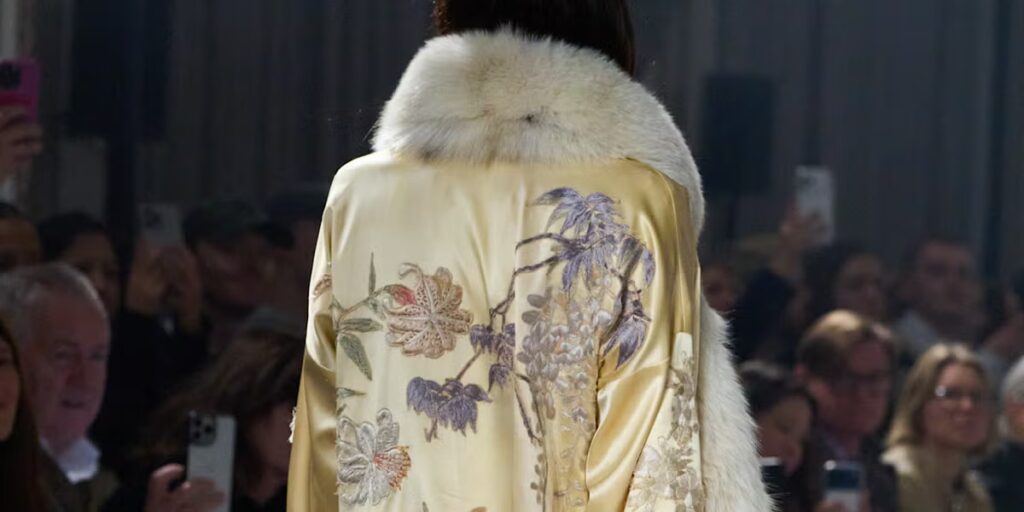
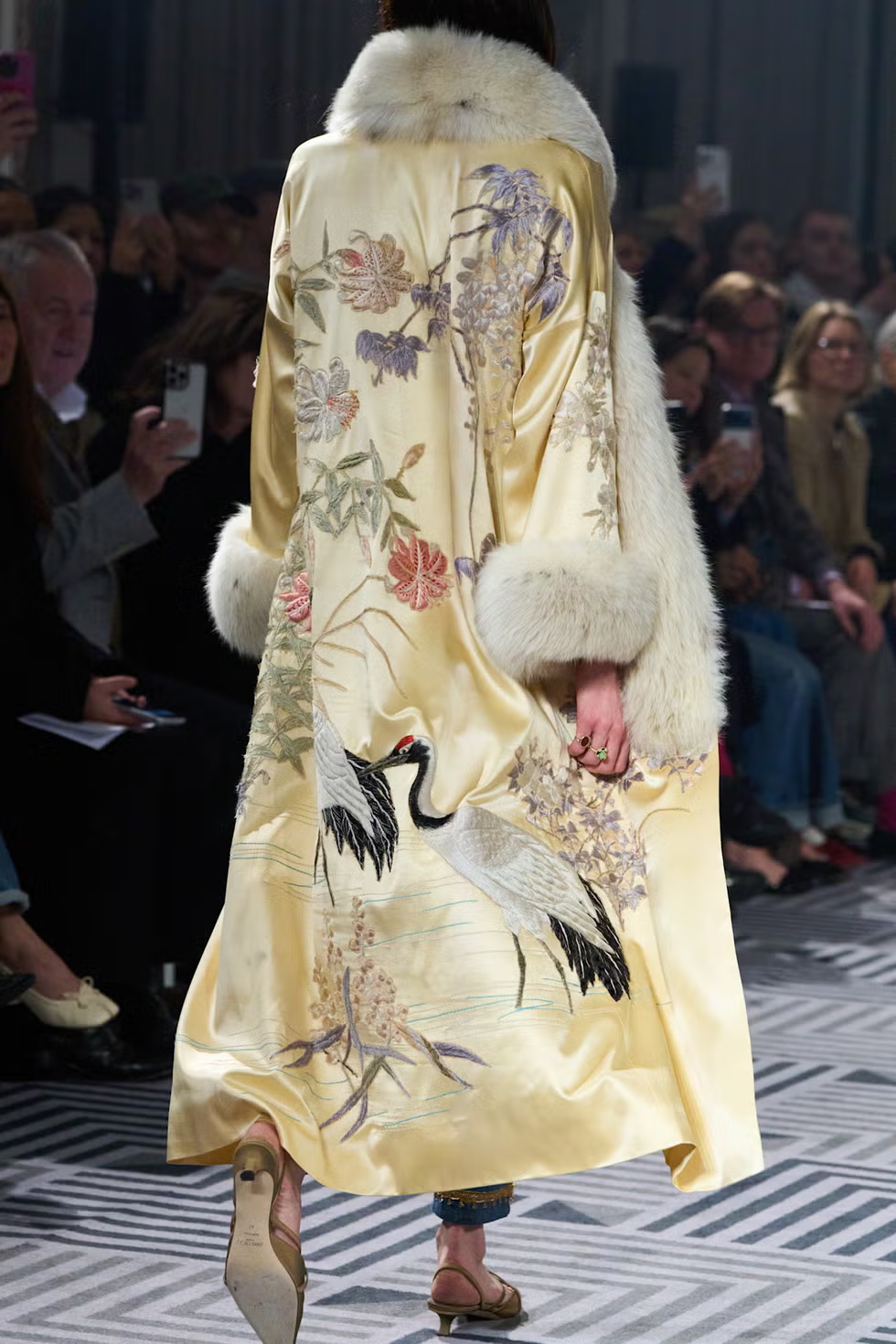
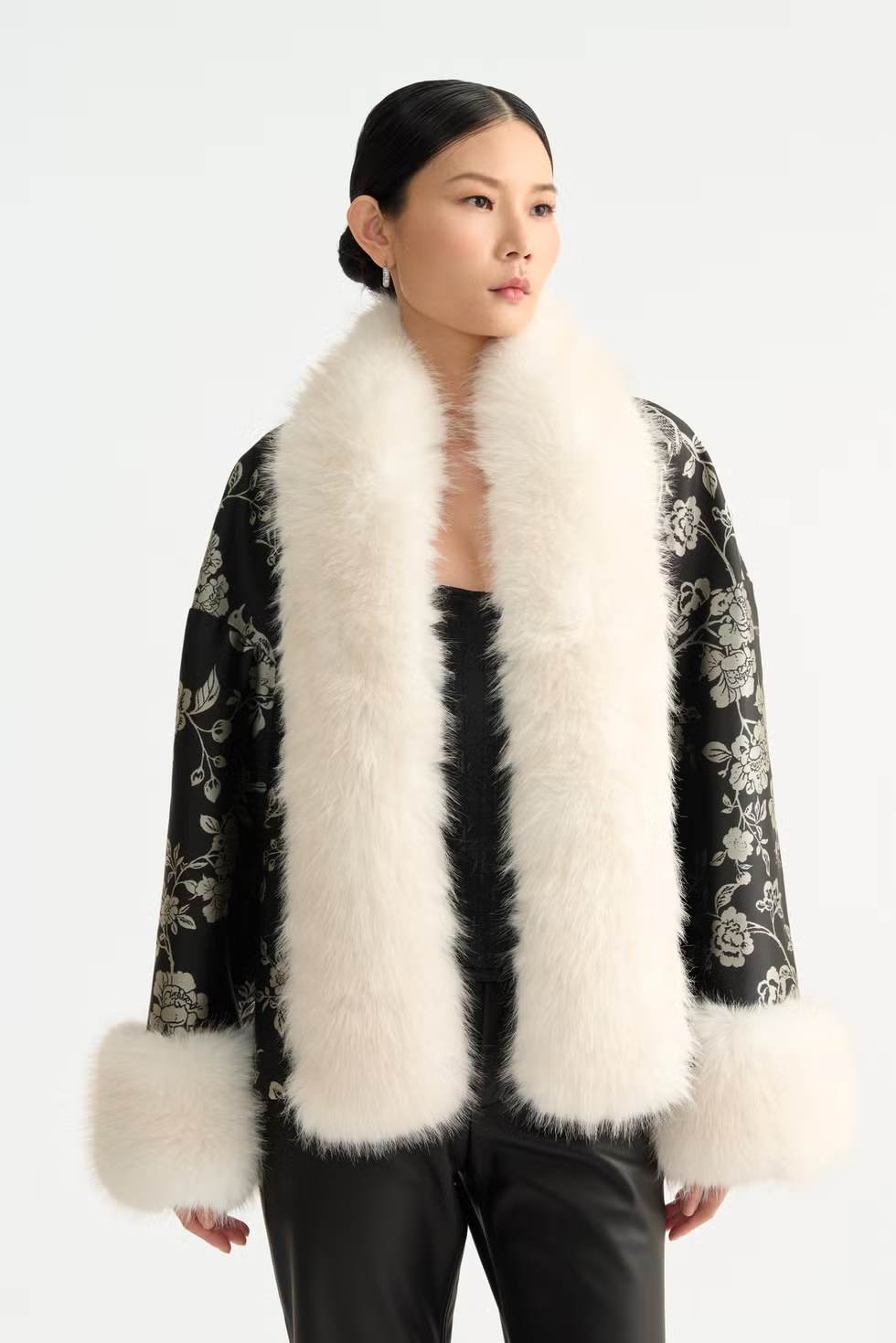
It’s been living rent-free in my mind for the better part of this year: Conner Ives’s silk brocade opera coat, which captured nearly every fashion lover’s heart when it debuted on the fall/winter 2026 runway at London Fashion Week. Reminiscent of Mary-Kate Olsen’s fur-trimmed Balmain coat from the 2013 Met Gala, this particular stunner, along with the designer’s other iterations, seems to be what every It girl is wearing.
The coat—crafted with silk tapestries dating back to the Qing dynasty and with hand-embroidered depictions of red-crowned cranes, bamboo leaves, and flowers—was undoubtedly the first wave in what would become a tsunami of a trend: opera coats. And while plenty of faux fur-trimmed coats have made their way onto the market, those featuring Chinese imagery like that on Ives’s iterations have taken center stage.
The opera coat from Conner Ives’s fall/winter 2026 collection.
“There’s been a real change in how people perceive Chinese design,” Cheryl Leung, founder and creative director of Sau Lee, tells ELLE. Leung attributes the opera coat’s rise in popularity to fashion’s shift away from minimalism and consumers’ growing appetite for expressive pieces, richer fabrics, and textures. “Brocade is a great example because it has so much character,” she says. “The fabrics can be quite ornate, but when you put them into a modern silhouette or style them with something very simple, they feel completely different.”
Chinese design has often been presented through a Western lens, but designers like Leung and Kim Shui are creating work rooted in their own cultural perspectives. Shui, the Chinese-American, New York-based creative director behind her eponymous label, has long been drawn to Chinese garments and the ways they communicate identity. “I’m particularly interested in the visual language and craftsmanship of traditional Chinese garments, whether it’s the silhouette of the qipao (a traditional Chinese dress dating back to the Qing dynasty), the richness of brocade, or traditional techniques like embroidery and intricate knot closures,” Shui tells ELLE. “I look at these elements not as things to reproduce literally, but as a vocabulary that I can reinterpret.”
Kim Shui fall/winter 2026.
While the trend has gained widespread popularity, the Chinese design details behind it can sometimes be overlooked. “I’ve seen so many ‘trending winter coat’ videos featuring Chinese brocade coats with fur trim and traditional Chinese embroidered silk coats, but they don’t make any reference to their Chinese origins,” Shui says. “Instead of using terms like ‘qipao’ or ‘mandarin collar,’ creators will often describe these details generically as a ‘stand collar’ or ‘high neckline.’ It’s important to acknowledge where these design elements come from and the history behind them—why erase the cultural context?”
Leung sees the coat’s popularity as an opportunity to bring attention to its history and the designers reinterpreting it. Shui and her team have also been creating content about the histories of brocade, embroidery, and the qipao, as well as the cultural references behind her collections to bring more awareness of the craft to her audience.
An opera coat by Sau Lee.
“I do think there’s a difference between appreciating a design tradition and overlooking where it came from,” Leung says. “If a designer has been inspired by Chinese textiles, craftsmanship, or traditional clothing, acknowledging that doesn’t take anything away from their creativity. If anything, it gives the work more depth and helps people appreciate the original references.” Shui adds that brands outside the culture have a “responsibility to acknowledge their origins rather than presenting them as an entirely new aesthetic.”
Fashion has been both a vehicle for cultural exchange and a product of it—and trends will undoubtedly come and go. Not everyone will be interested in the cultural history of the piece they buy—and Leung doesn’t necessarily think they need to be. Shui is happy to see people from all backgrounds embrace garments from outside of their own cultures. “I hope this renewed interest encourages people to look beyond the garment itself and discover the rich traditions and craftsmanship behind it,” she says.
Source: ELLE
Source link