


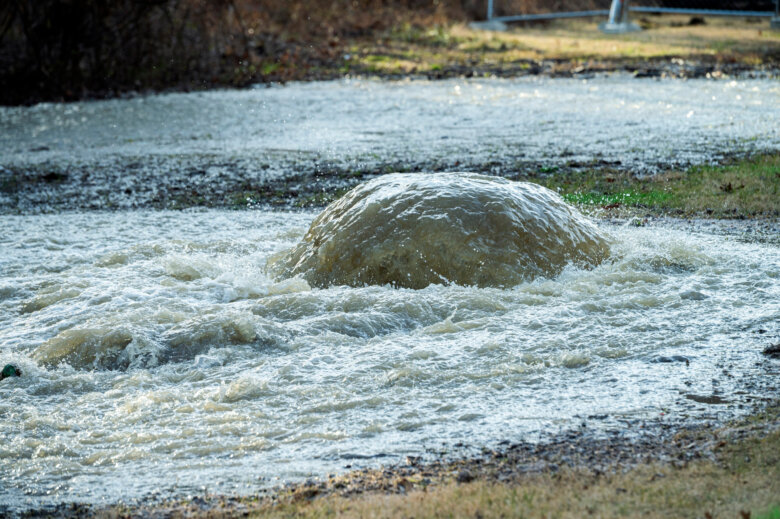
There was no indication the 72-inch segment of the Potomac Interceptor wastewater pipeline was in danger of imminent failure when it collapsed Jan. 19, according to D.C. Water CEO David Gadis
There was no indication the 72-inch segment of the Potomac Interceptor wastewater pipeline was in danger of imminent failure when it collapsed Jan. 19, according to D.C. Water CEO David Gadis, who cited the utility’s own inspections.
The break sent more than 200 million gallons of untreated wastewater into the Potomac River before the leak was contained by diverting the wastewater into a section of the C&O Canal and back into the pipeline.
Gadis said the collapse of the pipeline was “a once in a lifetime type break.”
“After looking at all the documents and the data about the collapsed section of the Interceptor, we believe our assessments of its condition were on target,” Gadis said during a news briefing Thursday.
The 54-mile pipeline carries wastewater from Loudoun County, Virginia, to the Blue Plains Advanced Wastewater Treatment Plant in D.C.
Gadis said based on information D.C. Water had and its own inspection records, “We saw no reason to elevate this section of the pipeline for repair ahead of its scheduled” work in June of this year.
“At the time of the collapse, we were already in procurement process as part of our efforts to execute this scheduled repair,” he said.
In previous news conferences, D.C. Water officials were asked about what inspection records of the pipeline showed.
John Cassidy, D.C. Water’s Clean Rivers Project manager, said inspection videos from 2017, 2021 and two in 2024 have been reviewed.
“The purpose of the assessment was to figure out, was there something in the videos or inspection results that would lead D.C. Water to believe there was an emergency that was imminent and needed to be addressed immediately at that the break location? And those videos basically do not show that,” Cassidy said.
He also said that while its findings as to what caused the segment of the pipeline to collapse are not definitive, the discovery of boulders surrounding the pipe underground do raise questions.
“It’s not standard and not good engineering practice to include those very large boulders on top of the pipe in the trench backfill, and that’s what we discovered,” Cassidy said.
Gadis said D.C. Water and its board have “each initiated an independent assessment to evaluate” its inspection and maintenance processes.
“And finally, we are looking at the entire pipeline; how each section is rated against when it is scheduled to be repaired,” he said.
Get breaking news and daily headlines delivered to your email inbox by signing up here.
© 2026 WTOP. All Rights Reserved. This website is not intended for users located within the European Economic Area.