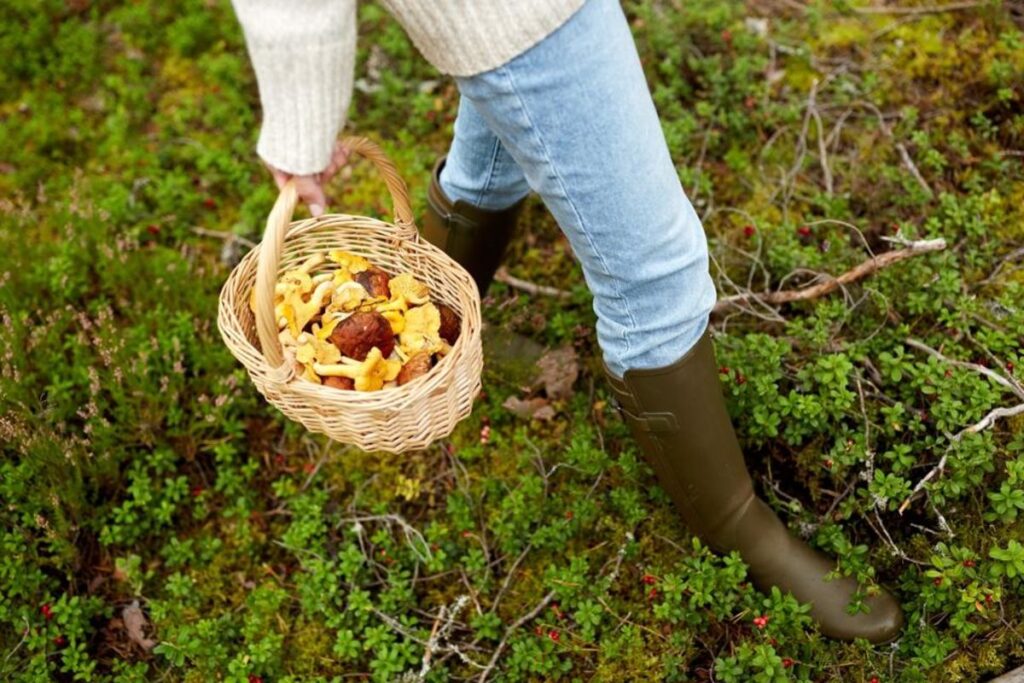
Foraging has been a growing fall travel trend for a while, with Europeans increasingly choosing destinations for their forests, not necessarily for their cities or landmarks. In particular, mycotourism has been around for some time, especially in Central and Eastern Europe, where picking fungi is a deeply rooted autumn tradition.
Now, the practice has become a bookable experience for travelers. It involves observation hikes where guides accompany tourists and help them identify wild specimens, how to collect fungi in a sustainable way, and even how to log rare finds via apps to assist specialist research.
“Foraging trips are nothing new. What eSky did was give it a name,” says Marcin Starkowski, Group PR Manager at online travel agency eSky. “The term ‘mushroomcation’ is our coinage, and in Poland we have really run with it, turning a family pastime into a recognizable reason to plan a trip.”
Where to go on a mushroomcation
eSky’s booking data highlights the best destinations for a mushroomcation. For stays between mid-September and mid-November, the number of Flight+Hotel packages booked from Poland to Czechia rose by 50% year on year, and to Lithuania by more than 40%.
Advertisement
Advertisement
Estonia, which was not especially popular in 2025, is now the most sought-after Baltic country among the agency’s customers. Other forest-rich destinations on the radar include Slovakia, Latvia, Sweden and Finland. “Depending on the region, the season stretches from late summer through October, and in mild weather even to mid-November,” says Starkowski.
What is a mushroomcation?
“One interesting observation is that, because of the various restrictions on transporting wild fungi across borders, mushroomcation is mostly about the activity itself and the time spent on the spot, rather than about bringing the harvest home,” explains Starkowski. “Travelers pick, cook and eat local dishes there, so the experience is built around the forest and the table, not the suitcase.”
To get some inspiration, you can turn to so-called “mushroom influencers” on social media, who turn a basket of porcini into a full travel itinerary, from the choice of place through local cuisine to cooking the harvest. “Social media amplifies all of this, with baskets of mushrooms, species-identification guides and stories from the forest,” says Starkowski.
“Creators like @chaoticforager on TikTok and @fascinatedbyfungi on Instagram show the whole experience.” The latter, based in California, has nearly 600,000 followers and posts about rare species and teaches viewers how to identify the best specimens for consumption.
This article was originally published on Forbes.com