


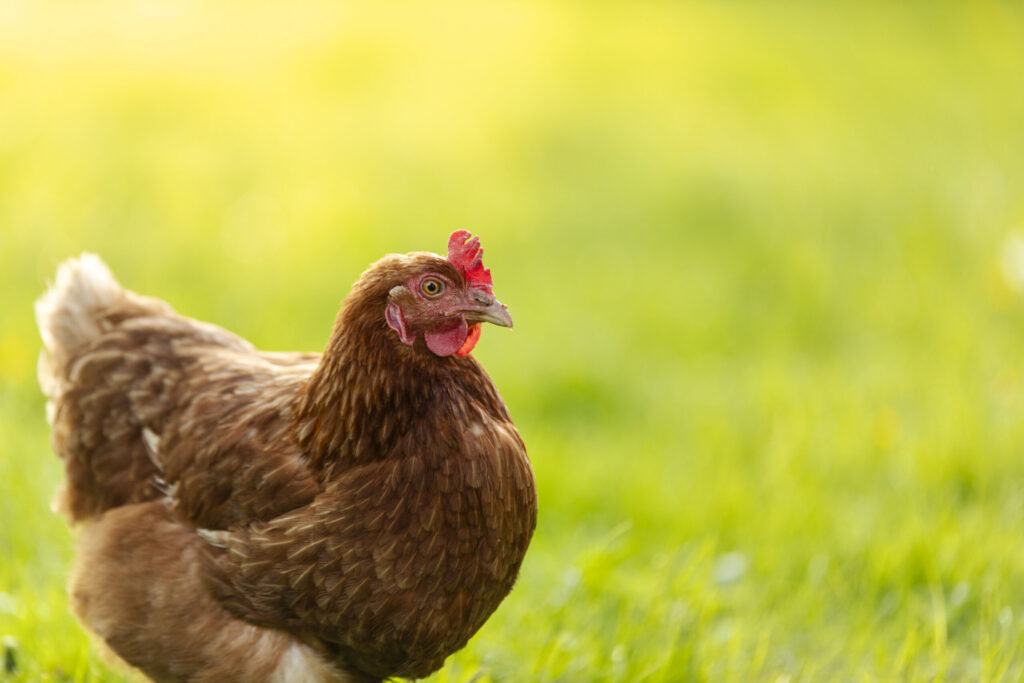
Pockets of the bird flu, a highly contagious respiratory virus, keep showing up on chicken farms on Maryland’s Eastern Shore and in other states each year.
This article was republished with permission from WTOP’s news partners at Maryland Matters. Sign up for Maryland Matters’ free email subscription today.


The poultry industry can anticipate yearly outbreaks of highly pathogenic H5 avian influenza, known as bird flu, as pockets of the highly contagious respiratory virus keep showing up on chicken farms on the Eastern Shore and in other states each year.
“I find myself talking about this every year now,” Grayson Middleton, with the Delmarva Chicken Association, told Eastern Shore legislators during a virtual meeting Friday.
“So I want to say, unfortunately, this is the new normal,” he said.
His statement comes as new cases of “bird flu” continue to pop up on commercial farms along the Eastern Shore, affecting thousands of chickens that must be killed for biosecurity measures and causing significant economic challenges for farmers in the process.
Early last week, the Maryland Department of Agriculture announced that preliminary results of testing on a broiler chicken farm in Wicomico County detected bird flu, affecting 77,600 birds. It’s the second Maryland farm hit by bird flu this calendar year, after the disease was confirmed on a Caroline County-based commercial farm in January, affecting 37,000 chickens.
Middleton argued that the current avian influenza season really began in December, after bird flu was identified on a Queen Anne’s County farm in the last week of the year, affecting 96,000 birds.
“I think we can expect this disease to follow migratory paths every year going forward, at least for the foreseeable future,” Middleton told lawmakers.
But it’s not just industry leaders who believe bird flu is becoming more endemic.
In an interview Friday afternoon, Jennifer Trout, the state veterinarian, said she would “unfortunately” agree with Middleton’s assessment that annual bird flu cases are becoming the “new norm.”
“This situation started in 2022 and it’s basically never ended,” she said. “Right now, avian influenza really loves the Maryland climate … we have these wild birds that are moving back and forth — and it is really becoming more of the new norm.”
Bird flu is not new but has been of particular interest within the past few years as more migratory birds have been infected than in previous years. Meanwhile, more cases of bird flu are being detected in mammals, though the public health risk for humans is still low.
The Eastern Shore is an agricultural hub for Maryland, which includes chicken farms. The commercial broiler chicken industry, where birds are raised for meat products, brought in $1.5 billion for Maryland in 2024 and produced about 311 million broiler chickens, according to state data.
The damage from avian flu in commercial or backyard flocks can be devastating. Due to the rapid spread of the virus, safety measures require all chickens in the affected flock to be quarantined and “depopulated” – systematically killed – to keep the disease from spreading further.
“Avian influenza is a highly contagious airborne respiratory virus that spreads easily among birds through nasal and eye secretions, as well as manure,” the state Agriculture Department explained in a recent statement. “The virus can be spread in various ways from flock to flock, including by wild birds, through contact with infected poultry, by equipment, and on the clothing and shoes of caretakers.”
“It’s not a lot of fun,” Trout said. “Nobody likes to have avian influenza and we certainly don’t wish that upon any of our farmers on the shore.”
While the current avian flu season has affected more than 200,000 birds, it’s a far cry from outbreaks other states are facing, including a hotspot of bird flu activity in Pennsylvania affecting over 7 million birds, primarily egg-laying chickens.
State officials, industry leaders, and chicken farmers cooperate to keep the spread down when a case has been detected. Middleton told lawmakers that the biosecurity measures are improving to contain bird flu when it hits farms.
“Good news is, as this has become more common, our industry has ramped up biosecurity,” he said. “We have worked to decrease the downtime losses, meaning the time the farm needs to be inactive for the virus to be completely cleared.”
Del. Christopher T. Adams (R-Middle Shore), who chairs the Eastern Shore Delegation, said he appreciated the efforts of the industry and poultry farmers to streamline bird flu containment and quarantine.
“The growers certainly have standardized procedures to deal with it,” he said in an interview. “I think what’s matured is industry response and how the industry treats biosecurity.”
Trout agrees that biosecurity responses have become more streamlined, but that “doesn’t mean we should let our guard down.”
Biosecurity measures apply to both commercial farmers and those with backyard flocks: Change clothes after working on poultry farms, wear boot coverings while working with and around birds, and disinfect tools and equipment that may have come in contact with birds or their droppings, among other measures.
“All of the components of making sure that your birds are safe,” she said. “Whether you’re a commercial operation or a backyard enthusiast of poultry, regardless of size, you have to be doing those same things and keeping your head on that swivel to make sure you are preventing your flock from becoming infected.”
Maryland Matters is part of States Newsroom, a nonprofit news network supported by grants and a coalition of donors as a 501c(3) public charity. Maryland Matters maintains editorial independence. Contact Editor Steve Crane for questions: editor@marylandmatters.org.