

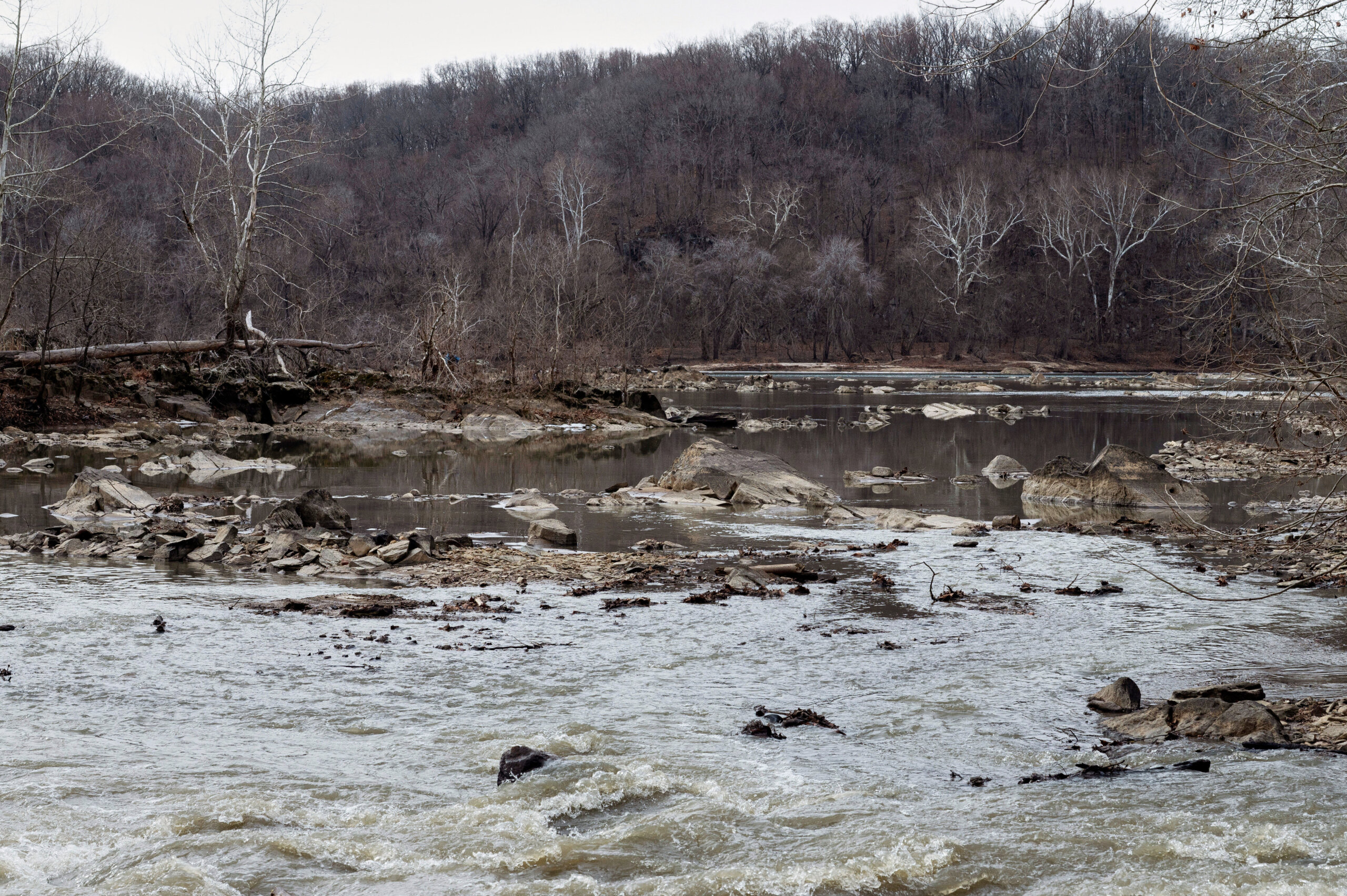
Questions are being raised about whether D.C. is downplaying the health risks and ongoing environmental damage caused by a sewage pipe that ruptured, sending millions of gallons of wastewater in the Potomac River.
D.C. Water says new high-capacity bypass pumps are expected to arrive Friday at the site of last month’s sewer pipe break that has poured millions of gallons of raw sewage into the Potomac River.
However, questions are being raised about whether the public is being adequately informed about health risks and ongoing environmental damage.
In an open letter this week, D.C. Water CEO David Gaddis resolved to do everything possible to reclaim the Potomac, following the initial Jan. 17 failure of a 72-inch sewer pipe, known as the Potomac Interceptor.
But data collected by researchers suggests the D.C. government may be downplaying the dangers of the spill, according to a local environmentalist with the Potomac Riverkeeper nonprofit.
Researchers with the University of Maryland say they’ve been testing the water once a week since Jan. 21.
“Even last week we’re still measuring E.coli 4,000 times above recreational water quality standards,” said Rachel Rosenberg Goldstein, a professor at the University of Maryland’s Department of Global, Environmental and Occupational Health.
“We’ve also detected Staphylococcus aureus and the antibiotic resistant strain of staph aureus, which is called MRSA,” Goldstein told WTOP’s Nick Iannelli.
The findings pose a substantial danger to humans, Goldstein said.
“It’s really important for public health, because people who interact with the water, and potentially with the lands that was impacted by the water, could become infected with those bacteria,” Goldstein said.
The recent ice has frozen the risk in place, but warmer weather could exacerbate the situation.
“Bacteria can survive in a lot of different types of environments,” Goldstein said. “Wastewater sewage is a type of environment that’s very favorable for bacteria growth. So especially as we see the temperature changing and we see the snow following, it’s really important that we continue to follow what’s happening with the water quality over time.”
Potomac Riverkeeper: DC is ‘sitting on its hands’
The gravity of the public health and environmental risk is being underplayed, according to Dean Naujoks, Potomac Riverkeeper, which is part of the nonprofit network dedicated to protecting the public’s right to clean, safe water in the Potomac and Shenandoah watersheds.
“Everybody keeps deferring to D.C. Water, and it’s a huge mistake,” said Naujoks, claiming the utility has downplayed risks, and miscalculated early E.coli findings, now saying they were actually 100 times higher than initially reported.
Naujoks believes local and federal governments have been lax in providing leadership in raising public awareness.
“D.C. is kind of sitting on its hands,” he said.
Naujoks said the Environmental Protection Agency and the D.C. Office of Energy and the Environment have regulatory oversight of D.C. Water, which he referred to as “the entity that caused one of the largest sewage spills in U.S. history.”
“D.C. Water should not be in this role because they have a vested interest to assure the public that the water is safe,” he said.
Long-term, he said “If they’re going to restore confidence in people coming back to the water — with crew teams and sailing clubs — we need data, we need sampling, and D.C. is going to have to pay for that to restore the public’s confidence and faith in the Potomac River.”
On Thursday, D.C.’s Department of Energy and Environment issued its strongest advisory: “Residents and pets should not touch the Potomac River, or engage in any Potomac recreational activities including fishing. D.C. drinking water remains safe and unaffected.”
In addition, the agency said it is “testing contamination levels at three Potomac River sites and three Anacostia River sites. In addition, D.C. Water is testing five other sites. DOEE testing will continue on a weekly basis and results will be made publicly available.”
WTOP’s Jessica Kronzer contributed to this report.
Get breaking news and daily headlines delivered to your email inbox by signing up here.
© 2026 WTOP. All Rights Reserved. This website is not intended for users located within the European Economic Area.