It’s 9:30 p.m. Dinner was hours ago, the dishes are done, and suddenly, a snack sounds really good. If you’re trying to lose weight, this is often when the questions start: Am I actually hungry? Should I just go to bed? Will eating now make me gain weight?
Eating at night isn’t automatically a problem, even when weight loss is your goal. And you don’t need to ignore genuine hunger or go to bed with a growling stomach to make progress.
There’s also no magical food that burns fat while you sleep. But the right bedtime snack can help satisfy your hunger, keep you from grazing endlessly in the kitchen, and make it easier to settle in for the night.
Advertisement
Advertisement
Here’s what dietitians want you to know about nighttime eating, plus some satisfying snack ideas worth keeping in your back pocket.
Want the latest fitness advice and workouts to tackle any adventure? Sign up for our Blueprint newsletter.
Does Eating Late at Night Actually Cause Fat Gain?
Let’s clear this one up right away. “Short answer: no,” says Anna Kallianteri, RD. The research suggests that what and how much you eat across the whole day matters more than the time on the clock, she adds.
Dr. Theresa DeLorenzo, a sports, menopause and body image dietitian and nutrition science professor at Russell Sage College, agrees. “Despite the rumors, our metabolism does not shut off at night,” she says. So where did the ‘no eating after 8 p.m.’ rule come from?
Advertisement
Advertisement
The research does often link nighttime eating with weight gain, but when you look closer, the reasons often come down to eating more calories overall, mindlessly snacking while watching TV, or reaching for food out of habit rather than hunger. In other words, the issue often isn’t when you’re eating. It’s what’s happening around those eating habits and how they fit into your overall intake.
Kallianteri sums it up nicely: “When late-night eating becomes overeating, when we’re tired or distracted, it can add up without us noticing.”
Related: I’m a Clinical Weight-Loss Practitioner. These Are the Best Weight-Loss Diets That Actually Work
What Dietitians Look for in a Late-Night Fat-Loss Snack
Not all snacks are the same for weight loss, especially right before bed. “Look for something modest in size that pairs protein or fiber with a little healthy fat,” recommends Kallianteri. “That combination may help you feel satisfied rather than reaching for a second snack.”
Advertisement
Advertisement
Here’s your balanced nighttime snack checklist:
-
Protein: Protein is the most filling macronutrient, so it’s your friend when you want a snack that actually helps you stop snacking. Research on pre-sleep protein has found it supports muscle repair, which is great if you’re losing weight and want to keep your muscle mass.
-
Fiber: Fiber slows digestion, which helps you feel full and keeps blood sugar from spiking and crashing. Fruits, vegetables, whole grains, beans, nuts, and seeds are all good sources. DeLorenzo also sees nighttime snacks as an opportunity: “Nighttime snacks can be a great way to top off your fruit or vegetable intake.”
-
Low Glycemic Load: Glycemic load measures how much a food will raise your blood sugar. Foods with a low glycemic load release sugar slowly, while sugary, refined snacks spike it more quickly.
-
Portion Control: Think “snack,” not “fourth meal.” Around 150 to 200 calories is a good sweet spot for most people. It’s enough to tamp down on hunger before bed without making you feel stuffed or uncomfortable.
Related: The Crucial Workout and Nutrition Changes You Need to Make the Second You Start a GLP-1, According to Top Fitness Experts
A bedtime snack can absolutely fit into a weight-loss plan. Choose something you enjoy that helps satisfy your hunger, and consider including protein or fiber when you want a snack that’s more filling. Pay attention to portions when they’re helpful, but don’t confuse eating the smallest possible snack with making the best choice.
1. Greek Yogurt With Berries
If you want something sweet before bed, start here. Three-quarters of a cup of plain, nonfat Greek yogurt delivers about 17 grams of protein, and a handful of berries adds natural sweetness, fiber, and plenty of flavor. It’s a great option when you want a snack that feels a little more substantial than a piece of fruit. If you’re looking for something that more closely resembles dessert, add a few dark chocolate chips.
2. Apple or Pear Slices With Nut Butter
There’s a reason this combo is a classic. The fruit provides soluble fiber, and peanut or almond butter adds healthy fats and a little protein to make your snack more satisfying. For a simple, balanced option, pair a small apple or pear with about a tablespoon of nut butter. One thing to keep in mind: nut butter is nutritious, but it’s easy to eat more than you realize straight from the jar. A quick scoop into a measuring spoon can help you build a snack that fits your goals without giving up the food you love.
3. Whole-Grain Crackers With Cheese or Hummus
Sometimes you want something crunchy and salty. Pair a serving of whole-grain crackers with cheese for a protein boost, or reach for hummus for a plant-based option with fiber and some protein. Look for crackers that list a whole grain as the first ingredient, and check the label for fiber. This combination gives you more nutritional staying power and helps prevent turning your bedtime snack into a whole box of crackers.
4. Whole-Grain Pretzels With Peanut Butter or Hummus
DeLorenzo suggests whole-grain pretzels with a dip are an easy go-to. Pairing them with peanut butter or hummus adds flavor and makes your snack more satisfying than pretzels alone. Just remember that not every pretzel labeled “whole grain” is especially high in fiber, so check the nutrition label. And rather than eating straight from the bag, portion some into a bowl and add your dip. You get to enjoy your snack without losing track of how much you’ve eaten.
5. Fruit and Cheese
Try grapes with a few slices of cheese or pineapple with cottage cheese. The fruit adds natural sweetness and fiber, and the cheese gives this snack more staying power. It’s especially handy when you want a little something to eat but don’t feel like preparing anything.
6. Air-Popped Popcorn
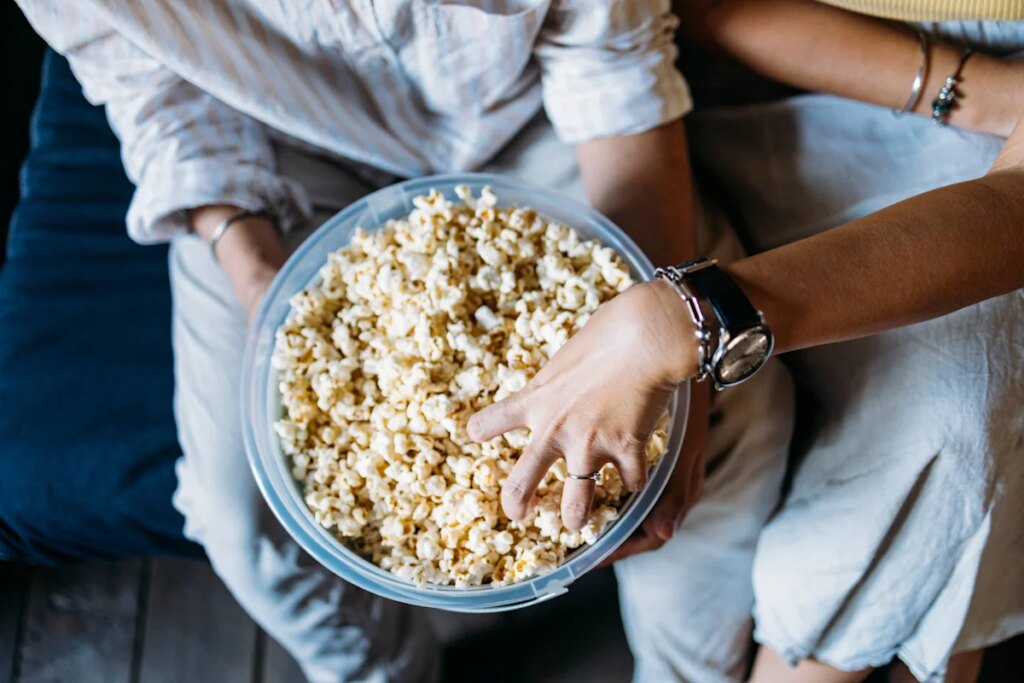
Popcorn is a whole grain, and three cups of air-popped popcorn contain roughly 100 calories and more than 3 grams of fiber. That’s a pretty generous bowl for a relatively modest calorie count. Season it with spices like garlic powder, smoked paprika, nutritional yeast, or a drizzle of olive oil. If popcorn alone doesn’t quite hit the spot, pair it with a small handful of nuts.
7. Trail Mix
Trail mix is a great option when you’re craving something sweet, salty, and crunchy all at once. Try making your own with almonds, pumpkin seeds, dried cherries, and a few dark chocolate chips. Because nuts and dried fruit are concentrated sources of calories, start with a small bowl or a portion of about ¼ cup, then adjust based on your hunger.
Related: Dietitians Reveal 9 Everyday Foods They Recommend to Support Testosterone Levels Naturally
Common Late-Night Snacking Mistakes to Avoid
A bedtime snack isn’t always a problem. But a few everyday habits can make it harder to recognize your hunger, enjoy what you’re eating, and feel satisfied when you’re done. Here’s what dietitians want you to keep in mind.
Advertisement
Advertisement
-
Eating straight from the bag in front of a screen. Both of our experts named this one first. “The biggest one is eating straight from the packet in front of a screen, which makes portions easy to lose track of,” says Kallianteri. DeLorenzo sees the same thing: “A mistake a lot of people make when having a nighttime snack is mindlessly eating chips or cookies in front of the TV.”
-
Under-eating during the day. If you “save” calories all day, your hunger will likely collect the debt at night. “I also often see people under-eating earlier in the day and then arriving at the evening ravenous,” says Kallianteri. Regular, balanced meals with protein and fiber earlier in the day are one of the best ways to tame nighttime cravings.
-
Skipping the pause. DeLorenzo recommends slowing down before you snack. “The best way to have a nighttime snack is to pause and evaluate what you feel like having,” she says. “Put a serving of what you are going to have in a bowl. And then pay attention and eat mindfully while having your nighttime snack.”
-
Mistaking tiredness for hunger. Kallianteri also points out that people often reach for food when they’re actually just tired. If you’ve had dinner and a snack and you’re still rummaging through the pantry, it might be your bedtime calling, not your appetite.
The Bottom Line
You don’t need to fear the fridge after dark. Remember, there’s no magic snack that burns fat while you sleep, but you also don’t have to ignore your hunger just because it’s late. If you want something to eat before bed, start with foods you enjoy. Greek yogurt with berries, apple slices with peanut butter, crackers with cheese, or popcorn with a cheese stick are all options that combine satisfying flavors with helpful nutrients. Eat enough during the day, give yourself a chance to enjoy your snacks, and notice whether your nighttime routine is working for you.

This story was originally published by Men’s Journal on Oct 23, 2026, where it first appeared in the Nutrition section. Add Men’s Journal as a Preferred Source by clicking here.