

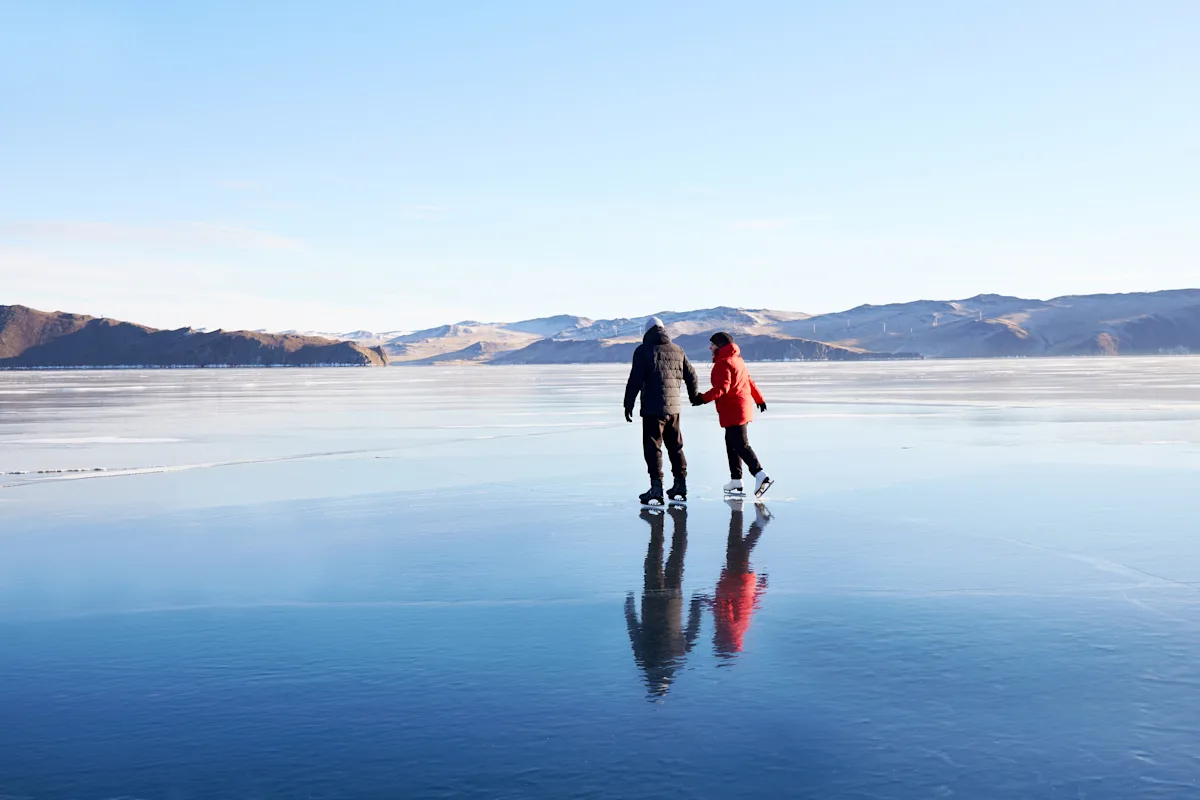
Ice skating on a frozen lake or pond is what winter wonderland dreams are made of, especially if snowflakes are gently falling as you make your laps. But when you’re out on one of Mother Nature’s frozen ponds vs. a traditional monitored ice skating rink, how do you really know if it’s safe to skate?
First off, make sure you’re not trespassing when you venture out to go skating on a frozen pond; check to be sure it’s on public land. Yes? Now your mission is to make sure the ice is at least 4 inches thick, according to numerous experts including the Minnesota Department of Natural Resources and the Old Farmer’s Almanac. Measuring the ice atop a frozen body of water is tricky for a couple reasons, mainly because that layer can be varying thickness levels at different points. According to the almanac, you should avoid skating on any areas near inlets or moving water. You know the expression—you don’t want to be skating on thin ice!
Simply tapping on the ice with your foot to gauge thickness won’t do the trick, either. Read on to learn how exactly how to test an icy surface so you can feel good about skating on it.
Disclaimer: Skating on a frozen lake is never 100 percent safe, cautions the Minnesota DNR. (Minnesota, by the way, is the “land of 10,000 lakes,” so leave it to the professionals there to know a thing or two about this!) The safest ice skating experience is at a designated outdoor rink where professionals are regularly testing ice thickness with professional equipment. There are tons of these types of rinks across the country—from Minneapolis’ many municipal outdoor rinks to the gigantic Evergreen Lake in Colorado’s mountains that’s groomed by a Zamboni.
If you skate at a designated ice rink, you can often check a website or call a hotline to determine whether the ice rink is open and deemed safe to skate. Another advantage? Some cities have measures in place to help the ice freeze and make skating more enjoyable.
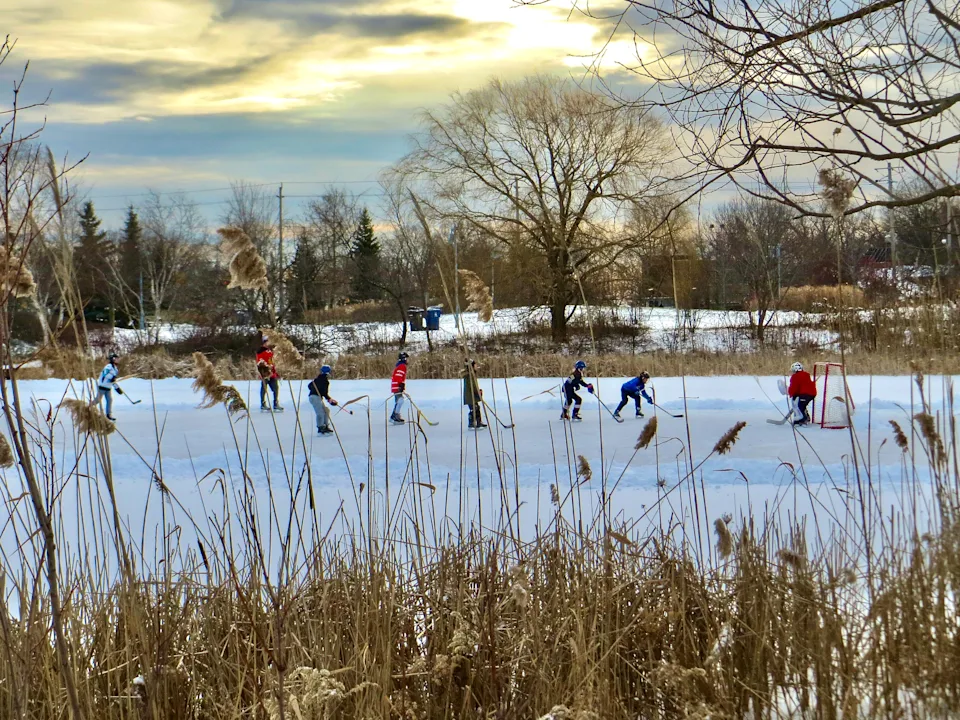
Kids playing hockey on a frozen pond.
(Daryl W Woods via Getty Images)
If you’re determined to go skating in the wild, though, here are three important things you should do before strapping on your ice skates and getting on the lake or pond.
1. Make Sure the Ice is 4 Inches Thick
Never judge ice solely by how it looks, says James Mayfield, an environmental engineer and the president and CEO of Mayfield Environmental Engineering. “Just because it looks sturdy doesn’t mean it’s ready for a dance,” he says.
You need at least a 4-inch ice bed beneath you to ice skate, Mayfield says. Use a drill to take your measurements, and be sure to measure in different areas of the lake or pond as the thickness of ice can vary, depending on factors like underwater springs. You’ll need the following tools:
Drill or chisel all the way through the ice to create a small hole, then hook your tape measure’s end to the edge of the hole near the water and measure the thickness of the ice. (Think: The technique is similar to how you’d measure oil in your car). Then repeat and repeat. Drill and measure at various points across the surface where you want to skate, as the thickness of the ice can vary.
2. Look at the Ice Color
In addition to measuring the ice, look for visual signs that a pond or lake is safe to skate on. Like we mentioned above, you shouldn’t rely on your eyes alone to gauge whether ice is safe to skate on, but ice that has a solid, uniform appearance without any cracks, shadows or dark spots tends to be the safest, says Eric Matechak, an outdoors expert with Freshwater Fishing Advice who leads winter tours and has experience as a wildlife and fisheries technician.
“Ice that looks bluish in color is also a good sign that it’s thick and dense enough for skating,” he says. On the flip side, if it’s opaque or milky looking, it could mean there are air bubbles trapped underneath the surface, meaning the ice is thinner. Off white or brown ice should also be avoided, he says.
“Avoid any ice with pools of water on top or slushy areas,” he says. “Those conditions make the ice unstable. The same goes for ice that appears broken apart or has visible cracks in it. The pressure from skaters can cause existing cracks to spread quickly.”
3. Check in With Local Experts
If you’re looking for a good spot to go ice skate, you can check in with local experts who might have a good idea of the conditions on nearby lakes and ponds. Some places to gather intel include ice fishing shops and outdoor adventure outfitters that rent gear.
4. Make Sure It’s Cold Enough
In terms of temperature, it’s ideal to have at least a week straight of nightly temps being consistently below freezing before venturing out onto ice, says Matechack.
“Even if daytime highs are above freezing, a long stretch of supercold nights should allow that ice to form solidly,” he says. But avoid going out if temperatures have been fluctuating above and below freezing frequently, he says.
5. Pack Smart
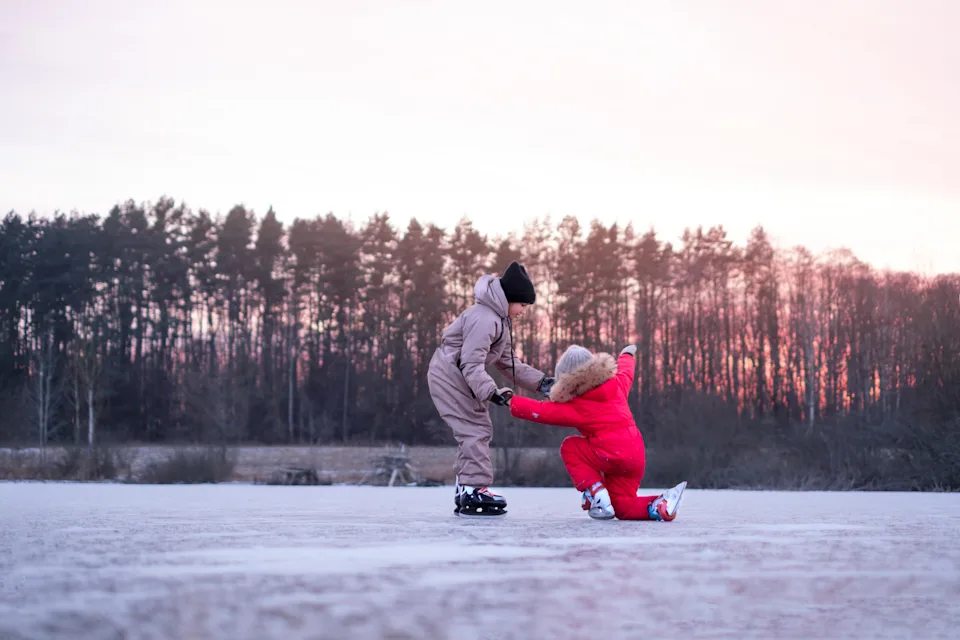
Bundle up for outdoor ice-skating. Dressing in layers will help you keep your temperature regulated.
(Maryna Auramchuk via Getty Images)
You don’t want to do all this prep and then get out on the ice, only to realize you’re freezing.
-
Warm pants. Comfy jeans, fleece-lined leggings, or even ski pants are great for skating. You don’t want anything too wide-legged or drafty.
-
A long-sleeved, moisture-wicking shirt. (You’ll be surprised how much you can work up a sweat on the ice!)
-
A jacket or sweatshirt. Dressing in layers is the name of the game.
-
Socks. Make sure they’re not too thick, otherwise it can be tough to get your skates on.
-
Ice skates. At some rinks you may need to bring your own; check ahead of time if they have rentals.
-
Helmet. When you’re learning how to skate, or if you’re joining in on a hockey game, it’s good to have some head protection. Kids and new skaters should also wear knee, wrist and elbow pads to help cushion any falls.
Frequently Asked Questions
How thick does ice need to be to skate on?
Ice should be at least 4 inches thick for skating, according to experts.
Can clear ice be unsafe?
Yes. Clear ice is usually stronger, but thickness can vary, especially near inlets or moving water.
Is pond skating safer than lake skating?
Not necessarily—both can be dangerous depending on depth, temperature, and water movement.