

Splurge on a room at the Taj Umaid Bhawan Palace.
Try the street food scene near the clock tower, Ghanta Ghar.
Visit the Mehrangarh Fort.
Spend a day souvenir shopping in the markets.
Take a one-night detour to Rohet Garh, an hour away from Jodhpur.
For first-time visitors to India, the Golden Triangle is almost a rite of passage. Delhi, Agra, and Jaipur offer an excellent introduction to the country, with majestic forts, grand palaces, and bustling streets lined with local delicacies.
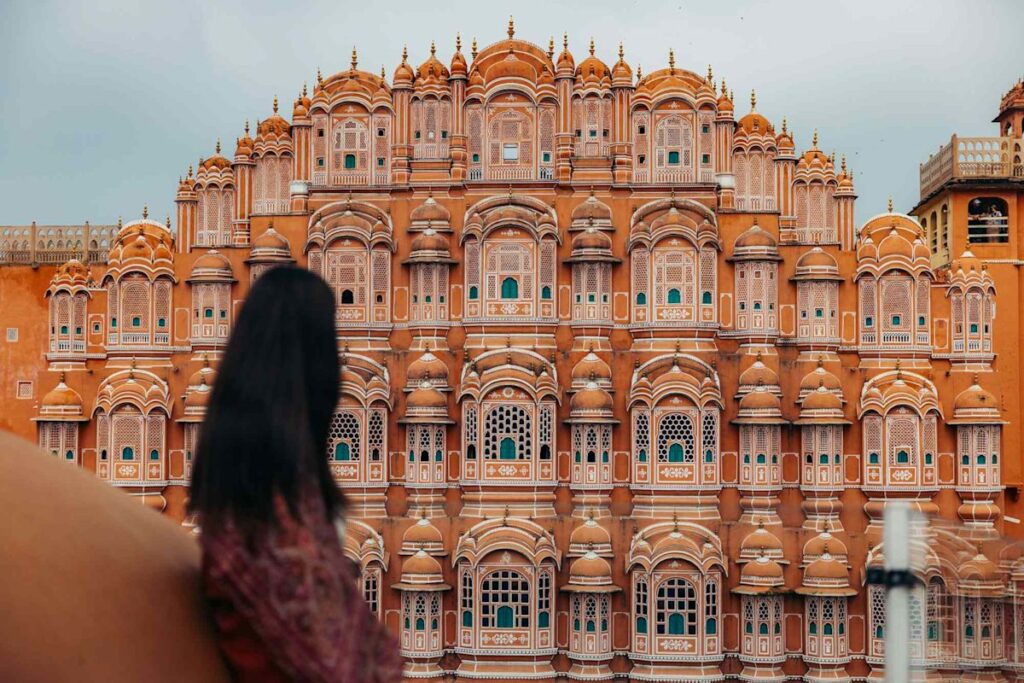
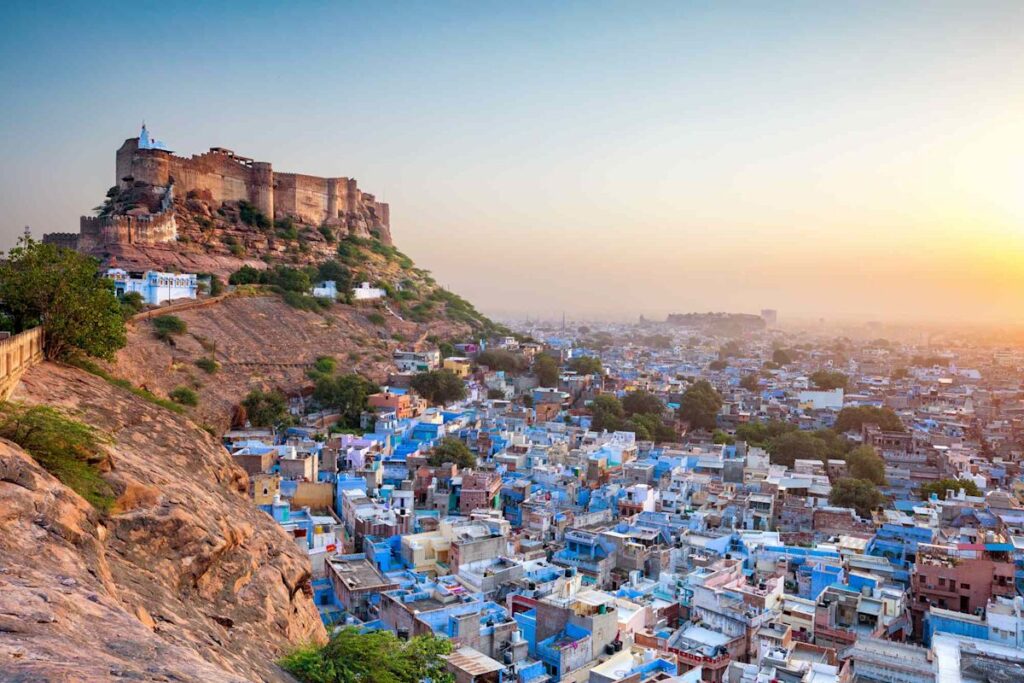
But for travelers who have already ticked off the classics, venturing a little farther west into Rajasthan leads to a city that offers the same royal grandeur, but with fewer crowds. Swapping Jaipur’s pink for indigo, Jodhpur lies in the shadow of the Mehrangarh Fort, which has watched over the city from its hilltop perch for centuries on the edge of the Thar Desert. The city is a maze of serpentine lanes, where blue-washed, lime-plastered homes climb the hillside, evoking the medinas of Chefchaouen in Morocco.
Advertisement
Advertisement
Having lived in Rajasthan my entire life, I’ve often thought about how to distinguish Jaipur from Jodhpur. To me, Jaipur is a blend of the old and the new, while Jodhpur feels suspended in time. Even the new seems to hearken back to centuries past, as though the city is perpetually folding back in on itself.
Spend the night at Taj Umaid Bhawan Palace, one of the world’s largest private residences. Linger over a full-moon dinner admiring the imposing Mehrangarh Fort at RAAS Jodhpur. Or, take an olfactory journey through Maharani Spices, where the heady aromas of freshly ground masalas make resisting the temptation of “just one more purchase” difficult.
Here is my curated list of places to visit, shop, and experience in Jodhpur, the Blue City.
Best Hotels & Resorts
Taj Umaid Bhawan Palace, Jodhpur
If The Great Gatsby‘s glittering soirées ever needed a venue in India, they would be perfectly at home beneath the dome of Taj Umaid Bhawan Palace. Far removed from the hullabaloo of Jodhpur’s labyrinthine blue lanes, the honey-gold sandstone palace sits in isolation atop Chittar Hill. Commissioned by Maharaja Umaid Singh in 1929, it was built not just as a royal residence, but also to employ thousands of people devastated by a prolonged famine. Part museum, part luxury hotel, the building has 347 rooms in total, some of which accommodate guests and others that serve as home to Jodhpur’s royal family. A stay here offers the rare privilege of saying you shared a roof with royalty.
RAAS Jodhpur
A boutique hotel with front-row seats to the Mehrangarh Fort, RAAS Jodhpur occupies the residences of the courtiers who once served the mighty fortress. The 40-room property, clad in rose-hued Jodhpur sandstone, is a contemporary nod to Rajput architecture. Rooms come with an inherent royal sumptuousness: polished terrazzo floors, intricately carved stone jaalis (lattices) on the windows playing peekaboo with views of Mehrangarh Fort, and freestanding bathtubs. For an extra dose of heritage, book the Stepwell Suite, the one room that overlooks an 18th-century stepwell, rediscovered during the hotel’s restoration and now maintained by the property.
The Rohet House
With just six suites and two rooms, The Rohet House is a boutique hotel, though it appears more like the stylish home of a well-traveled collector. Hidden in one of Jodhpur’s leafy residential neighborhoods, the property’s walls are wrapped in hand-painted frescoes as a love letter to Pichwai, the centuries-old art form from the town of Nathdwara in Rajasthan. Peacocks, lotuses, cows, and scenes from the legends of the Hindu god Krishna are painted across the interiors in a mix of soft pastels and bold hues. Beyond the art-filled rooms, there’s also a swimming pool and a family-style dining room that serves as the restaurant. Sign up for the guided food walk, available upon request, for a delicious introduction to Jodhpur beyond its historical landmarks.
Welcomhotel by ITC Hotels, Jodhpur
A mid-range luxury hotel that delivers all the comforts of an international chain, Welcomhotel by ITC Hotels is a 98-key property with spacious rooms and villas, multiple restaurants, a spa, a swimming pool, and a fitness center. For the best views of the desert landscape, check into one of the higher-floor rooms or, better yet, book a villa with its own private pool and patio.
Mharo Khet
Having started as a farm-to-table dining experience, with accommodations added over the following few years, Mharo Khet offers an escape from the city and a chance to experience farm living on the outskirts of Jodhpur. As one would expect, the food is freshly foraged, with most of the produce grown in-house.
Advertisement
Advertisement
But don’t mistake Mharo Khet for a modest country farm. Named one of Travel + Leisure’s best new hotels in 2026s, it comes with all the expected creature comforts—and more.
Set across a 40-acre expanse, the property has 10 cottages, each with 2,000 square feet of space, featuring a living area, a bedroom, a walk-in wardrobe, and a large bathroom, plus its own private courtyard. Dining includes a nine-course, plant-forward menu. As for activities, there are in-house artists, weavers, potters, chefs, and bartenders for you to pick up a skill or two.
Best Things to Do
Food Trail Around the Clock Tower
Jodhpur’s narrow lanes, especially around the Ghanta Ghar clock tower, are lined with hole-in-the-wall shops serving some of the city’s best mithais (sweets) and namkeens (savories). Many of these humble establishments have a loyal fan base across India. Whether it’s the famous makhaniya lassi—a rich, buttery yogurt drink—from Shri Mishrilal Hotel or Chaturbhuj’s gulab jamun, a doughnut soaked in sugar syrup, don’t miss the chance to eat your way through Jodhpur’s street food. Join a guided food trail curated by The Rohet House, or wander at your own pace, stopping wherever the aromas lead you.
Mehrangarh Fort
Rising 400 feet above the city, the 15th-century Mehrangarh Fort dominates Jodhpur from its 100-foot-high walls of burnished stone. Unlike other cities in Rajasthan, which often have multiple forts and palaces, Jodhpur has this main, commanding citadel. Encompassing multiple courtyards, a temple, and a museum, it’s a historic stronghold and the best vantage point of the city below. During the winter, the fort also becomes a cultural stage, hosting events like the sacred Spirit Festival, typically held in February. Take a couple of extra hours to explore the Brahmapuri neighborhood near the fort for the blue-and-white homogeneous quarters you’ve likely seen on the internet.
Jaswant Thada
A kilometer from Mehrangarh Fort, Jaswant Thada is a cluster of pavilion-style cenotaphs that once served as the cremation grounds of Jodhpur’s royal family. Built in 1899, the structure is known for the finely polished marble cladding on its domes and pillars, which turns almost translucent in sunlight.
Osian and Rohet
Unlike Jaipur, Jodhpur’s appeal lies in how quickly the landscape changes. Within a few kilometers, the city gives way to the stark stillness of the desert and villages that seem frozen in time. Osian, a roughly 1.5-hour drive from the city, is home to a cluster of Hindu and Jain temples dating from the 8th to the 12th centuries AD. If you’re willing to rough it a little, desert camping here is unforgettable—watching the sun sink behind the dunes with a hot cup of freshly brewed goat’s milk chai in hand.
Advertisement
Advertisement
Another detour to the small town of Rohet offers an opportunity to encounter the Bishnoi community around Jodhpur, known for their long-standing sustainable and eco-conscious way of life, long before these terms became buzzwords. Staying at the 400-year-old haveli at Rohet Garh, you can arrange desert safaris, possible blackbuck sightings, and guided visits to Bishnoi homes for a glimpse into their daily traditions and village life.
Shopping
Shopping in the markets of Jodhpur can lead you to places where the largest fashion houses of the world find inspiration. At the bustling bazaar Nai Sarak, discover textiles, including tie-and-dye, hand-block, and mirror work. Take a break at the Sojati Gate Market for a traditional henna design painted on your hand. Move on to Mochi Bazaar for embroidered shoes. Tripolia Bazar is another place to find a treasure trove of antiques and trinkets.
Around Ghanta Ghar clock tower, Sardar Market is a sensory delight, with shops selling spices such as the region’s famous Mathania red chilies. Some shops worth browsing: Maharani market for textiles and handicrafts, Gems & Jewels Palace for precious and semi-precious jewelry, and Orange Tree for contemporary furniture, decor, and distinctive art pieces that make stylish keepsakes to take home.
Getting There
A tuk tuk on the busy streets of Jodphur.
Credit: Instants/Getty Images
Jodhpur has an airport with direct flights to some of the larger Indian cities. Alternatively, trains such as the Vande Bharat connect Jodhpur with New Delhi. If you’re exploring Rajasthan by road, consider driving from Jaipur to Jodhpur with an overnight stop in Pushkar to explore the historic temple town.
Getting Around
Jodhpur’s main attractions are spread between the walled old city, the hilltop fort, and the outskirts. If you’re planning to visit multiple sights in a day or heading on a detour, it’s worth having a chauffeur-driven car for most of your trip, which is quite affordable in India.
Advertisement
Advertisement
Within the city, ride-sharing apps such as Uber and Ola are available, though wait times can be longer than in larger Indian cities. Auto-rickshaws are plentiful within the old marketplaces. The historic lanes around Mehrangarh Fort, Navchokiya, and the clock tower are too narrow for cars, and wandering through them is part of the experience.
Best Time to Visit
View of the Blue City of Jodhpur through a window.
Credit: Jackyenjoyphotography/Getty Images
Jodhpur is best enjoyed during the winter months, between October and March, when pleasant temperatures make it ideal for exploring the fort ramparts and wandering through the Blue City’s unshaded streets. Avoid May and June if you plan to spend much time outdoors, as temperatures can reach above 104 degrees Fahrenheit.
Read the original article on Travel & Leisure
Source link