


When you buy through links on our articles, Future and its syndication partners may earn a commission.

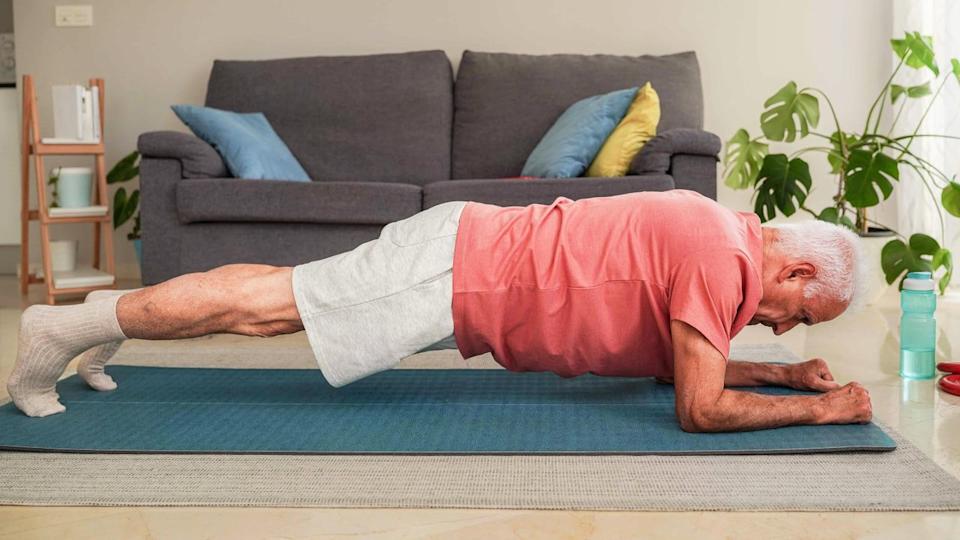
Credit: Shutterstock
I’m a firm believer that you can always start an exercise regimen, no matter your age or current physical ability. That being said, there are some aspects to getting in shape that become more difficult as you get older.
Some of the common challenges that seniors face, like bone density loss, poor balance, and chronic pain, can be addressed well before you hit 60. Strengthening key muscle groups and sharpening your coordination can combat these issues and vastly improve your quality of life in your later years.
Just as it’s never too late to start a fitness routine, it’s also never too early to prepare for healthy aging. Grab a pair of dumbbells and add the following four exercises to your workouts now, even if you’re decades away from being a senior citizen.
How to do the exercises
Check in with your doctor before starting any new workout. If you’re a beginner, consider meeting with a certified personal trainer to learn proper form and exercise modifications, if necessary.
In addition to a pair of moderately-heavy dumbbells (10-25 pounds), you’ll also need a yoga mat.
Perform each of the following exercises in a circuit, aiming for three complete rounds. Feel free to do fewer sets, reps, and time if you’re new to working out. You can also perform the exercises unweighted until you’ve mastered the form.
Once you’ve built up some strength and endurance, you can use heavier weights, increase your reps and time, or do more sets.
The exercises are:
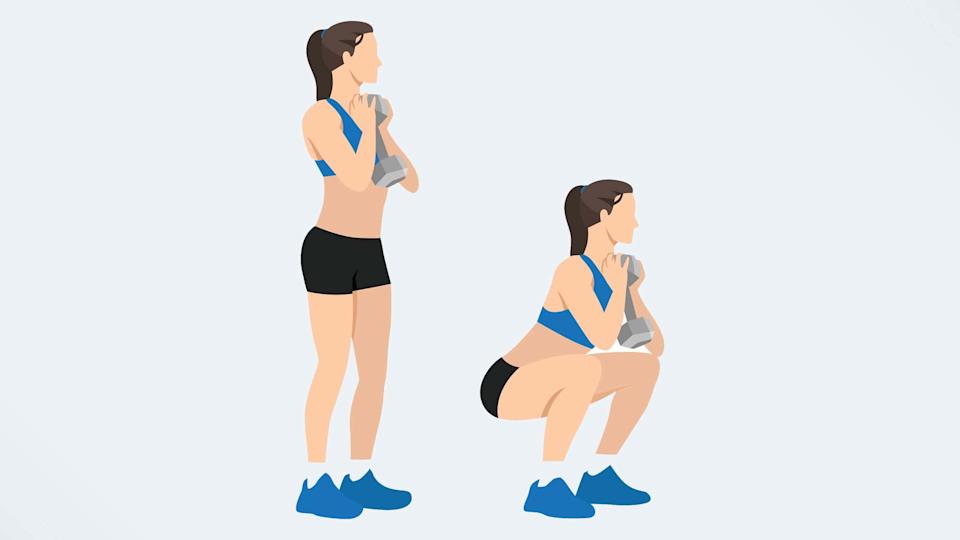
1. Goblet squats
Credit: Shutterstock
-
Grab a dumbbell and hold it at chest level.
-
Stand with your feet slightly wider than hip width apart.
-
Aim your hips behind you.
-
Bend your knees and lower your hips towards the floor.
-
Once you’ve reached the end of your range, stand up.
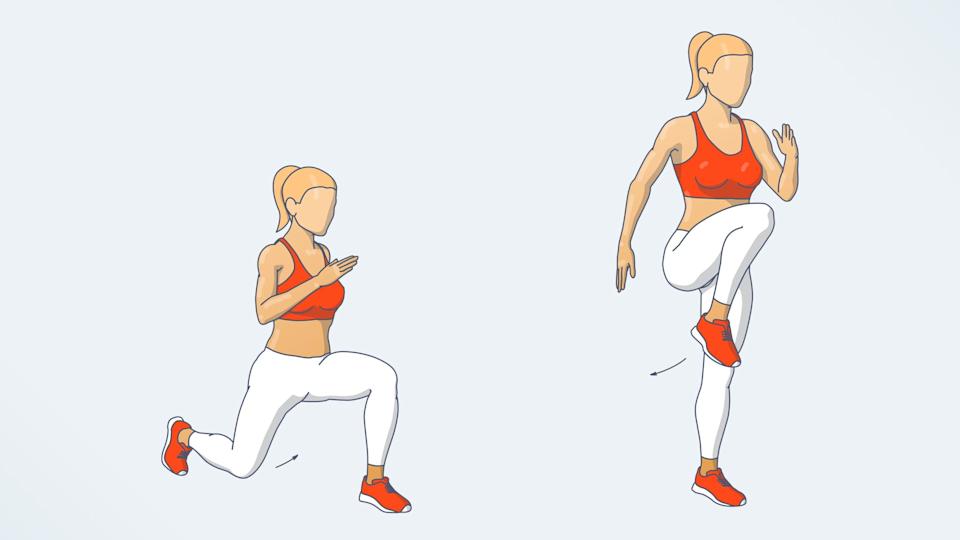
2. Reverse lunge to balance
Credit: Shutterstock
-
Hold a pair of dumbbells in each hand.
-
Stand tall and engage your core muscles.
-
Step your right foot behind you.
-
Bend your knees, lowering your right knee towards the floor.
-
Bring your right knee forward, parallel to your hip.
-
Step your right foot back behind you.
-
Continue for 10-12 reps, then repeat on the other side.
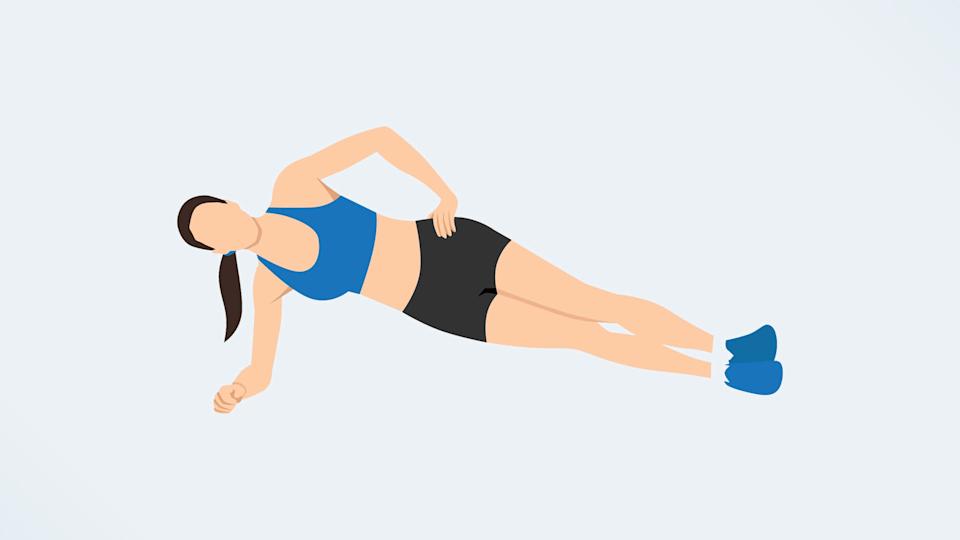
3. Side planks
Credit: shutterstock
-
Place your right elbow underneath your right shoulder.
-
Elongate your legs and engage your core.
-
Lift your hips into the air.
-
Hold in this position for 15-30 seconds, then repeat on the other side.
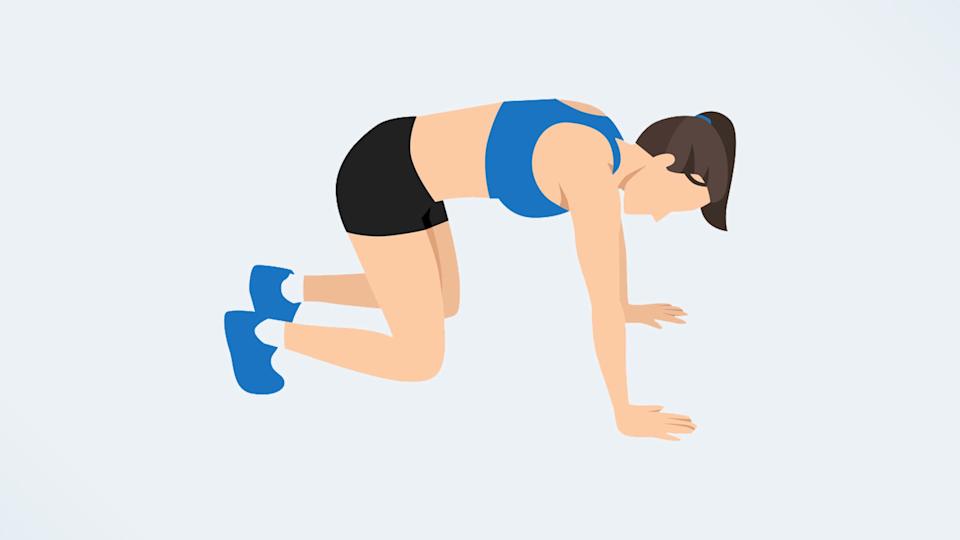
4. Bear planks
Credit: Shutterstock
-
Come to all fours on the mat.
-
Lift your knees off the mat.
Benefits of the 4 exercises
The exercises in this workout strengthen the core, glutes, hips, quadriceps, and hamstrings – muscles that are responsible for stabilizing your pelvis and spine, and moving your body through space.
The goblet squat addresses core stability, lower body power, and ankle mobility. This functional movement mimics getting up and down from a seated position, which is beneficial to continue practicing as you get older. You’ll also be targeting a few upper-body muscles like your chest, upper back, and biceps by holding the weight.
The reverse lunge to balance enhances single-leg strength, power, and balance. The lunge portion of the exercise targets glutes, quads, and hamstrings, while the balance portion trains deep core muscles to stabilize your body properly. This exercise is an example of dynamic balance, which is the ability to maintain a controlled, upright posture while transitioning from one position to another. Falls become a big risk as we age, and since falls rarely happen when we’re standing still, it’s crucial to practice balance while we’re moving.
Both the side plank and bear plank address core stability and control. These exercises strengthen deep core muscles like your transverse abdominis and internal obliques, which support the pelvis and spine and help maintain proper posture and balance as you move. The stronger these muscles are, the more stable you’ll be while walking, running, climbing stairs, and performing other everyday movements. Lack of strength in the stabilizing muscles can make you more susceptible to falls as you get older, which can cause serious injury.


Follow Tom’s Guide on Google News and add us as a preferred source to get our up-to-date news, analysis, and reviews in your feeds.