


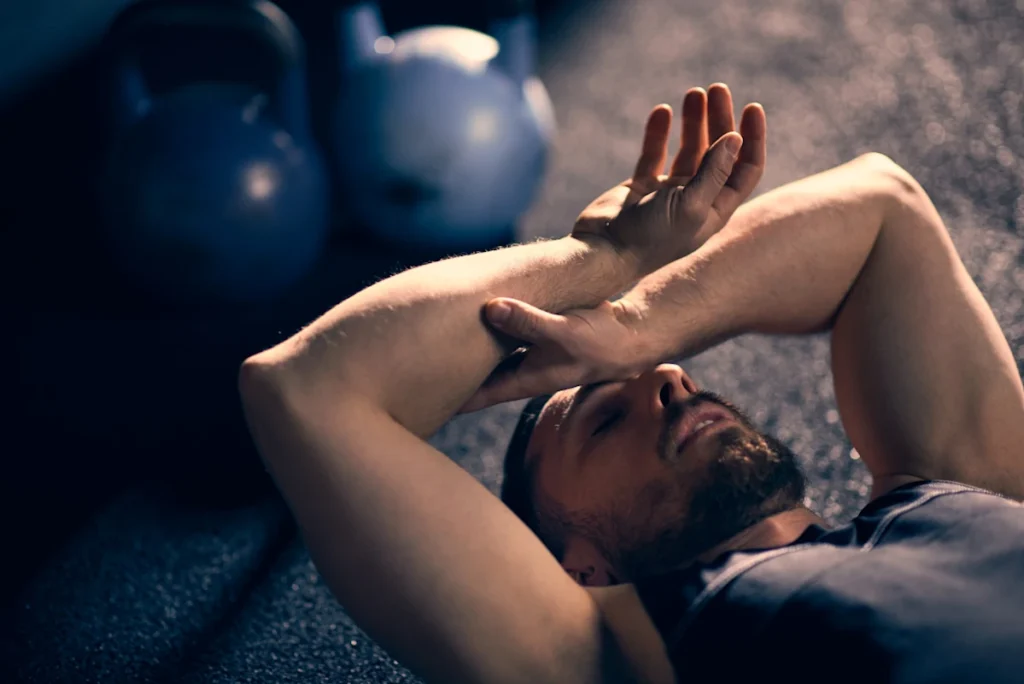
Be honest: how many times have you rushed straight out of the gym after finishing a workout? Sure, your heart rate may still be flirting with zone 5, but you figure it’ll settle down on the drive home. We’re all guilty of skipping recovery at some point, but this piece of training only becomes more important the older we get. Even if you’re short on time, post-workout recovery doesn’t have to be a tedious process. In fact, it can take as little as five minutes.
That’s why Charlotte Marsh, a certified Buteyko breathing coach, suggests adopting a short recovery breathing protocol after your workouts. Exercise puts your body in a stressed, sympathetic state to drive performance. But the problem is, many people fail to intentionally shift out of it.
“If you want to help your muscles adapt—to access a state where you can rest and repair—and return to your work or home life in a calm and relaxed manner, then you need to shift down a gear or two,” Marsh explains. “Even five minutes of deliberate recovery breathing can help.”
Related: Biohacking Expert Swears by This Simple Daily Habit to Clear Your Mind and Reduce Stress
During training, your heart rate climbs and your breathing speeds up, whether you’re hitting heavy weights or pushing the tempo on a run. Since breathing is directly tied to your nervous system, intentional breathing is one of the fastest ways to signal to your brain that the stressor is over.
“Stress recovery is all about how easily we can shift from one state to another, so don’t finish your last set, grab your keys, and go straight back into a busy schedule,” Marsh adds. “Think of this as a ‘cooldown for your physiology,’ not just your muscles.”
Next time you finish a workout, find a space to sit and take several rounds of slow, deep nasal breaths driven by the diaphragm. This style of breathing stimulates the vagus nerve, which helps bring your heart rate and blood pressure down while reducing cortisol levels and improving oxygen delivery. Plus, it can support faster muscle repair, better sleep, and less next-day fatigue, all while leaving you feeling calmer and more clear-headed when you leave the gym.
Related: Hunting for the Top Wearable Fitness Trackers? We Rated the Best Across Lifting, Endurance, Sleep, and Recovery
This story was originally published by Men’s Journal on Feb 18, 2026, where it first appeared in the Health & Fitness section. Add Men’s Journal as a Preferred Source by clicking here.