

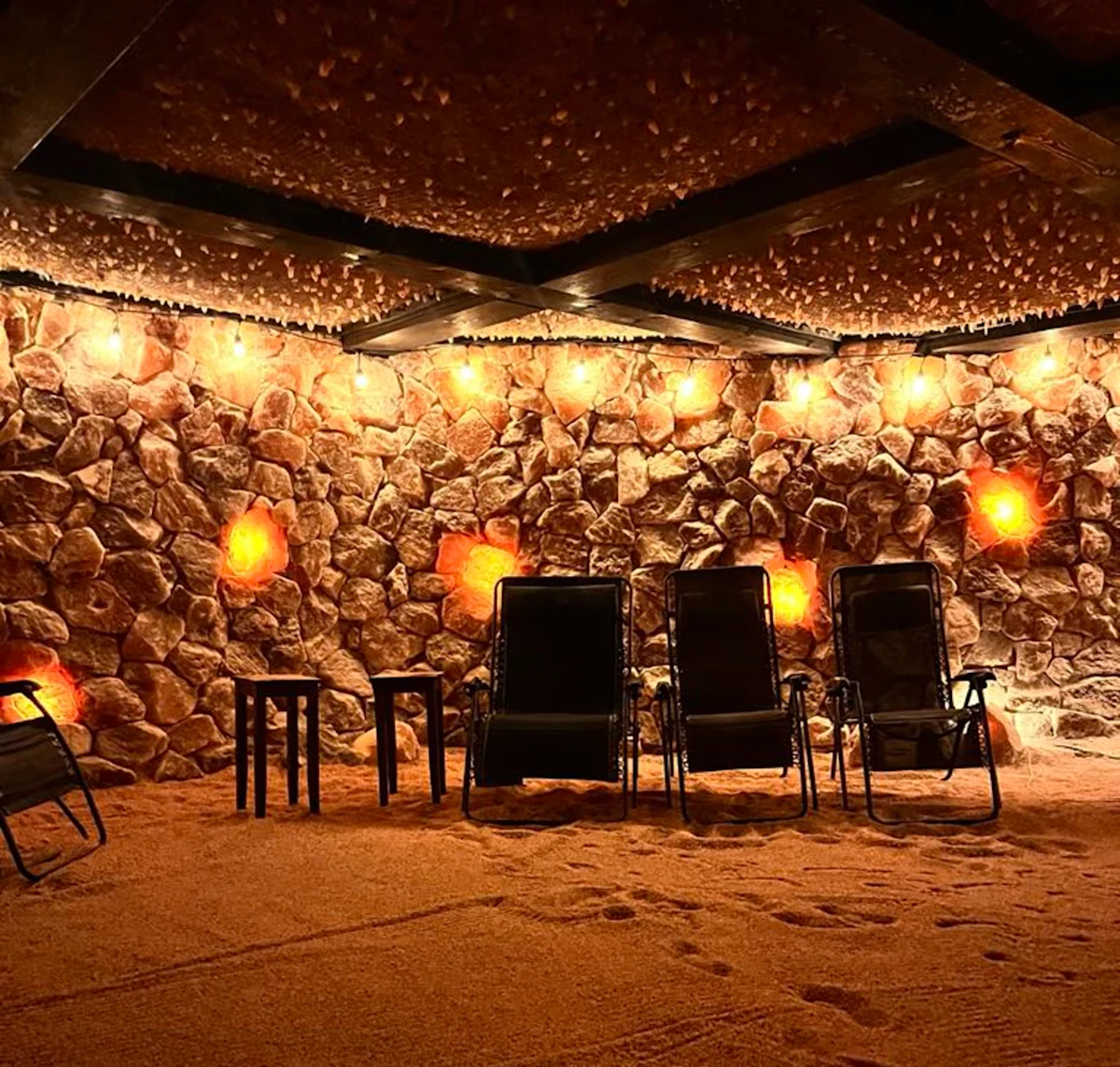
Walking out of the Santa Barbara Salt Cave in Santa Barbara, California, my husband Jordan and I both felt salt on our lips—much like you do when you get out of the ocean after a long swim.
Made from 45 tons of Jurassic-age salt blocks and crystals, which are back-lit to give the space a warm, relaxing orange glow, the attraction is billed as “the largest underground crystal salt cave in North America.” Descending into the cave mid-afternoon, we lounged for about 45 minutes while soft meditative music played, relaxing so much we almost fell asleep.
Naturally occurring salt caves are actually quite rare, as the formations are water-soluble, but do still exist in some desert environments: Malcham Cave, the largest natural salt cave in the world, opens to the Dead Sea. However manmade versions like the one we visited, are becoming more popular. The Salt Therapy Association says the industry has grown each year for the past eight years, and their most recent report forecasted a white-hot growth at least 20% in 2023 as day spas, luxury hotels, and wellness retreats add salt rooms.
Here’s the thing: You won’t find a salt mound of science to back up things like thalassotherapy (swimming or soaking in seawater for health benefits) or halotherapy (spa-like salt rooms like the Santa Barbara Salt Cave), but we do know that salt therapies have spanned cultures and millennia. Jordan found that the salt cave visit seemed to lessen the cough he gets from his allergies. When got back home, he started using over-the-counter saline sprays, which has been a game-changer for his allergies.
So, in these modern times, should we all be hanging out in salt caves? I, for one, am a convert and tested the Santa Barbara Salt Cave personally and compared my results with expert opinions. If you’re curious whether or not you should try a salt cave, read on.
What are salt caves?
Naturally occurring salt caves are actually quite rare, as the formations are water-soluble, but do still exist in some desert environments: Malcham Cave, the largest natural salt cave in the world, opens to the Dead Sea. But manmade salt caves and rooms, like the one we visited, are becoming more popular.
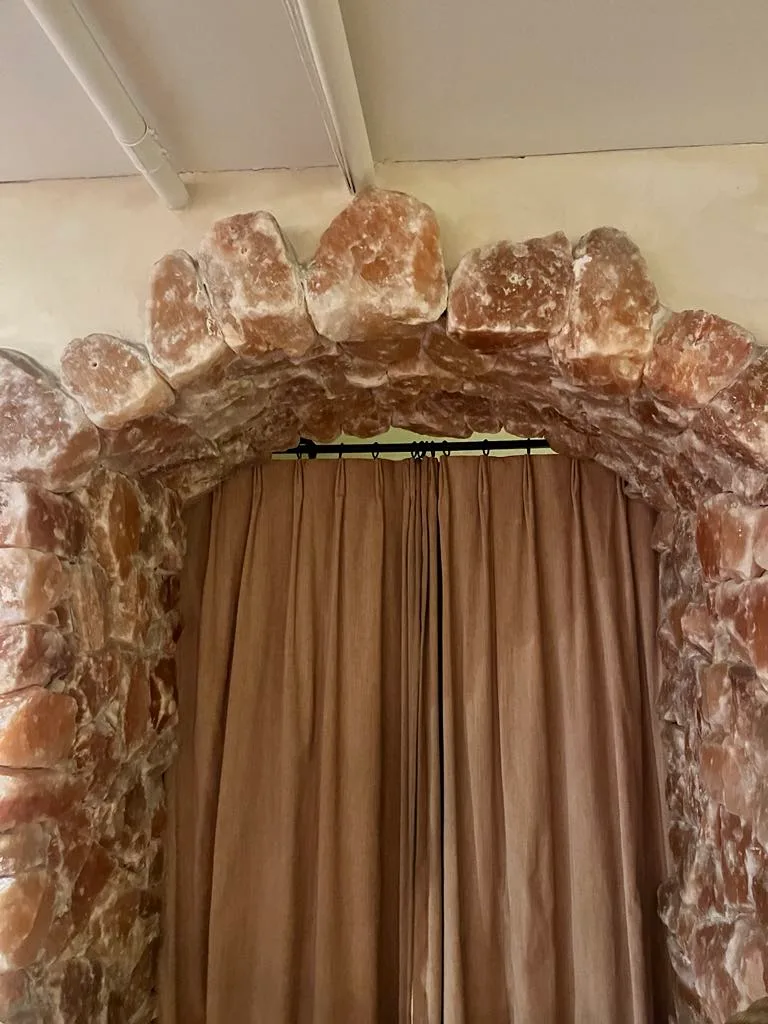
The entrance to the salt cave I visited in Santa Barbara.
(Brittany Anas)
There are two different types of salt caves or salt rooms: active and passive. In active salt caves, machines break apart salt and circulate it through the space, so you breathe it in and it settles on your skin. Passive salt caves, like the one I visited, generally have walls formed from Himalayan salt bricks and crushed salt as flooring. These simulate the environment in a naturally occurring salt cave.
One of the first known salt spas opened in 1839 at a salt mine after an entrepreneur noticed the miners in salt caves had youthful skin and rarely any respiratory issues. But the practice of using salt as a medicinal therapy dates even farther back to the Greeks and Romans, who bathed in sea water for therapeutic effects.
Salt cave health benefits: What research and experts say
Given that I gargle with salt water to soothe a sore throat and use a nasal saline rinse to clear congestion, I’m warm to the idea that simply sitting in a room full of salt when I’m in good health could make me feel even better. I’m not alone, either.
The use of salt as a medicinal therapy is known as “halotherapy,” and while proven results are not nearly as abundant as personal testimonials, researchers are interested in the potential health benefits of salt. A 2022 study in the Journal of Education Health and Sport found that salt therapy is a safe, alternative therapy that can reduce irritation in our airways and help improve dry skin among other benefits.
The strongest evidence for salt cave therapy is for individuals with respiratory and allergy conditions, says Dr. Brenda Walkey, M.D., a board-certified physician at Release Well-Being Center, which has locations in Boston and Westborough, Massachusetts.
“It is thought that salt therapy produces its benefits by improving the clearance of mucus that can cause upper respiratory symptoms such as cough,” Walkey says. “The anti-inflammatory and anti-microbial properties of salt are likely to play a role as well.” Research, she adds, has shown that salt therapy can improve lung function in people experiencing symptoms of asthma, COPD and other chronic respiratory illnesses.
Salt caves could potentially boast some skin benefits, too. Mineral salts have moisturizing properties, explains Victoria Waked, medical esthetician and U.S. head of education for Dr. med Christine Schrammek. “Additionally, salt therapy plays a role in normalizing the skin’s pH, stimulating cell function and the detoxifying process, which means skin conditions such as eczema, rashes and even acne can be improved,” she says. Achieving significant improvement, though, may require 2 to 3 sessions per week over a couple of months, she says.
Key Takeaways
-
Salt caves may help with allergies and respiratory issues
-
Sessions cost around $25–$50
-
Benefits vary; evidence is limited but promising
-
Great for relaxation and low-effort wellness
Top salt caves and salt rooms to try out
Rich with amenities, spa-goers The Spa at Séc-he in downtown Palm Springs can soak in private tubs filled with 105-degree mineral-rich waters fed by the Agua Caliente spring. Those getting treatments can also relax in a spacious halotherapy salt cave before or after your massage or facial.
Set aside time for an afternoon at the spa while staying at Paséa Hotel & Spa in Huntington Beach, California. This dreamy oceanfront hideaway is home to Aarna Spa, which, in addition to a tranquil salt room, also has a private spa garden with water features, cabanas, and fire pits.
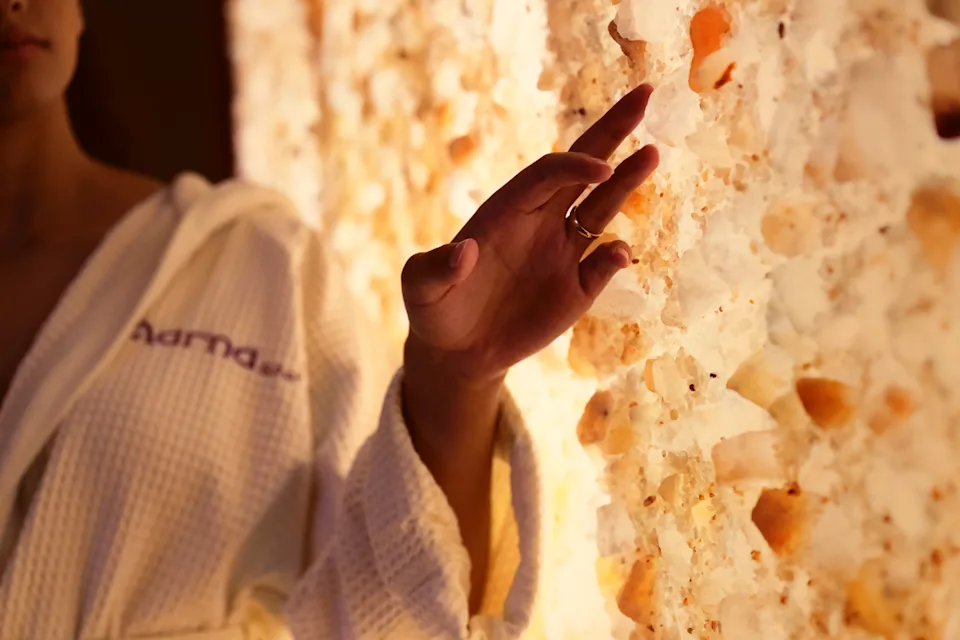
Paséa Hotel & Spa’s Aarna Spa’s tranquil Salt Room
(The Meritage Collection)
You can even enjoy a Himalayan salt cave while sailing! The Sea Thermal Suite aboard Celebrity Cruises is available on Edge Series ships. In addition to enjoying the salt room, the spa-goers can relax in heated tile loungers, enjoy waterfall showers, and also visit the steam room, crystalarium, hammam, infrared sauna, and feel like you’re in a cocoon in floating basket chairs that look out at sea views.
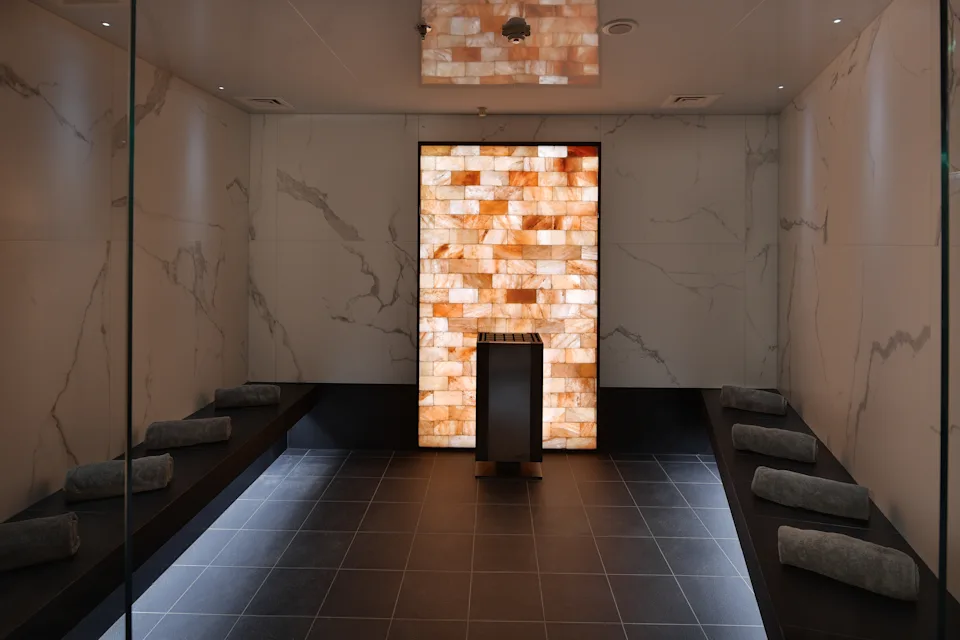
Himalayan salt room available on Celebrity Cruises’ Edge Series ships.
(Celebrity Cruises)
Pomona Salt Cave and Spa in White Sulphur Springs, West Virginia is a bucket list-worthy salt cave to visit. With more than 18,000 pounds of pure Himalayan salt, this storybook-looking sanctuary offers spa services and sessions like cave yoga. Guests can even stay the night at the Salt Room Lodge.
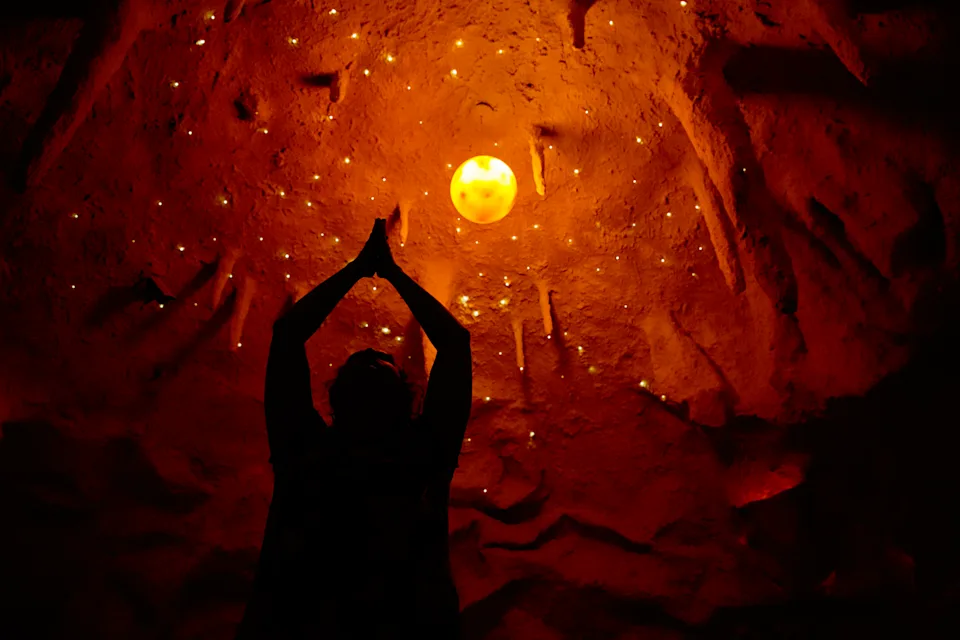
Salt cave enthusiasts can practice yoga at the Pomona Salt Cave & Spa in West Virginia.
(West Virginia Department of Tourism)
The Himalayan Hideaway in Winston-Salem, North Carolina features more than 8,000 pounds of hand-mined Himalayan pink salt. Sessions are held in a room equipped with zero-gravity chairs and ambient lighting, accompanied by soothing music. Guests can also enjoy the tea room with Nepalese tea and warm their feet on salt foot globes.
Scottsdale is a well-known wellness destination. If you’re head to the desert for some R&R, put Spa Avania at the Grand Hyatt Scottsdale Resort on your must-visit list. Here, you can enjoy treatments like a Desert Essence Wrap with agave oil and relax in a beautifully designed Himalayan salt room.
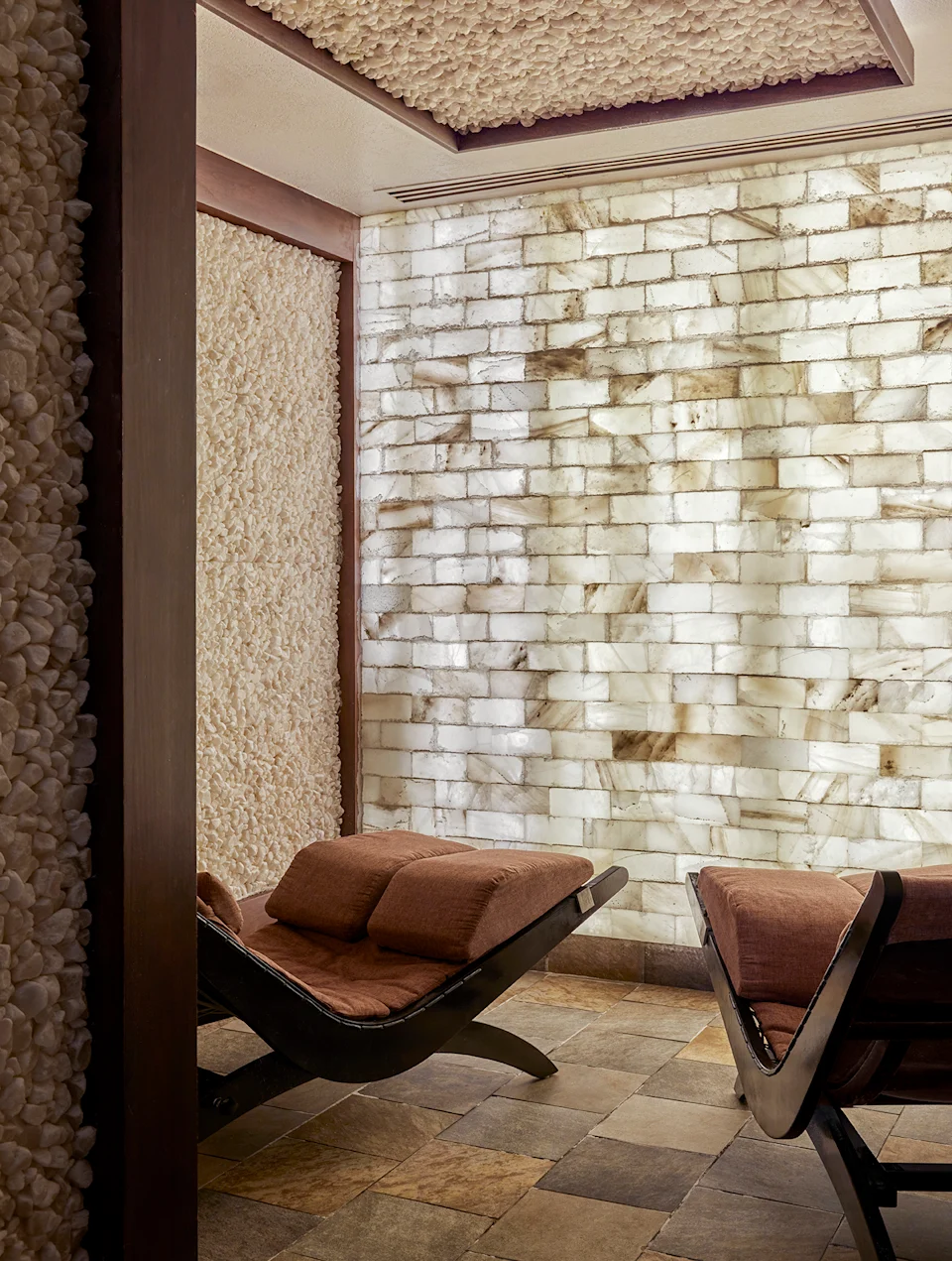
Himalayan salt room at the Grand Hyatt Scottsdale Resort’s Spa Avania.
(Grand Hyatt Scottsdale Resort)
Where else can I find salt caves?
You probably don’t have to travel far to find a salt room or cave.
-
Many local day spas have these types of therapy rooms that you can book sessions in, so do a search for “salt therapy rooms near me” or “salt caves near me,” and you’ll likely be surprised to find several options.
-
Check Groupon for deals on salt therapy sessions near you, which might also yield more results than a Google search.
-
I’ve also seen halotherapy rooms at spas as an amenity, like The Spa at Séc-he in downtown Palm Springs, which has halotherapy salt caves you can use if you’re getting a treatment.
Tips for your first salt cave session
The salt cave that we tried out cost $25 per person for a 45-minute session, which I’ve found is pretty standard. Here’s a few tips for getting the most out of a salt therapy room or cave.
-
Know the Electronics Policies: Some salt caves will ask that you disconnect, while others will allow you to bring in smartphones, books, headphones and use during your session.
-
Dress Comfy: Comfy clothes are suggested so that you can lounge in comfort. Light colors will show salt less than dark colors. I started off in yoga pants and a T-shirt so I could get the most skin benefits from the salt cave, but I recommend bringing a sweatshirt. The cave we were in got a little chilly. Some salt rooms and caves have robes and blankets.
-
Wear Socks: Some salt caves will provide shoe covers, but many will ask you remove your shoes and wear socks onto the crushed salt floor.
-
Avoid Putting on Perfume: Some salt therapy locations ask that you refrain from wearing scents (perfume, smoke, etc.) as a courtesy to scent-sensitive guests.
-
Meditate: Use mindfulness techniques such as breathing exercises to maximize the potential mental health benefits of your session, Walkey says.
One final thing: Don’t be surprised if you feel a tickle in your throat while you’re in the salt therapy rooms. That’s likely the salt doing its job, according to The Salt Suite, and most people feel their sinuses clear right away or within a couple of hours after the treatment.
Should you try a salt cave?
Yes—if you enjoy spa experiences, want a gentle, natural way to ease breathing or stress, or just love a warm, glowing environment, a salt cave session is a relaxing and potentially beneficial experience