


When you buy through links on our articles, Future and its syndication partners may earn a commission.

Credit: Shutterstock
If there’s one muscle group that quietly causes trouble for a lot of people, it’s the hip flexors. I know this because they’ve been a persistent problem area for me — especially during busy work periods when I’m spending more time sitting than I’d like. That frustration sent me down a bit of a rabbit hole researching why hip flexors get so tight in the first place, and what actually helps.
It turns out these muscles are closely linked to our fight-or-flight response. When we feel stressed, the hip flexors stay in a shortened, switched-on position — ready to move, but never quite getting the chance to fully relax. It’s an interesting part of our evolutionary history, because tight hip flexors once meant we were primed to run, fight, or spring into action at a moment’s notice.
But in our modern lives, tight hip flexors translate into stiffness, poor posture, and even lower back discomfort. Add desk life into the mix, and it’s no surprise so many of us feel locked up through the front of the hips.
The good news is, we can help our hip flexors. A handful of targeted exercises — combining both stretching and strengthening — can make a real difference. When done regularly, they help restore mobility, support better posture, and build the kind of hip strength that carries over into everyday movement. Ahead, I’ve rounded up five of the best hip flexor exercises to help you do just that.
1. Kneeling hip flexor stretch
Credit: Shutterstock
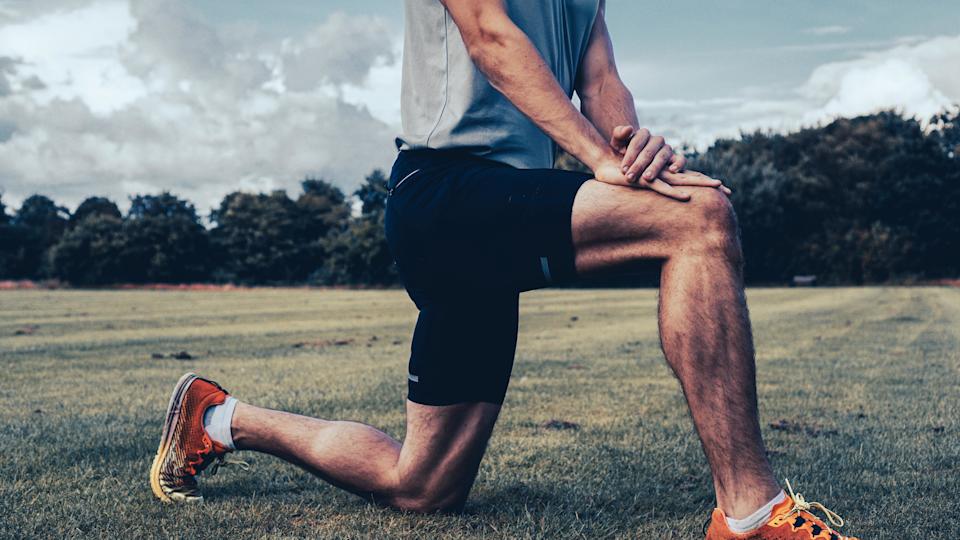
This is the classic for a reason. The kneeling hip flexor stretch directly targets the iliopsoas — the deep hip flexor muscle that tends to shorten when we sit for long periods. Done well, it can also help improve posture by counteracting that forward-tilted pelvis many of us pick up from desk life.
How to do it:
-
Kneel on one knee with the other foot planted in front, forming a 90-degree angle.
-
Gently tuck your pelvis under (think “tailbone down”), then shift your weight slightly forward.
-
You should feel the stretch through the front of the hip on the kneeling side.
-
Hold for 30–60 seconds, then switch sides.
2. Standing hip flexor stretch with reach
This standing variation is ideal if you want to stretch your hip flexors without getting down on the floor. Adding an overhead reach increases the stretch through the front of the body, including the hip flexors and abdominal muscles.
How to do it:
-
Step one foot back into a staggered stance.
-
Bend your front knee slightly and squeeze the glute of the back leg.
-
Reach the arm on the back-leg side overhead and gently lean to the opposite side.
-
Hold for 20–30 seconds, then switch sides.
3. Glute bridge

Credit: Shutterstock
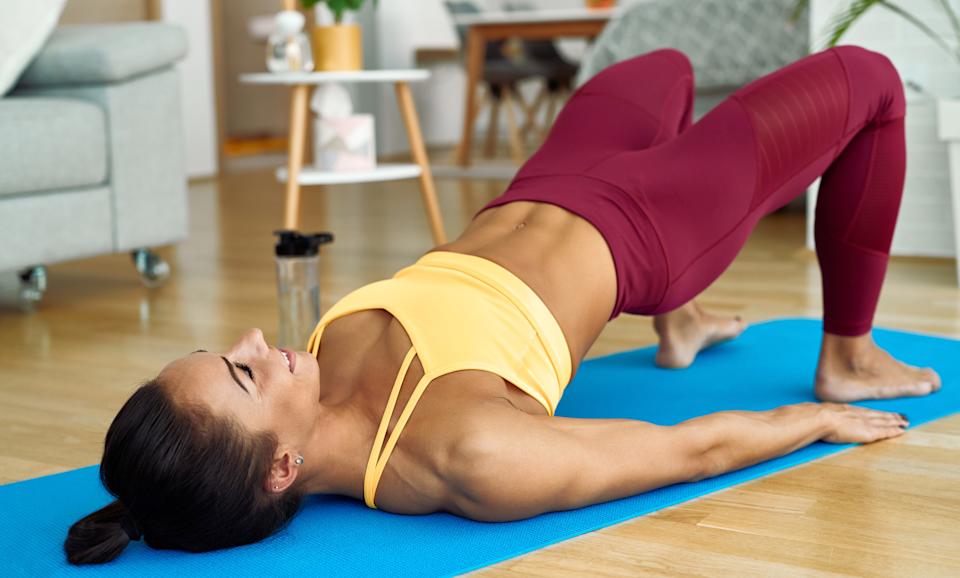
While bridges are often thought of as a glute exercise, they’re also excellent for hip flexor health. Strengthening the muscles that oppose the hip flexors helps restore balance around the pelvis, reducing tightness over time.
How to do it:
-
Lie on your back with knees bent and feet hip-width apart.
-
Press through your heels and lift your hips, squeezing your glutes at the top.
-
Keep your ribs down and avoid arching your lower back.
-
Hold for 5–10 seconds, then slowly lower back down, one vertebrae at a time.
4. Lunge with spinal twist
Credit: Shutterstock
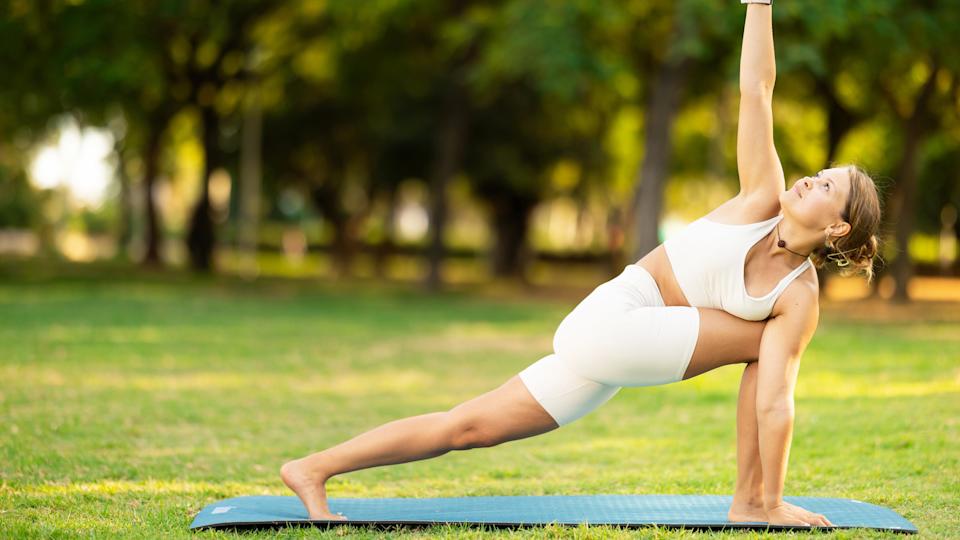
This move combines a deep hip flexor stretch with a twist through the upper back — which helps counter two big post-sitting issues at once: tight hip flexors and a stiff, rounded spine. The twist also recruits your core, making this both a mobility and functional strength move.
How to do it:
-
Step forward into a deep lunge, with your back knee lightly touching the floor (or raised if more comfortable).
-
Keep your front knee tracking over your ankle and your torso tall.
-
As you settle into the lunge, rotate your torso toward your front leg, reaching your opposite arm up toward the ceiling.
-
Hold for 20–30 seconds, then switch sides.
5. Marching hip flexor lift
Credit: Shutterstock
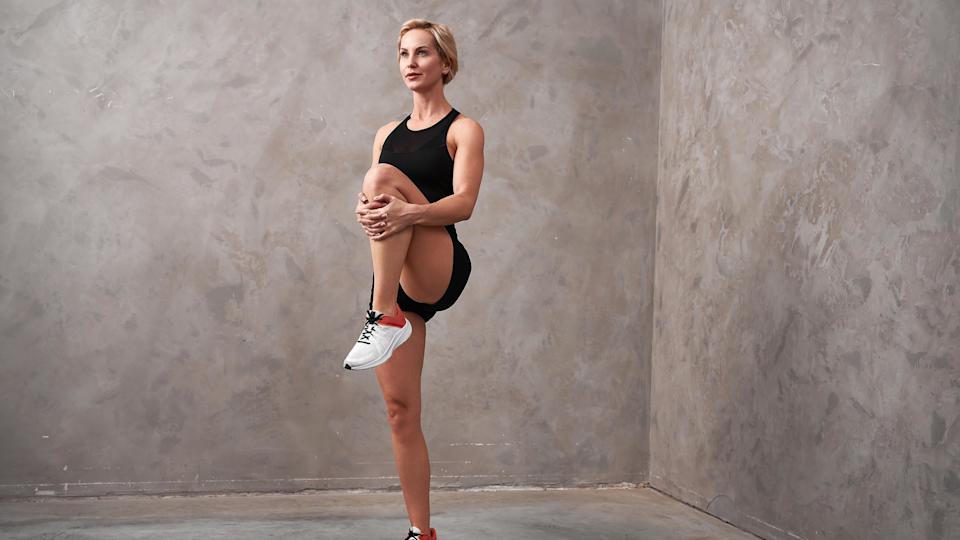
Not all hip flexor work should be passive. This dynamic stretch strengthens the hip flexors through their full range of motion, which can help reduce stiffness and improve functional movement like walking and climbing stairs.
How to do it:
-
Stand tall with hands on hips or holding a wall for balance.
-
Slowly lift one knee toward hip height, then lower with control. You can hug your knee to your chest to deepen the stretch if you like.
-
Focus on staying upright rather than leaning back.
Hip flexor tightness can creep up slowly, but the impact on how you move, sit, and even breathe can be huge. Done regularly, these stretches can make a real difference to your comfort, posture, and lower-body strength over time.
If you’re new to hip flexor work, take it gently at first. Move with control, ease off if something doesn’t feel right, and give your body time to adapt — consistency matters far more than pushing for depth.


Follow Tom’s Guide on Google News and add us as a preferred source to get our up-to-date news, analysis, and reviews in your feeds.