


When you buy through links on our articles, Future and its syndication partners may earn a commission.

Credit: Getty Images
These hip flexor exercises from a physical therapist may help relieve tightness, reduce pain and bulletproof your hips against injury. Recently, I spotted a video by Dr. Orit Hickman of Pain Science Physical Therapy, who demonstrates exercises specifically for people with hypermobility, those who have lots of flexibility in their joints, or those with tight hip flexors.
Most people can benefit, though, so don’t fret if you’re not hypermobile — you’re not excluded from the gang. Below, you can check out the full video by Dr. Hickman, and what she recommends if you want to build flexible hip flexors safely without injury.
The exercise
I was genuinely excited to try this one. Here it is.
The hip flexors are deep stabilizing muscles, and the hip joints, generally, are pretty stable. However, for those who are hypermobile, trying to stretch (and stretch, and stretch) muscles using “deep” positions can actually target and put pressure on the joints.
For that reason, Dr Hickman says we should focus on stretching the hip flexors safely without putting too much pressure on the joints or aiding their flexibility further. In other words, you don’t need to become a contortionist to release your muscles.
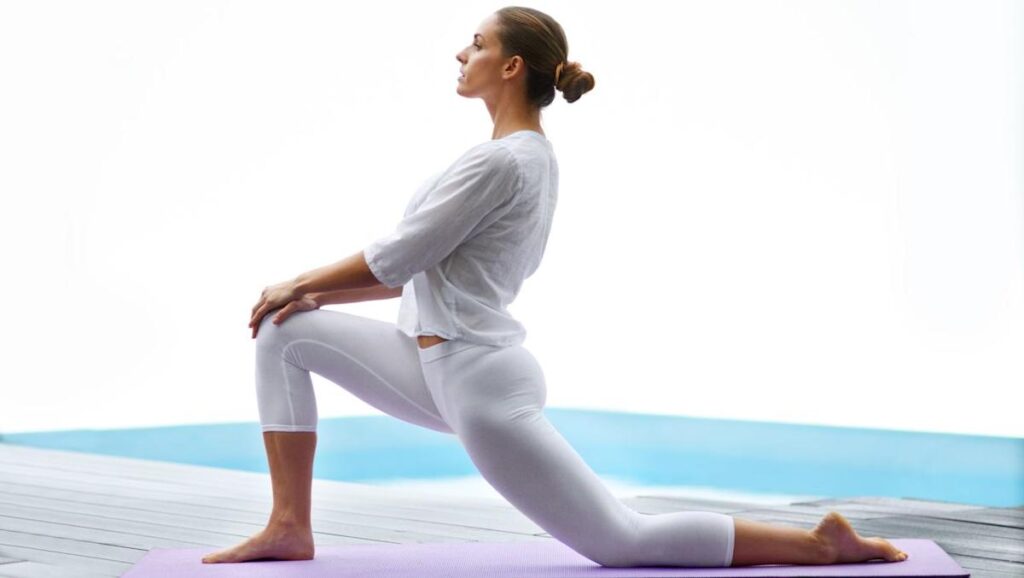
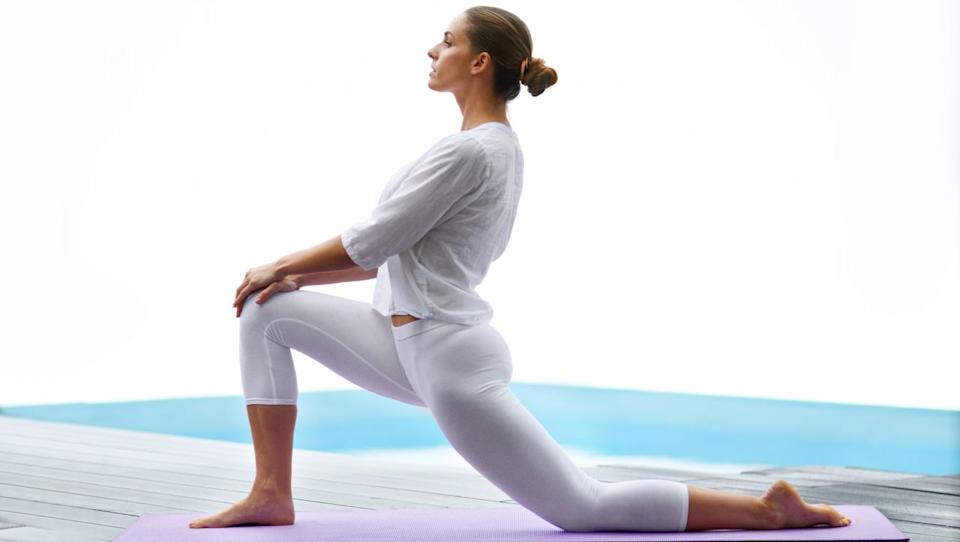
She recommends starting in a half-kneeling position — not a low runner’s lunge, like we typically do to target the hips, but an upright position with the front knee stacked over the front ankle and back knee stacked under the back hip. From here, Dr. Hickman asks patients to squeeze the gluteal muscles, which may (or may not) elicit a stretch. For some (the very flexible), you may not feel anything.
Next, try tilting the pelvis under to feel the stretch along the front of the hip on your back leg. Continue to focus on the pelvic tilt, then, if you want more, add a side bend over the front leg. Dr. Hickman explains that the hip flexors attach at the femurs and to the lumbar spine, so by reaching over the side, you should feel a stretch deep into the hip flexors without needing to move far.
Here’s my tried-and-tested verdict
For me, hypermobility is more of a problem in my upper body, which has led me to some pretty bad shoulder instability and pain over the years from compensating everywhere else. But everything is connected, right? I like to think of the body as one whole unit, and I now exercise that way, too.
For that reason, I decided not to jump straight into low lunge, frog pose, or the butterfly sit like I usually would, and opted for Dr. Hickman’s “softer” approach — and I mean that as a compliment. Sometimes less really is more.
I am pretty flexible, so I opted for Hickman’s optional add-ons and went for the pelvic tilt and side bend; boy, does this stretch really work. Just a few minutes spent on each side, and I walked away feeling more open and less stiff without overworking my hips or causing pain.
During hot yoga classes, where the heat can make muscles more pliable, leaving us feeling bendier, I can often take hip stretches too far and get left with niggles for days after. This has been a game-changer for me, and I plan to continue adopting it. Let me know how you do!


Follow Tom’s Guide on Google News and add us as a preferred source to get our up-to-date news, analysis, and reviews in your feeds.