

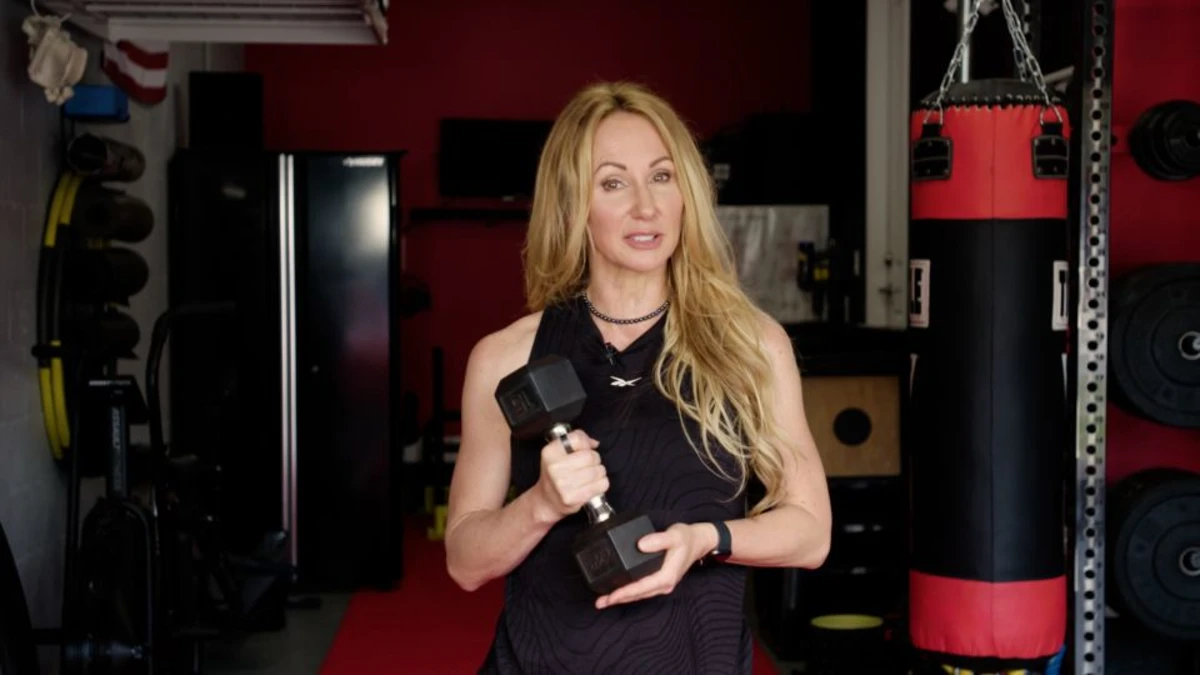
Dana Santas, known as the “Mobility Maker,” is a certified strength and conditioning specialist and mind-body coach in professional sports, and is the author of the book “Practical Solutions for Back Pain Relief.”
Many people approach fitness with the same assumption: If they just train harder, stay consistent and push through discomfort, results will follow. But for countless exercisers, effort isn’t the issue. Stress is.
Chronic stress keeps the nervous system stuck in a fight-or-flight state that quietly undermines physical progress before a workout even begins. Muscles stay locked in tension. Breathing becomes shallow. Recovery lags. Motivation wanes. And movement that should feel energizing starts to feel heavy and exhausting.
The solution isn’t pushing harder but learning how to regulate your physiology so your body can support — rather than sabotage — your fitness goals.
How stress affects your body before exercise begins
The nervous system regulates how your body responds to stress by constantly balancing two primary branches:
-
The sympathetic aspect is responsible for the fight-or-flight response, increasing muscle tension, alertness and breathing rate when the body perceives threat.
-
Parasympathetic supports recovery, allowing muscles to relax and systems such as breathing, digestion and recovery to function more efficiently.
In healthy conditions, the body moves fluidly between these two states. Under chronic stress, however, the nervous system remains biased toward fight-or-flight, even when no immediate danger is present.
Persistent sympathetic nervous system activation wreaks havoc on your ability to tolerate and adapt to stress — even the self-imposed “good” stress of your workouts. Being stuck in a state of fight-or-flight increases protective muscle tension, altering movement mechanics, limiting mobility, and increasing the likelihood of compensations that can lead to pain or injury.
Breathing also changes under chronic stress. The resulting shallow, rapid breathing patterns not only increase fatigue, but they also reduce rib cage movement and core strength, which affects posture, balance and power. And how you move and breathe isn’t all that’s affected — your ability to recover suffers, too. Elevated stress hormones interfere with sleep quality and tissue repair.
Why pushing harder often makes it worse
Many people respond to stalled progress by adding greater intensity: more workouts, fewer rest days, higher effort. But overtraining a stressed system compounds the problem.
When your body doesn’t feel safe and recovered, it prioritizes protection over performance. Muscles get tighter, and pain sensitivity increases.
This is why two people can follow the same program yet have different outcomes. One body adapts and gets stronger. The other stalls and feels beaten down.
The difference isn’t discipline or toughness — it’s nervous system function.
Regulate first, then train
A regulated nervous system allows the body to access strength, mobility and coordination more efficiently. When the nervous system shifts into balance, muscles can relax when they should, engage when needed and recover more effectively.
Doing so doesn’t require eliminating stress from life. It requires giving the nervous system regular signals of safety and periods of recovery.
Here are several strategies that do exactly that.
Use breathing to downshift reactivity
Your breathing is one of the quickest and most effective ways to influence nervous system state. Deep breaths with longer exhales activate the parasympathetic nervous system, helping alleviate muscle tension and mitigate stress-driven reactivity.
Put it into practice: Set the tone for your nervous system at the start of your day by practicing conscious breathing before you even get out of bed. Take six long, slow breaths first thing in the morning to establish a calm baseline for the day.
Use intentional deep breathing throughout the day whenever you notice your breath becoming shallow or rushed. Even a 90-second breathing break can noticeably shift how your body feels and performs.
Choose mobility that signals safety, not strain
Mobility work isn’t just about increasing range of motion — it’s about reducing protective tension. Slow, controlled movements help signal safety to the nervous system, reducing protective guarding and improving movement confidence.
Put it into practice: Once or twice daily, do mobility exercises that focus on spine and rib cage movement, which are effective for stressed bodies. Try gentle twists, chest openers and side stretches. Avoid extreme stretches that can reactivate nervous system protection.
Prioritize recovery every day
Recovery doesn’t only happen after workouts. It should be happening in the spaces between stressors during the day and every night.
Sleep is one of the most powerful tools for nervous system regulation — downshifting stress hormones and supporting physical and mental recovery. However, chronic stress can make falling asleep and staying asleep more difficult, which is why intentional sleep hygiene matters.
Put it into practice: Establish a wind-down routine. It might include wearing blue-light-blocking glasses and limiting screen time in the evening, keeping the bedroom cool and dark, and doing breath work or bedtime yoga.
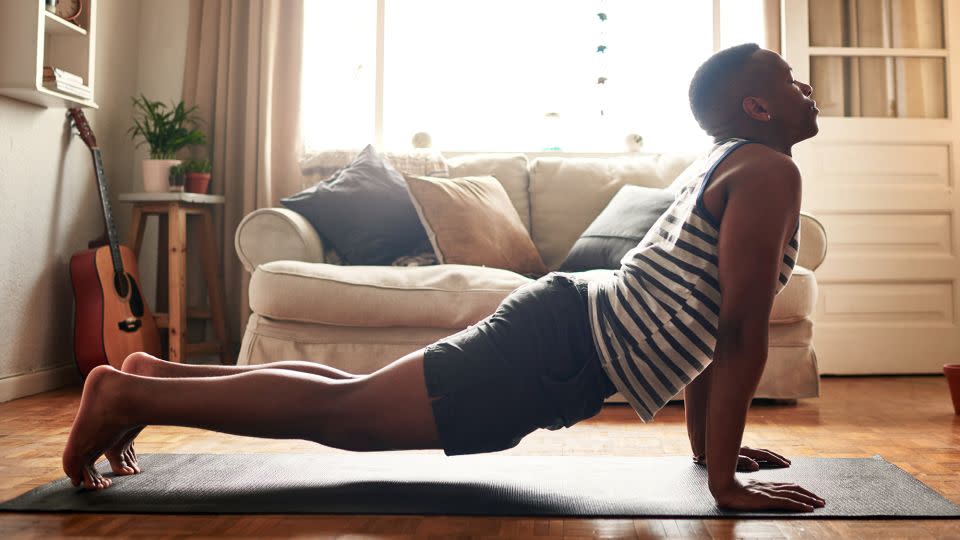
A yoga routine in the evening can help you wind down and prepare your body for sleep. – PeopleImages/iStockphoto/Getty Images
Naps also play an important role in nervous system health. Short daytime naps can reduce stress, restore energy and improve focus. In my work in professional sports, I’ve seen firsthand the benefits of regular napping for some of the most elite athletes in the world. Many teams have designated nap rooms and bring in sleep experts to teach best practices.
Put it into practice: Don’t try to power through an afternoon slump. If you are in an environment where napping is possible, listen to your body and rest. Whether you’re an elite athlete or a recreational exerciser, strategic rest helps regulate your nervous system and makes training feel more sustainable.
Build nervous system resets into your daily life
A nervous system reset is any intentional practice that helps shift your physiology out of fight-or-flight and back toward a state where movement, coordination and recovery are more accessible. Practices that combine slow, intentional moves with focused attention and breath, such as tai chi, can serve as powerful resets.
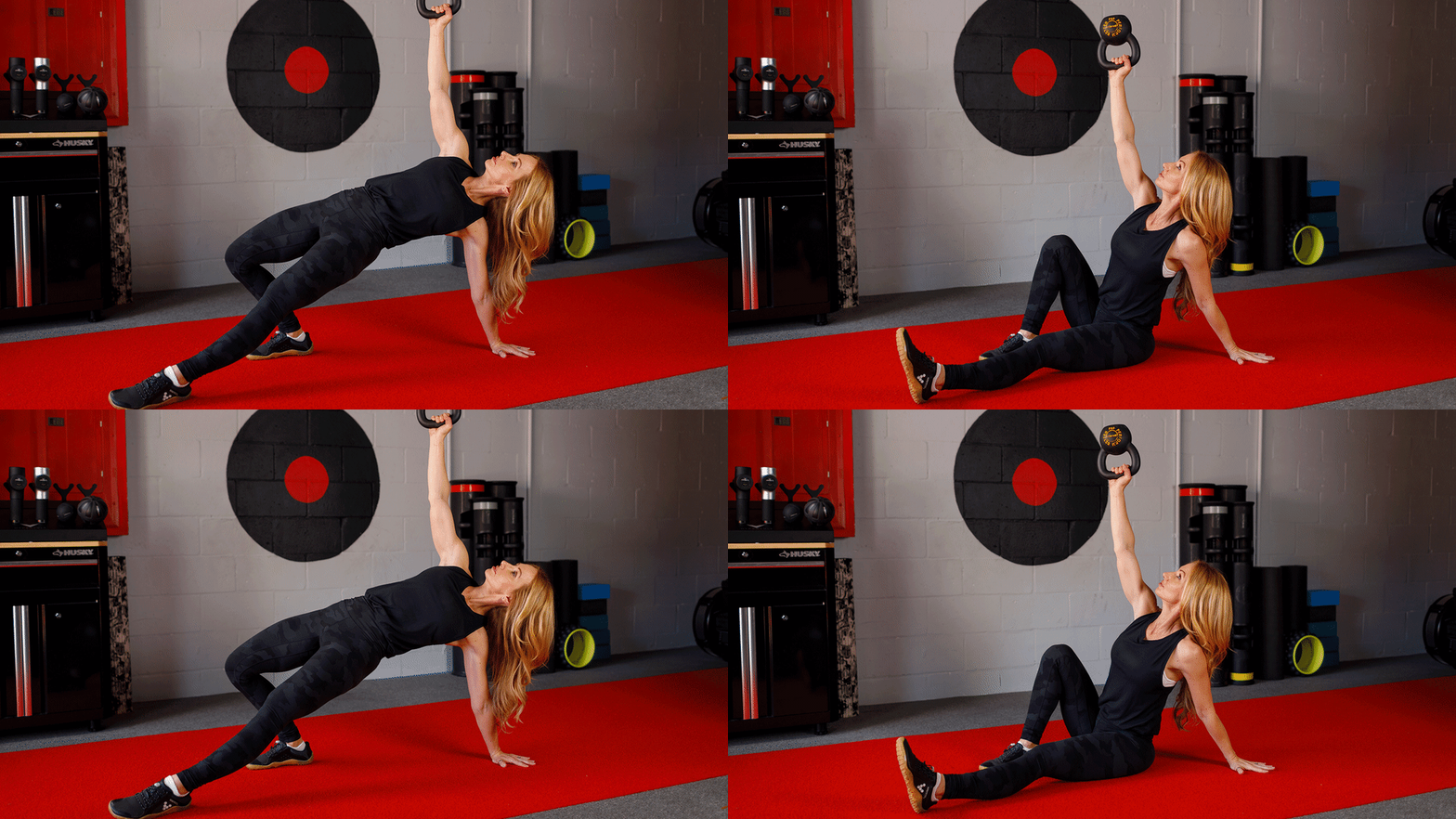
Slow, controlled movements help signal safety to the nervous system and can reduce protective guarding. – Aaron Lockwood
Just a few minutes of conscious breathing, focused attention and grounding movement is enough to help reconnect the mind and body, reduce reactivity and restore a sense of ease.
Resets can be used during warm-ups, after workouts, between stressful meetings or anytime your body feels keyed up. The goal is to have a go-to strategy you use regularly to recalibrate, so stress-induced tension doesn’t accumulate unchecked.
Put it into practice: Try using this simple reset sequence:
-
First, take several slow, deep breaths with an emphasis on extended exhales.
-
Next, begin grounding yourself fully in the present moment. Feel your feet on the floor and your weight supported by gravity. Notice three things in your environment, silently naming them in your mind.
-
Then move into gentle motion: a few slow neck rotations, spinal twists, and arm and hip circles, staying aware of your breath and how your limbs move through space.
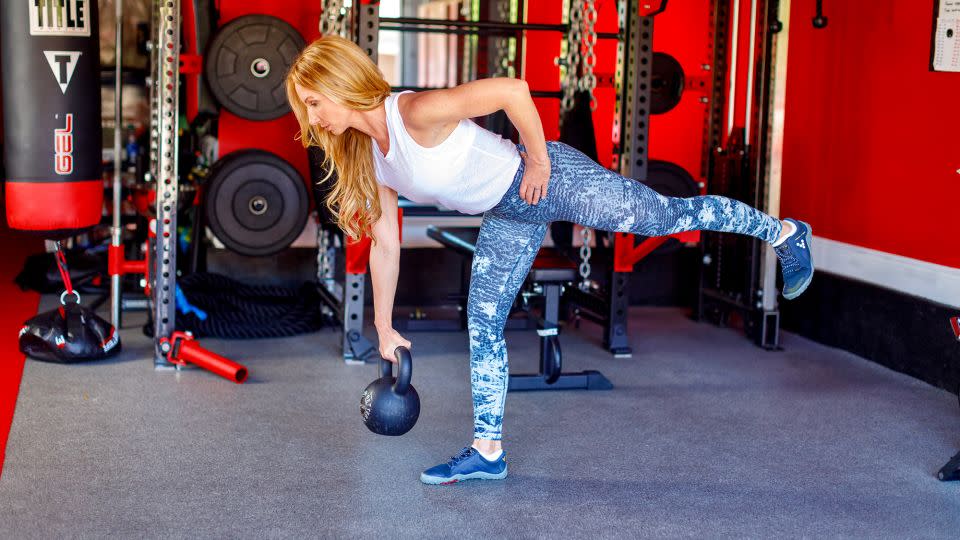
A balancing single-leg Romanian deadlift involves hinging at the hip. Avoid rounding your back and don’t force it. Your body and your training program will thank you. – Aaron Lockwood
When nervous system regulation becomes part of your training strategy, exercise stops working against you and starts working for you. Fitness progress doesn’t come from pushing a stressed system harder — it comes from creating the conditions that allow change. When the body feels safe, your training effort will pay off.
Get inspired by a weekly roundup on living well, made simple. Sign up for CNN’s Life, But Better newsletter for information and tools designed to improve your well-being.
For more CNN news and newsletters create an account at CNN.com