

Your mattress may look clean, but dust mites, skin cells and body oils could be working their way into your bed every time you lie down to sleep. Factor in the hot-flashers and the 42% of people in a mattress retailer’s survey who admit to crawling under the covers post-workout without showering, and you can go ahead and add sweat to that list. Not to be out-icked, Kenneth Mendez, CEO and president of the Asthma and Allergy Foundation of America (AAFA), says pollen, pet dander and even mold may be joining the mix too. Gross? Sure. But take comfort in knowing that if you’re not regularly cleaning your mattress, you are most certainly not alone. That same 1,000-person survey found that 58% of people never clean their mattress, and just 7% do it every month. Here’s how often you really should, and how to do it without damaging your mattress.
How often should you clean your mattress?
Unless you’re dealing with a stain or an accident, you may only have to do a deep clean every six months or so. However, that advice changes if you’ve got allergies or you’re among the 46% of people who share their bed with a pet at least some of the time. In these cases, “it’s smart to do it more often and wash your mattress protector regularly,” says Katie Sullivan, cleaning expert from the American Cleaning Institute.
What you need to clean a mattress
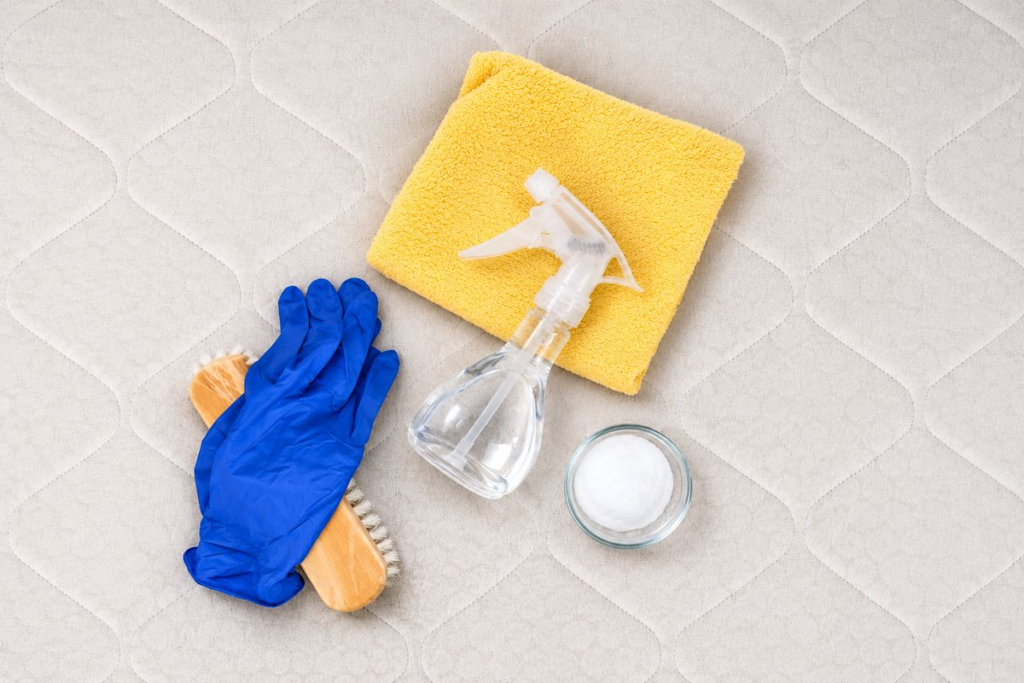
You probably already have everything you need to get your mattress squeaky clean right in your home. That includes:
Advertisement
Advertisement
Vacuum with upholstery attachment
Mild detergent or enzyme cleaner
How to clean a mattress properly
It takes just a few steps — and some downtime for drying or deodorizing — to get it all done. Of course, if you have deep, set-in stains, it may take multiple attempts to get clean. Here’s your step-by-step guide to cleaning your mattress.
Wash all bedding
If you’re going to the trouble of cleaning your mattress, you may as well clean your bedding too. Mendez recommends washing sheets, pillowcases, blankets and mattress covers in hot, soapy water (at least 130 degrees Fahrenheit) weekly to combat allergens. Bulkier items like comforters can be washed less often; follow the care label. Dry bedding in the dryer on a hot cycle, not outdoors, where it can attract pollen and other allergens, Sullivan says.
Vacuum the entire surface
Break out the vacuum cleaner and your favorite attachments to give the entire surface of the mattress a once-over. For most of the bed, you can use the upholstery tool. For the nooks, crannies and edges, where dust mites and other particles can linger, grab the crevice tool. No attachments? Each of these Yahoo award-winning vacuums comes with a crevice tool and an upholstery or brush head, so you can handle the surface and the seams with one purchase:
Amazon
Amazon
Amazon
Spot clean stains
For a fresh spill, blot up as much as you can right away (don’t scrub), then dab on mild laundry detergent or dish soap. If you are dealing with biological stains like urine, sweat or blood, however, choose an enzyme cleaner. It’ll “reactivate and break down” the stain, says Mary Helen Rogers, a spokesperson for the International Sleep Products Association. “Treat only the stained or odorous area, using the least moisture necessary, then blot with a clean towel.” Most enzyme cleaners need 15 to 30 minutes to work before you blot, but always follow the product’s directions.
Some top-rated enzyme cleaners to consider:
Amazon
Amazon
Amazon
Deodorize with baking soda
For urine or blood stains, add one more step once the area is mostly dry: sprinkle a generous amount of baking soda over the spot. “It’ll help absorb residual moisture and smells,” says Rogers, adding that you’ll need to let it sit for several hours before vacuuming.
Advertisement
Advertisement
No pee or blood? Baking soda can still help if your mattress smells stale. Sprinkle it over your mattress to absorb the smell, then “let it sit for at least 30 minutes and longer if the smell is still there,” Rogers says. Once you’re satisfied, vacuum it all up.
Let the mattress dry completely
Don’t rush to make your bed after you’ve finished cleaning. Instead, “let the mattress fully dry first,” Rogers says. “Airflow and full drying are essential to prevent lingering odor and mold growth.” To speed the process, open windows, use floor fans or run a dehumidifier. You can also prop up your mattress on its side to increase airflow.
What not to do when cleaning a mattress
A few well-meant moves can do more harm than good, Rogers and Sullivan say:
Don’t soak it. Too much moisture invites mold, so use as little as you can.
Don’t scrub. Blot instead, which helps keep stains from soaking further in.
Don’t use bleach. It can damage the mattress’s fabrics and internal materials.
Don’t steam clean. Heat can set stains and odors, and moisture sets the stage for mold and other allergens.
Don’t use a hair dryer to speed up drying. The heat can set in lingering stains and odors.
How to keep your mattress clean
“Use a mattress cover, protector or encasement,” Rogers says. It’s the easiest way to go longer between deep cleans. And if yours is waterproof, you may be able to skip the stain-and-odor steps during your deep clean. “If you didn’t spill on it, it’s not ‘dirty.’ Vacuum it, re-cover it, remake the bed and move on,” she adds.
Advertisement
Advertisement
AAFA recommends covering both your mattress and box spring once they’re fully clean. That helps keep allergenic particles from ending up in your mattress, where they’re harder to remove.
Here are a few highly rated mattress protectors to consider:
Amazon
Amazon
Amazon
The bottom line
Keeping your mattress clean can help reduce the risk of triggering allergy symptoms and support better sleep. Using a mattress protector will do most of the heavy lifting — then it’s just a matter of periodic vacuuming, deodorizing and spot-treating stains to help keep your mattress in tip-top shape. Of course, no amount of cleaning will make an old mattress new again. If it’s time to replace your mattress, follow our mattress buying advice and fit your pick with a protector right away.
Mattress cleaning FAQs
How long does it take a mattress to fully dry?
It can take hours or even days to fully dry, depending on the type of mattress. “Foam in your bed can be just like a sponge and hold moisture longer, so allow for more drying time,” Rogers says. “Innerspring mattresses generally have more airflow,” which allows them to dry faster.
Can I steam clean my mattress?
No. “Moisture is your mattress’s enemy,” says Rogers, who emphasizes that steam cleaning sets the stage for mold and other allergens to grow. Plus, the heat from the steam can set stains or odors into the mattress fibers.
Will regular cleaning reduce the risk of bed bugs?
Not really. Bed bugs don’t care how clean your mattress is. They hitch rides on suitcases, clothes and secondhand items, so even a spotless home can end up with them. Frequent vacuuming and high-heat laundering can help control an infestation, but they won’t prevent one.
Meet our experts
Kenneth Mendez, president and CEO of the Asthma and Allergy Foundation of America
Advertisement
Advertisement
Our health content is for informational purposes only and is not intended as professional medical advice. Consult a medical professional on questions about your health.
Source link