Five containers of chicken on Sunday look like a week of lunches handled. The problem is the fifth container. Cooking five meals at once does not give cooked chicken a five-day refrigerator life.
According to the federal cold-storage chart, cooked meat and poultry leftovers, soups, and stews generally belong in the refrigerator for three to four days at 40°F or below. If you cook on Sunday, freeze the portions intended for late in the week instead of leaving every meal in the fridge.
That is a small scheduling change, not a reason to abandon high-protein meal prep. You can still cook once and have lunch ready every workday.
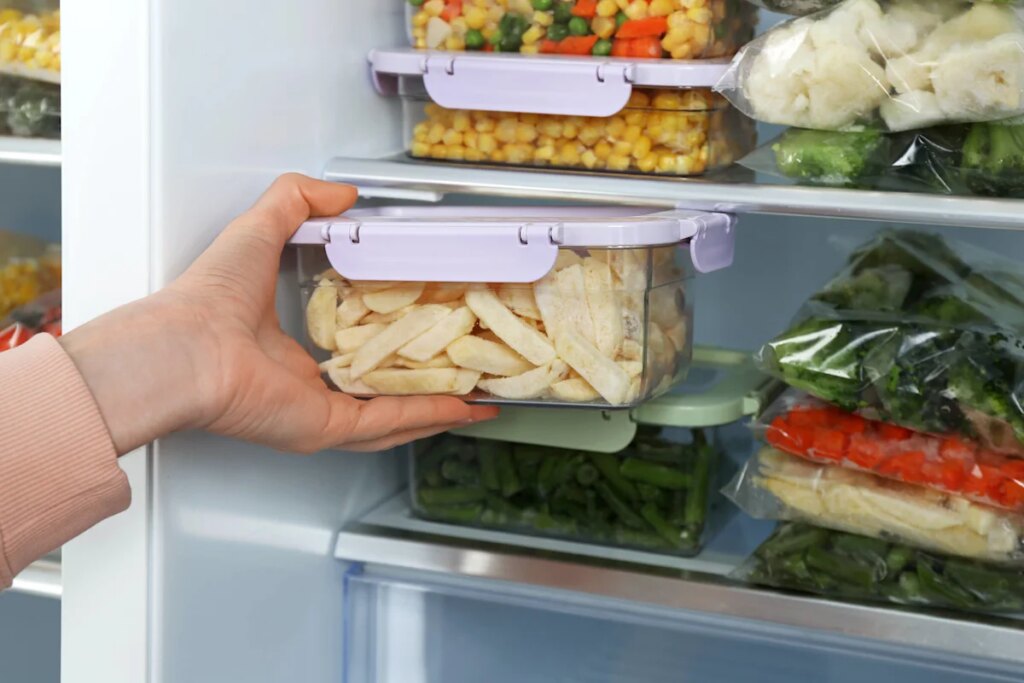
Use a three-in-the-fridge, two-in-the-freezer plan
For five cooked lunches prepared on Sunday, this conservative schedule avoids making Thursday’s timing a guessing game. It assumes the food was cooked, cooled, and handled safely.
|
Lunch |
Where it goes on Sunday |
What to do later |
|---|---|---|
|
Monday–Wednesday |
Refrigerator |
Keep cold until use. |
|
Thursday |
Freezer after prompt chilling |
Move to the refrigerator Wednesday to thaw. |
|
Friday |
Freezer after prompt chilling |
Move to the refrigerator Thursday to thaw. |
A small portion may thaw overnight; a larger or denser one can need longer. Allow enough time in the refrigerator. If it is still frozen, use a safe reheating method rather than leaving it on the counter.
Advertisement
Advertisement
Label containers with the cooking date and intended meal day. Freezing should be part of Sunday’s plan, not a last-minute attempt to rescue food after an uncertain week in the fridge.
Cool the food promptly
Divide large batches into shallow containers. Do not leave a deep pot of chili on the counter for hours while waiting for it to reach room temperature. USDA guidance allows hot food to go directly into the refrigerator, with large amounts divided for faster cooling. Keep space around containers so cold air can circulate.
The FDA’s storage guidance says perishable food should not sit at room temperature for more than two hours, or one hour when the air temperature is above 90°F. The fridge should stay at or below 40°F and the freezer at 0°F. Use an appliance thermometer to check.
Once the portions intended for freezing are chilled, transfer them promptly. Choose containers suitable for both the food temperature and freezer storage. Leave appropriate expansion space for liquid meals.
Thaw and reheat only the portion you need
The refrigerator is a convenient place to thaw lunch because the food stays cold. USDA also permits microwave thawing, followed by continued heating to a safe temperature.
Advertisement
Advertisement
When reheating leftovers, aim for 165°F throughout, measured with a food thermometer. In a microwave, cover, stir or rotate, and allow the recommended standing time. Test more than one spot in a dense meal; a hot edge does not tell you whether the center is hot enough.
For the commute, USDA recommends at least two cold sources with perishable packed food. Use an insulated bag and refrigerate lunch on arrival when possible. A container that spent the morning in a warm car has a different storage history from one that stayed cold.
Does the same rule apply to every meal?
No. The storage chart gives hard-cooked eggs a week in the refrigerator, while raw poultry gets only one to two days. A commercially packaged food may have its own instructions. Follow the guidance for the actual ingredients and preparation, rather than treating everything in a meal-prep container as interchangeable.
Smell is not a safety test. The FDA warns that food can contain harmful bacteria without looking, smelling, or tasting spoiled. Do not sample a questionable lunch to decide whether to keep it.
Advertisement
Advertisement
If freezing meals does not suit what you like to eat, make a smaller batch on Sunday and another midweek. Our basic meal-prep guide can help with planning, and our options for people who do not cook offer another route.
The goal is a lunch you can eat with confidence. Plan the storage at the same time you plan the protein.
This article uses U.S. household food-safety guidance from the linked federal agencies. Storage times assume safe preparation and uninterrupted temperature control; they do not make mishandled food safe. Follow product-specific instructions when they are more restrictive. No meal service or storage product was tested or recommended.
This story was originally published by Men’s Fitness on Oct 25, 2026, where it first appeared in the Nutrition section. Add Men’s Fitness as a Preferred Source by clicking here.