
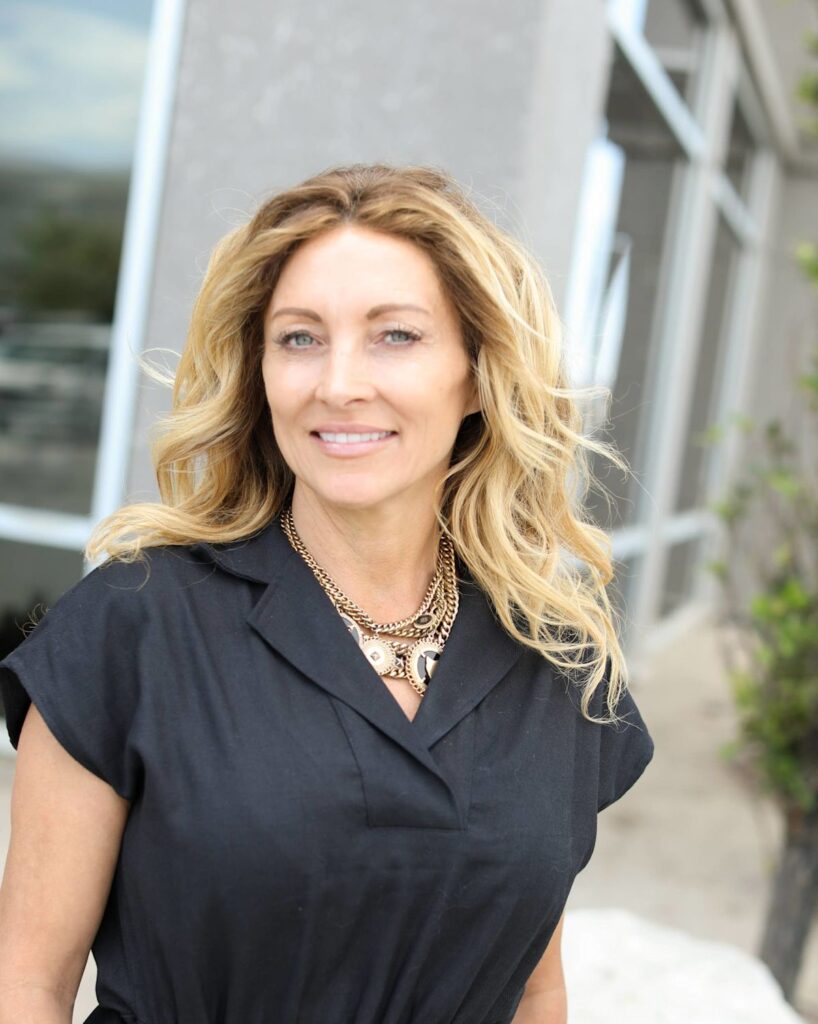


Michelle Church once believed recovery meant complete abstinence. When her brother, Aaron, began taking buprenorphine as part of his addiction treatment, she struggled to understand why medication belonged in the picture.
Michelle Church. Photo courtesy of Melinda Jae.
After losing him to an overdose, her understanding changed. She met people building full lives while receiving medication treatment and began thinking differently about what support could look like.
“If I could go back, I would be less judgmental and more curious,” she says.
Advertisement
Advertisement
Church, director of marketing and community engagement at Utah medical cannabis business Dragonfly Wellness, now brings that experience to her advocacy. Her story illustrates a central principle of harm reduction: help can begin while someone is still using substances, and recovery can develop around that person’s health, circumstances and goals.
That approach has immediate relevance in Utah, where state health officials report 664 drug-overdose deaths in 2025. The total includes overdoses involving different drugs, underscoring the need for accessible prevention and care.
What Harm Reduction Looks Like in Practice
A first visit to a harm-reduction organization might begin with naloxone, sterile supplies or a conversation. It can also lead to medical care, counseling and addiction treatment.
At the Utah Harm Reduction Coalition, founder and executive director Mindy Vincent, a licensed clinical social worker, describes a process built around acceptance and practical assistance.
Advertisement
Advertisement
Someone entering through the organization’s syringe services can receive a risk assessment, HIV and hepatitis C testing, and a service plan. When they want treatment, the next steps include a clinical assessment and an appropriate level of care, with services such as therapy, case management and peer support.
Mindy Vincent, founder and executive director of Utah Harm Reduction Coalition. Photo: Nick Hairup.
“Recovery is always defined by the client themselves,” Vincent says.
She says the organization welcomes people who are still using substances, those pursuing abstinence and those taking prescribed medications. That flexibility creates an opportunity to start working together when a person asks for help.
Syringe services also provide an established route into care. The CDC describes these programs as places to obtain sterile equipment, testing, vaccinations and connections to substance-use treatment.
Advertisement
Advertisement
For Stuart Fisk, MSN, a retired nurse practitioner with decades of experience caring for people with HIV, substance-use disorders and chronic pain, the conversation starts with understanding what someone wants to change. Goals might include reducing opioid use, treating an infection, managing pain or finding more stable housing.
Those practical concerns belong in the recovery conversation because they shape a person’s health and ability to engage with care.
Medication Can Create Room to Recover
One of the most useful things a family can understand is that medication can be part of recovery.
The CDC identifies buprenorphine, methadone and naltrexone as FDA-approved medications for opioid use disorder. Buprenorphine and methadone help reduce cravings and withdrawal; naltrexone blocks opioid effects.
Advertisement
Advertisement
Medication treatment is associated with a lower risk of overdose and death. A clinician can help determine which option fits an individual’s needs.
“I have often described them as treatments that quiet craving and give them the space to heal and recover,” Fisk says of buprenorphine and methadone.
Counseling and peer support can complement that medical care. People who choose abstinence can pursue that goal with peer support and a treatment plan that fits their needs. The CDC also makes clear that difficulty accessing counseling, or a decision to decline it, should not delay medication treatment.
For Church, learning to recognize the value of medication changed how she understood her brother’s experience. Her reflection offers families a useful starting point: ask what is helping, listen to the answer and support a treatment plan developed with qualified professionals.
What the Utah Medical Cannabis Study Found
Medical cannabis entered this conversation through patients’ experiences with pain and a preliminary Utah analysis of opioid prescribing.
Advertisement
Advertisement
The white paper from Management Science Associates, working with transaction data from Dragonfly Wellness, examined records for 186 patients with chronic pain.
Researchers linked cannabis purchases with electronic health records and compared prescribed opioid dosage before and after each patient’s first recorded cannabis purchase. They standardized dosage using morphine milligram equivalents, or MME, to compare different opioids.
Of those patients, 157—84.4%—had lower prescribed monthly opioid dosage afterward. The descriptive comparison also showed a 53.1% decline in average monthly dosage.
Jenniffer Lucero, MD, MSc. Photo courtesy of Jenniffer Lucero.
Jenniffer Lucero, MD, MSc, a research consultant with Management Science Associates, explains that the finding identifies a direction for further study.
Advertisement
Advertisement
“What we found is an association, and it’s the kind of signal that tells us where to look next,” she says.
The records measured documented prescribing, rather than how much medication patients actually took. Observation periods varied, and there was no separate group of patients who were not purchasing cannabis. Other changes in treatment could have contributed to the results.
After researchers adjusted for several patient and clinical characteristics, the estimated reduction was smaller and did not meet the conventional threshold for statistical significance: the p-value was 0.077, above 0.05.
The study did not specifically examine opioid use disorder or measure overdose, nonprescribed opioid use, pain relief, daily functioning or cannabis-related adverse effects. Lucero says the preliminary analysis has not been submitted for peer review.
Advertisement
Advertisement
Those details define the next research questions: whether changes in prescribing translate into better pain control and daily life, and how benefits and adverse effects compare with other care.
Keeping Pain Management and Addiction Treatment in Focus
Reducing prescribed opioid dosage for chronic pain and successfully treating opioid use disorder are different clinical outcomes. Keeping that distinction clear makes the conversation more useful for patients and families.
Broader pain research provides some context. A 2025 review from the Agency for Healthcare Research and Quality found small short-term improvements in pain with certain cannabis-based products. Effects varied by formulation, and some products increased dizziness, sedation and nausea. Evidence about reducing opioid use remained insufficient.
Cannabis has no FDA approval for treating opioid use disorder. Established addiction medications remain central to evidence-based care.
Advertisement
Advertisement
Church makes Dragonfly’s position on that distinction explicit: “We do not claim that cannabis treats opioid use disorder.”
Patients’ accounts of relief can help identify questions worth studying. For someone managing both pain and addiction, those experiences can also inform a conversation with their clinician about a coordinated care plan.
Practical Ways to Help Someone Take the First Step
Support can start with a few concrete actions:
Learn about naloxone. This medication can reverse an opioid overdose and is available as a nasal spray without a prescription. The CDC recommends giving naloxone if available, calling 911 and staying with the person until help arrives when an overdose is suspected.
Ask about medication treatment. A health care professional or addiction-treatment service can explain options for opioid use disorder. The federal FindTreatment.gov directory can help locate services.
Connect with a local harm-reduction program. Organizations such as UHRC can offer supplies, education, testing and connections to ongoing care. Asking about available services is a practical way to begin.
Offer encouragement that leaves room for honesty. Vincent suggests a simple message: “I love you, I believe in you, I will support you.”
Making Room for Hope
Church’s community initiative, A Light to Remember, brings together people grieving deaths from addiction and people building their recovery.
Advertisement
Advertisement
She remembers watching participants in recovery carefully retrieve memorial lanterns from a pond after the first event. Their attention to each lantern helped her see the gathering’s wider purpose.
“It is as much about hope for people in recovery as it is a memorial for those we have lost,” she says.
That sense of possibility runs through the interviews: a person can receive support today, build trust over time and work toward a healthier life with care that fits their needs. For a family unsure where to begin, listening and helping someone connect with treatment can be a meaningful first step.
Interviews and study materials were coordinated through Grasslands, which represents Dragonfly Wellness. Michelle Church works for Dragonfly, a medical cannabis business that supplied transaction data for the Utah study. Jenniffer Lucero consults for Management Science Associates, which designed and analyzed the study; she says neither organization paid the other for the collaboration. Mindy Vincent says UHRC connects interested clients with organizations including Dragonfly for cannabis education. The preliminary study has not been submitted for peer review. This article is for general information and is not a substitute for individualized medical advice.
This story was originally published by Men’s Fitness on Nov 21, 2026, where it first appeared in the Wellness section. Add Men’s Fitness as a Preferred Source by clicking here.
Source link